admin
admin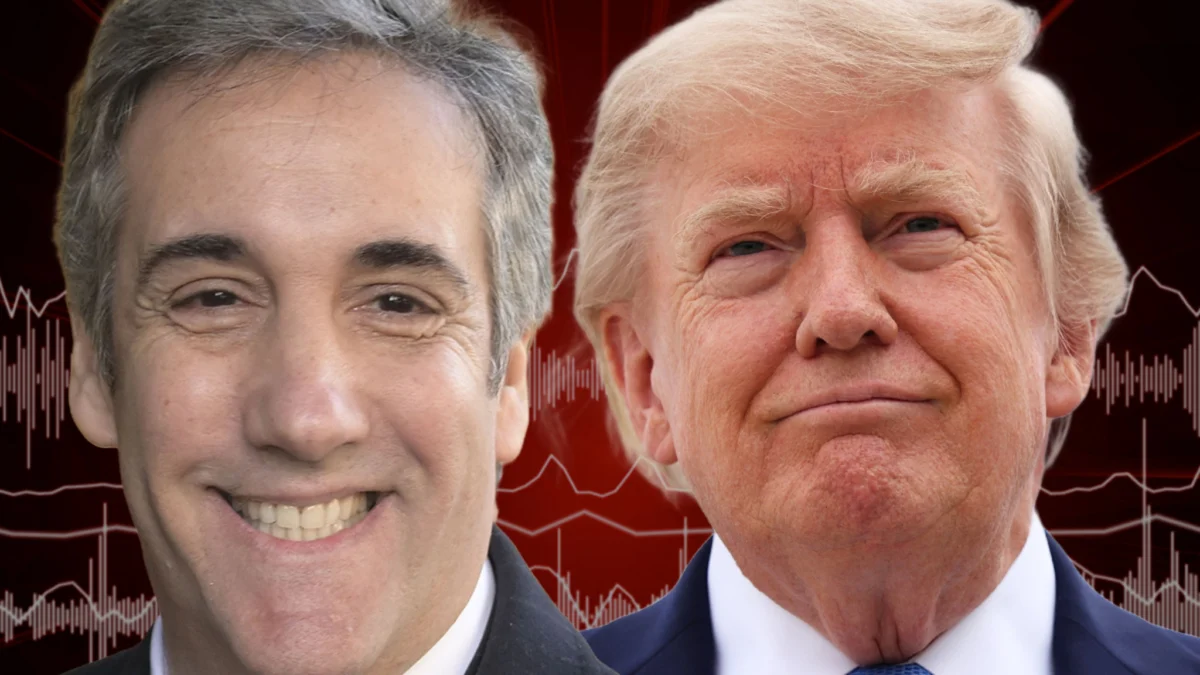
A stunning reversal of allegiances has gripped Washington, as Michael Cohen, once Donald Trump’s loyal "fixer" turned vehement critic and star witness against him, is now openly courting his former boss for a presidential pardon. The dramatic shift in their tumultuous relationship, culminating in recent public overtures and private meetings, signals Cohen’s desperate bid for clemency from the very man he helped convict. This unprecedented maneuver, unfolding in August 2026, casts a stark light on the fluid dynamics of loyalty and retribution in American politics, particularly concerning figures orbiting the former and potentially future President.
The overture was laid bare in a newly released clip from an interview between Cohen and Trump, where Cohen adopted a strikingly deferential tone. "Boss, you remember when I was by your side? I literally used to analyze the polls," Cohen was heard saying, his words dripping with nostalgia for their past partnership. This sentiment stands in stark contrast to the scathing criticisms and damning testimony Cohen delivered just two years prior, which played a pivotal role in Trump’s conviction on 34 felony counts in the 2024 New York hush money trial. The public display of camaraderie, designed to evoke a sense of shared history and mutual loyalty, is widely interpreted as a calculated appeal for presidential intervention in Cohen’s own legal standing.
The Arc of a Fractured Alliance: From Fixer to Foe and Back?
To fully grasp the magnitude of Cohen’s current strategy, it is essential to revisit the tumultuous history shared by these two men. For over a decade, Michael Cohen served as Donald Trump’s executive vice president and special counsel, famously declaring he would "take a bullet" for his boss. He was an indispensable part of the Trump Organization, known for his aggressive tactics and unwavering loyalty, often acting as a gatekeeper and enforcer. His responsibilities ranged from handling sensitive legal matters to negotiating deals and, as he now reminds Trump, even analyzing political polls, underscoring his deep involvement in Trump’s professional and political life. This period of intense loyalty saw Cohen deeply embedded in Trump’s inner circle, privy to many of the organization’s most confidential dealings.
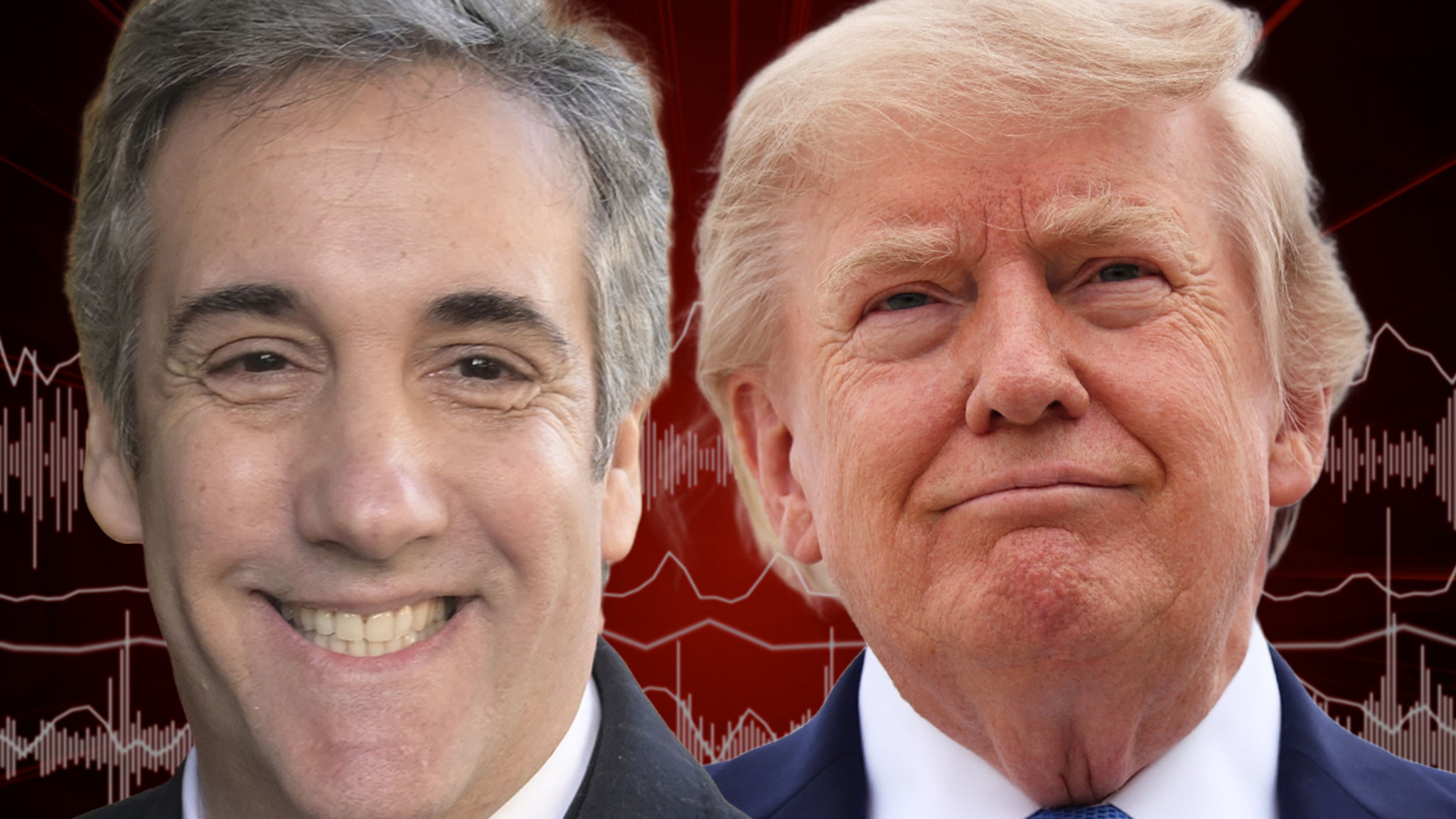
The relationship began to unravel dramatically in 2018, as federal investigations closed in on Cohen. Faced with mounting legal pressure, Cohen’s loyalty fractured. In August 2018, he pleaded guilty to eight federal charges, including campaign finance violations, tax fraud, and bank fraud, directly implicating Trump in hush-money payments made during the 2016 presidential campaign. He stated under oath that he made these payments "at the direction of a candidate for federal office, and in coordination with and at the direction of that candidate." Later that year, Cohen was sentenced to three years in federal prison, a term he served partly behind bars and partly under home confinement.
Following his convictions and imprisonment, Cohen transformed into one of Trump’s most vocal and damaging critics. He published tell-all books, hosted a popular podcast, and became a frequent guest on cable news, consistently portraying Trump as a corrupt and unfit leader. His testimony before Congress and his cooperation with various legal investigations provided critical insights into Trump’s business practices and political conduct. This adversarial stance reached its zenith in early 2024, when Cohen served as the prosecution’s star witness in the New York criminal trial concerning falsified business records related to hush-money payments to adult film star Stormy Daniels. His detailed and often emotional testimony was central to the prosecution’s case, which ultimately led to Trump’s historic conviction on all 34 felony counts in May 2024. The jury’s verdict solidified Cohen’s role as the key architect of his former boss’s legal downfall, seemingly cementing their status as irreconcilable foes.
The Pardon Play: A Strategic Retreat and Public Appeal
The recent shift in Cohen’s public posture began to materialize earlier this year, signaling a calculated strategic retreat from his previous confrontational stance. Cohen publicly stated that he felt "coerced" into testifying against Trump, a stunning recantation that immediately raised eyebrows across political and legal circles. This claim, which lacks substantiation beyond Cohen’s own assertion, directly contradicts years of his own public statements and sworn testimony where he presented himself as a whistleblower motivated by conscience.
Donald Trump, ever attuned to shifts in loyalty and public narrative, was quick to seize upon Cohen’s softened stance. In their recent interview, Trump reportedly praised Cohen for "walking back his criticism," calling it "a big thing that you did." This reciprocal acknowledgment from Trump is critical, as it suggests an opening for reconciliation and, more importantly, a potential willingness to consider Cohen’s plea for clemency. The timing of Cohen’s retraction and subsequent appeal is not accidental; it aligns perfectly with the window for a potential presidential pardon, should Trump be in a position to grant one.
Cohen’s public campaign for a pardon is not confined to private conversations or recorded interviews. He leveraged his media presence, appearing on CNN with anchor Jake Tapper, to announce his intention to formally pursue a pardon. During the segment, Cohen stated his plan to contact the Justice Department to check on the processing of his presidential pardon application. This public declaration serves multiple purposes: it signals his seriousness, attempts to create public pressure, and positions his request as a legitimate legal process rather than a mere political favor. It also strategically places the narrative of his reconciliation and pardon pursuit directly into the national media spotlight.
The Mechanics of a Presidential Pardon: Federal vs. State Convictions
Understanding the nuances of a presidential pardon is crucial in this context. Under Article II, Section 2, Clause 1 of the U.S. Constitution, the President has the power to grant "Reprieves and Pardons for Offenses against the United States, except in Cases of Impeachment." This power is broad and generally applies to federal crimes. The process typically involves an application to the Office of the Pardon Attorney within the Department of Justice, which then investigates the case and makes a recommendation to the President. However, Presidents retain the ultimate discretion and can bypass the DOJ’s recommendation process entirely.
It is critically important to distinguish between federal and state convictions. Michael Cohen was convicted of several federal crimes in 2018, including campaign finance violations, tax fraud, and making false statements to Congress. A presidential pardon, if granted by Donald Trump, would apply to these federal convictions, effectively forgiving him for these federal offenses and restoring certain civil rights, such as the right to vote or hold public office, that might have been lost due to his felony convictions.
However, the 2024 hush money trial, in which Michael Cohen testified against Donald Trump, resulted in Trump’s conviction on state-level felonies in New York. A presidential pardon cannot directly nullify state convictions. The President’s clemency power is limited to offenses against the United States (federal law). Therefore, while Cohen’s testimony contributed to a state conviction for Trump, Cohen himself is seeking a pardon for his own federal crimes. This distinction is paramount and often misunderstood in public discourse. A pardon for Cohen would address his past federal transgressions, not Trump’s more recent state-level legal issues.
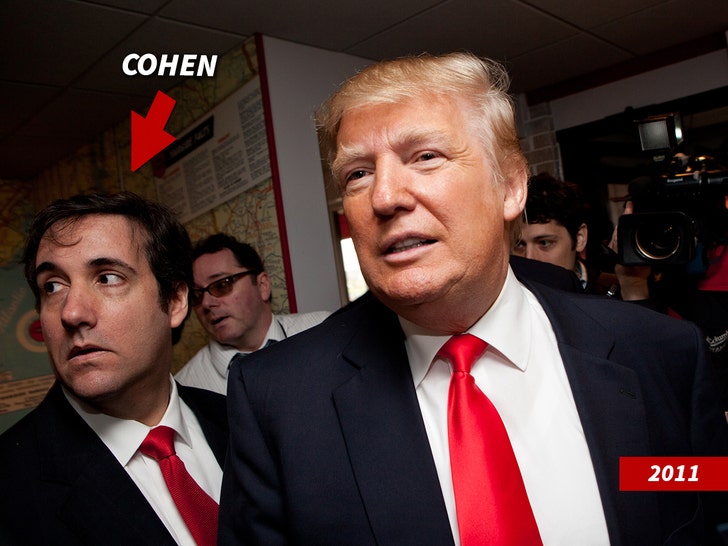
A Timeline of Shifting Fortunes and Renewed Dialogue:
The timeline of Cohen and Trump’s interactions highlights the dramatic nature of their evolving relationship:
- Early 2000s – 2016: Michael Cohen serves as Donald Trump’s fiercely loyal attorney and "fixer," deeply involved in his business and early political endeavors.
- 2017 – 2018: Federal investigations into Cohen escalate. His properties are raided by the FBI in April 2018.
- August 2018: Cohen pleads guilty to federal charges, including campaign finance violations related to hush-money payments, explicitly implicating Donald Trump.
- December 2018: Cohen is sentenced to three years in federal prison.
- 2019 – 2020: Cohen serves his prison sentence, later transitioning to home confinement due to the COVID-19 pandemic. During this period, he becomes a vocal and consistent critic of Trump.
- 2020 – 2023: Cohen releases books detailing his experiences with Trump and hosts a critical podcast, solidifying his image as Trump’s primary antagonist.
- Early 2024: Cohen testifies as the key prosecution witness in the New York hush money trial against Donald Trump.
- May 2024: Donald Trump is convicted on 34 felony counts in the New York state court, largely based on testimony including Cohen’s.
- Summer 2025: Cohen and Trump reportedly begin to mend their fractured relationship with a private meeting at Trump’s New Jersey golf club. This marks the initial phase of their reconciliation.
- Early 2026: Another significant meeting takes place at Trump’s Mar-a-Lago estate in Florida, further cementing their renewed dialogue. Cohen publicly retracts his prior testimony, claiming he felt "coerced."
- August 2026: The interview clip surfaces, showcasing Cohen’s explicit appeal for a pardon. Cohen announces on CNN his intention to pursue a formal presidential pardon application.
Reactions, Implications, and Ethical Dilemmas:
The prospect of a presidential pardon for Michael Cohen, especially under these circumstances, carries significant political, legal, and ethical ramifications.
Political Implications:
For Donald Trump, granting a pardon to Cohen would undoubtedly be a divisive move. While it could be hailed by his loyalists as a demonstration of strength and an act of "righting a wrong" – particularly given Cohen’s recent "coercion" claims – it would likely face fierce condemnation from political opponents. Critics would view it as an egregious abuse of presidential power, a reward for recanting testimony, and a further erosion of the rule of law. It would fuel narratives of political expediency over justice, potentially impacting public trust in the judicial system and the presidency itself. The optics of pardoning an individual who directly contributed to the President’s own legal woes, only after that individual shifts their narrative, would be difficult to reconcile for many.
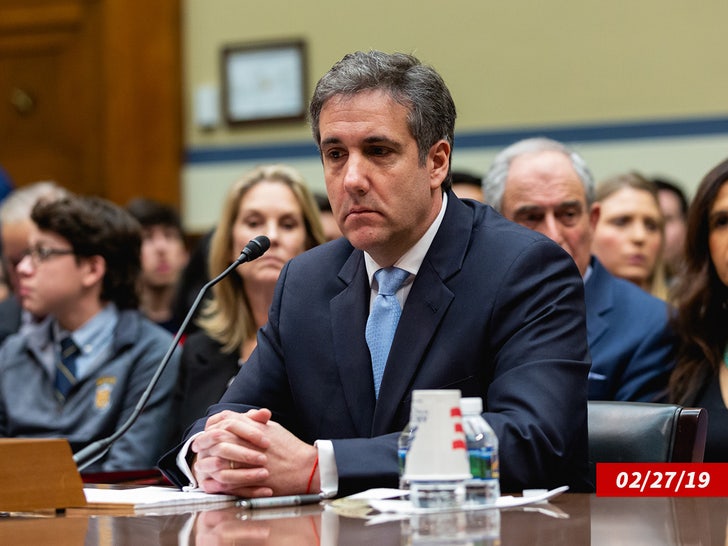
Legal Implications:
A federal pardon for Cohen would absolve him of his federal convictions, restoring his civil liberties. However, it would not erase the historical record of his actions or his testimony. His past statements, even if later recanted, could still be relevant in other legal contexts, although their weight might be diminished. The pardon would not, for instance, retroactively invalidate his testimony in Trump’s state trial, as the pardon power applies to the individual being pardoned, not to the consequences of their testimony on others. Furthermore, a pardon does not typically equate to an admission of innocence; rather, it implies forgiveness for a crime committed.
Ethical Considerations:
The ethical questions surrounding a potential pardon are profound. Is it appropriate for a President to pardon someone who directly testified against him, particularly after that individual retracts key aspects of their prior testimony and openly appeals for clemency? Such an act could be perceived as transactional, suggesting that judicial outcomes can be altered through political loyalty and shifts in public narrative rather than through a steadfast commitment to truth. It raises concerns about the integrity of the justice system and the potential for powerful individuals to manipulate legal processes for personal gain. The "coercion" claim itself, made years after his convictions and testimony, further complicates the ethical landscape, as it could be seen as a convenient fabrication designed to facilitate the pardon request.
Broader Impact:
This saga could set a troubling precedent, signaling that loyalty, even if renewed after a period of betrayal, can ultimately lead to forgiveness for past legal transgressions. It might embolden other former associates of political figures to consider similar strategies, potentially undermining the incentive to cooperate with law enforcement if a future pardon is perceived as an achievable outcome. For the public, it reinforces a perception that justice operates differently for the politically connected, further eroding confidence in the fairness and impartiality of legal processes.
As Michael Cohen presses forward with his application, and as Donald Trump weighs the political and personal costs and benefits of granting such a pardon, the nation watches intently. The dramatic journey from "fixer" to "foe" and now, potentially, back to a pardoned associate, underscores the complex and often unpredictable nature of political relationships at the highest levels. The outcome of Cohen’s plea will undoubtedly be a defining moment, offering further insight into the wielding of presidential power and the enduring questions of accountability and loyalty in contemporary American politics.

 Yuyun Lusiyani
 Joko Widodo
 Jia Lissa
 Pevita Pearce