
 Lina Irawan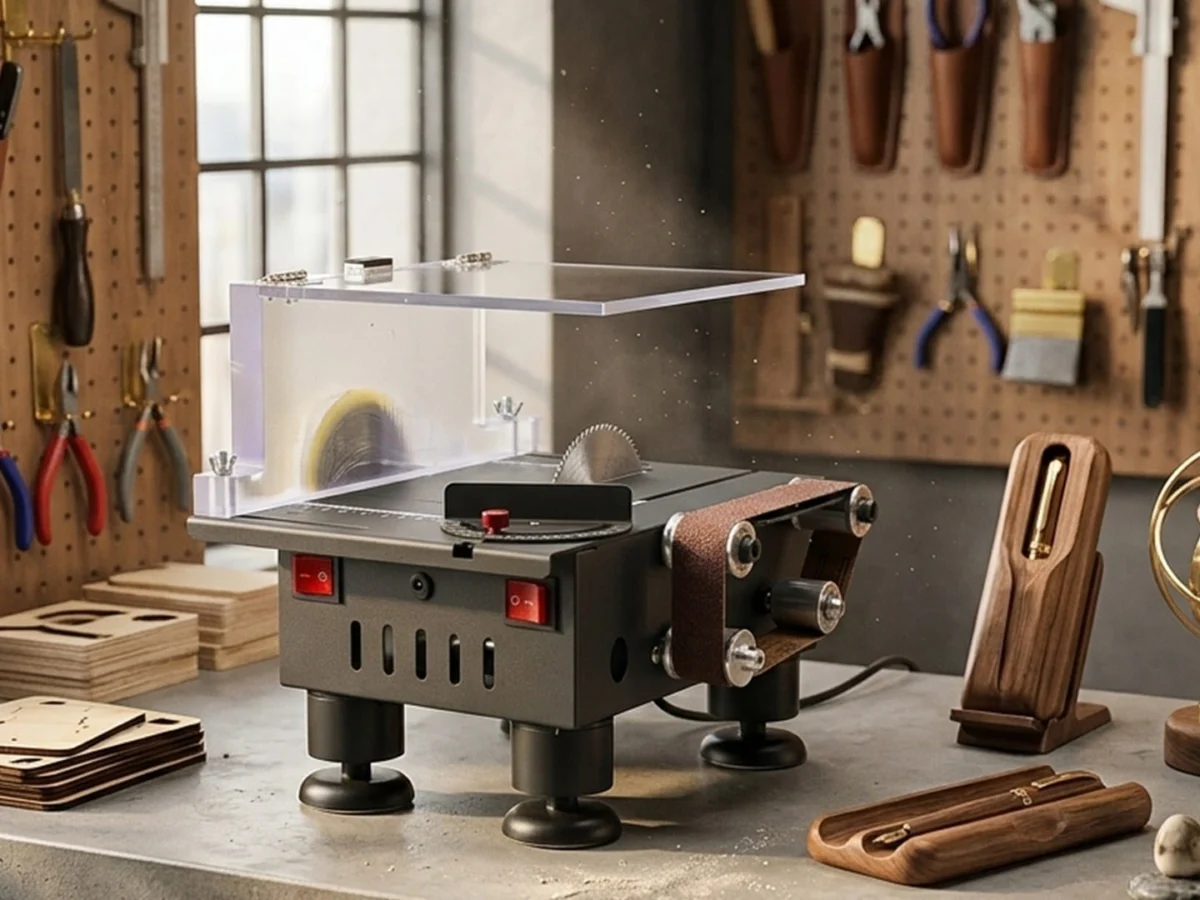
The emergence of the Mini 3-in-1 Desktop Craft Workshop on the global crowdfunding platform Kickstarter marks a significant shift in the accessibility of precision woodworking and fabrication tools for urban dwellers. As of the current reporting period, the project has successfully secured US$137,959 in pledges from an initial cohort of 60 backers, far exceeding its baseline requirements and signaling a robust market appetite for multi-functional, space-conscious hardware. This compact benchtop machine integrates three traditionally disparate functions—cutting, sanding, and engraving—into a single chassis designed specifically for environments where a traditional garage or shed workshop is unavailable. For hobbyists, model makers, and DIY enthusiasts residing in apartments or rental properties, the device represents a strategic alternative to the logistical challenges of housing and maintaining full-scale industrial equipment.
Core Functionality and Engineering Design
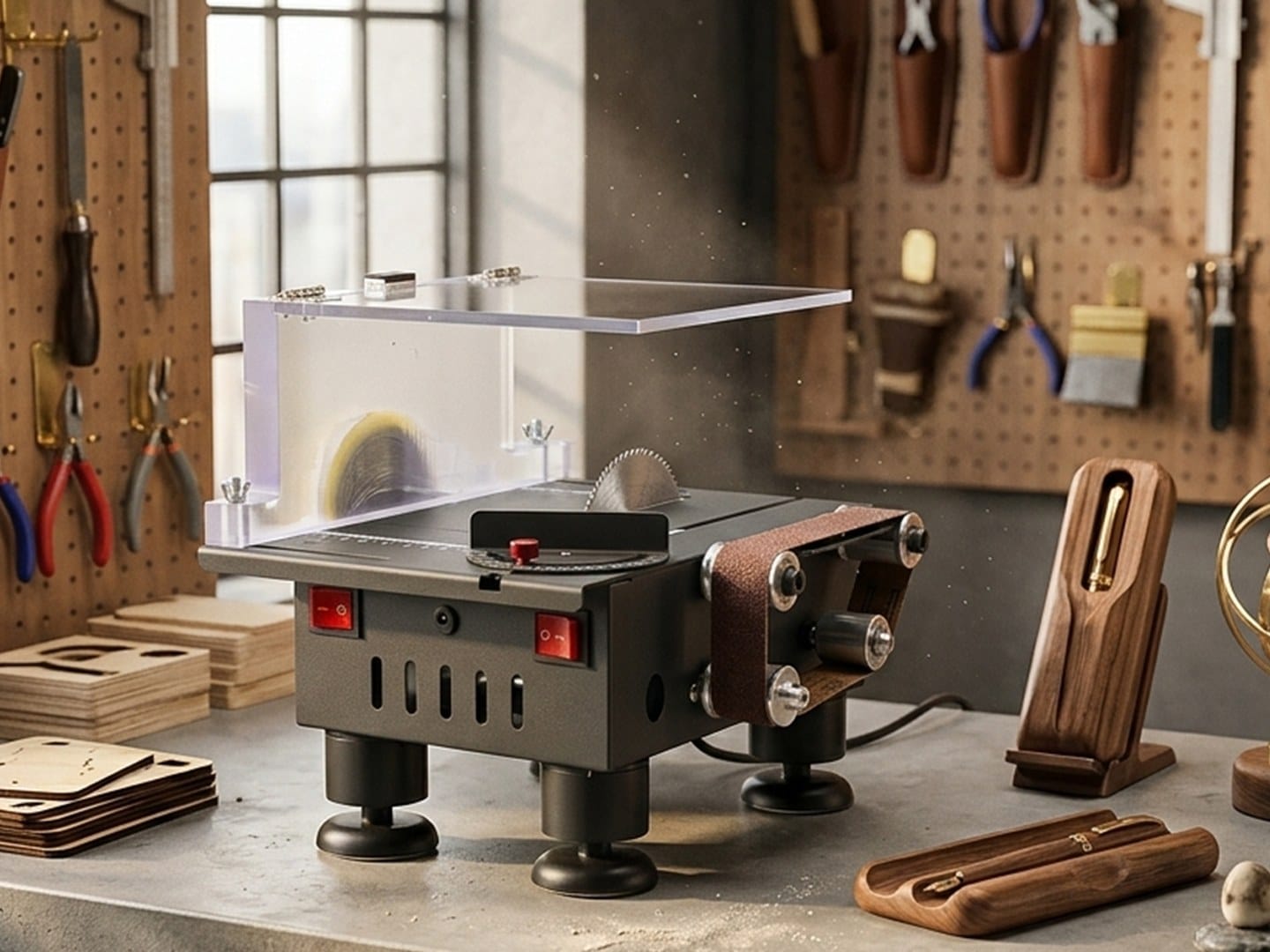
The Mini 3-in-1 Desktop Craft Workshop is engineered around a central 600-watt pure copper high-torque motor. In the realm of power tools, the choice of a pure copper motor is a technical decision aimed at maximizing heat dissipation and extending the operational lifespan of the unit under sustained loads. This motor provides the necessary torque to drive three distinct modules within a singular 265 x 310 x 100 mm footprint. This size is comparable to a standard desktop printer, allowing it to be stationed on kitchen counters, office desks, or temporary workbenches without requiring permanent installation or heavy-duty mounting.
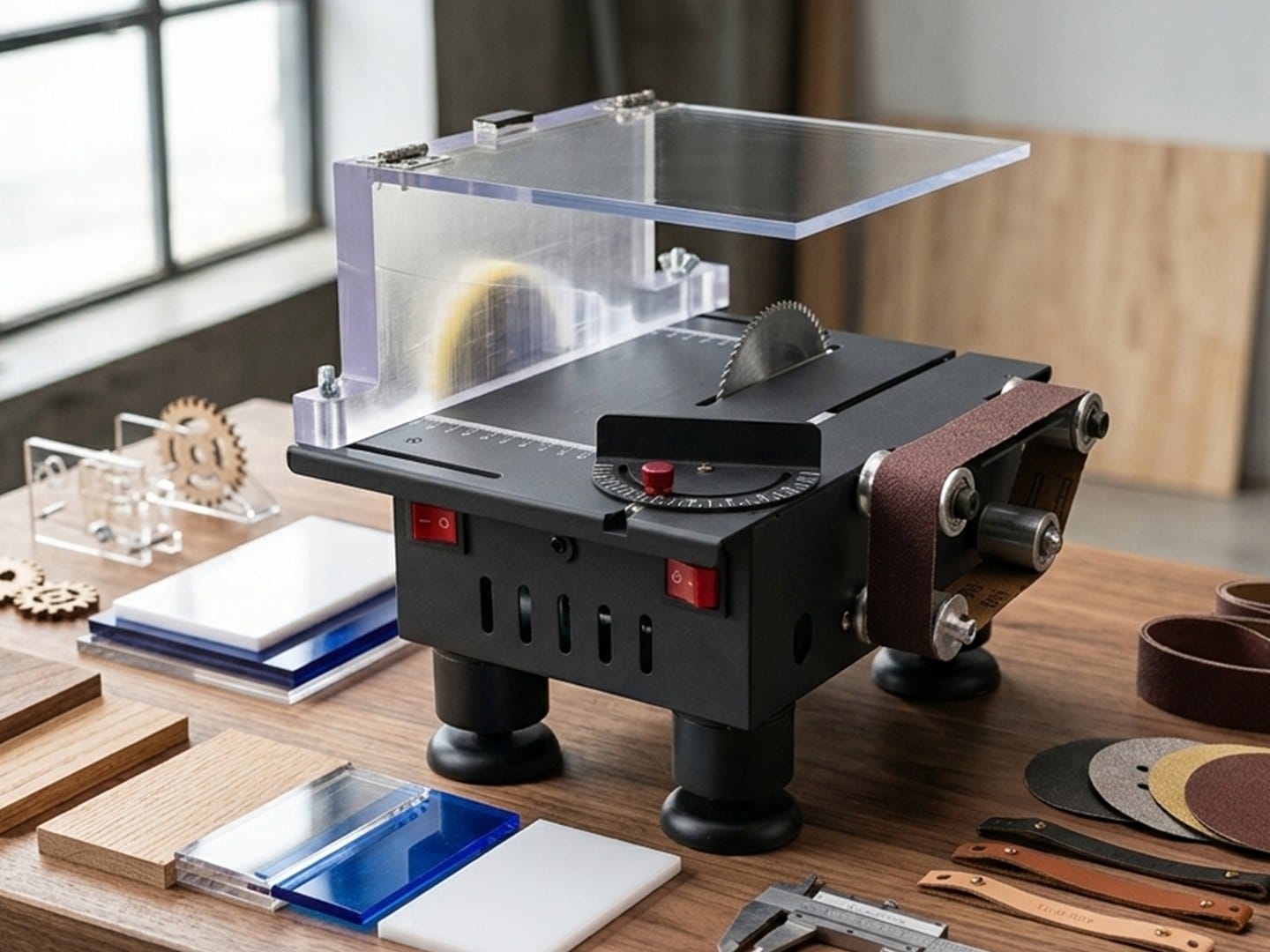
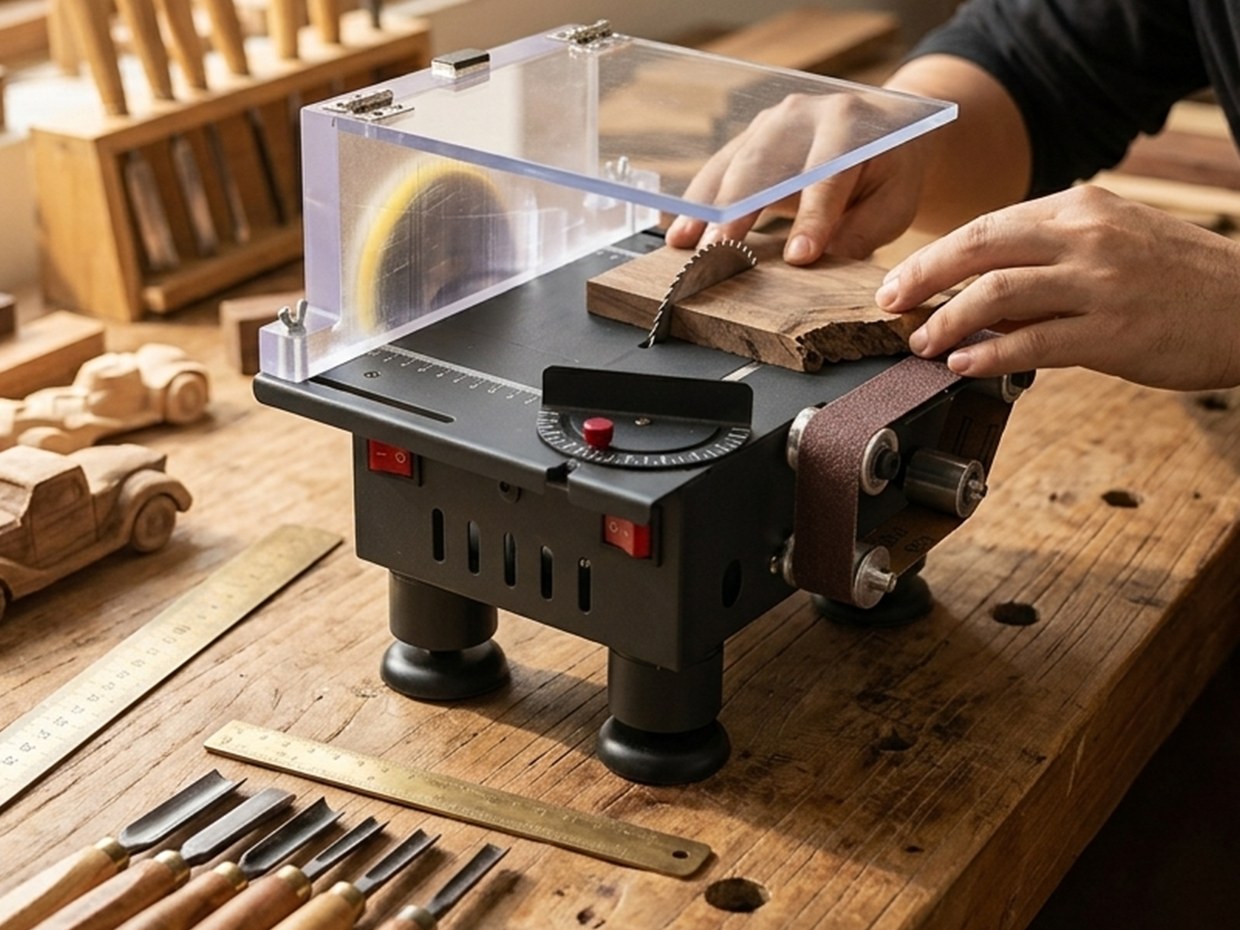
The cutting system functions as a miniaturized table saw, utilizing adjustable guides and a stable support base to facilitate both straight and angled cuts. This module is intended for use with timber, acrylics, plastics, and bamboo. Complementing the cutting system is a high-speed sanding module designed for edge refinement and surface smoothing. By integrating the sanding belt into the same housing, the machine eliminates the "tool-swapping" downtime often associated with small-scale fabrication. The third component, the engraving module, provides fine-detail capabilities, allowing users to personalize projects with text or intricate patterns.
A Chronology of the Desktop Tool Evolution
The development of the Mini 3-in-1 Desktop Craft Workshop follows a broader historical trend in the "Maker Movement," which has seen industrial-grade capabilities miniaturized for consumer use.
- The Industrial Era (1950s–1990s): Tools such as table saws and belt sanders were exclusively large, stationary machines requiring dedicated 220V circuits and significant square footage.
- The Handheld Revolution (2000s): Companies like Dremel popularized rotary tools, offering engraving and light sanding in a handheld format, though they lacked the stability and accuracy of table-mounted saws for straight cuts.
- The Prototyping Boom (2010s): The rise of 3D printing and CNC milling introduced the concept of "desktop manufacturing," though these remained largely additive or automated rather than manual craft tools.
- The Integrated Desktop Phase (Present): The Mini 3-in-1 represents the current iteration of this timeline, where manual subtractive tools (saws and sanders) are combined into a single, user-controlled desktop unit to maximize utility per square inch.
The current Kickstarter campaign is the latest milestone in this chronology, with a projected timeline that aims for full-scale manufacturing and global shipping by October 2026. This two-year window reflects the complexities of moving from functional prototypes to mass-production-ready hardware that meets international safety and electrical standards.
Technical Specifications and Material Compatibility
According to technical documentation provided by the development team, the Mini 3-in-1 is optimized for "soft" to "medium" density materials. While it lacks the raw horsepower of a 1,500-watt contractor saw, its 600-watt motor is calibrated for precision over bulk.
- Dimensions: 265 mm (L) x 310 mm (W) x 100 mm (H)
- Motor Type: 600W Pure Copper High-Torque
- Primary Functions: Circular Cutting, Belt Sanding, Laser/Mechanical Engraving
- Safety Features: Transparent acrylic guard, internal debris management, and stabilized non-slip base
- Compatible Materials: Softwood (pine, balsa), hardwood strips (oak, walnut up to specific thicknesses), acrylic sheets, PVC, bamboo, and assorted craft plastics.
The inclusion of a transparent safety guard is a critical design choice for the intended user base. In confined apartment settings, the management of sawdust and the prevention of high-velocity debris are paramount. The guard serves as both a physical barrier and a visual guide, allowing for high-visibility work without compromising the operator’s safety.

Market Analysis and the Rise of "Micro-Manufacturing"
The success of the Mini 3-in-1’s funding round highlights a burgeoning sector of the global economy often referred to as "micro-manufacturing." Market analysts suggest that the increasing cost of urban real estate has forced a generation of "makers" to abandon traditional workshops in favor of "closet shops" or "desk shops." This demographic shift has created a vacuum for tools that offer professional-grade accuracy without the industrial footprint.
Furthermore, the average pledge per backer for this project—approximately US$2,300 based on current totals—suggests that the market is not merely looking for cheap entry-level tools, but is willing to invest in premium, multi-functional hardware. This indicates a move away from "disposable" plastic tools toward more robust, metal-housed units that can serve as the centerpiece of a small-scale production line.
Safety Considerations and Operational Trade-offs
While the Mini 3-in-1 offers significant versatility, professional woodworkers note that integrated tools always involve trade-offs. The primary consideration for potential users is the limitation of scale. The machine is not designed for ripping large plywood sheets or processing heavy construction lumber. Its strengths lie in model making, jewelry design, architectural prototyping, and small home repair tasks.
Safety experts also emphasize that despite its "mini" status, the 600-watt motor is capable of causing significant injury if safety protocols are ignored. The developers have addressed this by integrating adjustable guides to keep fingers away from the blade and a clear cover to contain sparks or splinters. However, the use of personal protective equipment (PPE), such as safety glasses and dust masks, remains mandatory even in a desktop environment.
Official Responses and Backer Expectations
In communications with the backing community, the project leads have emphasized that the Kickstarter phase is a collaborative effort to refine the final manufacturing process. "We are focusing on the synergy between the three modules," the team stated in a recent update. "The goal is to ensure that switching from the saw to the engraver is seamless, requiring no additional tools or complex recalibration."
Backer reactions have been largely positive, with many citing the "all-in-one" nature of the device as the primary draw. However, seasoned Kickstarter participants remain cautious regarding the October 2026 delivery date. Hardware projects are notoriously susceptible to supply chain disruptions and regulatory delays. The project’s transparency regarding the pure copper motor and the specific dimensions of the unit has helped build a level of trust that is often missing in less detailed crowdfunding campaigns.
Broader Impact on the DIY Industry
The introduction of the Mini 3-in-1 Desktop Craft Workshop may prompt established power tool brands to reconsider their product lines for the urban market. Traditionally, companies like DeWalt, Makita, and Milwaukee have focused on either heavy-duty professional tools or consumer-grade handhelds. There has been a historical lack of "prosumer" desktop workstations that bridge this gap.
If the Mini 3-in-1 successfully navigates its production phase and delivers a reliable product, it could validate a new category of "Desktop Fabrication Centers." This would likely lead to increased competition, resulting in better safety features and more affordable pricing for the end-user. For now, the project remains a high-interest outlier, demonstrating that even in an increasingly digital world, the demand for tactile, physical creation remains high.
As the campaign progresses toward its conclusion, the focus will shift from fundraising to the rigorous demands of manufacturing and quality control. For the 600-watt motor to perform across three different functions reliably, the internal gearing and drive systems must be manufactured to exacting tolerances. The success of the Mini 3-in-1 will ultimately be judged not by the funds it raised, but by its ability to turn a standard apartment desk into a functional, safe, and productive workshop for the modern maker.



 Yuyun Lusiyani
 Joko Widodo
 Eva Lovia
 Pevita Pearce
 admin
admin