admin
admin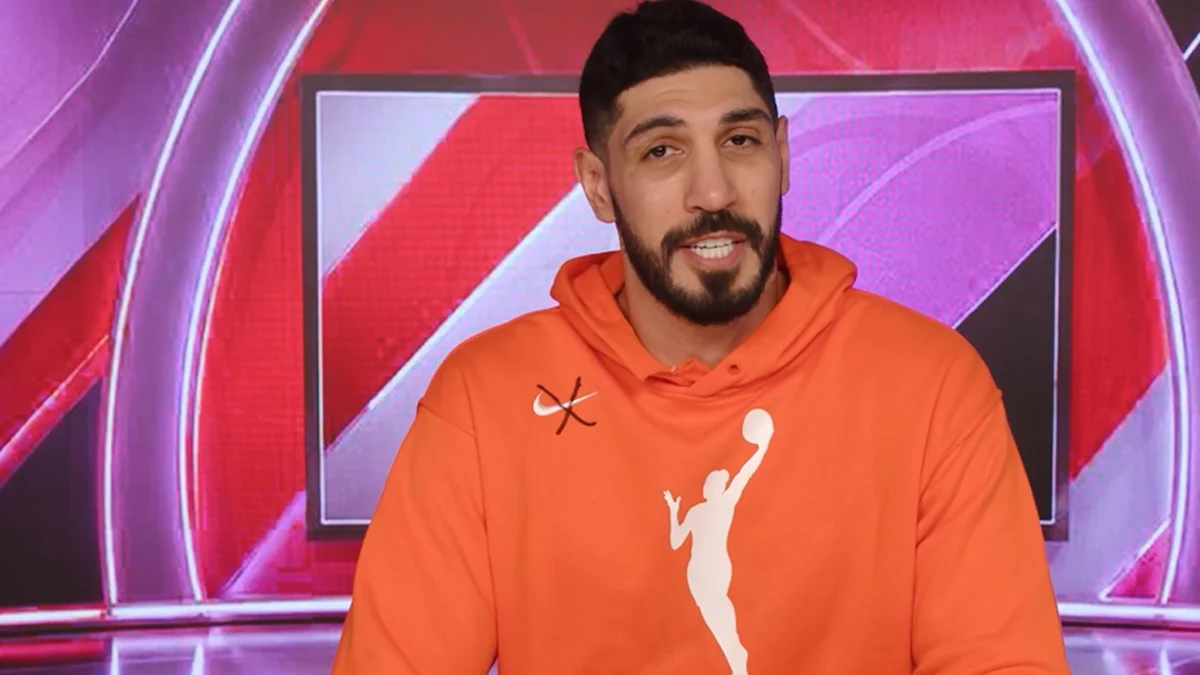
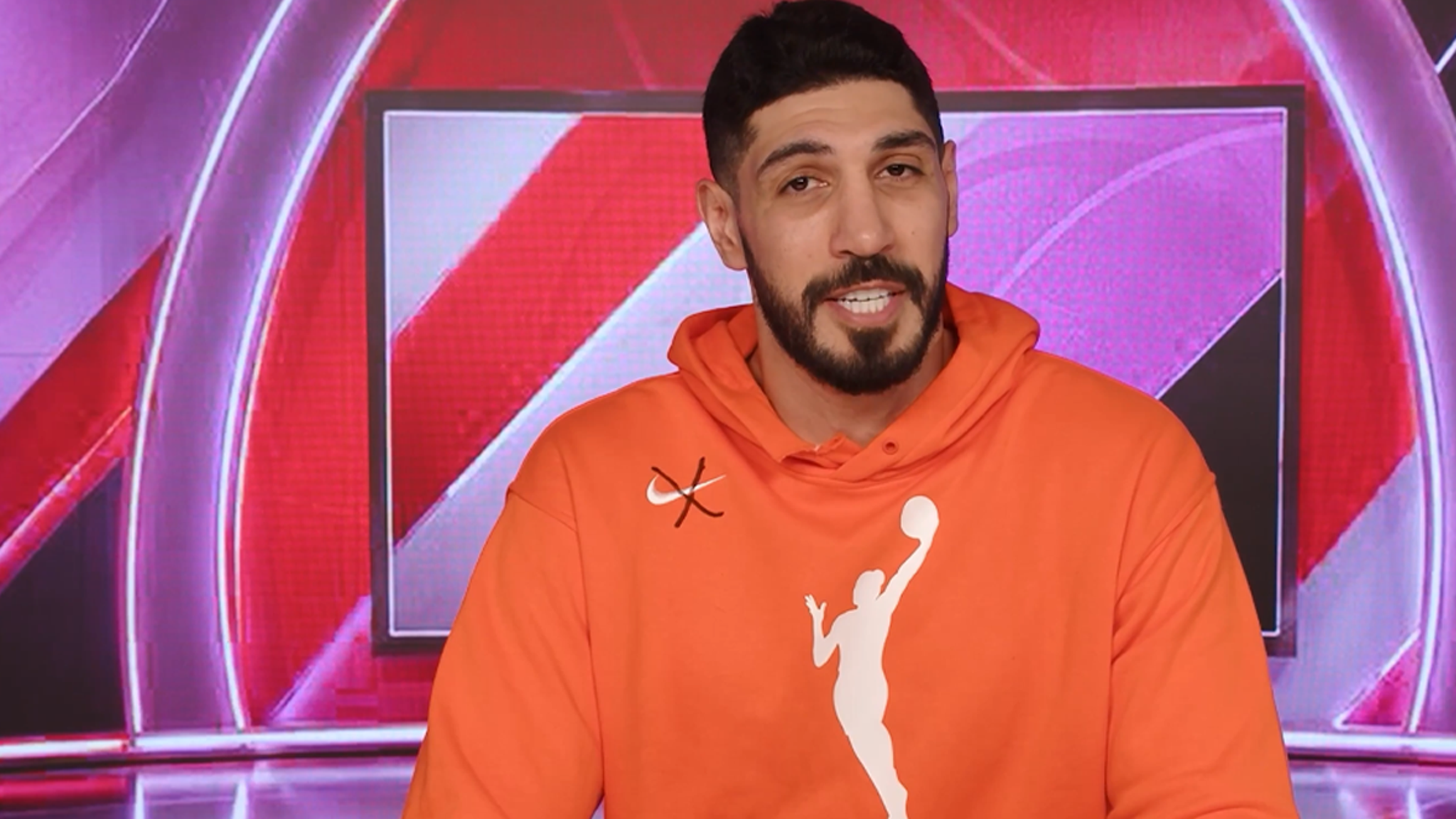
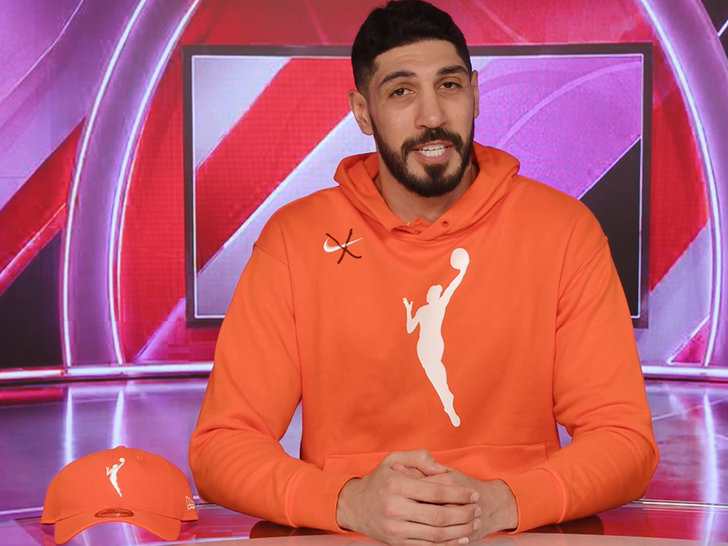
Former NBA player Enes Kanter Freedom is slated to attend the highly anticipated WNBA matchup between the Indiana Fever and the Chicago Sky at Wintrust Arena this Sunday, August 23, 2026, a move that places him squarely in the spotlight amidst his recent controversial declaration of eligibility for the 2027 WNBA Draft. The 6-foot-10 center, known for his outspoken activism and human rights advocacy, has publicly stated his intention to play in the women’s professional league, citing its existing self-identification guidelines as a pathway for his participation. This attendance comes at a time when the WNBA is experiencing unprecedented viewership and public interest, largely fueled by rookie sensation Caitlin Clark, who is expected to feature prominently in the game. Kanter’s presence is anticipated to draw significant media attention and has prompted him to implement "major security measures" for the event, according to sources close to him.
The Genesis of the Controversy: Kanter’s WNBA Draft Declaration
The saga began when Enes Kanter Freedom, a veteran of 11 NBA seasons with a career spanning teams like the Utah Jazz, Oklahoma City Thunder, New York Knicks, and Boston Celtics, publicly announced his intention to enter the 2027 WNBA Draft. His declaration was not a jest but a pointed statement aimed at highlighting what he perceives as ambiguities or inconsistencies in gender eligibility policies within sports, specifically referencing the WNBA’s self-identification guidelines. Kanter has consistently framed his action as a form of support for women’s sports, asserting that if the league’s rules allow for self-identification as a woman, then he, too, should theoretically be eligible. This stance has been met with a mixture of bewilderment, support, and fierce condemnation, particularly from critics who accuse him of mocking the transgender community and trivializing the hard-fought battles for inclusion in women’s sports.
Kanter, who legally changed his name to Enes Kanter Freedom in 2021 to reflect his commitment to human rights, has a long history of leveraging his platform for political and social commentary. He has been a vocal critic of the Turkish government, leading to his passport being revoked and his family facing persecution. He has also spoken out against human rights abuses in China and has been a proponent of the Fethullah Gülen movement. His activism has often come at a personal cost, including being effectively blackballed from the NBA due to his political outspokenness. This background provides crucial context for understanding his current foray into the WNBA eligibility debate; it aligns with a pattern of using public statements to challenge established norms and draw attention to what he considers pressing issues.
His declaration for the WNBA Draft included a tongue-in-cheek remark about forming a "modern Kobe and Shaq" duo with Caitlin Clark, further amplifying the conversation and drawing the rookie star into the periphery of his narrative. While intended to be humorous, the comment inadvertently linked Clark, who has been a magnet for both unprecedented fan engagement and intense scrutiny, to a debate she has not publicly addressed.
WNBA’s Eligibility Framework and the Broader Discourse
The Women’s National Basketball Association, like many professional sports leagues, navigates complex issues surrounding athlete eligibility, particularly concerning gender identity. While specific, publicly detailed WNBA policies on transgender athletes are not always prominently featured, the broader landscape of sports generally leans towards inclusivity while grappling with fairness in competitive balance. Many international and national sports federations have adopted various guidelines, often requiring hormone therapy or specific testosterone level thresholds for transgender women to compete in women’s categories. Kanter’s argument, however, appears to hinge on a more literal interpretation of "self-identification" that he believes opens the door for his participation without such medical requirements.
The controversy surrounding Kanter’s declaration intersects with a much larger and highly contentious global debate regarding the inclusion of transgender women in women’s sports. Proponents of inclusive policies emphasize human rights, self-determination, and the mental and physical health benefits of participation. Critics often raise concerns about competitive fairness, citing biological differences between individuals assigned male and female at birth, even after hormone therapy. Kanter’s intervention, regardless of his stated intentions, has undeniably added fuel to this already blazing fire, forcing a spotlight onto the WNBA’s potential need to clarify or reinforce its official stance on such matters. His attendance at a high-profile game further intensifies this pressure, transforming a theoretical debate into a tangible presence at a league event.
A High-Stakes Game and Heightened Scrutiny
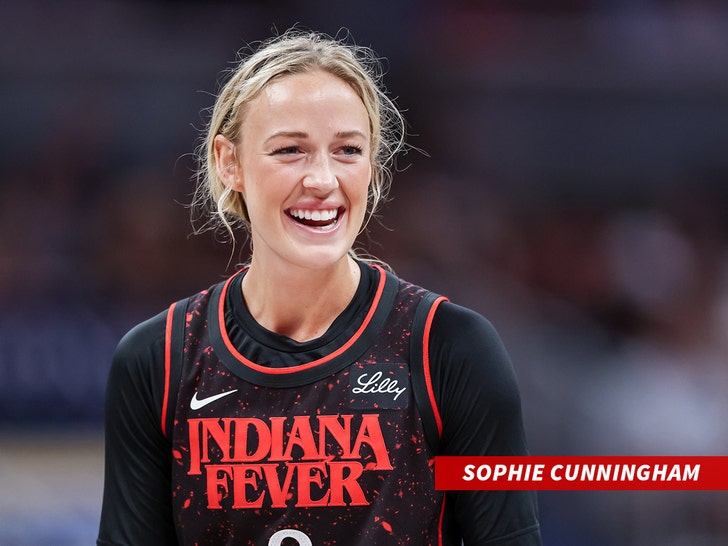
The Indiana Fever vs. Chicago Sky game is already one of the season’s most anticipated matchups, not just for the fierce rivalry between the teams but primarily due to the "Caitlin Clark effect." Clark, the first overall pick in the 2024 WNBA Draft, has revolutionized the league’s visibility, driving record-breaking viewership, ticket sales, and merchandise demand. Her presence guarantees a packed arena and a national television audience, making it an ideal, albeit potentially volatile, stage for Kanter’s public appearance.
The game is expected to be a sell-out at Wintrust Arena, which has a capacity of approximately 10,387 for basketball. The atmosphere will be electric, filled with passionate fans eager to witness Clark’s talent and the competitive spirit of two strong teams. Into this already charged environment steps Kanter, whose very presence is a political statement. The "major security measures" he is reportedly undertaking underscore the potential for various reactions, ranging from supportive demonstrations to vocal protests, and the general unpredictable nature of public interaction in such a polarized climate.
Chronology of Events and Anticipated Reactions
While a precise timeline for Kanter’s initial WNBA declaration isn’t publicly detailed in the original article, his statements emerged several weeks prior to this announcement, generating a significant media buzz. His consistent reiteration of his position, coupled with the "Kobe and Shaq" comment, kept the story alive. The announcement of his physical presence at a WNBA game marks a significant escalation from online discourse to real-world engagement.
Inferred Reactions and the League’s Dilemma:
-
WNBA and Team Management: As of the time of this report, it remains "unclear if the WNBA, Fever, and/or the Sky are aware of Kanter’s plans, or whether they’ll try and stop him." This ambiguity puts the league and its constituent teams in a precarious position. Their primary responsibility is to ensure the safety and enjoyment of all attendees, while also upholding the integrity of the game and the league’s values. Any direct attempt to prevent Kanter’s entry, unless based on a clear violation of arena policies, could be perceived as censorship or taking a side in a sensitive debate. Conversely, allowing his unfettered attendance without any preemptive statement might be interpreted by some as tacit approval of his controversial stance. It is most likely that the WNBA and the teams will emphasize a commitment to welcoming all fans and maintaining a safe environment, while refraining from commenting directly on Kanter’s specific WNBA eligibility claims, referring such matters to formal league policy channels. They will likely be working closely with arena security to manage any potential disruptions.
-
Players: WNBA players are known for their social activism and outspokenness on a range of issues. However, the topic of transgender athletes in women’s sports is particularly complex and divisive, even within progressive communities. Some players might privately or publicly express discomfort with Kanter’s presence or his statements, viewing them as disrespectful to women athletes or the transgender community. Others might choose to remain silent to avoid being drawn into the controversy, focusing instead on the game itself. There could also be players who, for various reasons, might align with Kanter’s perspective, though this is less frequently seen in public discourse within professional women’s sports. The players’ union, the WNBPA, may also find itself in a position where it needs to consider how to support its members amidst such external pressures.
-
Fans and Advocacy Groups: The WNBA boasts a diverse and passionate fanbase. Kanter’s appearance is likely to elicit strong reactions from different segments of this audience. LGBTQ+ advocacy groups and allies will likely be present, potentially staging protests or demonstrations to counter what they perceive as transphobic rhetoric. Conversely, groups that support Kanter’s viewpoint or are critical of current transgender inclusion policies in sports might also mobilize, creating a potentially confrontational atmosphere outside and possibly inside the arena. Social media will undoubtedly be abuzz with live commentary and strong opinions from both sides.
Broader Impact and Implications
Enes Kanter Freedom’s planned attendance at the Fever-Sky game transcends a mere celebrity sighting; it transforms the event into a crucible for a significant cultural and sports policy debate. His actions force the WNBA to confront, either explicitly or implicitly, the implications of its current eligibility frameworks and the broader societal conversations around gender identity in competitive sports.
-
Policy Scrutiny: Kanter’s declaration puts immense pressure on the WNBA to re-evaluate or at least publicly clarify its official stance on player eligibility concerning gender identity. While the league may have internal policies, the public nature of Kanter’s challenge demands transparency and clarity. This could lead to the development of more robust, detailed, and publicly accessible guidelines, potentially aligning with or diverging from those adopted by other major sports organizations.
-
Public Relations Challenge: The WNBA, which has successfully cultivated an image of progressiveness, inclusivity, and empowerment for women, faces a delicate public relations challenge. How it manages Kanter’s presence and the surrounding discourse will significantly impact its brand perception. Alienating any segment of its diverse fanbase or appearing indecisive on a core social issue could have lasting repercussions.
-
Increased Scrutiny on Women’s Sports: While Caitlin Clark has brought unprecedented positive attention to the WNBA, Kanter’s actions introduce a different kind of scrutiny. It highlights the vulnerability of women’s sports to external political and social debates, and the ongoing struggle to define fair and equitable competition in an evolving understanding of gender. This could inadvertently draw more eyeballs to the league, but potentially for reasons unrelated to the athletic prowess on display.
-
Precedent Setting: Depending on how the WNBA responds, Kanter’s actions could set a precedent for future challenges to sports eligibility rules. If his claims are perceived as gaining traction or forcing a re-evaluation, it might embolden others to similar public interventions across various sports leagues.
-
Athlete Advocacy: The situation may also galvanize WNBA players to become more vocal on this specific issue, either individually or collectively through the players’ association. Their voices, as the primary stakeholders in the league’s integrity and competitive fairness, will be crucial in shaping the long-term discourse.
As the Indiana Fever and Chicago Sky prepare to tip off at 7 PM ET on Sunday, the focus will not solely be on the thrilling basketball action between Caitlin Clark and other prominent players from both teams. A significant portion of the media and public’s attention will undoubtedly be fixed on Enes Kanter Freedom and the broader implications of his controversial appearance. This event underscores the WNBA’s growing prominence as a platform not just for elite athleticism but also for the complex and evolving social dialogues that permeate modern society. The league’s response, or lack thereof, to this unfolding situation will be closely watched, setting a potential course for how professional sports navigate the intricate intersections of identity, competition, and public activism in the years to come.


 Yuyun Lusiyani
 Joko Widodo
 Jia Lissa
 Pevita Pearce