
 Jia Lissa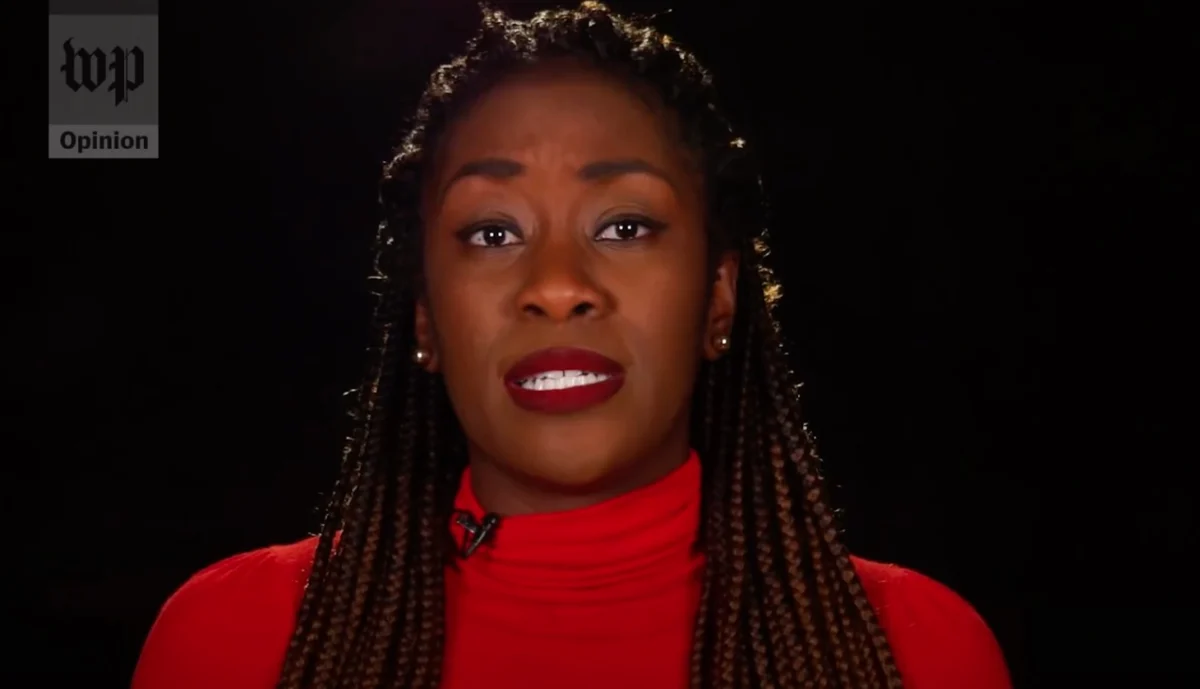
In a significant ruling for labor rights and journalistic expression, an independent arbitrator has ordered The Washington Post to reinstate Karen Attiah, a prominent columnist and former Global Opinions editor, nearly one year after the publication terminated her employment. The decision, handed down by arbitrator Sarah Miller Espinosa on Thursday, August 24, 2026, concludes that the newspaper lacked "good and sufficient cause" to fire Attiah following her controversial social media commentary regarding the assassination of conservative activist Charlie Kirk in September 2025.
The arbitrator’s ruling, which was first reported by The New York Times, mandates that The Washington Post not only rehire Attiah but also provide her with full back pay and restored benefits for the duration of her absence. Espinosa’s decision emphasized that the newspaper "violated" its collective bargaining agreement with the Washington Post Guild, the union representing the paper’s editorial staff, and failed to meet the legal threshold required to prove that Attiah had engaged in "gross misconduct."
The Catalyst: Social Media Posts and the Kirk Assassination
The conflict between Karen Attiah and The Washington Post management began in the immediate aftermath of the assassination of Charlie Kirk, the founder of Turning Point USA. Kirk, a highly influential and often polarizing figure in conservative politics, was shot and killed in Utah in September 2025. His death triggered a massive wave of national mourning among his supporters and a heated debate across social media regarding his political legacy and the nature of political violence in America.
Attiah, who frequently wrote on issues of race, international human rights, and social justice, took to the social media platform Bluesky to share her perspective on the public reaction to Kirk’s death. In several posts, she questioned the societal expectation for universal mourning of figures who had built their careers on divisive rhetoric.
Among the specific posts cited by The Washington Post in its termination proceedings was one in which Attiah stated: "Refusing to tear my clothes and smear ashes on my face in performative mourning for a white man that espoused violence is… not the same as violence." In another post, she elaborated on her critique of American social norms, writing, "Part of what keeps America so violent is the insistence that people perform care, empty goodness and absolution for white men who espouse hatred and violence."
The newspaper’s leadership argued that these statements violated internal social media policies designed to protect the "integrity and impartiality" of the publication. They contended that such public statements by a high-profile columnist could be perceived as celebrating or trivializing the death of a political figure, thereby damaging the brand’s reputation for objective reporting and civil discourse.
The Termination and Allegations of Misconduct
On September 15, 2025, shortly after the posts were published, The Washington Post issued a formal termination letter to Attiah. The letter accused her of "gross misconduct" and stated that her actions had compromised the newspaper’s standards. However, the termination letter also introduced a secondary layer of justification, referencing "documented performance concerns" that had supposedly existed prior to the social media controversy.
"Given these concerns, and in light of your recent unacceptable Bluesky posts, we cannot tolerate the risk your performance poses to The Post," the letter stated. This inclusion suggested that management viewed the social media incident as the final straw in a longer history of internal friction.
A point of contention during the subsequent legal battle was a post by Attiah that misattributed a racist quote to Kirk. While this post mentioned Kirk by name—unlike her other philosophical critiques—it was notably absent from the official list of reasons provided in the termination letter. Fact-checking organization Snopes later confirmed that the quote Attiah attributed to Kirk was an internet-sourced misquote, likely a distorted version of his previous comments regarding affirmative action. Attiah had claimed she was using Kirk’s "own words," a claim that proved factually incorrect.
The Arbitration Proceedings and Defense
Following her firing, Attiah and the Washington Post Guild filed a grievance, leading to arbitration hearings in June 2026. During these proceedings, Attiah’s legal team argued that her posts were entirely consistent with her role as an opinion columnist. They maintained that she was hired specifically to provide provocative, analytical commentary on power dynamics, race, and political discourse.
Attiah testified that her posts were not intended to incite violence or mock a tragedy, but rather to serve as a meta-commentary on how American society processes the deaths of controversial figures. She described her work as "commenting on our discourse on political violence" and argued that as an opinion writer, she should be afforded greater latitude in her public speech than a straight-news reporter.

The arbitrator, Sarah Miller Espinosa, ultimately sided with this interpretation. In her ruling, Espinosa noted that while the posts were certainly controversial, they did not constitute the "gross misconduct" necessary to bypass the standard disciplinary procedures outlined in the labor agreement. The ruling suggested that the newspaper had overreached by equating a columnist’s critical social commentary with a fireable offense of professional negligence or ethical breach.
Chronology of Events
- September 2025: Conservative activist Charlie Kirk is assassinated in Utah. The event sparks a national firestorm.
- September 2025: Karen Attiah posts several comments on Bluesky regarding the "performative mourning" of figures who espoused violence.
- September 15, 2025: The Washington Post fires Attiah, citing "gross misconduct" and "documented performance concerns."
- Late 2025: The Washington Post Guild files a formal grievance on Attiah’s behalf, initiating the arbitration process.
- June 2026: Formal arbitration hearings take place. Attiah defends her posts as part of her professional duties as an opinion writer.
- August 24, 2026: Arbitrator Sarah Miller Espinosa rules that the firing was a violation of the labor agreement and orders Attiah’s immediate reinstatement with back pay.
- August 24, 2026: Karen Attiah publicly announces her victory on social media; The Washington Post acknowledges the ruling but declines further comment.
Supporting Data and Labor Context
The reinstatement of Karen Attiah is being viewed by labor experts as a landmark case regarding the "just cause" provision in media contracts. Most unionized newsrooms require management to demonstrate a clear progression of disciplinary actions before termination, except in cases of "gross misconduct"—a term usually reserved for theft, physical violence, or egregious journalistic fraud (such as plagiarism or fabrication).
By ruling that Attiah’s social media posts did not meet the "gross misconduct" standard, the arbitrator has set a high bar for news organizations attempting to fire opinion journalists for their public-facing commentary. This case mirrors several other recent disputes in the media industry where the lines between personal social media use and professional identity have blurred.
According to data from the NewsGuild-CWA, there has been a 40% increase in grievances related to social media policies across major U.S. newsrooms since 2020. Journalists have increasingly pushed back against "neutrality" clauses that they argue are selectively enforced against women and journalists of color who speak out on systemic issues.
Official Reactions and Public Statements
Following the announcement of the ruling, Karen Attiah expressed relief and a sense of vindication. "This decision confirms what we’ve said from the start: I was doing my job as an opinion writer, and this was wrongful termination," she told The New York Times. She later posted on X (formerly Twitter): "The Washington Post fired me last year for speaking the truth after Charlie Kirk’s killing. I fought back. I’m happy to announce: I won my case against the Washington Post. They have been ordered to reinstate me immediately."
Attiah’s return to the newspaper marks a triumphant moment for her supporters, who viewed her firing as an attempt by the publication to appease conservative critics and distance itself from radical critiques of whiteness and power.
The Washington Post provided a brief, formal response to the ruling. A spokesperson stated that the publication "respects the arbitration process" but declined to elaborate on whether the paper would appeal the decision or how it intended to reintegrate Attiah into the newsroom.
Broader Impact and Journalistic Implications
The reinstatement of Attiah comes at a time of internal transition for The Washington Post. Under the leadership of CEO William Lewis and a shifting editorial strategy, the paper has faced questions regarding its commitment to "diversity of thought" versus its traditional role as a progressive-leaning watchdog.
The ruling highlights the inherent tension in modern journalism: the conflict between an individual journalist’s personal brand and the institutional brand of the newsroom. For opinion writers like Attiah—who are specifically hired for their voice and perspective—this tension is particularly acute. The arbitrator’s decision suggests that newsrooms cannot easily use "social media policies" as a catch-all to remove writers whose perspectives become a PR liability.
Furthermore, the case underscores the importance of union protections in the media industry. Without the backing of the Washington Post Guild, Attiah likely would have had little recourse against her termination. The ruling serves as a warning to other media conglomerates that "documented performance concerns" must be substantial and substantiated if they are to be used as a secondary justification for firing a protected employee.
As Attiah prepares to return to the Global Opinions section, the industry will be watching closely to see how The Washington Post manages the return of a columnist who successfully sued them for wrongful termination. The case remains a pivotal moment in the ongoing debate over the limits of free speech for journalists in the digital age and the procedural safeguards required to protect them from arbitrary dismissal.

 Yuyun Lusiyani
 Joko Widodo
 Pevita Pearce
 admin
admin
