
 Pevita Pearce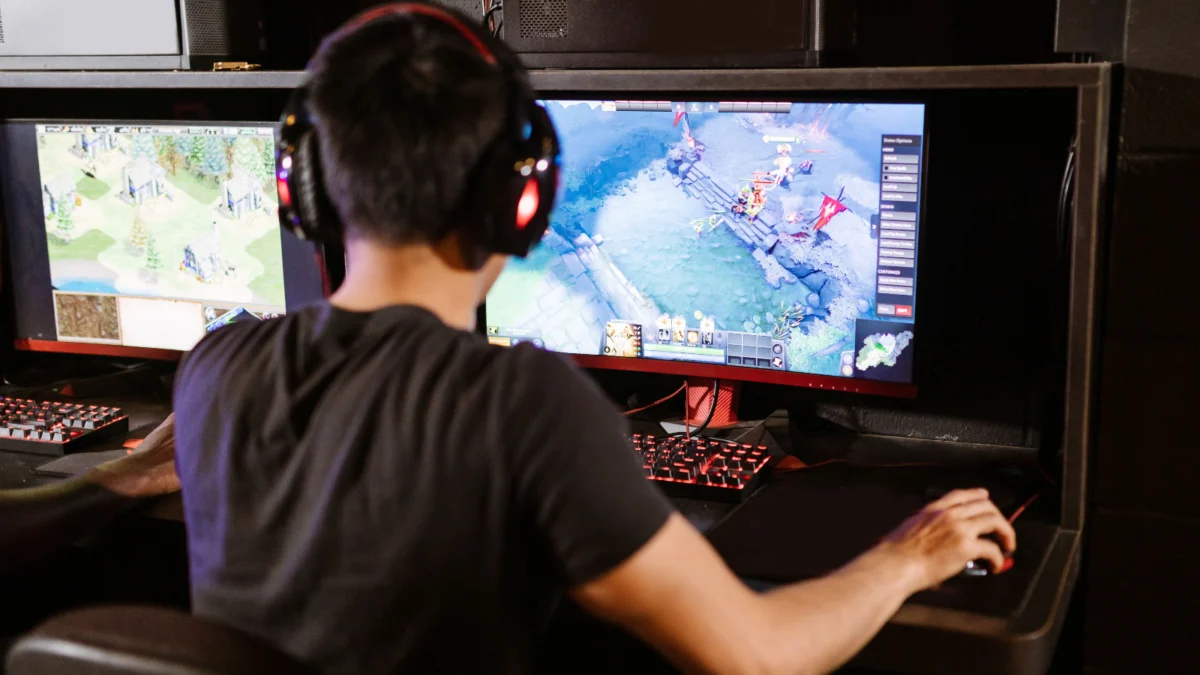
The Bundesnachrichtendienst (BND), Germany’s foreign intelligence service, has announced a major strategic shift in its recruitment efforts, confirming its presence at the 2026 Gamescom convention in Cologne. In an unprecedented move for the agency, the BND plans to transform the world’s largest gaming event into a primary scouting ground for cybersecurity experts, hackers, and intelligence officers. Often compared to the United Kingdom’s MI6 or the United States’ CIA, the BND is seeking to bridge the gap between traditional espionage and the rapidly evolving digital battlefield by tapping into the unique skill sets possessed by the global gaming community.
According to reports initially highlighted by The Telegraph, the agency’s booth at Gamescom will not merely be a promotional display but a functional testing site. Promising candidates will be invited to participate in a rigorous five-stage challenge designed by intelligence veterans. These challenges are engineered to assess technical proficiency in areas such as encryption, network penetration, and defensive cybersecurity. Beyond technical skills, the agency is looking for "qualified professionals" capable of filling high-level roles within its clandestine cyber divisions.
A Strategic Shift in German National Security
The decision to recruit at Gamescom is not an isolated marketing tactic but a response to the shifting geopolitical landscape of Western Europe. The administration of Chancellor Friedrich Merz has recently overseen a series of legislative reforms aimed at modernizing the German security apparatus. Central to these reforms is the controversial "hack back" provision. This legal framework grants the BND the authority to not only defend against incoming cyberattacks but to actively retaliate by infiltrating the servers of foreign adversaries, disrupting their databases, or disabling infrastructure related to weapons production.
This shift toward offensive cyber capabilities necessitates a workforce that is comfortable navigating complex digital environments under high pressure. The BND’s leadership has identified the gaming demographic as a natural fit for these requirements. BND spokesperson Julia Linner emphasized the synergy between gaming and intelligence work, stating that the agency sees a "significant overlap" between the two fields. According to Linner, gamers are inherently tech-savvy, accustomed to adopting various personas, and possess the psychological resilience required to fail repeatedly before successfully completing a mission.
The Gamescom Recruitment Initiative: BND Legends
To facilitate this talent search, the BND has developed its own proprietary video game titled BND Legends, which will be the centerpiece of their exhibit in Cologne. The game is described as a high-stakes stealth and hacking simulator that mirrors real-world intelligence operations. Players take on the role of an undercover operative infiltrating a fictional rogue state known as Bethulan.
The gameplay mechanics of BND Legends are specifically designed to mirror the tasks of a modern field agent. Players must navigate highly secured military installations, avoid detection by sophisticated surveillance drones, and bypass biometric security systems. Success in the game requires more than just fast reflexes; players must collaborate with non-player characters (NPCs) representing different agency roles, such as a remote hacker providing digital support and a geographical specialist offering terrain analysis.

The agency intends to use the game as a diagnostic tool. While visitors engage with the simulation, BND agents will be on-site to monitor performance, identify individuals with exceptional problem-solving abilities, and engage in "off-the-record" career discussions. This approach allows the agency to observe how potential recruits handle the stress of complex, multi-layered objectives in real-time.
The Rising Threat of State-Sponsored Cyber Warfare
The urgency behind this recruitment drive is underscored by the increasing frequency and sophistication of state-sponsored cyberattacks targeting German and European infrastructure. Data from the German Federal Office for Information Security (BSI) indicates a sharp rise in "hybrid warfare" tactics, particularly those originating from Russian-aligned hacker groups. These attacks have targeted everything from the German power grid to the financial systems of major European banks.
By expanding its recruitment efforts to Gamescom, the BND is acknowledging that the next generation of national defense will be fought in code rather than on conventional battlefields. The "hack back" policy approved by the Merz cabinet reflects a realization that passive defense is no longer sufficient. To protect national interests, the agency requires operatives who can think like hackers because, in many cases, they are hackers.
The timeline for this initiative follows several years of internal restructuring within the BND. Since 2023, the agency has been steadily increasing its budget for digital infrastructure and human intelligence in the cyber domain. The 2026 Gamescom event represents the public-facing culmination of this multi-year expansion, signaling a more transparent—yet no less serious—approach to intelligence recruitment.
The Psychological Profile of the Modern Operative
The BND’s interest in gamers extends beyond their ability to write code. Intelligence analysts have long noted that the cognitive demands of modern competitive gaming—such as pattern recognition, spatial awareness, and rapid decision-making—are highly transferable to intelligence work.
"Gamers are used to completing missions, adopting different identities, and staying focused on a goal for hours on end," Linner noted. These traits are essential for undercover operations and long-term surveillance missions, where patience and the ability to maintain a cover story are paramount. Furthermore, the collaborative nature of multiplayer gaming prepares individuals for the team-based environment of a modern intelligence cell, where communication between technical experts and field agents is critical for mission success.
Global Context: Gamers in the Service of the State
Germany is not the first nation to recognize the strategic value of the gaming community. Earlier in 2026, the United States Federal Aviation Administration (FAA) launched a massive recruitment campaign targeting gamers for air traffic controller positions. The FAA cited gamers’ superior hand-eye coordination and ability to process multiple data streams simultaneously as key reasons for the outreach, offering six-figure salaries to attract top talent.

Similarly, the UK’s GCHQ and the US National Security Agency (NSA) have historically used puzzles and online challenges to identify "hidden" talent outside of traditional university pipelines. However, the BND’s move to create a bespoke stealth game and host a physical recruitment hub at a major consumer convention represents one of the most direct and public attempts by a foreign intelligence service to integrate gaming culture into its operational structure.
Analysis of Implications and Public Perception
The BND’s presence at Gamescom is likely to spark a debate regarding the ethics of government recruitment within entertainment spaces. Critics of the "hack back" policy have already expressed concerns that the move could lead to an escalation in global cyber-tensions. Privacy advocates in Germany have also questioned the oversight of the BND’s new powers, fearing that a more aggressive foreign intelligence service could inadvertently impact the digital rights of private citizens.
However, from a national security perspective, the move is seen as a necessary evolution. As traditional warfare becomes increasingly digitized, the boundary between "civilian tech talent" and "military asset" continues to blur. For the BND, the goal is to ensure that Germany remains competitive in a world where a single vulnerability in a software update can be as devastating as a physical blockade.
The success of the Gamescom initiative will likely be measured by the number of high-quality applications the BND receives following the event. If the "BND Legends" challenge proves effective in identifying elite talent, it may serve as a blueprint for other European intelligence agencies looking to modernize their own recruitment strategies.
Future Outlook for Intelligence Recruitment
As Gamescom 2026 approaches, the BND is preparing for a high level of engagement. The agency has stated that it is looking for a diverse range of backgrounds, emphasizing that while technical skill is vital, the "intelligence mindset"—characterized by curiosity, discretion, and a sense of duty—is the ultimate requirement.
The integration of gaming and espionage highlights a broader trend in the 21st century: the professionalization of digital skills that were once considered mere hobbies. For the thousands of gamers attending the Cologne convention, the opportunity to transition from virtual missions to real-world national security operations may prove to be the ultimate "level up." The BND’s gamble is that the next great protector of the German state is currently sitting behind a keyboard, honing the very skills needed to defend the nation in an age of invisible warfare.



 Yuyun Lusiyani
 Joko Widodo
 Jia Lissa
 admin
admin
