
 Pevita Pearce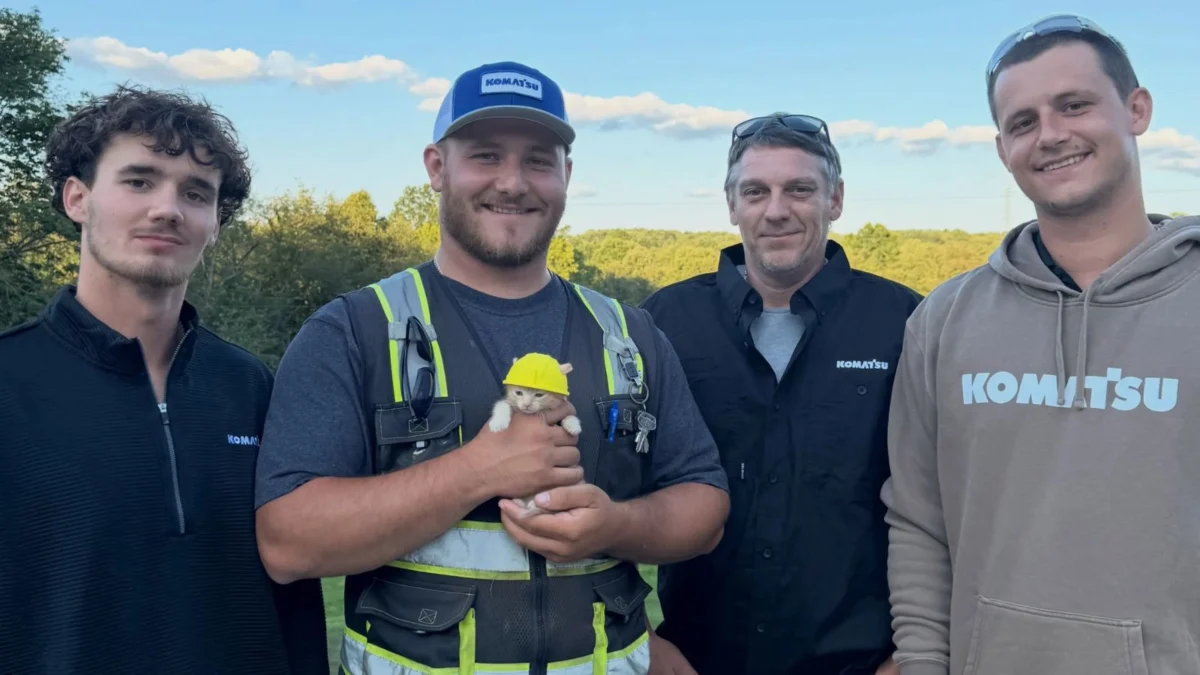
In a convergence of industrial labor and digital human interest, a construction project in the Akron-Barberton area of Ohio has produced an unlikely international celebrity. What began as a routine safety check on a heavy machinery site in mid-July has evolved into a viral phenomenon involving a rescued kitten, a major equipment manufacturer, and a massive social media following. The kitten, discovered trapped within the mechanical components of a large excavator, has not only been adopted by the site supervisor but has also been integrated into the company’s identity as an unofficial mascot and "safety inspector."
The incident occurred at a site managed by River Reach Construction, an environmental remediation and heavy civil construction firm based in Northeast Ohio. The rescue highlights the unexpected intersections between urban wildlife and industrial development, a theme that has resonated with millions of viewers across various social media platforms.
The Discovery and Rescue Operation: A Mid-July Chronology
The events began during a standard operational day in July when Chase Guello, an operating supervisor for River Reach Construction, was conducting a routine inspection of the fleet. The site, located in Barberton—a city just south of Akron known for its industrial history—was active with the sounds of heavy machinery until a distinctive, high-pitched sound interrupted the workflow.
According to Guello, the team was alerted to the presence of an animal by persistent meowing emanating from a Komatsu excavator. Upon closer investigation, the crew determined that the sound was coming from behind the skid plate—a heavy steel protective bottom used to shield the undercarriage of the machine from debris.
The rescue was not immediate, as the kitten had managed to lodge itself deep within the framework of the multi-ton machine. Guello and his team had to carefully navigate the components of the excavator to ensure the animal was not harmed during the extraction process. When the kitten finally tumbled out from the skid plate, it was found to be a small, orange-and-white shorthair, visibly shaken but otherwise uninjured.
Given the hazardous nature of a construction site, which includes heavy moving parts, extreme temperatures, and volatile materials, the survival of the kitten within the machinery was described by the crew as a fortunate stroke of timing. Had the excavator been fully engaged in heavy demolition or earth-moving tasks, the outcome likely would have been fatal.
From Machinery to Moniker: The Naming of Sue
The naming of the kitten reflects the deep-seated traditions of the construction industry, where equipment and personnel are often given nicknames based on their function or origin. Because the kitten was found inside a Komatsu-branded excavator, the crew decided to name her "Sue"—a play on the final syllable of the manufacturer’s name.
This naming convention served as the catalyst for the kitten’s transition from a stray animal to a corporate symbol. Shortly after the rescue, Guello made the decision to adopt the kitten permanently, providing her with a home while also bringing her back to the office and occasionally the site under controlled conditions.
The story gained initial traction when River Reach Construction began posting updates on their official Instagram page. The juxtaposition of a fragile, tiny kitten against the backdrop of massive steel buckets, hydraulic lifts, and rugged construction gear provided a visual contrast that quickly captured the attention of the "Pet-focused" side of the internet.
Analytical Context: The Viral Pet Phenomenon and Brand Engagement
The rapid ascent of "Sue the Construction Kitten" to viral status is supported by significant digital metrics. Reposts of Sue’s story on platforms such as X (formerly Twitter) and TikTok have amassed tens of millions of views. On Instagram, the River Reach Construction page saw a surge in engagement that far exceeds typical industry standards for construction firms.
Data from social media analytics suggests that "rescue-to-mascot" narratives perform exceptionally well because they humanize corporate entities. For a construction firm, which is often associated with noise, dust, and disruption, the presence of a rescued animal provides a relatable and empathetic counter-narrative.
Furthermore, the brand Komatsu has indirectly benefited from the exposure. The company has reportedly acknowledged their tiny namesake, providing Sue with "swag" including miniature branded gear. This interaction represents a modern marketing phenomenon where large-scale industrial brands engage with grassroots viral content to soften their public image.
Workplace Safety and the "OSHA" Inspector Reimagined
One of the most popular aspects of Sue’s viral fame is the humorous reinterpretation of industrial safety standards. Social media users have colloquially dubbed Sue the "OSHA Inspector," repurposing the acronym for the Occupational Safety and Health Administration to stand for "Orange Short Haired Angel."
While the jokes provide levity, they also touch upon the serious nature of workplace safety. In various videos, Sue is seen "inspecting" the office or sitting near equipment (always while the machines are powered down and under strict supervision). The public’s insistence that Sue "wear her PPE" (Personal Protective Equipment) led to the creation of a tiny, custom-made yellow hard hat, which has since become one of the most shared images of the kitten.
From a professional standpoint, the presence of a workplace pet in a construction office environment can have measurable benefits. Studies in organizational psychology suggest that the presence of animals in high-stress work environments can lower cortisol levels among employees and improve overall morale. For a crew engaged in the physically demanding and often high-stress field of civil construction, Sue has become a stabilizing and unifying presence.
Supporting Data: Urban Wildlife and Industrial Hazards
The rescue of Sue highlights a broader issue frequently encountered by construction crews: the presence of feral or stray animals in industrial zones. According to data from animal welfare organizations, construction sites often attract stray cats because the machinery provides warmth in the winter and shaded hiding spots in the summer.
However, these sites are fraught with danger. Statistical data from the American Society for the Prevention of Cruelty to Animals (ASPCA) suggests that thousands of stray animals are injured or killed annually in industrial accidents that go unreported. The successful rescue of Sue is a rare documented exception.
In Ohio specifically, the feral cat population remains a significant challenge for urban and suburban municipalities. Estimates suggest there are hundreds of thousands of unowned cats across the state. The visibility of Sue’s story has prompted many social media followers to advocate for Trap-Neuter-Return (TNR) programs and increased awareness for checking machinery before start-up—a practice common in rural areas to protect farm cats but less standardized in urban construction.
Public Reaction and Future Implications
The public’s obsession with Sue has led to a variety of requests that River Reach Construction is currently navigating. There is a significant demand for a "Sue the Construction Kitten" calendar, with proceeds potentially going to local animal shelters. This move would transition the viral moment into a philanthropic endeavor, further cementing the kitten’s legacy in the Akron community.
Comments from the public reflect a deep emotional investment:
- "She needs a work ID badge immediately for site access," noted one follower.
- "This is the best branding a construction company could ever ask for," another added, highlighting the marketing shift.
- "I would buy a Komatsu excavator just because of Sue," joked another user, illustrating the strange power of pet-based influencer marketing.
The construction crew has expressed surprise at the scale of the reaction. Chase Guello has maintained a focus on the kitten’s well-being, ensuring that despite her fame, she remains a healthy and well-adjusted pet. Sue now spends her days playing with toy excavators at home, a domestic echo of the massive machine that nearly became her tomb.
Conclusion: The Broader Impact of a Small Rescue
The story of Sue the construction kitten serves as a multifaceted case study in modern communication. It combines elements of traditional human-interest journalism, digital marketing, and workplace psychology. In an era often dominated by complex and often distressing news, the simplicity of a rescue story—bolstered by the rugged aesthetic of the construction industry—offers a universal appeal.
For River Reach Construction, the legacy of the mid-July rescue will likely last far longer than the specific project they were working on at the time. Sue has become a symbol of the "human side" of manual labor, reminding the public that behind the heavy steel and concrete of infrastructure projects are individuals who are willing to stop the machines for the smallest of reasons.
As Sue continues to "clock in" for her virtual shifts, her story remains a testament to the power of a single act of compassion and the unpredictable way that such acts can resonate across the global digital landscape. The "Orange Short Haired Angel" of Akron has successfully transitioned from a trapped stray to a beloved icon, proving that sometimes, the most important thing found on a construction site isn’t the structure being built, but the lives impacted along the way.


 Yuyun Lusiyani
 Joko Widodo
 Jia Lissa
 admin
admin
