
 Nila Kartika Wati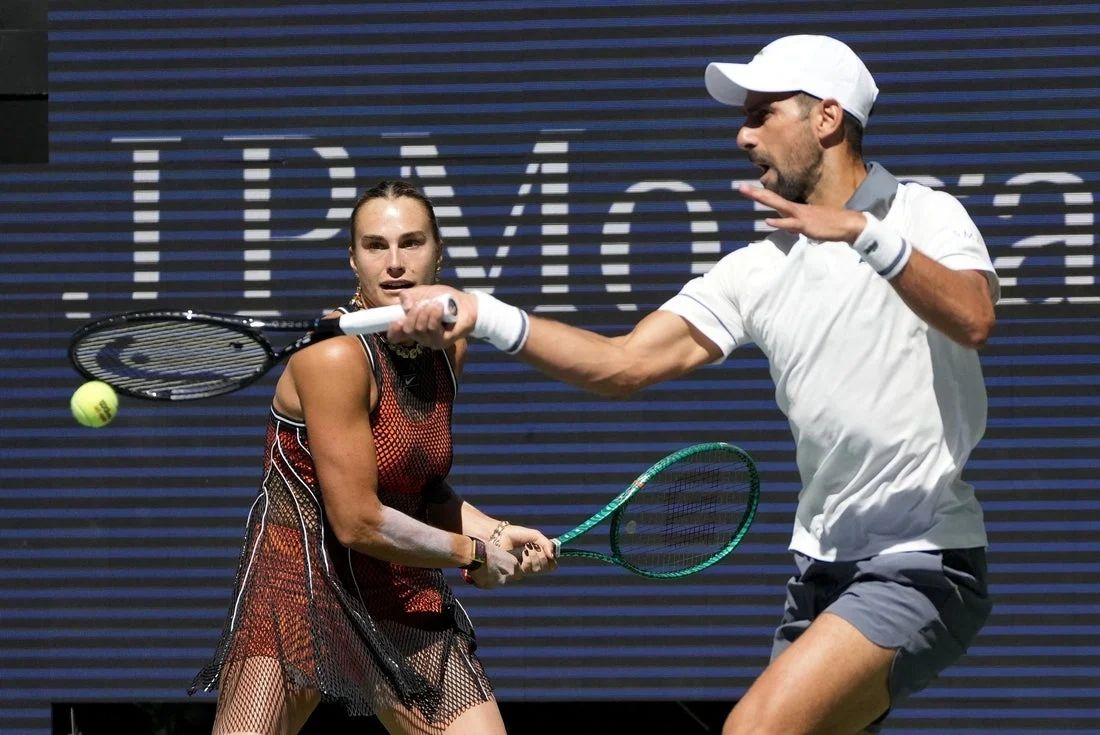
New York, United States – August 25, 2026 – The U.S. Open mixed doubles tournament, a vibrant interlude before the main singles draw commences, delivered a potent cocktail of star power, unexpected upsets, and compelling narratives on Tuesday. While titans of the sport like Serena Williams and Novak Djokovic graced the courts, the tactical acumen of doubles specialists and the resilience of comeback artists ultimately dictated the early narrative, leaving fans and analysts to dissect the evolving landscape of this unique Grand Slam event.
In a significant development, the highly anticipated pairing of tennis icon Serena Williams and rising superstar Carlos Alcaraz saw their promising U.S. Open mixed doubles debut come to an abrupt end in the quarterfinals. Despite a strong opening-round victory, the formidable duo, who were considered a formidable force, fell in straight sets to the fourth-seeded tandem of Belinda Bencic of Switzerland and Flavio Cobolli of Italy. This outcome, while disappointing for fans eager to witness the legendary Williams back on Arthur Ashe Stadium, highlighted the intricate dance of mixed doubles, where chemistry, court craft, and specialized skills often triumph over sheer singles pedigree.
Williams, 44, a 23-time Grand Slam singles champion, made a triumphant return to the iconic Arthur Ashe Stadium, a venue that has witnessed some of her most defining career moments. Her appearance marked her first competitive match on the hallowed grounds since her emotional retirement in 2022. The initial round saw Williams and Alcaraz dispatch Erin Routliffe of New Zealand and Lloyd Glasspool of Great Britain with a convincing 5-3, 4-1 victory, a performance that ignited optimism among her vast legion of supporters.
"It’s always such an amazing place to be here," Williams expressed in her on-court interview following the first-round win. "I never expected to be back on this court, so it was just a really cool moment. This is such a bonus for us to be out here and to play with Carlos is honestly so cool." This sentiment underscored the exhibitionary nature of the mixed doubles event for many of the top singles players, offering a unique opportunity for camaraderie and a different competitive rhythm.
Williams’ participation in the mixed doubles signifies a potential exploration of her competitive spirit beyond her previous singles and women’s doubles retirement. Her wildcard entry at Wimbledon in July, though ending in a first-round defeat, hinted at a desire to remain connected to the professional circuit. The U.S. Open mixed doubles, with its condensed format and emphasis on dynamic play, provided a fitting platform for such an endeavor.
For Alcaraz, the mixed doubles tournament represented a crucial stepping stone in his return to competitive tennis after a significant layoff. The young Spaniard had been sidelined since April due to a right wrist injury, forcing him to miss key Grand Slam events including the French Open and Wimbledon. His return to the court in Flushing Meadows, even in a doubles format, was closely monitored by the tennis world.
"Everyone could see how nervous I was," Alcaraz candidly admitted. "I made a double fault on the first point. I was really, really nervous. I was out for almost five months. I almost forgot how it felt to step on court once again. The nervousness was just for a couple of games, then Serena made it easy for me." His honest reflection shed light on the mental fortitude required to overcome prolonged injury and the pressure of immediate high-level competition.
The quarterfinal clash against Bencic and Cobolli proved to be a tougher test. The Swiss-Italian duo, seeded fourth, displayed superior doubles cohesion and execution, ultimately prevailing 5-4 (4), 4-1 in a match that lasted 55 minutes. Bencic, a former top-10 singles player, and Cobolli, a rapidly ascending talent, demonstrated the strategic advantage often held by players more accustomed to the nuances of doubles play.
Early Exits for Top Seeds Highlight Mixed Doubles’ Unique Dynamics
The narrative of the day was further amplified by a seismic upset in the top-seeded mixed doubles match, where the formidable pairing of Aryna Sabalenka of Belarus and Novak Djokovic of Serbia were surprisingly ousted in their opening-round encounter by Katerina Siniakova of the Czech Republic and Henry Patten of Great Britain. This result underscored a recurring theme in mixed doubles: the specialized skills and partnership synergy of dedicated doubles players can often overcome the formidable singles prowess of even the sport’s greatest champions.
Sabalenka, the reigning world No. 1 singles player and a two-time defending U.S. Open singles champion, and Djokovic, the Serbian legend and a 24-time Grand Slam singles champion, represented the epitome of star power that the U.S. Open mixed doubles event aims to attract. However, Siniakova, the current world No. 1 in women’s doubles and ranked No. 39 in singles, and Patten, the world No. 1 in men’s doubles, showcased exceptional teamwork and tactical play.
The match, played under the tournament’s revised best-of-three format for the early rounds, saw Patten and Siniakova emerge victorious with a score of 1-4, 4-2, 10-2 in a brisk 48-minute contest. The crucial turning point arrived in the second set, where the underdog duo captured the final three games and then secured all eight points in the match tiebreaker. Siniakova sealed the improbable victory with an ace served directly to Djokovic on match point, a moment that will be etched in the annals of U.S. Open upsets.
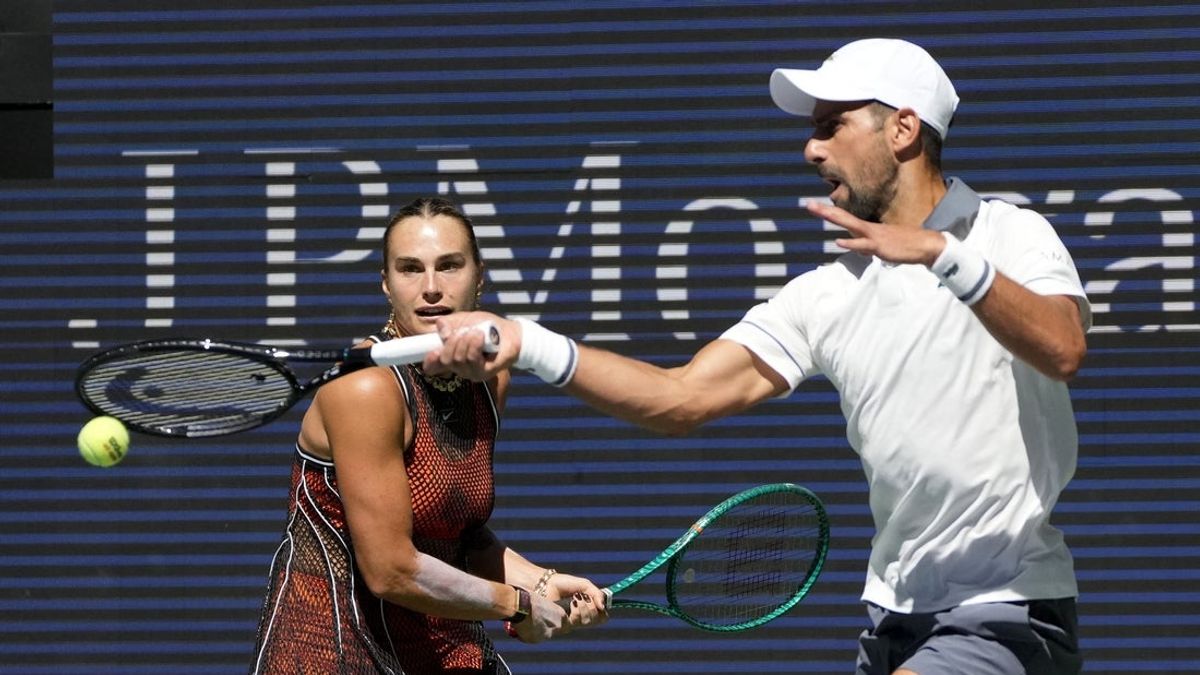
"You could see in the first set it was just big serves and bigger shots," Siniakova commented post-match, reflecting on the initial power play. "But I think we want to do it for doubles. It was a great turnaround. I enjoyed it." Her statement highlighted their strategic adjustment, shifting focus from raw power to doubles-specific tactics and court positioning.
The duo of Siniakova and Patten, who advanced through the qualifying rounds, demonstrated remarkable resilience and adaptability. Their triumph over the top seeds, who were initially scheduled to face Frances Tiafoe and Leylah Fernandez before Tiafoe withdrew due to a wrist injury, sent a clear message about the competitive depth within the mixed doubles draw.
The Evolving Landscape of U.S. Open Mixed Doubles
This year’s U.S. Open mixed doubles competition features a 16-team field with a substantial $1 million prize purse for the winning duo. The tournament’s format has seen significant adjustments, transitioning to a two-day event preceding the main singles draw. This condensed schedule aims to enhance spectator engagement and provide a distinct flavor to the Grand Slam calendar. The early rounds, as witnessed on Tuesday, employed a best-of-three format with the first two sets played to four games, culminating in a 10-point match tiebreak. This accelerated pace favors quick decision-making and consistent execution, characteristics that Siniakova and Patten exhibited masterfully. The semifinals and final, however, revert to the traditional best-of-three sets, with the first two sets played to six games and a deciding tiebreak if necessary.
The early exits of high-profile singles stars like Sabalenka and Djokovic, despite their immense talent, serve as a potent reminder of the specialized skills required for success in doubles. While singles players possess unparalleled groundstrokes and serving power, the intricate strategies, net play, court coverage, and partnership dynamics of doubles demand a different skillset. Doubles specialists like Siniakova and Patten, who dedicate their careers to mastering these intricacies, often find an edge in this format.
The implications of these early upsets extend beyond the immediate results. For players like Williams and Alcaraz, their mixed doubles campaigns offer valuable match practice and a different competitive environment as they navigate their individual career trajectories. Williams’ continued presence on court, even in a limited capacity, fuels speculation about her long-term engagement with the sport. Alcaraz’s successful return from injury, despite the quarterfinal defeat, marks a positive step in his quest to reclaim his dominant form.
The U.S. Open mixed doubles tournament, with its blend of established stars, rising talents, and dedicated doubles specialists, continues to be a captivating spectacle. The early upsets have not only injected excitement into the event but also underscored the enduring allure of strategic play and the unpredictable nature of Grand Slam tennis, proving that even in the shadow of singles superstardom, the art of doubles can steal the show.
The journey of the mixed doubles event continued on Tuesday with further compelling matches. In a fascinating encounter between established figures and emerging talent, the married couple Elina Svitolina of Ukraine and Gael Monfils of France emerged victorious in their quarterfinal match against the qualifying duo of Katerina Siniakova and Henry Patten. The match, a testament to their enduring partnership both on and off the court, concluded with a scoreline of 5-4 (6), 4-5 (3), 1-0 (8), showcasing the dramatic shifts and intense competition inherent in the format. Svitolina, a former top-3 singles player, and Monfils, known for his flamboyant style and doubles prowess, demonstrated their formidable combined skill set.
Looking ahead to the semifinals, the U.S. Open mixed doubles draw has shaped up to feature an intriguing blend of talent. The first semifinal will pit the experienced pairing of Svitolina and Monfils against the aforementioned fourth-seeded Swiss-Italian duo of Belinda Bencic and Flavio Cobolli. This match promises a clash of contrasting styles and experiences, with both pairs having navigated challenging paths to reach this stage.
The second semifinal will see a compelling all-Czech showdown as Karolina Muchova and Jakub Mensik face off against the Russian team of Mirra Andreeva and Andrey Rublev. Muchova, a recent Grand Slam finalist, and Mensik, a young talent on the rise, will bring significant singles pedigree to their doubles partnership. Their opponents, Andreeva and Rublev, have also demonstrated strong form and a growing synergy as a mixed doubles team. The outcomes of these semifinals will undoubtedly captivate fans and set the stage for a thrilling conclusion to the U.S. Open mixed doubles championship.
The revised format and the strategic decisions made by players and coaches throughout the tournament will undoubtedly be analyzed in the coming days, offering further insights into the evolving dynamics of mixed doubles tennis at the highest level. As the U.S. Open continues, the mixed doubles event has already cemented its place as a source of unexpected drama and compelling storylines, proving its worth as a vibrant and integral component of the Grand Slam experience.
This report was compiled by Field Level Media.


 Yuyun Lusiyani
 Joko Widodo
 Eva Lovia
 Pevita Pearce
 admin
admin
 Lina Irawan