
 Yuyun Lusiyani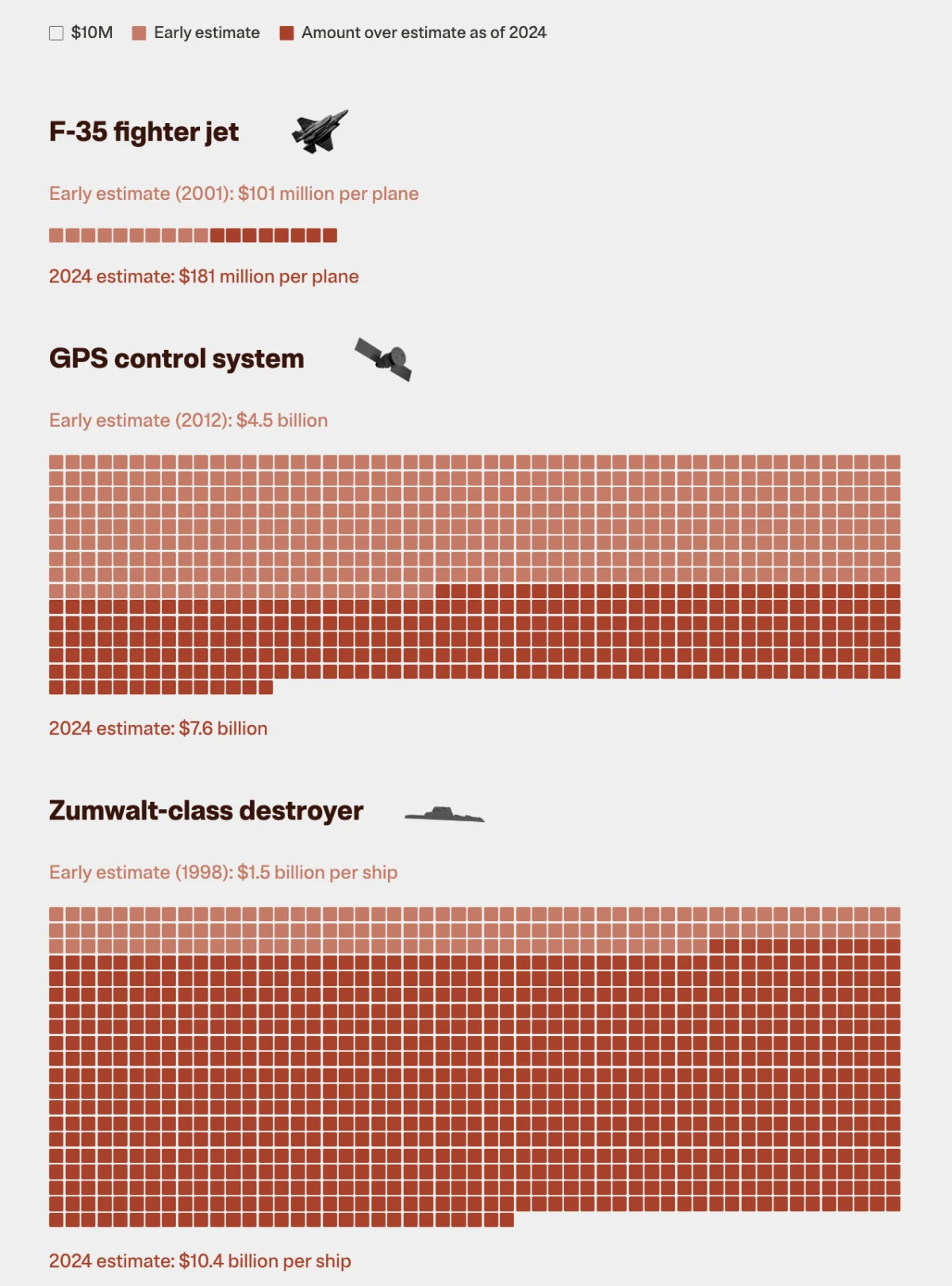
The sums are vast, but the explanations for the spending range from vague to inscrutable. The United States Department of Defense, tasked with safeguarding national security, operates with a budget so immense and complex that it consistently defies conventional financial scrutiny, raising alarms among watchdogs, former military officials, and investigative journalists alike. This year alone, Congress appropriated a staggering $1 trillion for defense, an amount that dwarfs the combined budgets of numerous critical domestic agencies, including those overseeing health, veterans affairs, education, housing, agriculture, and justice—in fact, it’s more than double their collective appropriations. Yet, the granular details of how these colossal funds are allocated often remain cloaked in a fog of bureaucratic jargon and opaque financial tables, rendering true accountability an elusive goal for American taxpayers.
Consider some illustrative line items found within the law funding the Department of Defense this year: a sum of $32.6 billion is allocated for "Other Procurement, Air Force," a category so broad it could encompass anything from aircraft spare parts to advanced weapon systems, without offering specific project details. Similarly, $35.2 billion is earmarked for "Research, Development, Test and Evaluation, Defense-Wide," another expansive designation that provides little insight into the specific initiatives or breakthroughs being funded. Even more perplexing is the $650 million designated for "supplies and associated support services" related to a highly specific legal citation: U.S. Code Title 10 Section 3601 subsection(c)(3)(B) clauses (i) through (iv). Deciphering the exact nature of these expenditures necessitates navigating thousands of pages of financial tables, intricate accounting records, and dense congressional committee documents—a task that would leave all but the most dedicated budgeting sleuth at a complete loss. This convoluted system, however, represents the standard method by which the U.S. government justifies its funding decisions for the world’s most expensive military, and the costs are continuously escalating.
"There’s no way that you can follow the money, because it keeps getting twisted like a Rubik’s Cube," remarked John Ferrari, a retired Army major general and currently a nonresident senior fellow at the American Enterprise Institute, encapsulating the pervasive frustration. "None of it is set up to be transparent." This lack of clarity is not a recent phenomenon but a deeply ingrained characteristic of Pentagon financial management, prompting serious questions about efficiency, waste, and potential misuse of taxpayer funds.
A History of Opacity and Escalating Costs
The challenges of defense spending transparency are not new, echoing concerns that have surfaced periodically throughout American history, particularly during periods of military expansion. From the post-World War II rearmament to the Cold War and the War on Terror, the sheer scale of military budgets has consistently presented unique oversight challenges. The current era, however, marks a significant inflection point, with proposed future spending levels poised to reach unprecedented heights. If the president’s priorities for next year’s budget are realized, defense spending is projected to soar dramatically higher, reaching an astounding $1.5 trillion. This figure, adjusted for inflation, would surpass the annual defense expenditures during the peak of World War II, a conflict that mobilized the entire nation’s industrial and human resources.
A fundamental aspect of this systemic issue is the Department of Defense’s consistent inability to meet basic financial accountability standards. The agency as a whole has famously never received a passing grade on a comprehensive financial audit, a standard requirement for virtually all other federal departments and major corporations. This persistent failure, acknowledged by government accountability offices (GAO), signifies a profound lack of internal controls and an inability to accurately track its assets and liabilities, making it virtually impossible to ascertain where every dollar goes. The absence of a clean audit opinion means that the DoD cannot assure Congress or the public that its financial statements are accurate and reliable, or that it can properly account for all its spending. When approached for comment on these audit failures and general financial transparency, the Department of Defense has typically remained silent, or offered general assurances of ongoing efforts towards improvement.
The "Black Box" of the Pentagon Budget: A World of Grandiose Plans and Staggering Consequences
The Pentagon budget, often described as a "black box," contains not just numbers but a world of grandiose plans and staggering consequences. It funds everything from the development of extraordinarily expensive jets, ships, and missiles to high-stakes projects that frequently go terribly awry, alongside closed-door deal-making with the world’s most powerful arms manufacturers. The investigative journalism organization ProPublica has embarked on a series of articles aimed at untwisting this "Rubik’s Cube," seeking to shed light on how taxpayer money is being spent at the Department of Defense—or, as the current administration has occasionally referred to it, the "Department of War." Through this investigative lens, ProPublica hopes to unearth vital, previously untold stories of military spending, and has issued a public call for assistance from individuals with insider knowledge of defense budgeting, spending, or contracting.
One early example uncovered by such scrutiny highlights the epic dysfunction of an artillery factory bankrolled by $533 million from the U.S. Army. This specific instance underscores a broader, troubling pattern: vast sums are routinely funneled into developing costly weapons systems that frequently come in significantly over budget, are delivered far behind schedule, or are even rendered obsolete by the time they are finally finished—if they are finished at all.
Case Studies in Cost Overruns and Operational Shortcomings
The history of modern defense procurement is replete with examples where ambitious promises clash with stark realities, leading to massive cost escalations and underperformance. These projects, often heralded as technological marvels, frequently become symbols of systemic inefficiency.
The Zumwalt-Class Destroyers
Initially lauded for their "affordable and flexible design," the Zumwalt-class naval destroyers were envisioned as stealthy, technologically advanced warships. In 1998, the estimated price tag for these vessels was approximately $1.5 billion per ship, according to the Government Accountability Office (GAO). However, due to significant design changes, technological hurdles, and a drastic reduction in the quantity ordered (from an initial plan of 32 ships down to just three), the expected price has ballooned to exceed $10 billion per ship. This astronomical increase meant that the program, once intended to be a cornerstone of naval modernization, became a niche asset. Of the three ships eventually built, their operational capabilities and roles have been a subject of ongoing debate, reflecting a program that fundamentally failed to deliver on its initial promise of affordability and widespread deployment.
Next Generation Operational Control System (GPS OCX)
Billed as the "best-value GPS control system for the future," this critical ground-control system for GPS satellites was intended to modernize and enhance the accuracy and resilience of the global positioning system. Its original estimated cost was around $4.5 billion. Yet, plagued by software development issues, technical complexity, and contractor performance problems, the project saw its expected costs soar to over $7.5 billion. After 16 years of development and program costs amounting to $6.27 billion, including substantial payments to defense contractor RTX (formerly Raytheon Technologies), the U.S. Space Force ultimately terminated the program in 2024. This cancellation, after more than a decade and a half and billions of dollars, left taxpayers with a significant bill and the ongoing need to find alternative solutions for GPS modernization, highlighting a critical failure in project management and oversight.
The F-35 Joint Strike Fighter
Perhaps the most prominent example of defense procurement woes is the F-35 jet. Upon its inception, it was promised as "a truly remarkable, capable and affordable multirole fighter" that would be built "on schedule and on cost." However, the F-35 program has become the Department of Defense’s most expensive weapon system in history, with development, production, and maintenance anticipated to require an astonishing $2 trillion over its lifetime, according to the GAO. Despite these colossal investments, the F-35 fleet has struggled with operational readiness. Reports indicate that F-35s are capable of performing all of their assigned missions only about a quarter of the time, raising serious questions about the return on investment and the aircraft’s combat readiness. A Lockheed Martin spokesperson, the prime contractor for the F-35, acknowledged the jet as "a critical capability for the United States and our allies" and affirmed the company’s pride in serving as its prime contractor, a standard defense of a program central to its business. Critics, however, argue that such statements often overlook the persistent issues that plague the program.
Systemic Roots of Waste and Inefficiency
Experts in defense spending point to a confluence of systemic causes for these outcomes, extending beyond individual project management failures to deeply ingrained practices within the defense industrial complex.
Preference for "Exquisite Designs" and Concurrency
The Pentagon often exhibits a preference for highly complex, cutting-edge designs, pushing the boundaries of technology. While this ambition can yield superior capabilities, it often leads to unforeseen technical challenges and cost overruns. Compounding this is the practice of "concurrency," where production of a weapon system begins before its design has been finalized and thoroughly tested. This "build-as-you-go" approach frequently necessitates costly retrofits and redesigns down the line, as flaws are discovered in already-produced units. The F-35 program is a prime example of concurrency leading to immense rework costs, as hundreds of aircraft were produced with known flaws that later required expensive modifications.
Contractor Monopolies and Limited Competition
The defense industry has consolidated significantly over decades, leading to a landscape dominated by a few large firms that often operate virtual monopolies over niche defense products. This lack of robust competition reduces the Pentagon’s leverage during contract negotiations, allowing contractors to command higher prices and face fewer pressures to innovate efficiently. When there are only one or two companies capable of producing a specialized component or system, the government’s bargaining power is severely diminished, often resulting in single-source contracts with inflated costs.
Lack of Accountability and Consequences
A pervasive issue highlighted by critics is the perceived absence of lasting consequences for contractors who fail to deliver on schedule, within budget, or to specified performance standards. "Industry just says, ‘Shucks, write us another check,’" an anonymous defense congressional staffer candidly observed, expressing frustration that "Congress just throws cash at the problem." This culture of leniency, critics argue, removes a crucial incentive for efficiency and responsible project management within the private sector defense industry, fostering an environment where failure is not adequately penalized.
Beyond the Billions: Specific Instances of Waste and Fraud
While the large-scale program overruns capture headlines, numerous smaller, yet equally egregious, examples of wasteful spending and outright fraud pepper the Pentagon’s financial records. Reports have cited instances such as the Pentagon reportedly spending $7 million on lobster tail in a single month last year, an expenditure that, while potentially justified for specific operational contexts, raises eyebrows in the broader context of fiscal austerity and taxpayer expectations.
The bureaucratic labyrinth itself can contribute to inefficiency. Would-be Pentagon contractors must navigate thousands of pages of complex regulations, a barrier that often favors established players and discourages smaller, potentially more innovative firms from entering the market. Moreover, investigations have uncovered alarming instances of price gouging, such as a military parts supplier found to be marking up products sold to the DOD by as much as 4,000%. For instance, a simple gear could be purchased for pennies but sold to the military for hundreds of dollars.
Perhaps most stark are cases of outright fraud. RTX, for example, admitted in 2024 to engaging in two schemes to defraud the Pentagon, including for Patriot missile systems, ultimately paying over $950 million to resolve federal investigations. This figure included an acknowledgment by the Department of Justice that RTX had fraudulently extracted $111 million from the Pentagon through misleading practices. Such incidents underscore not just inefficiency, but active exploitation of the system, further eroding public trust.
The Revolving Door and Political Influence
The confluence of military spending, political power, and corporate profit creates a powerful ecosystem that resists fundamental change. The "revolving door" phenomenon is well-documented: former four-star generals, high-ranking Pentagon officials, and influential congressional staffers often find a welcome and lucrative reception in the defense industry they once oversaw. This close relationship can lead to conflicts of interest, where individuals who once made decisions about procurement now lobby for the very companies benefiting from those decisions, potentially influencing policy and spending in ways that favor industry over taxpayer interests.
Furthermore, defense spending bills frequently present excellent opportunities for members of Congress to direct jobs and contracts to their districts, a practice known as "pork barrel" spending or, more formally, "earmarks." While proponents argue this ensures equitable distribution of defense-related economic activity, critics contend it incentivizes spending decisions based on political expediency rather than strategic necessity or cost-effectiveness. The largest defense firms—Lockheed Martin, Boeing, General Dynamics, RTX, and Northrop Grum




 Pevita Pearce
 Eva Lovia
 Nana Wu
 Joko Widodo
 admin
admin