
 Pevita Pearce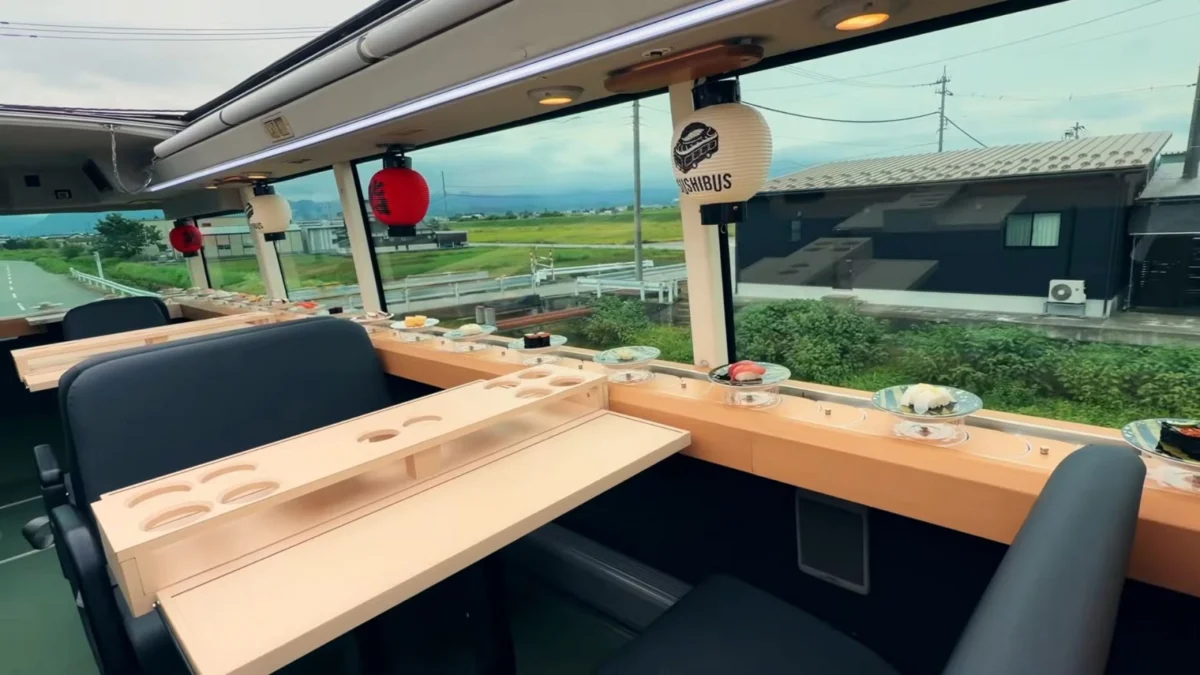
The intersection of traditional Japanese gastronomy and modern urban tourism is set to reach a new milestone with the announcement of the world’s first mobile conveyor-belt sushi restaurant. Scheduled for an official launch in October 2026, the "Sushi Bus" will provide an immersive experience that combines a high-end all-you-can-eat dining service with a comprehensive sightseeing tour of Tokyo’s most iconic landmarks. This innovative project aims to redefine the "experience economy" within Japan’s travel sector, offering a double-decker solution to the growing demand for unique, multi-sensory tourist attractions.
According to the official project disclosure, the Sushi Bus will operate as a fully functional restaurant on wheels, utilizing a specialized double-decker vehicle designed to accommodate both a professional kitchen and a high-tech dining area. The initiative comes at a time when Japan is witnessing a record-breaking surge in international tourism, with travelers increasingly seeking activities that blend cultural authenticity with technological novelty.
Technical Specifications and Operational Logistics
The architecture of the Sushi Bus is a feat of mobile engineering, specifically designed to maintain the standards of a traditional kaitenzushi (conveyor-belt sushi) establishment while navigating the rhythmic stops and starts of urban traffic. The vehicle’s lower deck will serve as a dedicated culinary hub, staffed by professional sushi chefs. This kitchen will be responsible for the preparation of fresh nigiri, maki, and other seasonal offerings, ensuring that the quality of the seafood remains consistent with land-based counterparts.
To bridge the gap between the kitchen and the diners, an onboard elevator system has been integrated into the bus’s design. Once the chefs prepare the dishes, they are loaded into the elevator and transported to the upper deck. On the second level, a member of the service staff receives the plates and places them onto a continuous conveyor belt that circulates alongside the passenger seating.
The upper deck is configured to hold a maximum of 20 passengers per excursion. This limited capacity is intended to ensure an intimate atmosphere and to manage the logistics of the all-you-can-eat service model. The company behind the venture has announced plans to operate five separate tours per day, starting and ending near the historic Tokyo Station, a central transit hub that serves as the gateway for millions of domestic and international travelers.
Route Overview: Navigating Tokyo’s Cultural Landscape
While the definitive itinerary is subject to final municipal approvals, the preliminary route highlights several of Tokyo’s most significant cultural and commercial districts. By selecting a path that encompasses both historical sites and modern marvels, the Sushi Bus aims to provide a comprehensive visual narrative of the city.
The tour is expected to pass through Ginza, Tokyo’s premier luxury shopping and dining district. Ginza is historically significant as the site of a silver coin mint established in 1612, and it has evolved into a global symbol of Japanese sophistication. Passengers will be able to view the district’s famous department stores and architectural landmarks while sampling fresh seafood.
The route also includes a traverse through the Shibuya Scramble Crossing, arguably the most famous intersection in the world. Observing the organized chaos of Shibuya from the elevated vantage point of a double-decker bus offers a unique perspective on Tokyo’s high-density urbanism. Furthermore, the bus is scheduled to visit Asakusa, home to the Kaminarimon (Thunder Gate) and the ancient Senso-ji Temple. This segment of the tour provides a stark contrast to the neon lights of Shibuya, grounding the experience in Japan’s Edo-period history.
Contextualizing Japan’s Post-Pandemic Tourism Surge
The timing of the Sushi Bus launch is strategically aligned with the robust recovery of the Japanese tourism industry. Data from the Japan National Tourism Organization (JNTO) indicates that inbound visitor numbers in 2024 have consistently surpassed pre-pandemic levels, fueled in part by a favorable exchange rate and a global fascination with Japanese pop culture and cuisine.
In the first half of 2024 alone, Japan welcomed over 17 million international visitors. This influx has led to a saturation of traditional tourist sites, prompting the industry to develop creative solutions that distribute foot traffic and offer "premium" experiences that can be booked in advance. The Sushi Bus fits into this niche by providing a controlled, luxury environment that avoids the crowds of traditional restaurants while simultaneously checking off "sightseeing" from the traveler’s itinerary.
Economic analysts suggest that the "all-you-can-eat" (tabehoudai) model, combined with the novelty of a moving conveyor belt, leverages two of Japan’s most successful exports: its culinary reputation and its reputation for precision engineering. By packaging these into a single 90-to-120-minute experience, the operators are targeting a high-value demographic willing to pay a premium for convenience and "Instagrammable" content.
The Evolution of the Kaitenzushi Experience
The concept of conveyor-belt sushi originated in Osaka in 1958, invented by Yoshiaki Shiraishi, who sought to make sushi more accessible and affordable by automating the service process. Over the decades, kaitenzushi has evolved from a budget-friendly dining option to a technologically advanced industry utilizing sensors, RFID tags, and automated delivery systems.
The Sushi Bus represents the next logical step in this evolution: the mobility of the restaurant itself. While "restaurant buses" have existed in Tokyo previously—notably the Willer Travel restaurant bus which offers full-course meals—the integration of a functioning conveyor belt on a moving vehicle presents unique challenges. Maintaining the stability of the belt and ensuring that plates do not slide during turns or braking requires specialized dampening technology and customized dishware.
Logistical Considerations and Regulatory Compliance
Operating a mobile kitchen in Japan involves navigating a complex web of health and safety regulations. The Sushi Bus must adhere to the Food Sanitation Act, which mandates strict temperature controls for raw fish and rigorous sterilization protocols for the kitchen environment. Because the bus is a moving vehicle, it must also meet the standards set by the Ministry of Land, Infrastructure, Transport and Tourism regarding passenger safety and vehicle modifications.
Industry insiders note that the October 2026 launch date provides a significant window for the developers to refine these technical aspects. Ensuring the safety of 20 passengers while they handle chopsticks and small plates on a moving bus is a primary concern. It is expected that the bus will utilize high-precision GPS and automated speed governors to ensure a smooth ride, minimizing the risk of spills or accidents.
Furthermore, the environmental impact of such a venture is under scrutiny. With Tokyo aiming for a "Zero Emission Tokyo" by 2050, there is speculation that the Sushi Bus may utilize electric or hydrogen fuel-cell technology to align with the city’s green initiatives, although the specific engine type has not yet been confirmed by the developers.
Strategic Expansion and Future Outlook
The Tokyo launch is viewed as a pilot phase for a broader national rollout. The organizers have already expressed their intentions to expand the service to Osaka and Kyoto following the successful establishment of the Tokyo route. Osaka, known as "Japan’s Kitchen," is the spiritual home of conveyor-belt sushi, making it a natural secondary market. Kyoto, with its narrow streets and deep historical roots, would offer a different aesthetic experience, though it may present greater navigational challenges for a double-decker vehicle.
While pricing details have not been released, the "all-you-can-eat" nature of the service suggests a mid-to-high-range price point, likely catering to tourists who prioritize time-efficiency and novelty. The five-trip-per-day schedule allows for a maximum daily throughput of 100 passengers, positioning the Sushi Bus as an exclusive, boutique experience rather than a mass-market transit option.
Broader Implications for the Global Tourism Market
The Sushi Bus is a prime example of the "retailtainment" trend—the blurring of lines between retail/dining and entertainment. As global travelers move away from passive sightseeing toward active participation, cities like Tokyo are forced to innovate. This project highlights a shift in how urban spaces are utilized, turning the commute itself into the destination.
The project also reflects a broader trend in Japan’s hospitality sector to create "hybrid" experiences. This is mirrored in other sectors, such as the recently announced "Poke Ball Hotel," where fans of the Pokémon franchise can stay in themed accommodations. These ventures capitalize on strong brand identities—whether that brand is a global media franchise or a national dish—to create high-demand, limited-supply experiences.
As October 2026 approaches, the global travel community will be watching closely to see if the Sushi Bus can successfully balance the delicate requirements of high-quality sushi preparation with the unpredictable nature of urban sightseeing. If successful, it could set a new standard for mobile dining worldwide, potentially leading to similar concepts in other major food capitals like Paris, New York, or Bangkok. For now, the Sushi Bus stands as a testament to Japan’s ongoing commitment to innovation, hospitality, and the celebration of its culinary heritage in the most modern way possible.



 admin
admin
 Lina Irawan
 Nila Kartika Wati
 Yuyun Lusiyani
 Eva Lovia
 Joko Widodo