
 Pevita Pearce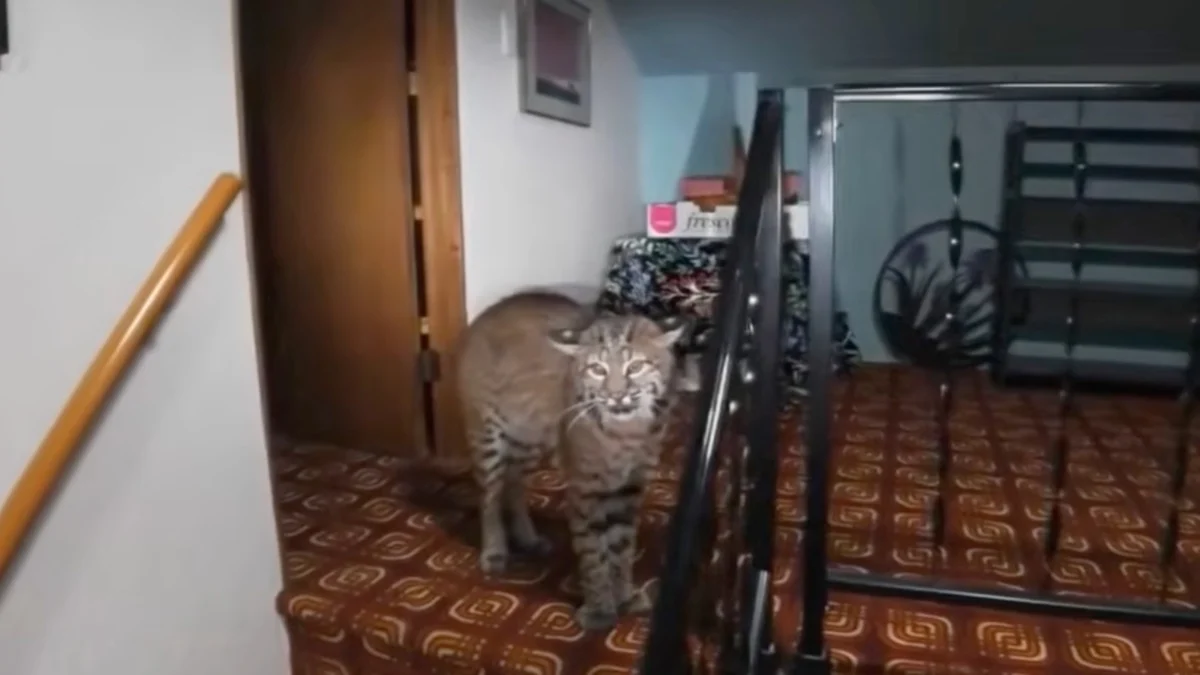
Residents of a quiet neighborhood in Kirkland, Washington, were thrust into a high-stakes standoff last week when a reported home invasion took an unexpected turn, revealing an intruder of the feline variety. What began as a standard emergency call for a suspected burglary ended with a tactical deployment of drone technology to safely manage a wild bobcat that had barricaded itself inside a private residence. The incident has highlighted the increasing frequency of human-wildlife encounters in the Pacific Northwest and the innovative methods law enforcement agencies are adopting to resolve such conflicts without resorting to lethal force.
The sequence of events began during the late evening hours when a homeowner in the suburban community of Kirkland, located just east of Seattle across Lake Washington, heard suspicious noises emanating from the upper floor of their house. Believing a human intruder had gained access to the premises, the resident followed standard safety protocols, retreating to a secure area and contacting the Kirkland Police Department. Dispatchers treated the call as a high-priority residential burglary in progress, a situation that typically necessitates a swift and cautious response to ensure the safety of the occupants and the apprehension of the suspect.
Upon arrival, officers established a perimeter around the home. However, as they entered the residence to conduct a room-by-room sweep, they were not met by a fleeing thief or a cornered suspect. Instead, they discovered a full-grown bobcat (Lynx rufus) perched stoically at the top of the home’s main staircase. The animal, characterized by its distinctive tufted ears and spotted coat, appeared startled but did not immediately flee, creating a tactical dilemma for the responding officers.
Tactical Innovation: The Role of Drones in Wildlife Management
Faced with a wild predator in a confined indoor space, the Kirkland Police Department opted against a direct physical confrontation. Approaching a cornered bobcat presents significant risks; while they rarely attack humans, a trapped animal can become highly aggressive, and their sharp claws and teeth can inflict serious injury. Furthermore, the department aimed to resolve the situation with minimal stress to the animal.
To bridge the gap between observation and action, officers deployed an indoor drone. In recent years, many police departments in Washington State have integrated Small Unmanned Aircraft Systems (sUAS) into their tactical kits. While typically used for searching buildings for armed suspects or documenting crime scenes, the drone proved to be the ideal tool for this unique scenario.
The drone allowed officers to monitor the bobcat’s behavior from a safe distance, providing a live video feed that helped them determine if the animal was injured or agitated. Beyond mere observation, the hum of the drone’s rotors and its physical presence were used to gently influence the bobcat’s movements. By maneuvering the drone strategically, police were able to "corral" the animal, keeping it contained in a specific area of the upper floor until professional wildlife handlers could arrive on the scene. This technological intervention effectively de-escalated the situation, preventing the need for officers to enter the "red zone" where the animal might have felt compelled to lash out.
Entry Points and the Domestic Lure
An investigation into how the bobcat entered the home revealed a combination of environmental factors and domestic coincidences. Authorities believe the animal utilized a large tree situated close to the residence. Bobcats are exceptional climbers, often using trees to scout for prey or avoid larger predators like cougars or coyotes. In this instance, the bobcat likely leaped from a sturdy branch onto a second-story ledge or directly through an open window.
Washington summers and early autumns often prompt residents to leave windows open for ventilation, a habit that wildlife experts warn can serve as an unintended invitation to opportunistic animals. In this specific case, police suspect that the homeowner’s domestic cat may have played an inadvertent role in the "burglary." It is common for wild felids to be attracted to the scent or sight of domestic pets, either out of territorial curiosity or predatory instinct. The presence of the house cat near the window may have drawn the bobcat closer, leading it to explore the interior of the home once it found an accessible entry point.
Professional Extraction and Release
Once the bobcat was successfully contained by the police and their drone, officials from the Washington Department of Fish and Wildlife (WDFW) were summoned to the scene. WDFW officers are trained in the chemical immobilization of wildlife, a process that requires precise calculations of weight and species-specific sedative dosages.
Upon arrival, the wildlife experts were able to sedate the bobcat safely. Once the animal was unconscious, it was carefully removed from the home in a specialized transport crate. A cursory physical examination conducted by the wildlife officers determined that the bobcat was in good health, showing no signs of disease or injury sustained during its time inside the residence.
Following the department’s policy of returning non-habituated animals to their natural environment whenever possible, the bobcat was transported to a suitable wilderness area far from the suburban sprawl of Kirkland. It was monitored until the sedative wore off and was successfully released back into the wild.
The Urban-Wildlife Interface: A Growing Trend
The Kirkland incident is not an isolated occurrence but rather part of a broader trend of increased wildlife activity in residential areas across the United States. As urban development continues to encroach upon natural habitats, the "urban-wildlife interface" becomes a frequent site of conflict.
In Washington State, bobcats are highly adaptable and can be found in a variety of habitats, including forests, swamps, and even suburban greenbelts. According to WDFW data, bobcat populations remain stable across the state, but as their natural hunting grounds are fragmented by housing developments, they are increasingly forced to navigate human-dominated landscapes. This often leads them into backyards, onto porches, and—as seen in Kirkland—into homes.
This incident follows a similar, more viral encounter in August, where a woman in another region woke up to find a black bear had entered her kitchen. In that instance, the bear was attracted by the scent of a bucket of Kentucky Fried Chicken left on the counter. Such events serve as a stark reminder that the sensory world of wild animals is driven largely by food and curiosity, and human residences are often perceived as high-reward environments.
Analysis of Implications for Public Safety
The successful resolution of the Kirkland bobcat incident provides several key takeaways for both law enforcement and the general public.
For law enforcement, the use of drones in this context demonstrates the versatility of modern policing tools. By prioritizing technology over physical force, the Kirkland Police Department protected its officers, the homeowners, and the animal. This "safety-first" approach is becoming the gold standard for departments operating in regions with high wildlife populations.
For the public, the event underscores the importance of "wildlife-proofing" homes. Experts recommend several preventative measures to avoid similar encounters:
- Securing Entry Points: Ensure that windows, especially those near trees or fences, are fitted with sturdy screens or kept closed when unattended.
- Pet Safety: Keeping domestic pets indoors, particularly at night, reduces the likelihood of attracting predators like bobcats, cougars, or coyotes.
- Attractant Management: Beyond pet food, things like unsecured trash, bird feeders, and even fallen fruit can attract smaller mammals that, in turn, attract larger predators like bobcats.
Community Reaction and Expert Statements
While the homeowners were understandably shaken by the presence of a wild predator in their living space, the community reaction has been largely one of fascination and praise for the police department’s restraint.
"We are relieved that the situation ended peacefully," a spokesperson for the Kirkland Police Department stated following the release of the animal. "Our goal is always to resolve calls with the least amount of conflict possible. The use of our drone program allowed us to maintain eyes on the subject without creating a situation where the animal felt it had to fight its way out."
Wildlife biologists note that while bobcats are generally reclusive, their presence in suburban neighborhoods should be treated with respect rather than fear. They play a crucial role in the ecosystem by controlling rodent and rabbit populations. However, when they cross the threshold into human dwellings, the priority shifts to safe removal and the re-establishment of boundaries.
As the Pacific Northwest continues to grow, the boundaries between the wild and the developed will continue to blur. The Kirkland bobcat incident serves as a blueprint for how these inevitable intersections can be managed through a combination of public awareness, professional wildlife expertise, and the strategic application of modern technology. The bobcat, now back in its natural habitat, remains a symbol of the wild spirit that still resides just beyond the fences of Washington’s suburban neighborhoods.



 Joko Widodo
 admin
admin
 Lina Irawan
 Jia Lissa
 Yuyun Lusiyani