
 Nila Kartika Wati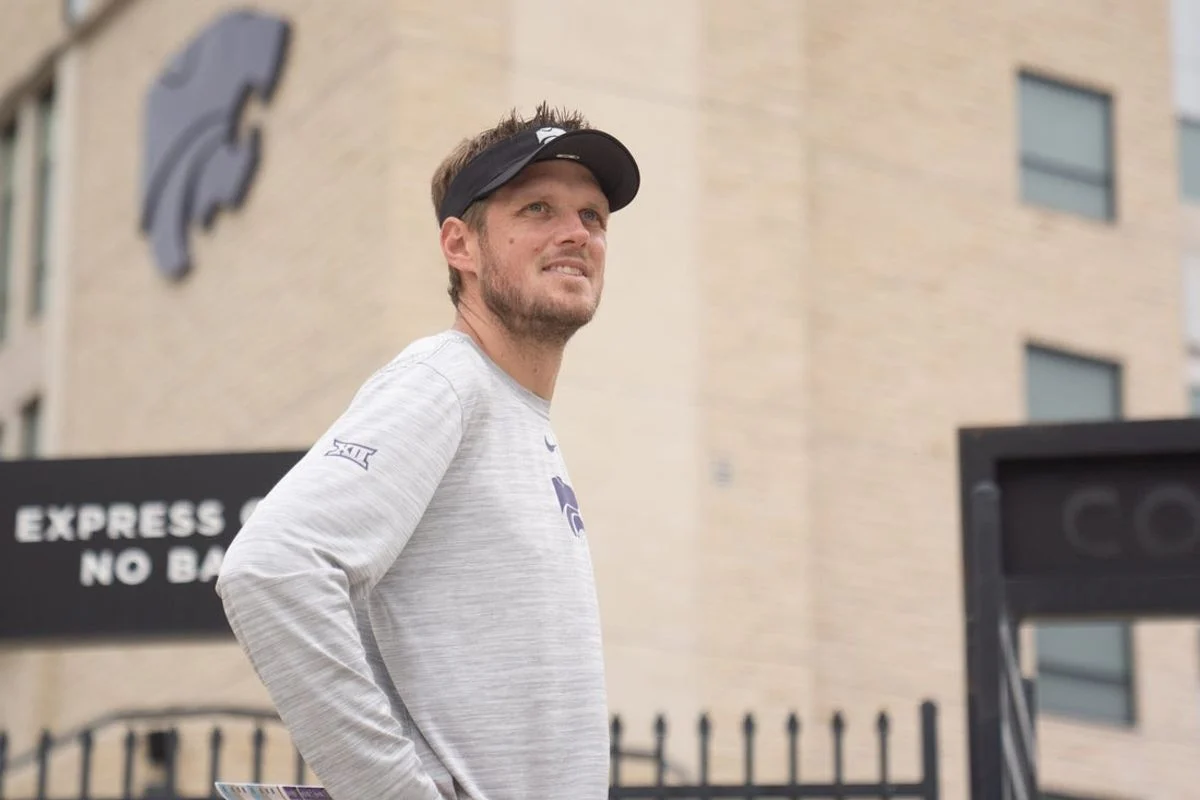
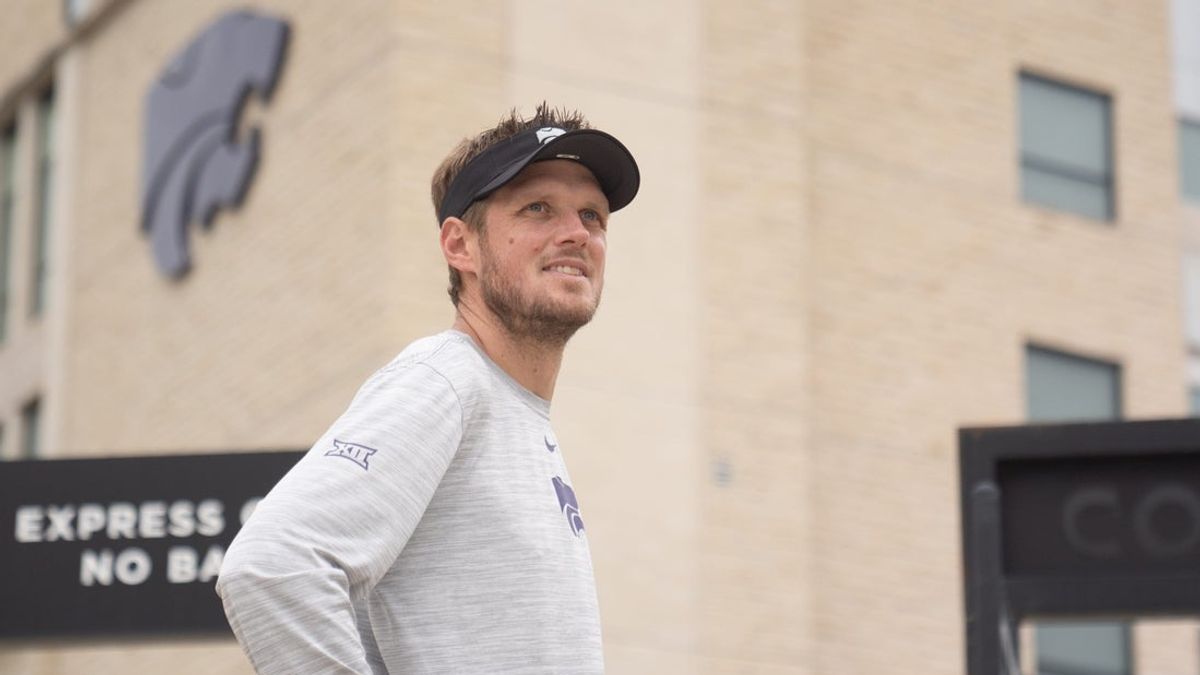
The dawn of a new era in Manhattan, Kansas, arrives this Saturday as Collin Klein, a beloved former quarterback and Heisman Trophy finalist, makes his highly anticipated debut as the head coach of the Kansas State Wildcats. At 36 years old, Klein steps into the role that once belonged to the legendary Bill Snyder, for whom he played during his illustrious collegiate career. The Wildcats will host the Nicholls Colonels of the Football Championship Subdivision (FCS) Southland Conference at Bill Snyder Family Stadium, marking the first game of the 2026 season and the inaugural contest under Klein’s leadership.
This pivotal moment for Kansas State football carries significant weight. The program is seeking to rebound from a challenging 2025 season that saw them finish with a .500 record (6-6) and decline a bowl invitation. This outcome marked only the second time since 2010 that the Wildcats did not participate in a postseason bowl game, a departure from the consistent success that had become a hallmark of the program. Preseason consensus projections from various sports analysts place Kansas State in the middle of the pack within the revamped 16-team Big 12 Conference, typically ranking them seventh or eighth. This places considerable pressure on Klein and his staff to immediately instill a winning culture and restore the program’s competitive standing.
Klein’s approach to rebuilding the roster has been aggressive and strategic, heavily leveraging the NCAA transfer portal. A substantial influx of 26 new players have joined the Wildcats’ ranks, signaling a significant overhaul of the team’s personnel. Among the notable additions are defensive end Wendell Gregory, a proven disruptor acquired from Big 12 rival Oklahoma State, and wide receiver Josh Manning, a dynamic playmaker recruited from Missouri. These acquisitions are intended to bolster key positions and introduce new talent capable of making an immediate impact.
However, the path to success for the Wildcats is not without its immediate hurdles. The offensive line, a crucial component for any successful football team, is undergoing significant adjustments. The team has been forced to shuffle new and inexperienced players into prominent roles, a situation exacerbated by the loss of starting left tackle John Pastore to a season-ending lower-leg injury sustained during the offseason or early training camp. This unforeseen setback necessitates a period of adaptation and cohesion building for the offensive front.
Reflecting on the challenges of personnel management, Coach Klein acknowledged the fluid nature of the team’s composition. "We’ve been moving a lot of guys around," Klein stated during a recent media availability. "It’s definitely not like we projected coming in. It’s been an interesting carousel, for sure." This candid admission highlights the ongoing process of finding the right combinations and maximizing the potential of the current roster.
Despite the personnel shifts, the Wildcats’ offense boasts several established playmakers who will be instrumental in Klein’s inaugural season. Senior quarterback Avery Johnson returns, entering his final year of eligibility with an impressive collegiate resume. Johnson has accumulated 5,576 career passing yards and 1,378 career rushing yards, demonstrating his dual-threat capabilities and his importance as the offensive lynchpin. His experience and leadership will be vital in guiding the team through the early stages of Klein’s tenure.
Complementing Johnson in the backfield is senior running back Joe Jackson. Jackson earned third-team All-Conference honors last season and showed flashes of his explosive potential in the latter part of 2025. In the final two games of the season against Utah and Colorado, he combined for 435 rushing yards and six touchdowns, indicating a strong finish and a promising outlook for his senior campaign. His ability to consistently gain tough yards and find the end zone will be a cornerstone of the Wildcats’ offensive strategy.
The Wildcats’ opening opponent, Nicholls, enters the game with a slight advantage in terms of game experience. The Colonels, members of the FCS Southland Conference, have already played one game this season, securing a decisive 44-10 victory over Mississippi Valley State in Week 0. This early contest provided Nicholls with an opportunity to fine-tune their strategies and identify areas of strength and weakness before facing a Football Bowl Subdivision (FBS) opponent.
In their season opener, Nicholls showcased a balanced offensive attack and a disruptive defense. Senior quarterback Ean Rodrigue orchestrated the offense effectively, throwing for 264 yards and three touchdowns. Running back Tamaj Hoffman contributed significantly to the ground game, rushing for 53 yards and two touchdowns. The Colonels’ defense made its presence felt by intercepting three passes, demonstrating their ability to create turnovers and disrupt opposing offenses.
Nicholls head coach Tommy Rybacki, now in his second season with a 5-8 overall record, views the early game as a strategic advantage. "A lot of coaches would tell you that you make a lot of progress between Games 1 and 2," Rybacki commented. This sentiment underscores the value of having game film and live-game adjustments to draw upon when preparing for their next opponent.
Rybacki’s primary concern for his team’s matchup against Kansas State is to ensure his players maintain focus and discipline amidst the formidable reputation of their opponent and the historic setting of Bill Snyder Family Stadium. The stark contrast in program stature and historical success presents a unique psychological challenge for the visiting Colonels.
"We talk a lot about focusing on the task at hand," Rybacki emphasized. "If you start thinking about the external factors, you can get overwhelmed: playing Kansas State, the Big 12, Bill Snyder Stadium. You still need to tackle well." This pragmatic approach highlights the coaching staff’s strategy to keep their team grounded and execute their game plan, irrespective of the opponent’s pedigree.
The transition for Collin Klein from a celebrated player to a head coach represents a significant moment for Kansas State. Klein’s playing career at Kansas State was defined by his grit, leadership, and success. He led the Wildcats to an 11-2 record in 2012, earning him a spot as a Heisman Trophy finalist, an honor rarely bestowed upon a player from a non-traditional powerhouse program. His deep understanding of the program’s culture and his personal connection to its foundational principles are expected to resonate with the current team and the passionate Wildcat fanbase.
The legacy of Bill Snyder looms large over Kansas State football. Snyder, who coached the Wildcats for 27 seasons (1989-2018), transformed a program that was once considered one of the nation’s most challenging to win at into a consistent contender. His innovative strategies, unwavering discipline, and commitment to player development laid the groundwork for decades of success. The stadium being named in his honor is a testament to his indelible impact, and Klein, having played under Snyder’s tutelage, is uniquely positioned to carry forward that legacy.
Klein’s appointment as head coach in December 2025, following the departure of Chris Klieman to North Dakota State, signaled a deliberate choice by the Kansas State athletic department to look within the program’s established lineage. Klein had served as the offensive coordinator and quarterbacks coach under Klieman for the 2025 season, providing him with valuable experience in his current role before taking the helm. This internal promotion allowed for a smoother transition and continuity of coaching philosophy.
The 2026 season for Kansas State is widely viewed as a critical juncture. The program seeks to re-establish itself as a consistent contender in the Big 12, a conference that has seen significant expansion and increased competition. The addition of new members and the evolving landscape of college football necessitate a strong and adaptable leadership team. Klein’s task is to not only win games but also to cultivate a program that embodies the toughness and resilience that has defined Kansas State football.
The game against Nicholls, while seemingly a mismatch on paper, serves as a crucial litmus test for the Wildcats. It is an opportunity for the new coaching staff to implement their schemes, for the new players to gel with the returning roster, and for the team to build early season momentum. The performance in this opener will provide valuable insights into the team’s strengths and areas requiring further development as they prepare for the rigors of the Big 12 schedule.
The analysis of the Wildcats’ prospects for the 2026 season often centers on the offensive potential, particularly with Avery Johnson at quarterback. His ability to extend plays with his legs and deliver accurate passes makes him a dangerous weapon. However, the offensive line’s stability and the effectiveness of the running game will be paramount in sustaining drives and controlling the tempo of games. On the defensive side, the impact of new additions like Wendell Gregory will be closely watched. Kansas State has historically prided itself on strong defensive play, and the ability of the new personnel to adapt to the team’s defensive schemes will be a key factor in their success.
The broader implications of Klein’s tenure extend beyond just wins and losses. His success or struggles will be closely scrutinized as a barometer for the continued relevance of a "player-centric" coaching approach, drawing directly from the philosophies of successful former players who transition into leadership roles. His ability to connect with a new generation of athletes, adapt to the ever-changing dynamics of college football, and manage the pressures of a high-profile coaching position will be defining aspects of his career.
For Nicholls, this game represents a significant opportunity to make a statement on a national stage. A strong performance, regardless of the outcome, can provide valuable exposure and experience for their program. The Southland Conference, like many FCS leagues, is focused on developing its teams and competing at the highest level within its division. A competitive showing against an FBS opponent like Kansas State can serve as a significant morale booster and recruiting tool.
As the clock winds down to kickoff, the atmosphere at Bill Snyder Family Stadium is expected to be electric. The return of a Kansas State football icon to lead the program marks a new chapter filled with anticipation and hope. The journey of the 2026 Kansas State Wildcats under Collin Klein begins now, and the initial steps taken against Nicholls will set the tone for the season ahead. The blend of seasoned veterans and promising newcomers, coupled with Klein’s fresh leadership, presents an intriguing narrative for Wildcat football enthusiasts. The focus remains on execution, discipline, and the unwavering pursuit of excellence that has become synonymous with Kansas State football.


 Joko Widodo
 admin
admin
 Lina Irawan
 Jia Lissa
 Yuyun Lusiyani
 Pevita Pearce