
 Pevita Pearce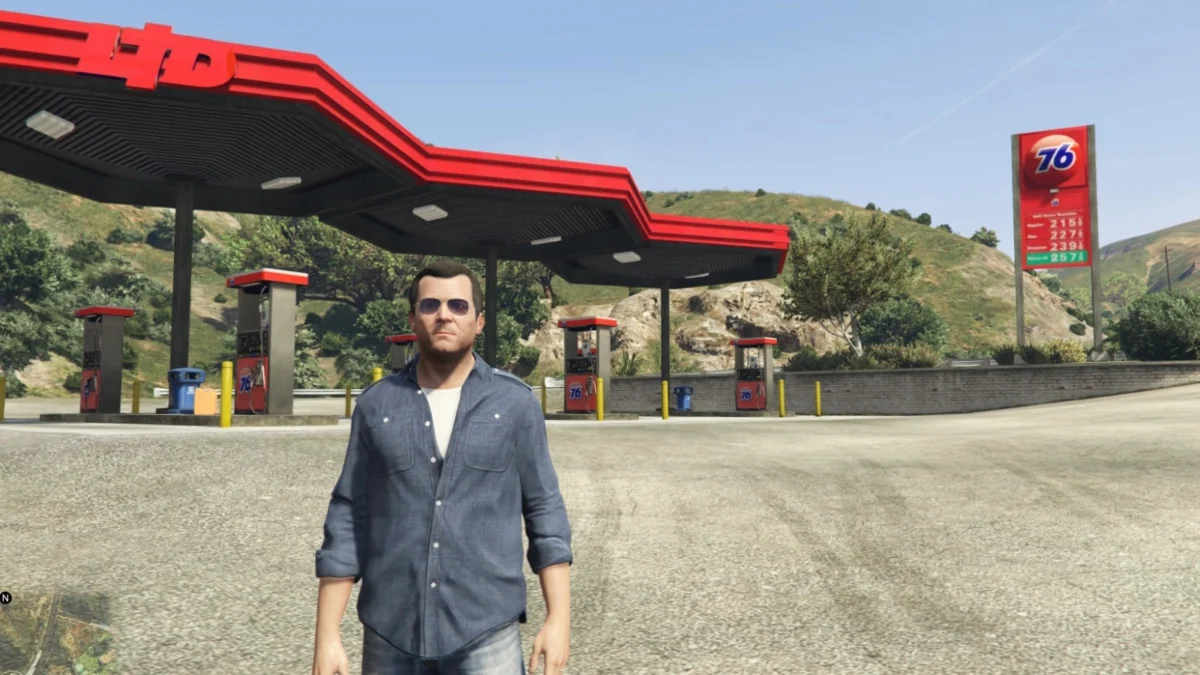
Rockstar Games has officially addressed the inclusion of a mandatory vehicle refueling mechanic in Grand Theft Auto VI (GTA 6), a feature that has sparked significant debate among the franchise’s global fanbase. Following a series of exclusive previews and hands-on demonstrations provided to select content creators, the studio moved to clarify the functionality of the system, which requires players to monitor and replenish fuel levels in internal combustion vehicles and battery levels in electric models. The revelation confirms a long-standing rumor that the upcoming title will lean further into hyper-realism than its predecessors, a design choice that has divided a community accustomed to the more arcade-like driving mechanics of previous installments.
The Emergence of the Refueling Mechanic
The existence of a refueling system in GTA 6 was first brought to light through a massive data breach in late 2022. During that event, early development footage showcased a revamped user interface (UI) that included a dedicated gas gauge located near the speedometer. While Rockstar did not comment on the leak at the time, the gaming community immediately began speculating on how such a feature would impact the core gameplay loop. For decades, the Grand Theft Auto series has allowed players to drive indefinitely unless a vehicle was destroyed by external damage. The introduction of fuel management represents a fundamental shift in the series’ philosophy, moving toward the survival-lite elements seen in other Rockstar titles like Red Dead Redemption 2.
In a recent video report, prominent gaming YouTuber TGG shared insights from his visit to Rockstar North, the lead development studio for the project. During his preview, he observed that gas stations throughout the fictional state of Leonida serve as functional hubs where players can repair damage, refuel tanks, or recharge electric vehicles. The process is not instantaneous; instead, it triggers a specialized animation. According to TGG’s estimates, the time required to fully replenish a vehicle’s energy source is approximately 10 seconds. This duration, while short in real-world terms, is a significant commitment within the context of a high-speed action game.
A Chronology of Community Skepticism
The path to accepting a refueling mechanic has been fraught with resistance from the GTA community. In early 2024, discussions surged on social media platforms and gaming forums regarding the potential for "realistic driving features" inspired by the Mafia franchise. In the Mafia series, particularly Mafia II, players were required to stop at gas stations to keep their vehicles operational. At the time, many GTA fans voiced their opposition to such a system, arguing that it could frustrate players by interrupting mission flow or causing untimely failures during police pursuits.
The concerns primarily center on the "Grand Theft" aspect of the game. Traditionally, a player in a dire situation could hijack any passing car to make an escape. With the new fuel system, the viability of a stolen vehicle becomes a variable; a player might unknowingly steal a car with a near-empty tank, leading to a breakdown in the middle of a high-stakes chase. This adds a layer of tactical unpredictability that some players find immersive and others find unnecessarily punishing.
Official Defense from Rockstar North Leadership
The debate reached a turning point during the preview overseen by Rob Nelson, the co-studio head of Rockstar North. As TGG demonstrated the refueling process, Nelson reportedly interjected to defend the mechanic’s implementation. According to reports from PC Gamer, Nelson highlighted the efficiency of the animation, stating, “Hey, that’s pretty fast for a fill-up. You can’t complain about that.”
Nelson’s comments suggest that Rockstar is aware of the potential for friction but believes they have found a balance that maintains immersion without becoming a chore. Beyond merely defending the speed of the animation, Nelson reportedly engaged the previewers in a dialogue about the system’s reception, asking for honest feedback on whether players would find the mechanic enjoyable or intrusive. This indicates that while the feature is currently integrated into the build, Rockstar may still be fine-tuning the frequency of refueling or the severity of running out of gas.
Technical Implications and Strategic Gameplay
The refueling mechanic is part of a broader suite of features designed to make the player feel like a more calculated criminal. In previous games, the player’s relationship with their vehicle was largely disposable. In GTA 6, the necessity of maintaining a vehicle may encourage players to stick with a "personal" car, upgrading and fueling it regularly rather than constantly swapping for random street cars.
From a technical standpoint, the fuel system introduces several new variables:
- Electric vs. Combustion: The game will distinguish between traditional gasoline vehicles and electric vehicles (EVs). While gas stations are ubiquitous, the availability of high-speed charging stations for EVs may vary, potentially affecting vehicle choice based on the player’s location in the map.
- Fuel Consumption Rates: It remains unclear if fuel consumption will be standardized or if it will vary based on vehicle type, driving style (e.g., high-speed flooring vs. cruising), or engine modifications.
- The "Empty Tank" Scenario: If a vehicle runs out of fuel, the game must decide how to handle the "soft lock." Whether the player can call a roadside assistance service, use a portable gas can, or is simply forced to abandon the vehicle is yet to be confirmed.
TGG noted that as long as players remain observant of the UI, fuel management is unlikely to become a constant hindrance. However, he acknowledged that the mechanic would inevitably create "emergent gameplay" moments—situations where the player’s lack of preparation leads to organic, unscripted challenges.
The Evolution of Realism in Rockstar Games
The decision to include refueling is consistent with Rockstar Games’ recent trajectory toward hyper-realism. Following the release of Red Dead Redemption 2 in 2018, the studio proved that it was willing to sacrifice some "arcade" convenience for the sake of immersion. In that title, players had to feed their character, brush their horse, and clean their weapons to maintain peak performance. While these mechanics were initially controversial, they eventually became praised for the depth they added to the world-building.
GTA 6 appears to be applying this "simulation" logic to a modern urban setting. The state of Leonida, which encompasses a massive area inspired by Florida, will likely require long-distance travel. In this context, fuel management acts as a pacing tool, forcing players to interact with the environment rather than simply teleporting or driving mindlessly from point A to point B. It also provides a logical use for the hundreds of gas stations scattered across the map, which in previous games served primarily as backdrop or explosive hazards.
Broader Impact and Industry Implications
The implementation of this mechanic could set a new standard for open-world titles. If Rockstar successfully integrates refueling without compromising the "fun factor," other developers may follow suit in an attempt to capture the same level of environmental persistence. Conversely, if the system is viewed as a deterrent to gameplay, it may serve as a cautionary tale for the limits of realism in action-adventure games.
The 10-second animation is a critical component of this balance. By keeping the interaction brief, Rockstar aims to minimize the "dead time" while still acknowledging the physical reality of the world. For the competitive "speedrunning" community and the "GTA Online" demographic, however, every second counts. How this mechanic translates to the multiplayer component of GTA 6 remains one of the most significant unanswered questions. In a competitive environment, being forced to stop for 10 seconds could be the difference between a successful mission and a total loss.
Conclusion and Future Outlook
As the release window for Grand Theft Auto VI approaches, the refueling mechanic stands as a symbol of the game’s ambitious scope. It represents a move away from the "sandbox" chaos of the early 2000s and toward a more sophisticated, "living" world where actions have logistical consequences. While the 10-second fill-up is a minor detail in isolation, it is indicative of a broader design philosophy that prioritizes player presence and environmental interaction.
Rockstar Games has a history of refining its mechanics based on playtesting and community feedback, and Rob Nelson’s inquiries during the preview suggest that the studio is closely monitoring the discourse. Whether the fuel gauge becomes a beloved staple of the series or a togglable option for more casual players will likely depend on the final balancing of the game’s economy and the frequency of the "low fuel" warning. For now, players are being sent a clear message: in Leonida, the fast life requires a full tank.




 Eva Lovia
 Nana Wu
 Joko Widodo
 admin
admin
 Nila Kartika Wati