
 Pevita Pearce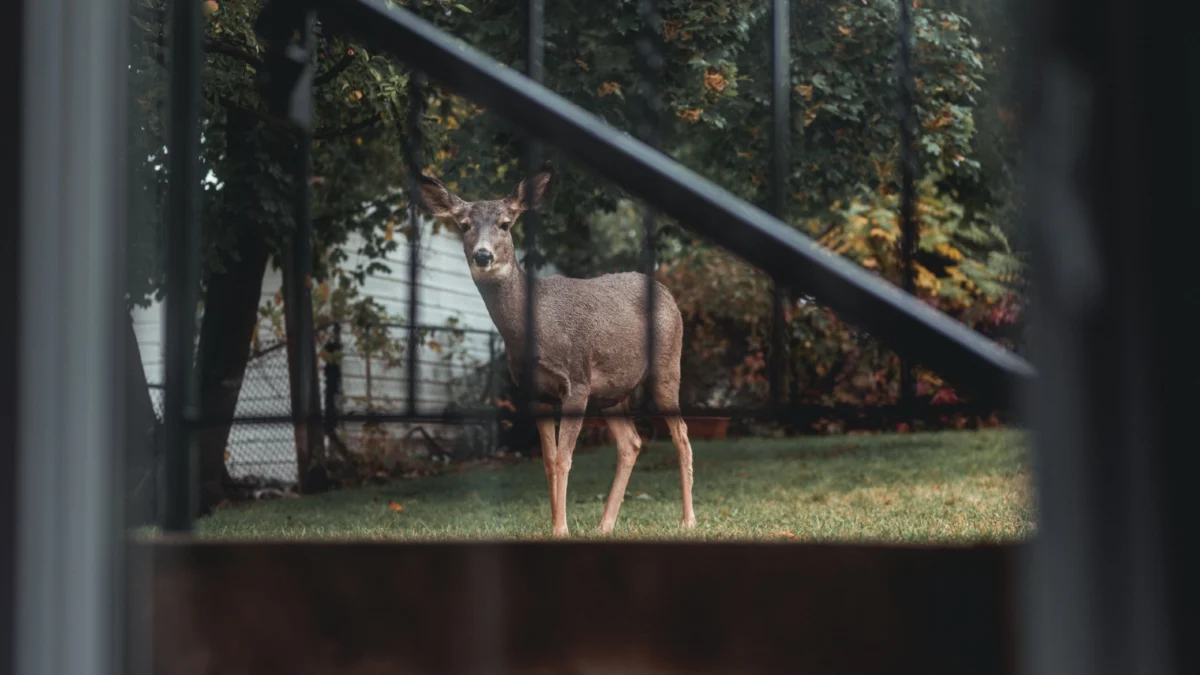
In an unusual intersection of suburban development and native Florida wildlife, deputies from the St. Johns County Sheriff’s Office were recently called to a residence to manage an intruder unlike any they typically encounter. A local homeowner, upon entering his master bathroom, discovered a full-grown deer standing motionless beside the toilet. The subsequent rescue operation, captured on body-worn camera footage, highlighted the challenges of wildlife management in residential areas and the creative problem-solving required by law enforcement when standard protocols for human trespassers do not apply.
The Initial Discovery and Emergency Response
The incident began on a weekday afternoon when a resident of St. Johns County, located in the northeastern portion of Florida, contacted emergency dispatchers to report a wild animal inside his home. According to initial reports, the deer had likely entered the house through an open or unsecured door, or potentially crashed through a glass pane, a behavior sometimes seen in startled cervids. Upon the arrival of the St. Johns County Sheriff’s Office (SJCSO) deputies, the situation was confirmed: a large buck had taken up residence in the bathroom.
Bodycam footage released by the Sheriff’s Office provides a vivid account of the scene. As deputies entered the confined space of the bathroom, the deer was observed in what biologists refer to as a "freeze response." This state of tonic immobility is a common defense mechanism in deer when they feel cornered or overwhelmed by stimuli they cannot easily escape. The animal remained perfectly still near the toilet and vanity, its presence a stark contrast to the modern domestic setting.
Chronology of the Extraction Operation
The primary objective for the deputies and the homeowner was to ensure the safe removal of the animal without causing injury to the deer, the residents, or the officers themselves. Wild deer, while generally non-aggressive toward humans, can become extremely dangerous when panicked. Their powerful hind legs and sharp hooves can cause significant lacerations or blunt-force trauma if they attempt to bolt in a confined space.
- Securing the Perimeter: The first step involved the deputies and the homeowner working together to clear a path. They began by moving furniture and clearing obstacles between the bathroom and the nearest exit, which was a set of sliding glass patio doors leading to the backyard.
- Creating a Funnel: By strategically positioning chairs and other household items, the team created a narrow corridor. This "funneling" technique is a standard practice in livestock and wildlife management, designed to guide an animal toward a specific exit while limiting its ability to turn back or seek refuge in other rooms.
- The Implementation of the Pool Brush: Recognizing that physical contact with the deer could trigger a violent "flight" response, the deputies opted for a non-invasive tool. They utilized a long-handled pool brush to gently nudge and guide the animal. The brush allowed the deputies to maintain a safe distance while providing enough of a tactile prompt to break the deer’s "freeze" state.
- The Departure and the Patio Incident: As the deer was coaxed out of the bathroom, it struggled to maintain its footing on the slick tile and hardwood floors of the home. The footage shows the animal slipping as it gained momentum toward the open patio doors.
- The Swimming Pool Interlude: Once outside, the deer did not immediately flee into the woods. Instead, it jumped directly into the homeowner’s swimming pool. Deer are naturally proficient swimmers, often taking to the water to evade predators or to cool down. The animal swam the length of the pool before finding the steps and exiting onto the pool deck.
- Final Escape: After a brief second dip in the water—likely due to confusion or a lingering sense of being pursued—the deer found a gap in the backyard perimeter fence and disappeared into the surrounding wooded area.
Biological Context: The Florida White-tailed Deer
The animal involved in this incident was a Florida white-tailed deer (Odocoileus virginianus seminolus), a subspecies of the common North American white-tailed deer. These animals are a staple of the Florida ecosystem, but their interactions with humans have increased significantly over the last two decades.
Biologists note that deer are highly sensitive to reflections. It is common for deer to see their own reflection in glass doors or mirrors and perceive it as a rival male, leading them to charge. This often results in the animal breaking into homes or businesses. Once inside, the lack of traction on synthetic flooring and the enclosed nature of hallways can cause the animal to panic, leading to the "freeze" behavior observed by the SJCSO deputies.
The use of the pool brush was a tactically sound decision. In wildlife biology, minimizing "handling stress" is crucial. Had the deputies attempted to lasso the deer or physically tackle it, the resulting spike in adrenaline and cortisol could have led to capture myopathy—a physiological state where extreme stress and overexertion lead to muscle damage and, eventually, death.
Urban Sprawl and Habitat Fragmentation in St. Johns County
St. Johns County is one of the fastest-growing counties in the United States. This rapid development often leads to habitat fragmentation, where wildlife corridors are interrupted by new housing developments, shopping centers, and highways. As the natural territory of the white-tailed deer shrinks, they are forced to navigate through residential neighborhoods to find food and water.
Data from the Florida Fish and Wildlife Conservation Commission (FWC) indicates that human-deer conflicts are on the rise in developing counties. While most of these interactions involve vehicle collisions or garden damage, "home invasions" by wildlife are becoming more frequent. The FWC recommends that homeowners in high-deer-population areas keep doors closed and consider using non-reflective coatings on low-hanging glass windows to prevent "territorial" strikes by bucks during the mating season, also known as the rut.
Official Statements and Public Reaction
The St. Johns County Sheriff’s Office took the incident in stride, using the opportunity to engage with the community through social media. In a post featuring the bodycam footage, the department added a touch of levity to the unusual call.
"The buck fled before deputies could issue a warning for trespassing," the department joked in their official Facebook post. This humorous approach serves a dual purpose: it humanizes the police force and highlights the unpredictable nature of the calls that deputies respond to daily.
The homeowner, while shaken by the intrusion and the potential for property damage, expressed gratitude for the professional manner in which the deputies handled the situation. No injuries were reported to the homeowner or the deputies, and the deer appeared to be unharmed as it returned to the wild.
Analysis of Implications for Law Enforcement
This incident underscores the necessity for law enforcement officers in rural and suburban-fringe areas to possess a basic understanding of wildlife behavior. While police academies focus heavily on human psychology and tactical defense, "nuisance wildlife" calls require a different set of skills.
The SJCSO’s successful resolution of the event without the use of tranquilizers or lethal force is a testament to effective de-escalation, even when the subject is non-human. Using household tools like a pool brush and rearranging furniture demonstrates an adaptable mindset that prioritizes the safety of all living beings involved.
Public Safety Recommendations for Wildlife Encounters
Following the incident, wildlife experts have reiterated several key safety tips for residents who find themselves in similar situations:
- Do Not Corner the Animal: A cornered wild animal is at its most dangerous. Always ensure the animal has a clear, unobstructed path to an exit.
- Reduce Stimuli: Turn off loud televisions or radios and dim the lights if possible. High-stress environments exacerbate an animal’s panic.
- Avoid Direct Eye Contact: In the animal kingdom, direct eye contact is often perceived as a challenge or a threat.
- Contact Professionals: As this homeowner correctly did, contacting local law enforcement or wildlife commissions is essential. They have the tools and the training to manage the situation safely.
Conclusion
The "bathroom deer" of St. Johns County has become a viral sensation, but behind the humor of the situation lies a factual reminder of the thinning veil between human civilization and the natural world. As urban boundaries continue to expand into previously untouched environments, such encounters will likely become a permanent fixture of modern suburban life. The successful and safe extraction of the deer by the St. Johns County Sheriff’s Office serves as a model for how law enforcement can navigate these strange, non-traditional calls with patience, ingenuity, and a respect for local wildlife. For now, the "trespassing" buck remains at large, having traded a bathroom and a swimming pool for the safety of the Florida brush.


 Joko Widodo
 admin
admin
 Nila Kartika Wati
 Lina Irawan
 Eva Lovia