
 Lina Irawan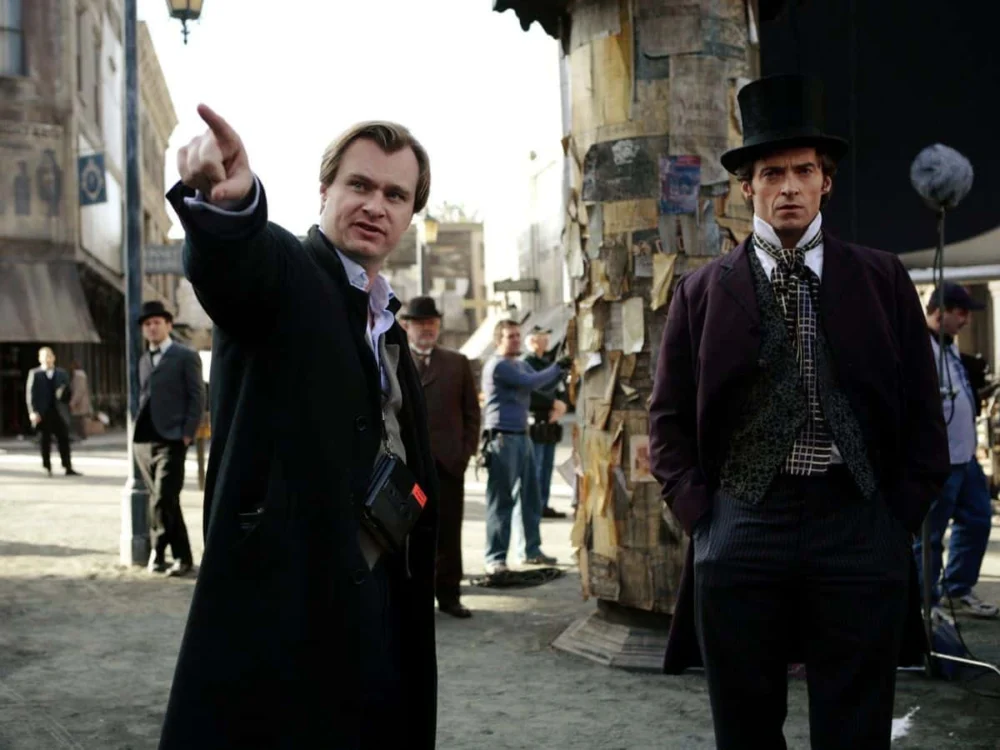
Christopher Nolan has established himself as the preeminent architect of the modern intellectual blockbuster, a director whose name serves as a primary marketing vehicle for major studio productions. His filmography is defined by a rigorous commitment to the theatrical experience, characterized by the use of large-format IMAX photography, non-linear narrative structures, and a philosophical preoccupation with the nature of time, memory, and identity. From his shoestring-budget debut in the late 1990s to his recent Academy Award-winning historical epics, Nolan’s body of work represents a rare synthesis of commercial dominance and artistic autonomy.
The Evolution of a Cinematic Auteur
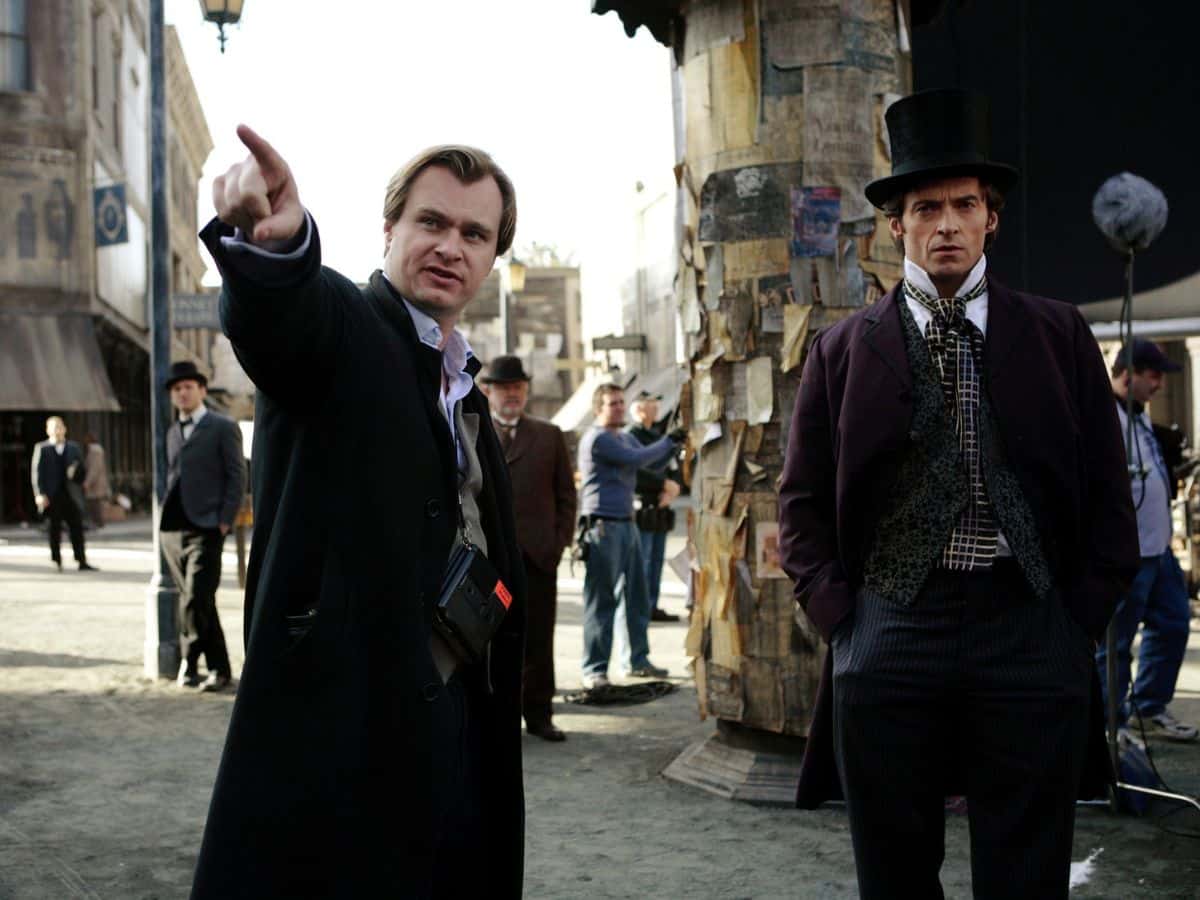
The career of Christopher Nolan is often categorized by his transition from high-concept independent thrillers to large-scale studio tentpoles. However, a consistent thematic thread runs through every project: the manipulation of the audience’s perception of reality. Whether exploring the fractured memory of an amnesiac or the temporal mechanics of a black hole, Nolan’s films function as complex puzzles that demand active engagement. His technical methodology—specifically his preference for practical effects over computer-generated imagery (CGI)—has become a hallmark of his production style, often involving the construction of massive physical sets and the execution of high-risk stunts.
Early Foundations: Following and the Indie Breakthrough
Nolan’s career began with Following (1998), a neo-noir thriller produced for approximately $6,000. Shot in black-and-white on 16mm film, the project was filmed on weekends over the course of a year, with Nolan serving as writer, director, cinematographer, and editor. While it ranks at the bottom of many lists due to its technical limitations, it established the non-linear storytelling techniques that would become his signature.
This groundwork led directly to Memento (2000), the film that launched Nolan into the cultural mainstream. With a budget of $9 million, Memento utilized a dual-narrative structure—one sequence moving forward in black-and-white and another moving backward in color—to simulate the experience of short-term memory loss. The film was a critical and commercial success, earning $40 million at the box office and garnering Academy Award nominations for Best Original Screenplay and Best Film Editing. It remains a benchmark for independent cinema, proving that complex structural gambits could find a broad audience.
Redefining the Superhero Genre: The Dark Knight Trilogy
In 2005, Nolan was tasked with reviving the Batman franchise following the critical failure of 1997’s Batman & Robin. Batman Begins (2005) rejected the camp aesthetic of previous iterations in favor of a "grounded" realism. By focusing on the psychological origins of Bruce Wayne and utilizing practical sets for Gotham City, Nolan reset the expectations for comic book adaptations.
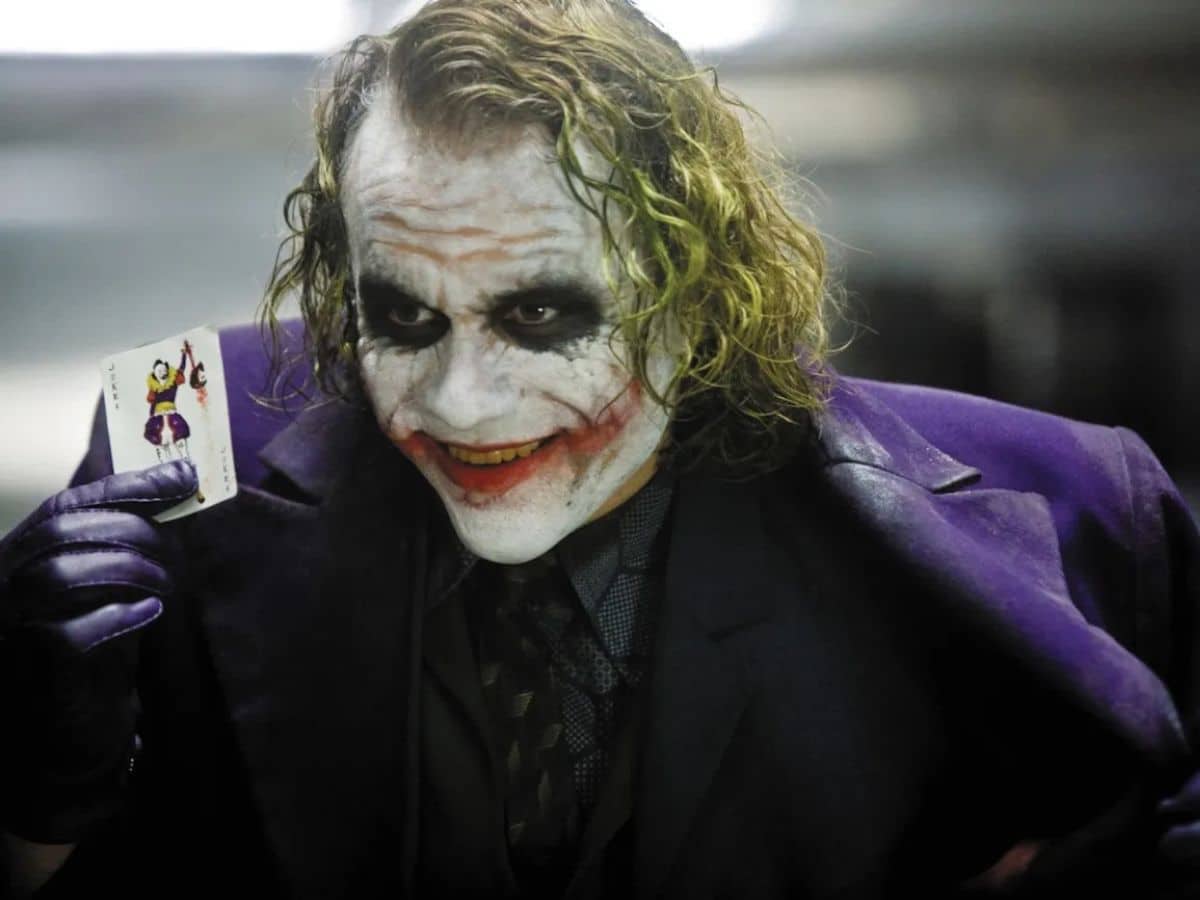
The peak of this era arrived with The Dark Knight (2008). The film became a cultural phenomenon, fueled by Heath Ledger’s posthumous Academy Award-winning performance as the Joker. It was the first major feature film to use IMAX cameras for select sequences, a technical decision that revolutionized large-format cinematography. Grossing over $1 billion globally, The Dark Knight is frequently cited by critics as the greatest superhero film ever made, praised for its exploration of surveillance, chaos theory, and moral ambiguity.
The trilogy concluded with The Dark Knight Rises (2012), a film of immense scale that depicted a city under siege. While it achieved massive financial success, grossing $1.08 billion, it faced criticism for its dense plotting and occasional narrative inconsistencies. Nevertheless, the trilogy remains a cornerstone of 21st-century cinema, influencing the tone of numerous subsequent franchise reboots.
High-Concept Originality and Temporal Manipulation
Between his Batman installments, Nolan produced The Prestige (2006) and Inception (2010). The Prestige, a period piece about rival magicians, is often regarded as Nolan’s most disciplined work. Its narrative mirrors the structure of a magic trick, utilizing misdirection to hide its final reveal in plain sight.
Inception (2010) represents the pinnacle of Nolan’s "original" blockbusters. A heist film set within the architecture of the human subconscious, it required extensive exposition to establish its "dream within a dream" logic. Despite its complexity, the film was a massive hit, grossing $839 million and winning four Academy Awards. It solidified Nolan’s status as a director who could command massive budgets for non-franchise material.

In 2014, Nolan released Interstellar, a science-fiction epic that balanced theoretical physics with a central father-daughter emotional arc. Collaborating with Nobel Prize-winning physicist Kip Thorne, Nolan aimed for scientific accuracy in his depiction of black holes and time dilation. While some critics found the emotional sentimentality at odds with the film’s rigorous science, its visual grandeur and Hans Zimmer’s organ-heavy score cemented its status as a modern classic.
Historical Realism and the Pursuit of Technical Perfection
Nolan’s more recent work has seen a shift toward historical events. Dunkirk (2017) utilized a "triptych" narrative, telling the story of the Allied evacuation from three perspectives: land (one week), sea (one day), and air (one hour). With minimal dialogue and a score built on the "Shepard tone"—an auditory illusion of a constantly rising pitch—Dunkirk functioned as a visceral, 106-minute exercise in sustained tension.
Following the experimental and polarizing Tenet (2020), which was released during the height of the COVID-19 pandemic, Nolan returned to historical subject matter with Oppenheimer (2023). A three-hour R-rated biopic about the "father of the atomic bomb," the film was a staggering success. It grossed over $975 million, becoming the highest-grossing biographical film of all time and winning seven Academy Awards, including Best Picture and Best Director. Oppenheimer demonstrated Nolan’s ability to turn a dense, dialogue-driven drama into a global cinematic event.
Comprehensive Ranking and Data Analysis
The following ranking is based on a synthesis of critical reception, technical innovation, and narrative cohesion.
- Inception (2010): The quintessential Nolan film, balancing complex structure with high-stakes action.
- The Dark Knight (2008): A genre-defining masterpiece that elevated the blockbuster to high art.
- The Prestige (2006): A perfectly constructed narrative puzzle that rewards multiple viewings.
- Interstellar (2014): An ambitious cosmic epic that remains his most visually stunning achievement.
- Oppenheimer (2023): A monumental achievement in biographical filmmaking and tension-building.
- Dunkirk (2017): A masterclass in sensory storytelling and structural precision.
- Memento (2000): The breakthrough that proved non-linear storytelling could be commercially viable.
- Batman Begins (2005): The foundational reboot that established the modern "grounded" superhero film.
- Insomnia (2002): A tight, psychological thriller that showcased Nolan’s ability to handle studio stars.
- The Dark Knight Rises (2012): A grand, if slightly overstuffed, conclusion to a landmark trilogy.
- Following (1998): A clever, low-budget debut that contains the seeds of all his future obsessions.
- Tenet (2020): A technically brilliant but emotionally distant exploration of time inversion.
Filmography Statistics and Performance
| Film Title | Release Year | Global Box Office (Gross) | Rotten Tomatoes Score |
|---|---|---|---|
| Following | 1998 | $240,495 | 82% |
| Memento | 2000 | $40.0 Million | 93% |
| Insomnia | 2002 | $113.8 Million | 92% |
| Batman Begins | 2005 | $373.7 Million | 85% |
| The Prestige | 2006 | $109.7 Million | 77% |
| The Dark Knight | 2008 | $1.006 Billion | 94% |
| Inception | 2010 | $839.0 Million | 87% |
| The Dark Knight Rises | 2012 | $1.081 Billion | 87% |
| Interstellar | 2014 | $733.2 Million | 73% |
| Dunkirk | 2017 | $530.4 Million | 92% |
| Tenet | 2020 | $365.3 Million | 70% |
| Oppenheimer | 2023 | $975.0 Million | 93% |
Technical Innovation and Industry Reactions
Nolan’s impact on the film industry extends beyond box office receipts. He has been a vocal advocate for the preservation of celluloid film in an increasingly digital industry. His insistence on shooting on 65mm and 70mm IMAX film has forced theaters to maintain and upgrade their analog projection systems.
Industry peers have frequently commented on his influence. Director Steven Spielberg noted that The Dark Knight’s exclusion from the Best Picture category led directly to the Academy expanding the field of nominees to ten films. Following the success of Oppenheimer, Cillian Murphy remarked that Nolan’s sets are characterized by a "focus and a lack of ego," where the technical complexity serves the narrative rather than the other way around.
The Future: The Odyssey (2026)
The next phase of Nolan’s career is set to begin with The Odyssey, scheduled for release on July 17, 2026. While plot details remain under wraps, the production has already generated significant industry buzz due to its high-profile cast, which reportedly includes Matt Damon, Tom Holland, and Zendaya.
The project is significant for being the first film in history to be shot entirely on IMAX 70mm cameras, a feat that builds upon the progress made during the production of Oppenheimer. Analysts predict that The Odyssey will be a "four-quadrant" blockbuster, aiming to bridge the gap between the intellectual depth of his recent historical work and the broad accessibility of his earlier sci-fi hits.
Broader Impact and Implications
Christopher Nolan’s legacy is defined by his ability to maintain the "event" status of cinema in the age of streaming. By creating films that demand to be seen on the largest possible screens, he has provided a vital lifeline to theatrical exhibitors. His work suggests that audiences are not only willing but eager to engage with challenging, long-form narratives if they are presented with sufficient scale and technical mastery. As he moves toward his 2026 release, Nolan remains one of the few directors capable of balancing the demands of a global commercial apparatus with a singular, uncompromising artistic vision.

 Jia Lissa
 Yuyun Lusiyani
 Joko Widodo
 Eva Lovia
 Pevita Pearce