
 Jia Lissa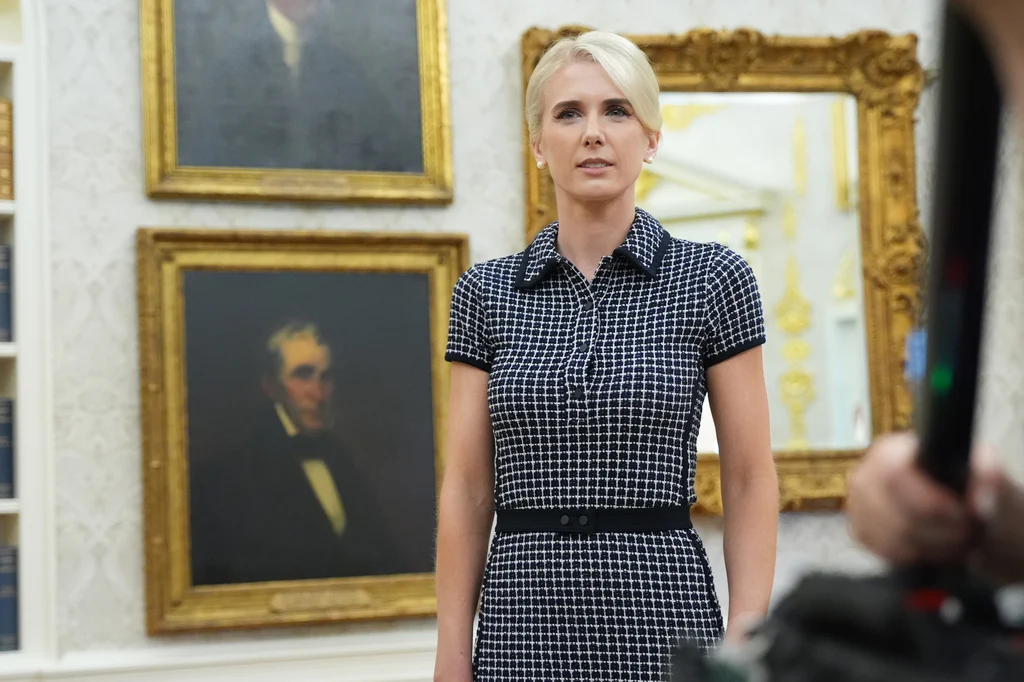
The White House has issued a formal defense of President Donald Trump’s decision to provide substantial cash gifts to three of his closest female aides, following a report by The Washington Post that detailed $45,000 payments to Natalie Harp, Margo Martin, and Chamberlain Harris. The administration maintains that the payments, which surfaced in recent financial disclosure filings, were personal holiday gestures rooted in a long-standing tradition of the President’s private life rather than supplements to their federal salaries. However, the revelation has ignited a firestorm among ethics experts and legal scholars who argue that such significant cash transfers from a sitting president to government employees may contravene federal anti-corruption statutes and executive branch ethics regulations.
The controversy centers on the intersection of personal loyalty and public service, particularly regarding the President’s special assistant, Natalie Harp. Harp, 35, who serves as a constant presence at the President’s side, reported the $45,000 gift on a financial disclosure form filed late last week. According to the report, the sum represents nearly 30 percent of her $150,000 annual government salary. Similar payments were reportedly made to Margo Martin, 31, a senior communications advisor, and Chamberlain Harris, 26, an executive assistant. All three women listed the payments on their respective disclosures as "cash gifts for the holidays," a categorization the White House insists is accurate and legally sound.
The White House Defense and the Tradition of Giving
In a statement released shortly after the report’s publication, White House spokesperson Davis Ingle dismissed the notion that the payments were inappropriate or illegal. Ingle framed the gifts as a continuation of Donald Trump’s decades-long behavior as a private businessman and employer. According to the administration, the President has historically provided generous bonuses and gifts to his staff during the holiday season, and his transition to the public sector did not, in his view, necessitate an end to these personal relationships.
"The President has a longstanding practice of giving Christmas gifts to people in his orbit, including at times employees and aides, both in government and in his time in the private sector," Ingle told reporters. He further argued that the gifts were "entirely" permissible because they were not tied to the aides’ official government duties. "The gifts at issue here have nothing to do with any of these individuals’ official government duties, and therefore are entirely permissible under relevant legal and ethical standards," Ingle added.
The administration’s position rests on the distinction between a "gift" and "compensation." Under this logic, the $45,000 was a personal token of appreciation from a wealthy benefactor to individuals he considers part of his extended professional family. By characterizing the payments as holiday gifts, the White House seeks to bypass the stringent rules that govern how federal employees are paid and what types of outside income they can accept.
Legal and Ethical Framework: 18 U.S.C. § 209
Despite the White House’s assurances, the payments have raised red flags for legal experts familiar with the United States Code. Specifically, 18 U.S.C. § 209 prohibits the "supplementation of salary" for federal employees from any source other than the United States government. The statute is designed to ensure that public officials serve the interests of the citizenry rather than the interests of private donors or, in this case, the personal interests of the person who occupies the Oval Office.
Richard Painter, who served as the chief White House ethics lawyer under President George W. Bush, was vocal in his criticism of the payments. Speaking to The Washington Post, Painter argued that the scale of the gifts makes the "holiday present" defense difficult to sustain. "He’s clearly trying to make it easier for them financially to work in government service at the White House," Painter said. "You can’t do that."
Painter further elaborated on the distinction between private-sector norms and public-service requirements. "It’s not like tipping the doorman on Fifth Avenue," he remarked. "These are U.S. government employees. If you want a job where you get tips, you shouldn’t be working for the U.S. government." The concern among critics like Painter is that such payments create an environment of "personal" rather than "institutional" loyalty, where aides may feel more beholden to the President’s personal whims than to their legal obligations as federal officers.
Profiles of the Recipients: The Inner Circle
The three aides at the center of the controversy are considered among the most loyal and frequently seen members of the President’s entourage.
Natalie Harp has become a recognizable figure in the Trump administration, often referred to by media outlets as the "human printer." Her role involves accompanying the President nearly everywhere, carrying a portable printer and tablet to provide him with real-time news updates, social media reactions, and favorable press clips. Her proximity to the President was highlighted earlier this summer during a NATO summit in July. Following a credible assassination threat from Iran, the President was moved to a secure location inside a catering truck; Harp was reportedly one of the few aides allowed to remain with him in that confined space.

Margo Martin, the 31-year-old communications advisor, has also been a constant presence, often seen managing the President’s interactions with the press during travel and at various events. Her role is critical to the administration’s messaging strategy. Chamberlain Harris, at 26, serves as an executive assistant, a role that requires high-level coordination of the President’s daily schedule and personal requirements.
The fact that all three aides are young women and recipients of identical $45,000 payments has led to further scrutiny regarding the criteria used for these gifts. While the White House maintains the gifts were distributed to those in the President’s "orbit," it remains unclear if other male aides or older staff members received similar cash disbursements.
Timeline of the Controversy
The timeline of the disclosure and subsequent fallout suggests a rapid escalation of the ethical debate:
- December 2025: The alleged "holiday gifts" are distributed to Harp, Martin, and Harris.
- July 2026: Natalie Harp is identified as a key aide during the security incident at the NATO summit, bringing her role into sharper public focus.
- September 4, 2026: President Trump holds an Oval Office event to discuss meat processing with farmers; Harp is seen standing prominently behind him.
- September 7, 2026: Financial disclosure forms for the previous year are processed and made available for review.
- September 8, 2026: The Washington Post breaks the story detailing the $45,000 cash gifts.
- September 9, 2026: The White House issues its official rebuttal, defending the legality of the payments.
Comparative Analysis and Broader Implications
The scale of these gifts is unprecedented in modern American presidential history. While it is common for presidents to give small tokens of appreciation to their staff—such as cufflinks, signed books, or framed photos—five-figure cash payments are virtually unheard of in the context of the federal workforce. Under the Obama, Bush, and Clinton administrations, strict gift-giving limits were enforced to avoid even the appearance of a conflict of interest or a violation of the salary supplementation ban.
The Office of Government Ethics (OGE) generally allows for gifts between employees based on a personal relationship, but these are typically restricted to "minimal value" items (usually defined as $20 or less) or gifts for specific occasions like marriage or the birth of a child. When a superior gives a gift to a subordinate, the rules are slightly different, but the core principle remains: the gift cannot be seen as a bribe, a kickback, or a salary supplement.
The $45,000 figure is particularly striking when compared to the average American household income. For many federal employees, such a sum would represent more than half of their total annual earnings. Critics argue that if the President wanted to increase the compensation for his aides, the proper channel would have been to request a salary adjustment through the official White House personnel budget, which is subject to congressional oversight and public record. By using personal cash, the President bypassed these checks and balances.
Political Fallout and Future Scrutiny
The political ramifications of the report are already beginning to manifest. Congressional Democrats have signaled that they may launch an inquiry into the payments. Senator Jon Ossoff (D-GA), who has previously criticized the President’s reliance on a small circle of personal loyalists, suggested that the payments are emblematic of a broader disregard for institutional norms. During a recent campaign rally, Ossoff quipped about the President’s preference for traveling with "Natalie" over performing the traditional duties of the office, a comment that has gained renewed traction in light of the gift disclosures.
The controversy also raises questions for the Department of Justice (DOJ). While the President has broad powers, the supplementation of salary statute is a criminal one. However, the likelihood of a DOJ investigation into a sitting president’s personal gift-giving is considered low, given the historical precedent of executive immunity and the subjective nature of "intent" in gift-giving cases.
As the story develops, the focus will likely shift to whether other aides received similar payments and whether these gifts were properly taxed. Under IRS rules, cash gifts of this magnitude would exceed the annual gift tax exclusion (which stood at $18,000 per recipient in 2024, though it may have adjusted by 2026). If the President did not pay the appropriate gift taxes, or if the aides did not report the income if it was deemed compensation, the situation could evolve from an ethics dispute into a tax compliance issue.
For now, the White House remains steadfast. The administration’s gamble is that the public will view the payments as the President intended: an act of personal generosity from a billionaire leader to his devoted staff. Yet, in the highly regulated world of federal service, the line between a generous boss and a law-breaking official remains a subject of intense legal debate. The outcome of this controversy may well define the limits of personal presidential power in the modern era.




 Yuyun Lusiyani
 Joko Widodo
 Pevita Pearce
 admin
admin
