
 Lina Irawan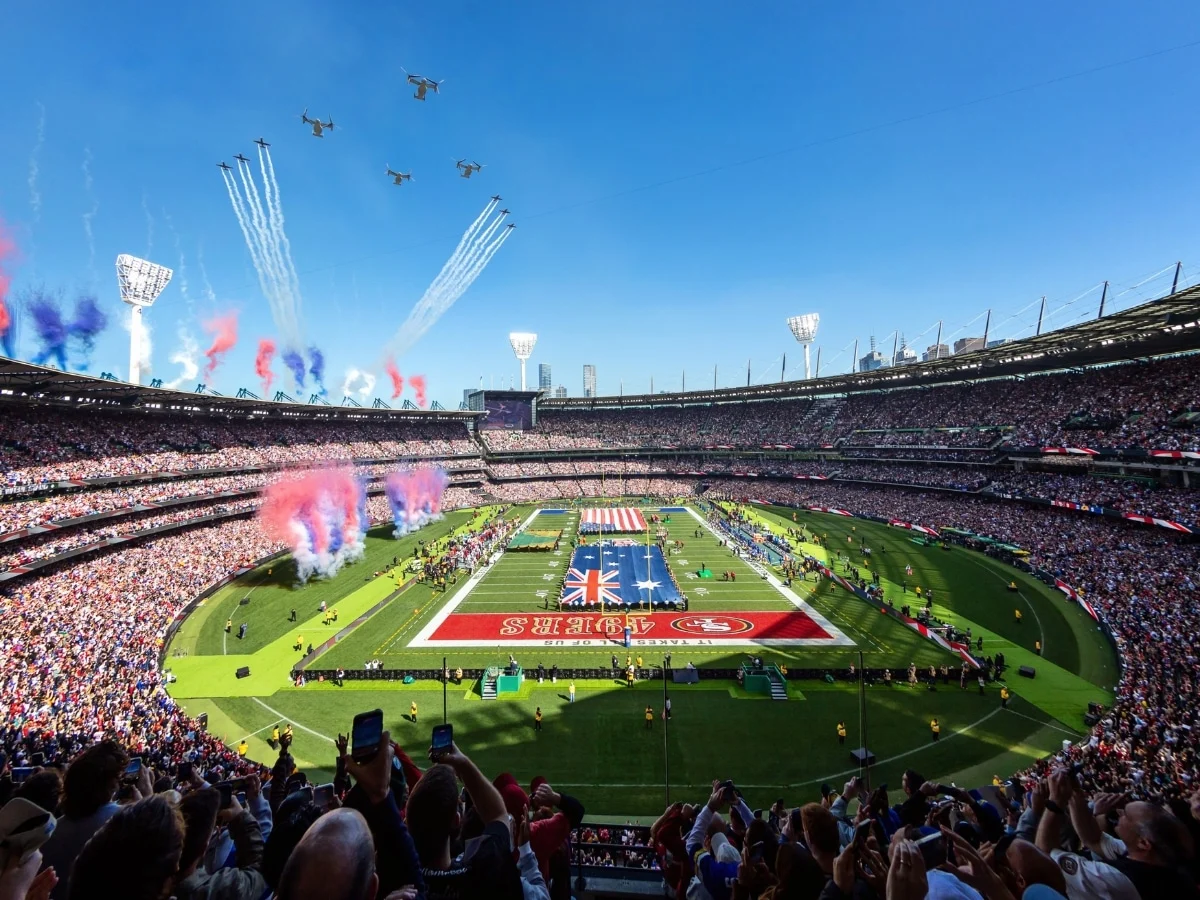
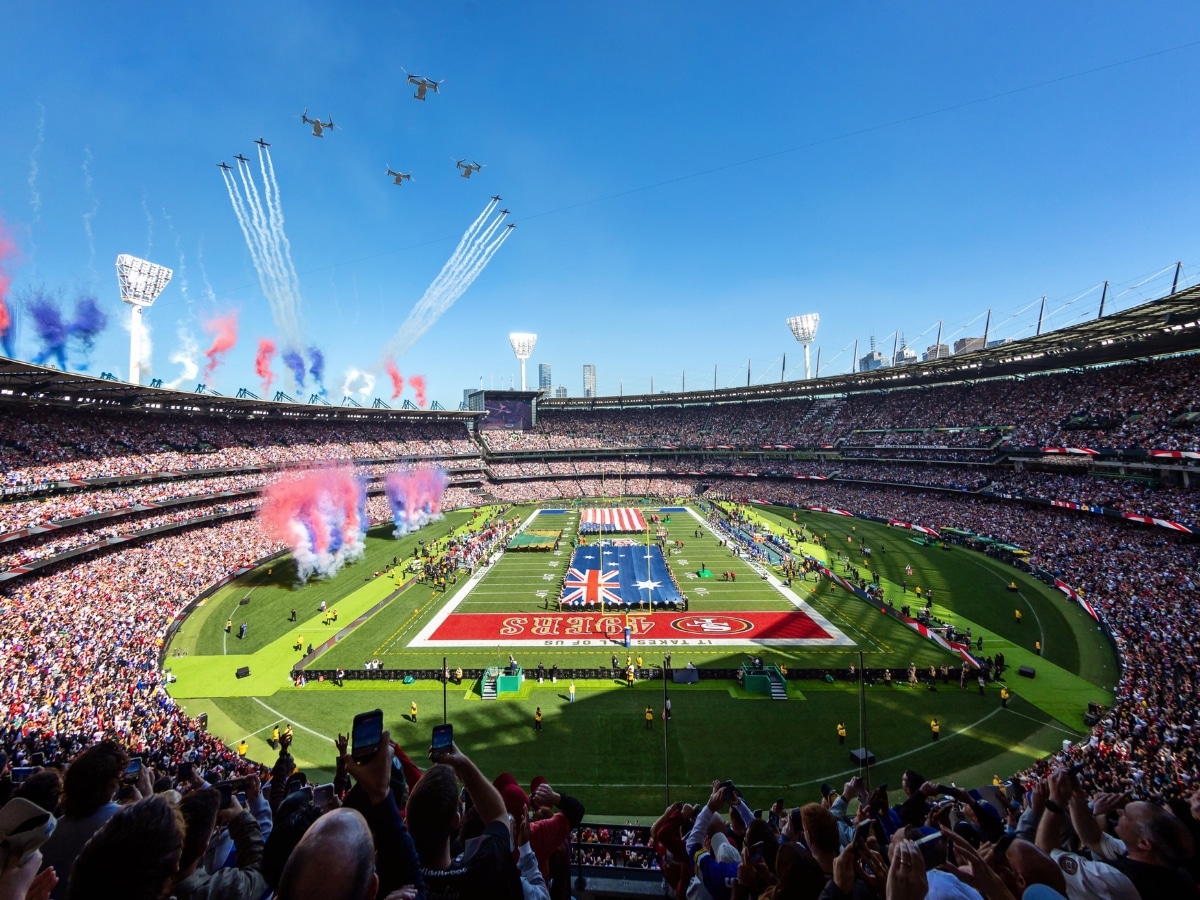
The National Football League (NFL) marked a significant milestone in its global expansion strategy on Friday as the San Francisco 49ers defeated the Los Angeles Rams 27–7 in the first-ever regular-season game held on Australian soil. A capacity crowd of 100,021 spectators filled the iconic Melbourne Cricket Ground (MCG), witnessing a spectacle that blended elite American professional football with high-production entertainment and local cultural touchstones. While the Rams entered the contest as the designated "home" team under the NFL’s Global Markets Program, the 49ers dictated the tempo for much of the game, scoring 24 unanswered points to secure a decisive opening-week victory.
The event represented more than just a single game; it was the culmination of years of logistical planning and market analysis by the NFL, which has identified Australia as a primary growth region. The attendance figure of 100,021 stands as one of the highest in the history of the league, rivaling the capacities of the largest stadiums in the United States, such as AT&T Stadium in Texas. The atmosphere in Melbourne mirrored that of a Super Bowl, featuring a pre-game performance of "Advance Australia Fair" by Cody Simpson and "The Star-Spangled Banner" by the Brooklyn-based group Infinity Song.
Chronology of Play: From Early Momentum to Defensive Dominance
The contest began as a defensive stalemate, with both teams adjusting to the unique environment of the MCG. The Rams struck first in the scoring column after a methodical drive in the opening quarter resulted in a short field goal, followed by the game’s first touchdown early in the second period. Running back Kyren Williams etched his name into the history books by scoring the first NFL regular-season touchdown in Australia, a short-yardage rush that capped an 80-yard drive and gave Los Angeles a 7–3 lead.
However, the momentum shifted rapidly as San Francisco’s offense, led by quarterback Brock Purdy, found its rhythm. Purdy, who has become a central figure in the 49ers’ recent success, demonstrated poise under the bright lights of the international stage. His first major contribution came via a 39-yard touchdown pass to Demarcus Robinson, which reclaimed the lead for San Francisco. The 49ers’ defense simultaneously tightened its grip on the Rams’ offense, pressuring quarterback Matthew Stafford and neutralizing the Rams’ explosive receiving corps.
By halftime, the 49ers had established a lead they would not relinquish. The third and fourth quarters saw San Francisco extend their advantage through a combination of tactical precision and physical dominance at the line of scrimmage. Purdy connected with veteran receiver Mike Evans for a touchdown before finding Deebo Samuel for another score, effectively putting the game out of reach. The 49ers’ defense punctuated the performance with a crucial goal-line stand in the fourth quarter, preventing a Rams comeback and ensuring the 20-point margin of victory.
The Half-Time Intersection of Sport and Culture
While the on-field action was the primary draw for many, the halftime show became a focal point of the day’s cultural discourse. The Jonas Brothers—comprising Nick, Joe, and Kevin Jonas—delivered a high-energy set designed to appeal to both the international broadcast audience and the local fans in attendance. The performance included their hit singles "Burnin’ Up," "Sucker," and "Year 3000," alongside their latest release, "Listen When Sad."
In a calculated move to resonate with the Australian audience, the trio performed a cover of John Farnham’s "You’re the Voice." The 1986 anthem, widely regarded as Australia’s unofficial national song, elicited a massive sing-along from the 100,000-strong crowd. This moment was cited by commentators as a successful "bridge-building" exercise, merging American pop culture with Australian heritage. Despite logistical concerns earlier in the week regarding Joe Jonas’s travel schedule—he missed a preliminary fan event due to flight delays—the group appeared in full for the performance, which went off without technical incident.
Technical and Logistical Feats: Converting the MCG
The hosting of an NFL game at the MCG presented unprecedented technical challenges. The MCG is primarily a circular venue designed for cricket and Australian Rules Football (AFL). To accommodate an NFL "gridiron," which is rectangular and requires specific dimensions for sidelines, end zones, and coaching boxes, officials had to meticulously reconfigure the turf.
The transformation involved marking out a 120-yard field (including end zones) across the center of the oval. This required the installation of temporary goalposts and the application of specialized paint that would not interfere with the AFL finals scheduled for the following weeks. Following the conclusion of the game on Friday, stadium groundcrews immediately began the process of reverting the field to its AFL configuration to prepare for the upcoming preliminary finals and the Grand Final on September 26.
Statistical Analysis and Key Performances
The 49ers’ victory was underpinned by statistical superiority in several key categories:
- Quarterback Efficiency: Brock Purdy finished the day with three touchdown passes and zero interceptions, maintaining a passer rating well above 110. His ability to distribute the ball to multiple targets—Evans, Samuel, and Robinson—showcased the depth of the San Francisco roster.
- Defensive Pressure: The 49ers’ defensive line recorded four sacks on Matthew Stafford and forced two turnovers. Their ability to stop the run was evident, as they held the Rams to under 80 total rushing yards following Kyren Williams’ initial touchdown.
- Special Teams: The kicking game remained steady despite the unfamiliar wind patterns of the open-air MCG. Both teams utilized the conditions to their advantage in the punting game, a facet of play that Australians, familiar with the kicking-heavy nature of AFL, particularly appreciated.
For the Rams, the loss is a setback in what was intended to be a celebratory "home" opener. Despite the support of the local crowd, the team struggled with consistency in the red zone, a factor that head coach Sean McVay will likely address during the long return flight to California.

The Broader Impact: NFL’s Global Strategy and Australia’s Market Potential
The success of the Melbourne game provides a strong proof of concept for the NFL’s continued international expansion. Australia has long been a consumer of NFL content, but the physical presence of a regular-season game signifies a new era of engagement. According to market data, Australia has one of the highest per-capita consumption rates of NFL Game Pass outside of North America, and the presence of Australian players in the league—primarily as punters like Mitch Wishnowsky of the 49ers—has bolstered local interest.
Industry analysts suggest that the economic impact of the game on the city of Melbourne is substantial. With thousands of international and interstate visitors traveling for the event, the hospitality and tourism sectors saw a significant spike in activity. The Victorian Government, which has aggressively pursued major sporting events to solidify Melbourne’s status as a global sporting capital, viewed the sell-out crowd as a validation of their investment.
Future Implications for the International Series
The NFL’s International Series has previously focused on London, Mexico City, Munich, and most recently, São Paulo, Brazil. The addition of Melbourne to this list suggests that the league is willing to overcome the logistical hurdles of long-distance travel to tap into affluent, sports-centric markets.
The primary challenge remains the "travel tax"—the physical toll of 14-to-16-hour flights on athletes. However, by scheduling the game for a Friday morning in Australia (Thursday night in the U.S. Eastern Time Zone), the league was able to capture a prime-time television slot in America while allowing the teams an extended recovery period before their next fixtures.
As the NFL evaluates the success of the MCG debut, talk has already turned to the possibility of a multi-year deal for games in Australia. Potential future venues include Sydney’s Accor Stadium or Perth’s Optus Stadium, though the MCG’s 100,000-seat capacity remains an unparalleled draw for revenue and atmospheric impact.
The 49ers return to the United States with a 1–0 record and the prestige of winning a historic international fixture. The Rams, while 0–1, have successfully expanded their brand footprint in a key international territory. For the 100,021 fans who departed the MCG on Friday, the day was a reminder of the growing universality of professional sports and the enduring appeal of high-stakes competition, regardless of the hemisphere.




 Yuyun Lusiyani
 Joko Widodo
 Jia Lissa
 Pevita Pearce
 admin
admin
