
 admin
admin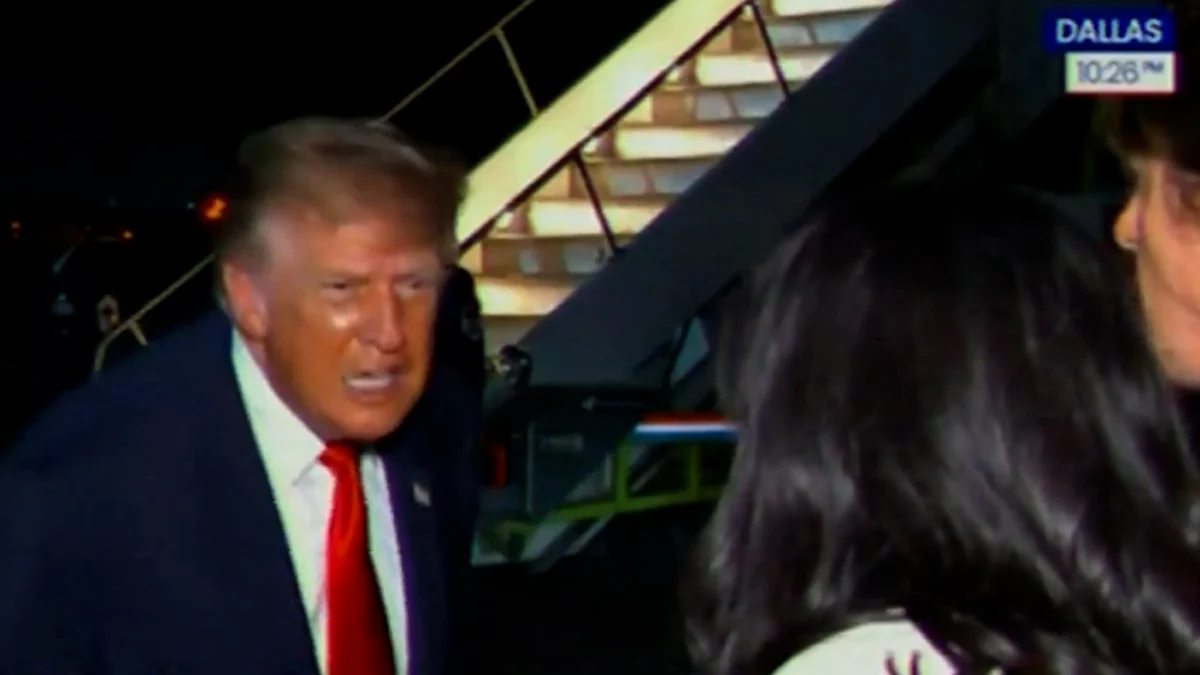
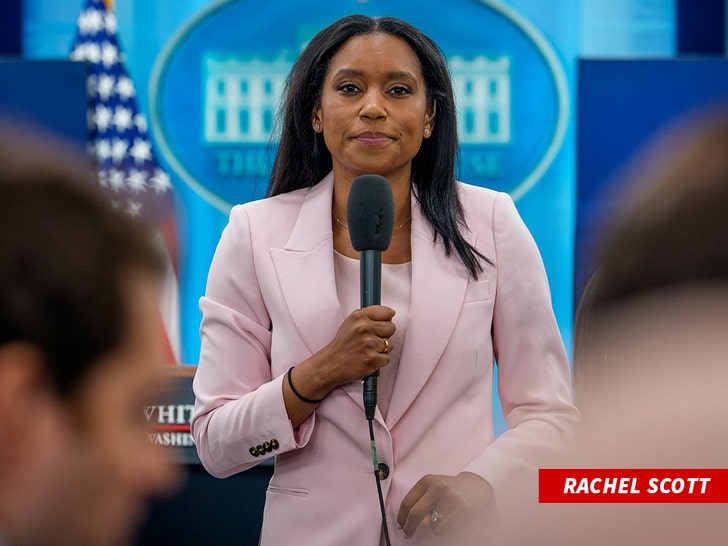
In a dramatic and highly publicized confrontation that underscored the persistent tensions between the executive branch and the press, President Donald Trump vehemently lashed out at ABC News White House correspondent Rachel Scott on the tarmac in Dallas, Texas. The incident, which occurred on the morning of September 11, 2026, moments after the President’s arrival for the Republican National Convention, quickly became a focal point of media scrutiny and political commentary. The contentious exchange unfolded as President Trump fielded questions from a pool of reporters, culminating in a sharp rebuke directed at Scott after she pressed him on the national debt and a controversial proposal to issue $5,000 checks to American voters.
The Tarmac Confrontation in Dallas
The scene was set against the backdrop of Dallas Love Field, a typically bustling regional airport, momentarily transformed into a high-stakes political arena. President Trump had just disembarked from Air Force One, making his way to a waiting motorcade before his scheduled appearance at the Republican National Convention, a pivotal event in the lead-up to the crucial midterm elections. As is customary, a group of journalists had gathered to pose questions to the President, seeking insights into his agenda and campaign strategy. The atmosphere, initially routine for such an encounter, swiftly grew tense when Rachel Scott, known for her incisive questioning and persistent pursuit of answers, challenged the President on a significant economic policy matter.
Scott’s initial question cut directly to the heart of a burgeoning economic debate: "Mr. President, with the national debt now exceeding $40 trillion, why do you feel it’s necessary to propose a $5,000 payment to every American to incentivize voting Republican in the midterms, if your economic policies are truly working as you claim?" The question, delivered with directness, aimed to probe the perceived contradiction between the administration’s economic boasts and a policy proposal that critics had quickly labeled as a form of "vote buying."
President Trump, visibly taken aback by the direct challenge to his economic narrative and the implication of the "$5,000 check" proposal, responded with characteristic defiance. He adamantly denied that the payments were an incentive to vote, reframing them instead as a "reward" for American citizens who had, in his view, endured "four years of bad economic policies during the Biden administration" that had, according to him, bled into the initial phase of his second term. He further expanded his critique, lambasting the previous administration’s policies on crime and border security, painting a picture of a nation he was diligently working to restore to prosperity and order.
Escalation: "Not You! You’re the Worst!"
As President Trump concluded his initial response, Scott attempted to interject with a follow-up question, seeking clarification or a deeper explanation regarding the national debt and the proposed payments. It was at this moment that the confrontation escalated dramatically. The President, turning sharply towards Scott, pointed a finger and repeatedly exclaimed, "Not you!" The fury on his face was palpable, captured by numerous cameras documenting the exchange. He then leaned further into the reporter, his voice rising, and added a scathing personal critique: "You’re the worst." The scene, raw and unscripted, left an indelible mark on observers and quickly circulated across news networks and social media platforms.

The swiftness and intensity of the President’s outburst against a credentialed White House correspondent immediately drew parallels to his past interactions with the press, which have frequently been characterized by antagonism and sharp criticism. However, the directness of the personal attack and the public nature of the reprimand in such a visible setting stood out, even for a presidency known for its combative relationship with the media.
The $40 Trillion National Debt: A Looming Economic Challenge
Rachel Scott’s question about the national debt was not merely rhetorical; it touched upon a critical and growing concern within economic and political circles. As of late 2026, the United States national debt had indeed surpassed the staggering figure of $40 trillion. This monumental sum represents the total outstanding borrowings of the U.S. federal government accumulated over decades, reflecting budget deficits from various administrations, economic downturns, and significant spending on social programs, defense, and infrastructure.
To put this figure into context, the national debt had steadily increased over the past two decades, accelerating significantly during periods of economic crisis and expansive fiscal policies. For instance, at the end of the Bush administration in 2009, the debt stood at approximately $10.6 trillion. By the end of the Obama administration in 2017, it had risen to nearly $20 trillion. The Trump administration’s first term saw it climb further, and the subsequent Biden administration, facing the economic fallout of a global pandemic and implementing large-scale relief and infrastructure packages, contributed to its continued ascent. The current $40 trillion mark represents a significant increase in just a few years, raising alarm bells among fiscal conservatives and economists about long-term sustainability, potential inflation, and the burden on future generations. Servicing this debt alone consumes a substantial portion of the federal budget, limiting flexibility for other critical investments.
The $5,000 Payment Proposal: Policy and Politics
The President’s proposal to offer each American a $5,000 check, positioned as a "reward," is a highly unconventional and fiscally significant policy idea, especially against the backdrop of the escalating national debt. While the precise mechanisms and eligibility criteria for such a payment were not fully detailed in the immediate aftermath of the announcement, the concept itself immediately sparked debate.
From a policy perspective, a direct payment of this magnitude to every American adult would represent an unprecedented fiscal injection into the economy. Assuming approximately 260 million adult Americans, the cost could run into trillions of dollars, potentially exacerbating inflationary pressures and further ballooning the national debt. Proponents might argue such a measure could stimulate consumer spending, providing a direct boost to individuals and businesses, particularly those still recovering from economic hardships. However, critics, like Scott, argue that if the economy is indeed robust, such a large-scale stimulus would be unnecessary and irresponsible.

From a political standpoint, the timing of the proposal, just weeks before the midterm elections and announced at a high-profile event like the Republican National Convention, strongly suggests a strategic maneuver to energize the Republican base and appeal to undecided voters. While President Trump denied it was an "incentive," the perception that it was designed to "buy votes" is a powerful narrative that opponents are eager to exploit. Direct payments have historically been popular, as seen during the COVID-19 pandemic, and promising such a significant sum could sway voters, particularly those facing economic anxieties. The President’s framing of the payments as a reward for enduring the "bad economic policies" of the previous administration seeks to link the benefit directly to his leadership and differentiate his approach from his predecessors.
Historical Context of Presidential Press Relations
President Trump’s confrontational style with the media is not a novel development. Throughout his political career, he has frequently characterized news organizations critical of his administration as "fake news" and "enemies of the people." His rallies often feature direct attacks on specific reporters or media outlets, a tactic that resonates strongly with his base. This approach marks a significant departure from traditional presidential-press relationships, which, while often adversarial, typically maintained a veneer of professional decorum.
Incidents of presidents expressing frustration with the press are not uncommon in American history. Richard Nixon famously had an acrimonious relationship with the media, and Lyndon B. Johnson was known for his bluntness. However, the consistent, public, and often personal nature of President Trump’s attacks has set a new precedent. This specific exchange with Rachel Scott serves as another prominent example of this ongoing tension, highlighting the challenges reporters face in holding the executive branch accountable. The aggressive posture towards a reporter asking a policy-relevant question also raises broader concerns about the health of democratic discourse and the ability of the press to fulfill its constitutional role.
Reactions and Implications
The immediate aftermath of the tarmac incident saw a flurry of reactions from various quarters. ABC News, while not issuing an immediate, direct condemnation of the President’s personal remarks, is expected to reaffirm its commitment to independent journalism and support for its correspondent. The White House Correspondents’ Association (WHCA) and other press freedom organizations are likely to issue statements defending Scott’s right to ask challenging questions and denouncing the President’s verbal assault. Such organizations consistently advocate for an environment where journalists can perform their duties without intimidation or personal attacks.
Politically, the incident is ripe for exploitation by both sides. Democrats will undoubtedly seize upon the footage as evidence of the President’s perceived authoritarian tendencies and disdain for transparency and a free press. They will likely frame the $5,000 payment as a desperate, fiscally irresponsible attempt to buy votes. Republicans, on the other hand, might rally around the President, viewing his outburst as a strong stand against a "biased" media, a narrative that often resonates with his supporters. The exchange could further galvanize his base, reinforcing the idea that he is fighting against entrenched institutions.
For the midterm elections, the incident adds another layer to an already complex political landscape. The Republican National Convention itself is designed to unify the party and project a strong image ahead of the elections. This confrontation, while potentially distracting, also serves to energize the base through perceived conflict. The economic debate, particularly around the national debt and the wisdom of large-scale direct payments, will undoubtedly intensify, becoming a key battleground issue in campaigns across the country.
The Enduring Role of Media Scrutiny
The exchange between President Trump and Rachel Scott, while jarring, serves as a stark reminder of the enduring, if often fraught, relationship between political power and the Fourth Estate. In a democratic society, the press plays a crucial role in holding leaders accountable, scrutinizing policy proposals, and informing the public. This necessitates asking difficult questions, even those that may provoke discomfort or anger from those in power.
The incident underscores the increasing pressures faced by journalists in an era of heightened political polarization and rapid information dissemination. The ability to ask follow-up questions, to delve deeper into complex policy issues like the national debt, and to challenge official narratives is fundamental to robust journalism. When these attempts are met with personal attacks and attempts to silence, it raises significant questions about the accessibility of information and the transparency of governance.
As the nation moves closer to the midterm elections, the Dallas tarmac incident will likely be dissected, analyzed, and replayed, contributing to the broader narrative of the Trump presidency and its unique approach to public communication and media engagement. It stands as a testament to the persistent tension at the heart of American political discourse, where the pursuit of truth often collides with the imperatives of power.




 Yuyun Lusiyani
 Joko Widodo
 Jia Lissa
 Pevita Pearce

