
 Lina Irawan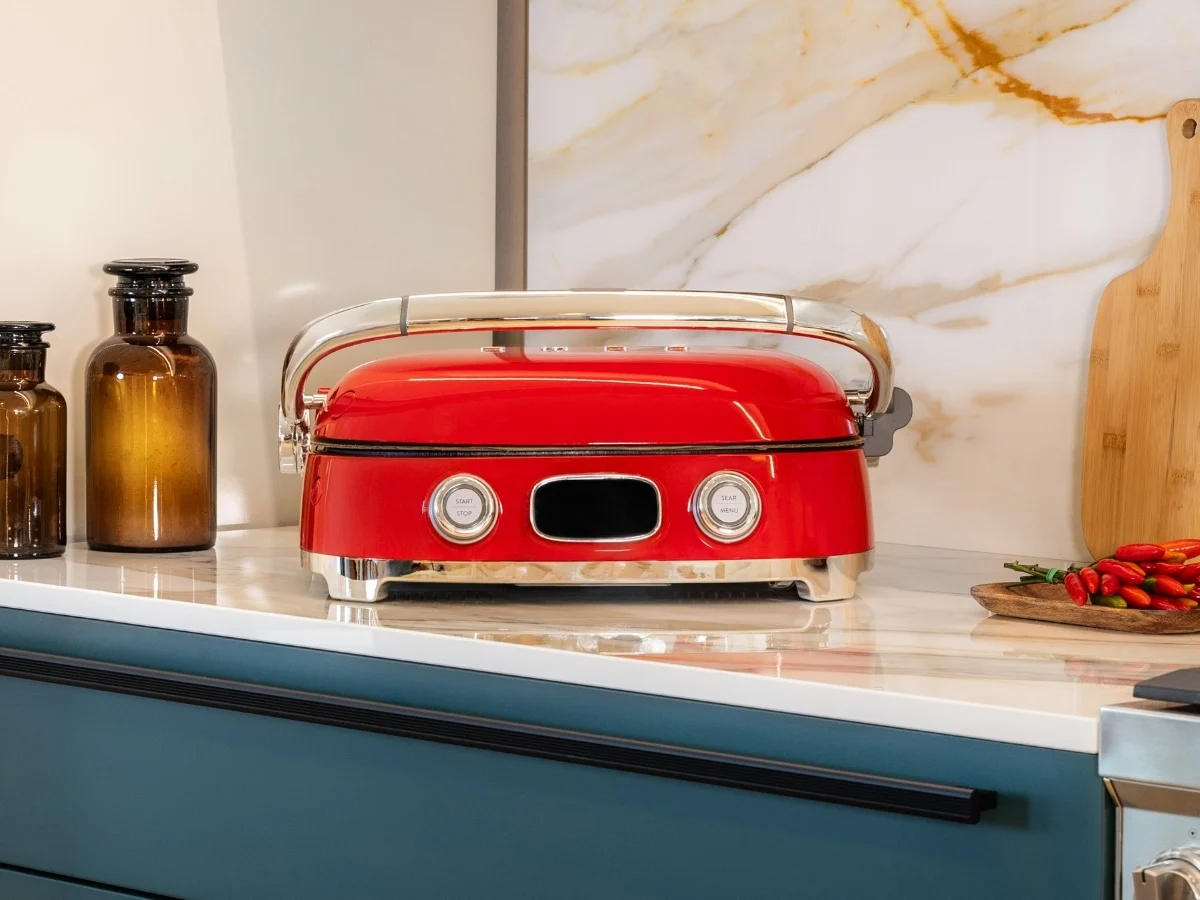
The introduction of the Smeg 5-in-1 MultiGrill (Model MGF01) marks a significant shift in the premium small appliance market, positioning a high-end, manual-control alternative against the automated convenience traditionally offered by competitors like Tefal. As consumer demand for multi-functional kitchen tools grows, driven by a global trend toward healthier home-cooked meals and more efficient use of kitchen space, Smeg has entered the fray with a device that prioritizes aesthetic appeal, thermal mass, and culinary versatility. Priced at $449 AUD, the MultiGrill is an investment in both form and function, designed to replace several single-use appliances including the sandwich press, waffle maker, and indoor barbecue.
Market Context and the Rise of Countertop Versatility
For over a decade, the benchtop grill market was defined by the "set-and-forget" philosophy. Brands like Tefal dominated this space with their OptiGrill series, which utilized thickness sensors and automated cooking programs to remove guesswork for the user. However, a new segment of the market—comprising culinary enthusiasts and design-conscious homeowners—has begun to favor manual precision and high-quality materials over digital automation.
The Smeg MultiGrill arrives as part of the brand’s broader "50s Retro Style" collection, which has successfully turned utilitarian kitchen tools into status symbols. This move reflects a broader economic trend known as "premiumization," where consumers are willing to pay a significant margin for appliances that offer durability, superior materials, and a design that complements modern interior aesthetics.
Technical Specifications and Design Engineering
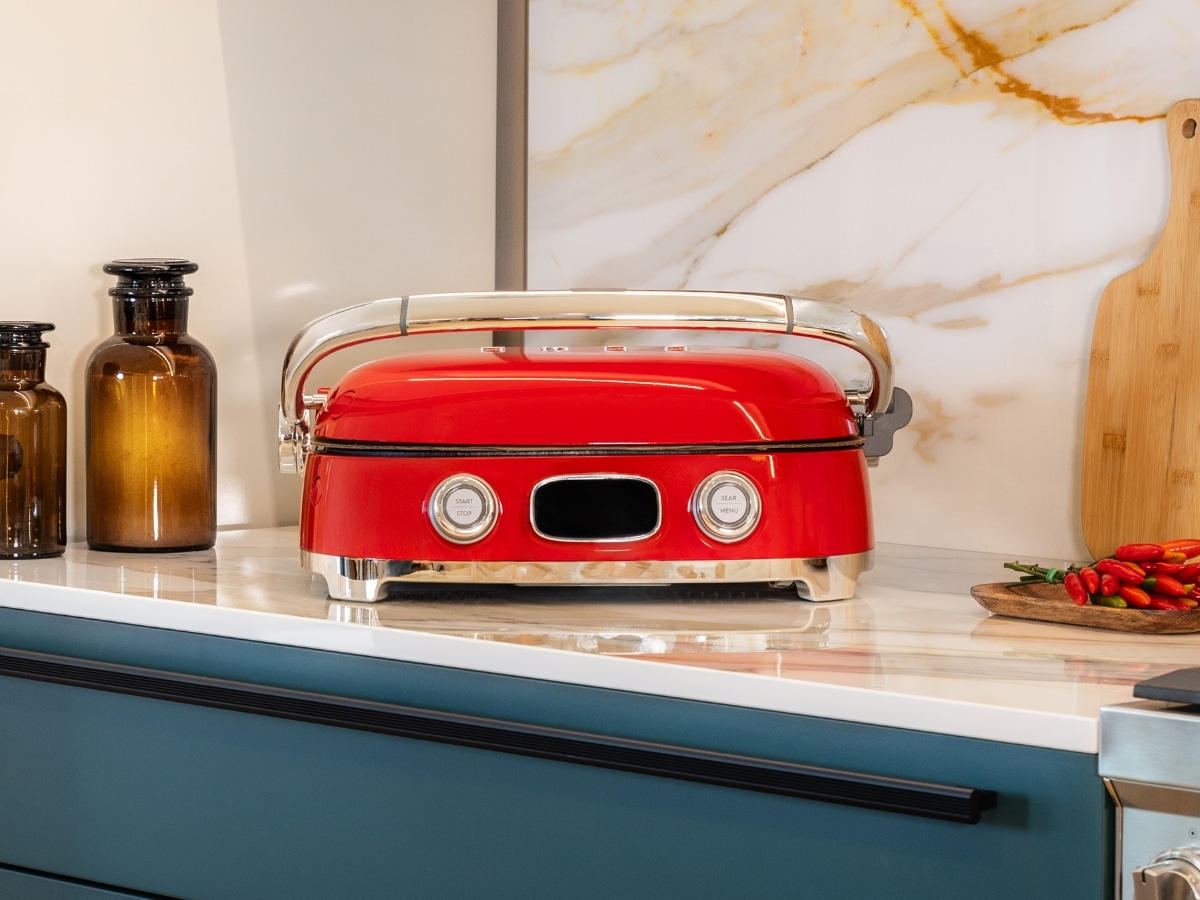
The Smeg MultiGrill is a substantial piece of engineering, weighing 7.9kg. This weight is a direct result of its die-cast metal body and heavy-duty cooking plates, which provide the thermal mass necessary for consistent heat retention and recovery—a critical factor in achieving a high-quality sear on proteins.
Measuring 47cm in width, 36cm in depth, and 21cm in height, the unit requires a dedicated footprint on the kitchen bench. This contrasts with more compact, plastic-housed units that are often designed for vertical storage in cupboards. The Smeg’s design philosophy suggests it is intended to remain a permanent fixture. When fully extended into the 180-degree "Open BBQ" mode, the cooking surface doubles to an expansive 47cm by 72cm, making it one of the largest portable electric grilling surfaces available for residential use.
The appliance features dual independent heating elements, controlled by two separate dials on the front panel. This allows users to set different temperatures for the top and bottom plates, a feature essential for the "Oven/Melt" mode or for cooking different food types simultaneously in the open configuration.
The Five-in-One Configuration Logic
The MultiGrill’s "5-in-1" nomenclature refers to its specific mechanical configurations:

- Contact Grill: The standard mode for searing meats and vegetables quickly by applying heat to both sides simultaneously. This reduces cooking times by approximately 50% compared to traditional pan-frying.
- Open 180° BBQ: The unit unfolds to lie flat, effectively becoming a large electric griddle or teppanyaki plate. This mode is particularly effective for social cooking or breakfast preparation.
- Oven/Melt Mode: Utilizing a sophisticated hinge lock, the top plate can be suspended at various heights above the bottom plate. This allows for melting cheese on open-faced sandwiches or "broiling" delicate items without direct contact.
- Panini/Sandwich Press: The floating hinge ensures even pressure across sandwiches of varying thicknesses, preventing the "squashing" effect common in cheaper presses.
- Waffle Maker: The inclusion of dedicated waffle plates transforms the unit into a high-capacity Belgian waffle iron, capable of producing four waffles per batch.
Performance Analysis: Manual Control vs. Automated Logic
A critical point of differentiation for the Smeg MultiGrill is its rejection of automated thickness sensors. While the Tefal OptiGrill uses an internal algorithm to determine when a steak is "medium-rare" based on its thickness, Smeg provides the user with an LCD screen and manual temperature controls ranging from 60°C to 230°C, with a dedicated "Sear" function that pushes the plates to 250°C.
Industry analysts note that while automation appeals to the time-poor novice, manual control appeals to the "prosumer." Manual dials allow for greater nuance; for example, a user can set a high sear for a steak on the bottom plate while keeping the top plate at a lower temperature to prevent overcooking the interior. However, this approach requires the user to have a baseline understanding of cooking temperatures or to utilize an external meat thermometer to ensure food safety and desired doneness.
Material Science: The Shift to Ceramic Coatings
One of the most significant upgrades in the Smeg MultiGrill is the use of a ceramic non-stick coating on its plates. Traditional non-stick appliances often use PTFE-based coatings (Polytetrafluoroethylene), which can degrade over time, especially when subjected to high heat, leading to a loss of non-stick properties and potential health concerns if the coating flakes.
Ceramic coatings are generally more resistant to high temperatures and provide a smoother surface that requires less oil. In real-world testing scenarios, the Smeg’s plates have shown superior release properties for high-protein foods like chicken and eggs. Furthermore, the design of the plates features wider, shallower grooves compared to the deep, narrow channels found on older grill models. This geometric change significantly eases the manual cleaning process, addressing a long-standing consumer complaint regarding the maintenance of indoor grills.

Comparative Chronology: Benchtop Grill Evolution
To understand the Smeg MultiGrill’s position, one must look at the timeline of the product category:
- 1994: The George Foreman Grill popularizes the "lean mean fat-reducing" contact grill, focusing on health but utilizing basic heating elements and fixed plates.
- 2010s: Brands like Tefal and Breville introduce removable, dishwasher-safe plates and digital sensors, moving the category toward convenience and "smart" cooking.
- 2020s: A resurgence in home cooking during global lockdowns leads to a demand for "professional grade" home appliances. Smeg and other luxury brands respond by integrating high-end materials (die-cast metals, ceramic) and manual precision into the category.
Official Responses and Market Impact
While Smeg has not released specific sales figures for the MGF01, the appliance has been met with positive reception in the Australian and European markets, particularly among demographics that prioritize kitchen design. Critics of the $449 AUD price point argue that it is nearly double the cost of legacy models from other brands. However, Smeg representatives have pointed to the inclusion of three full sets of plates (Grill, Flat, and Waffle) as a significant value add, noting that these accessories are often sold separately by other manufacturers.
From a sustainability perspective, the MultiGrill’s die-cast construction suggests a longer product lifecycle than plastic-heavy alternatives. In an era of "throwaway" appliances, Smeg’s focus on repairability and robust build quality aligns with growing consumer interest in sustainable consumption.
Broader Implications for Energy Consumption
As energy prices fluctuate, the efficiency of small appliances versus full-sized ovens has become a point of interest for factual analysis. A standard electric oven can take 15 to 20 minutes to preheat and consumes significant wattage to maintain temperature in a large cavity. The Smeg MultiGrill, by contrast, reaches searing temperatures in under six minutes and applies heat directly to the food surface. For small households or weeknight meals, the use of a multi-grill can represent a measurable reduction in household energy consumption compared to using a 60cm built-in oven for simple tasks like grilling chicken or toasting bread.

Final Assessment of Value and Utility
The Smeg 5-in-1 MultiGrill represents a successful marriage of mid-century design and modern material science. While its footprint and price may be prohibitive for those in smaller apartments or on a strict budget, its performance metrics—specifically in heat distribution and ease of cleaning—set a new benchmark for the category.
For the consumer, the choice between the Smeg and its competitors comes down to a preference for "chef-style" control versus "automated" assistance. The Smeg MultiGrill does not aim to cook the meal for the user; rather, it provides a high-performance, versatile platform for the user to execute a wide variety of culinary tasks with precision. As the "heart of the home" continues to evolve into a space for both social display and culinary exploration, the Smeg MultiGrill stands as a definitive example of the modern, multi-functional luxury appliance.
Technical Summary Table
| Feature | Smeg 5-in-1 MultiGrill (MGF01) | Industry Standard (Legacy) |
|---|---|---|
| Construction | Die-cast metal body | Plastic & brushed steel |
| Plate Coating | Ceramic Non-stick | PTFE (Teflon-style) |
| Temperature Max | 250°C (Sear Function) | 210°C – 230°C |
| Control Interface | Dual manual dials + LCD | Single dial or auto-presets |
| Weight | 7.9kg | 4.0kg – 5.0kg |
| Included Accessories | Grill, Griddle, & Waffle plates | Grill plates only |
| Hinge Design | Multi-level locking (Oven mode) | Floating (Press mode only) |




 Yuyun Lusiyani
 Joko Widodo
 Jia Lissa
 Pevita Pearce
 admin
admin
