
 Pevita Pearce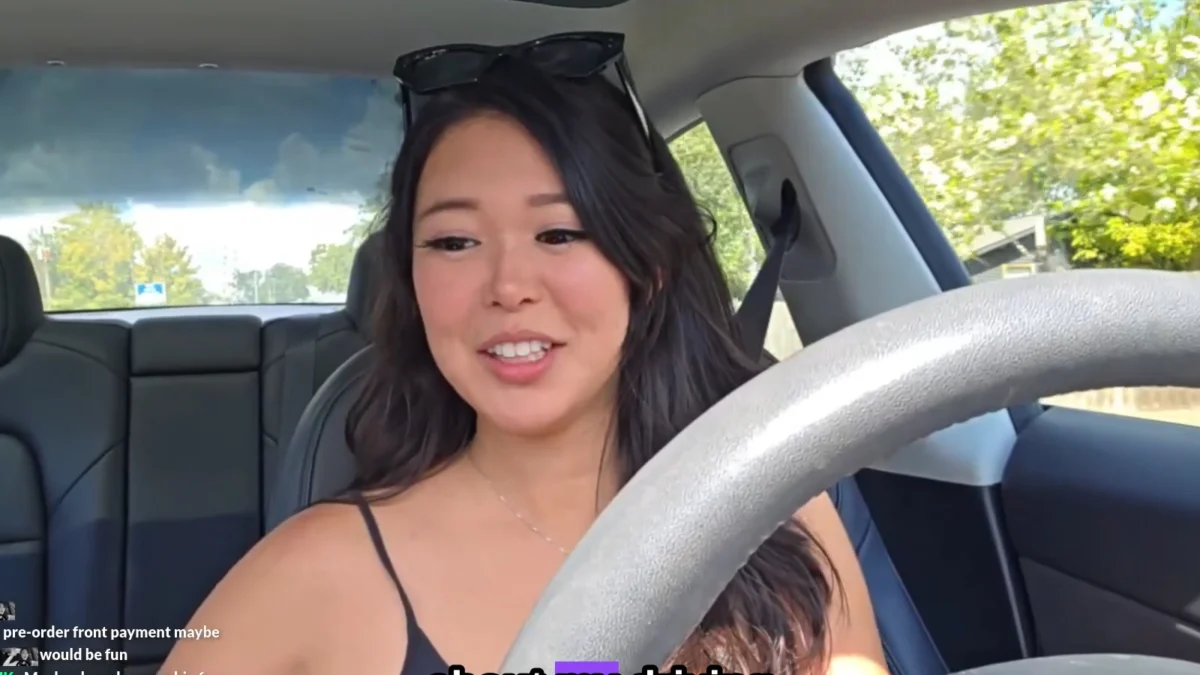
The landscape of live-streaming safety has once again come under intense scrutiny following a series of incidents involving prominent Twitch creator ExtraEmily, whose recent broadcast appears to show her engaging in distracted driving. The controversy reached a boiling point when Steven Spohn, a high-profile Twitch Ambassador and advocate for accessibility in gaming, publicly questioned the platform’s enforcement of its own safety guidelines. The incident, captured in a 42-second video clip that circulated widely on social media on September 10, 2026, depicts the streamer looking away from the road to interact with her live chat while her vehicle is in motion. This latest event has reignited a fierce debate within the streaming community regarding the efficacy of Twitch’s disciplinary measures and the inherent dangers of "In Real Life" (IRL) broadcasting while operating motor vehicles.
The September 10 Incident and the Ambassador’s Critique
The specific footage that triggered the current wave of backlash shows ExtraEmily in the driver’s seat of a moving vehicle. Throughout the clip, she is observed glancing down repeatedly toward a device—presumably a smartphone or tablet—to read real-time messages from her audience. Despite the absence of a physical collision in this particular segment, the visual evidence suggests a significant lapse in situational awareness. Viewers in the chat can be seen actively pleading with the creator to focus on the road, with messages such as "Please watch the road" and "Please don’t read chat" appearing on the screen.
Steven Spohn, who has long served as a bridge between the Twitch corporation and its creator base as an official Ambassador, expressed a profound sense of disillusionment regarding the situation. In a post shared on X (formerly Twitter), Spohn highlighted that the streamer could be seen swerving while her attention was diverted. His commentary was notably sharp, reflecting a growing frustration among platform veterans. "I’ll be honest: as a Twitch ambassador myself, I have no idea what I’m supposed to say here," Spohn wrote. He further questioned the integrity of the platform’s standards, asking, "What’s the point of trying anymore?" His remarks suggest a perceived double standard in how Twitch handles Terms of Service (ToS) violations, particularly when they involve high-profile creators who also hold ambassadorial titles.
A Chronology of Repeated Violations and Brief Suspensions
The primary source of the community’s ire is not merely the single incident on September 10, but what many perceive as a recurring pattern of dangerous behavior that has met with minimal long-term consequences. ExtraEmily, a member of the popular content collective One True King (OTK), has a documented history of driving-related controversies on the platform.
In June 2026, the streamer was handed a suspension after a broadcast captured her narrowly avoiding a collision. During that stream, she appeared to be distracted while attempting to change lanes, leading to a "near-miss" that was widely shared on the subreddit r/LivestreamFail. Despite the severity of the incident, Twitch restored her broadcasting privileges approximately 24 hours later. This followed previous driving-related disciplinary actions in 2023 and 2025. The brevity of these suspensions has led critics to argue that the current penalty system acts more as a "slap on the wrist" than a deterrent against life-threatening behavior.
The timeline of these events highlights a tension between Twitch’s growth-oriented creator partnerships and its safety obligations. ExtraEmily was appointed as a Twitch Ambassador despite her history of infractions, a move that Spohn and others have pointed to as a sign of inconsistent internal vetting and enforcement.
Industry Reactions and the Call for a Driving Ban
The fallout from the latest clip has drawn responses from some of the most influential figures in the streaming industry. Asmongold, a co-founder of OTK and one of Twitch’s most-watched creators, addressed the controversy during his own broadcast. He revealed that he had previously "complained to Twitch privately" about the prevalence of distracted driving streams. Asmongold’s stance is definitive: he argues that if a creator is broadcasting from a car, they should not be the one behind the wheel. "If you’re the streamer, you can’t be the driver," he stated, suggesting that the only safe way to produce such content is to utilize a hired driver or a passenger to manage the stream’s technical aspects and chat interaction.
Another prominent creator, Tectone, was more blunt in his assessment, posting an emphatic demand on social media for creators to "STOP F***ING DRIVING ON STREAM." The consensus among many top-tier streamers is that the multi-tasking required to maintain an engaging broadcast—monitoring bit alerts, reading chat, adjusting camera angles, and responding to donations—is fundamentally incompatible with the cognitive demands of safe driving.
Statistical Context: The Real-World Danger of Distracted Driving
The debate surrounding Twitch’s enforcement policies is framed by the broader public health crisis of distracted driving. According to data from the National Highway Traffic Safety Administration (NHTSA), distracted driving claimed over 3,300 lives in the United States in 2022 alone. Research indicates that sending or reading a text message takes a driver’s eyes off the road for an average of five seconds. At 55 mph, that is equivalent to driving the length of an entire football field with one’s eyes closed.
For a live streamer, the distraction is often more prolonged and interactive than a simple text message. The "parasocial" nature of Twitch encourages constant engagement, creating a psychological incentive for streamers to look at their screens to maintain viewership and revenue. When a streamer swerves, as noted in the Spohn critique, it indicates a failure of "lane keeping," a critical safety function that is often the first to degrade under cognitive load.
Twitch’s Community Guidelines and the Enforcement Gap
Twitch’s official Community Guidelines are explicit regarding the prohibition of dangerous activities. Under the "Self-Destructive Behavior" and "Illegal Acts" sections, the platform states that "dangerous or distracted driving" is never acceptable. The rules specifically forbid reading chat, interacting with a camera, or handling a streaming device while operating a vehicle. While hands-free broadcasts are technically allowed, the guidelines emphasize that the streamer’s primary focus must remain on the road.
The core of the current controversy lies in the "enforcement gap"—the discrepancy between the written rules and the actual penalties applied. Critics argue that Twitch’s reliance on automated reporting and a tiered suspension system often fails to account for the potential lethality of certain violations. While a streamer might receive a permanent ban for showing prohibited content or using certain language, repeated instances of distracted driving have, in several high-profile cases, resulted only in temporary bans. This has led to accusations of "viewership bias," where creators who generate significant traffic for the platform are perceived to receive more lenient treatment.
Broader Implications for Platform Liability and Brand Safety
Beyond the immediate safety concerns, the continued prevalence of distracted driving on Twitch poses significant risks to the platform’s business model. In an era where brand safety is a top priority for advertisers, footage of "Twitch-branded" ambassadors engaging in illegal or dangerous acts can lead to a withdrawal of corporate sponsorship. Advertisers are increasingly wary of having their products displayed alongside content that could be construed as endorsing or ignoring public endangerment.
Furthermore, there are looming questions of legal liability. If a streamer were to cause a fatal accident while actively interacting with a Twitch broadcast, the platform could potentially face litigation. Legal experts have noted that while Section 230 of the Communications Decency Act generally protects platforms from liability for user-generated content, the active "gamification" of the stream—through alerts and rewards that encourage interaction—could create a more complex legal landscape regarding the platform’s role in incentivizing the distraction.
The Future of IRL Streaming and Potential Solutions
As the "In Real Life" category continues to grow, the community is looking for structural changes to prevent future incidents. Several proposed solutions have gained traction among viewers and creators alike:
- Mandatory Chat Disablement: Some suggest that Twitch should implement a technical requirement that disables the chat interface on a mobile device if the GPS detects the user is moving at driving speeds.
- The "Passenger Only" Rule: Similar to Asmongold’s suggestion, a policy change could mandate that any broadcast from a moving vehicle must be conducted by a non-driver.
- Strict "One-Strike" Policies: Given the life-and-death stakes of road safety, there are calls for Twitch to move away from temporary suspensions for driving violations in favor of immediate, permanent bans.
- Hired Driver Requirements: For high-budget streamers like those in OTK, the community has argued that the cost of a professional driver is a small price to pay for ensuring the safety of the public and the longevity of the creator’s career.
At the time of this report, ExtraEmily has not issued a formal public response to the specific criticisms leveled by Steven Spohn. Twitch has also not commented on whether additional disciplinary actions will be taken regarding the September 10 footage. However, the pressure on the platform to reconcile its identity as a community-driven space with its responsibilities as a global media entity has never been higher. As ambassadors like Spohn begin to voice their concerns publicly, the internal culture of Twitch appears to be at a crossroads, facing a choice between maintaining high-engagement content and enforcing a zero-tolerance policy for public endangerment.




 Yuyun Lusiyani
 Joko Widodo
 Eva Lovia
 admin
admin
 Lina Irawan