
 Pevita Pearce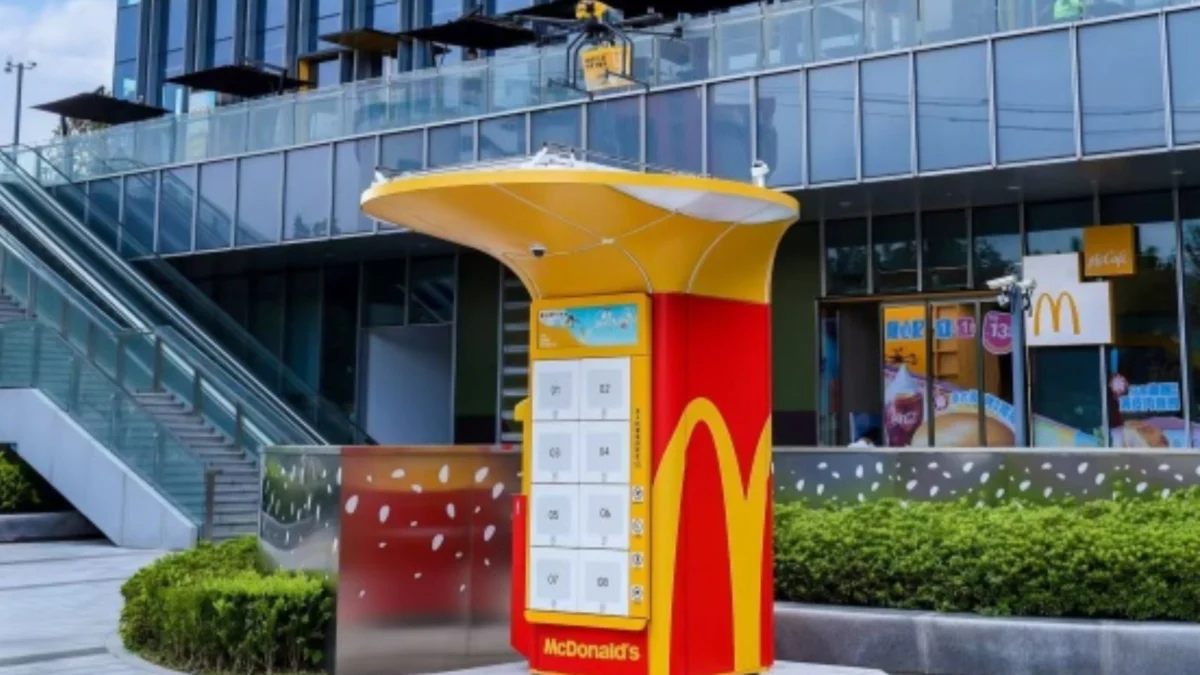
The landscape of urban logistics in China reached a new milestone on September 10 as McDonald’s China, in collaboration with the technology giant Meituan, officially inaugurated a dedicated drone delivery route in Shanghai. This service, concentrated in the city’s vibrant West Bund district, represents the first time a specific restaurant brand has established a permanent aerial delivery corridor in the country. By utilizing advanced unmanned aerial vehicles (UAVs), the fast-food giant now promises to deliver meals from the kitchen to a designated collection point in as little as 10 minutes, effectively bypassing the traditional ground-level congestion that often plagues one of the world’s most populous metropolitan areas.
The inaugural flight of this service saw a Big Mac meal depart from the McDonald’s storefront located on Longteng Avenue. The drone navigated a predetermined flight path before landing at a specialized kiosk at the West Bund Skatepark, a popular destination for residents and tourists. This partnership underscores a significant shift in the "last-mile" delivery sector, moving away from experimental pilots toward integrated, commercially viable infrastructure designed to enhance consumer convenience and operational efficiency.
The Operational Workflow: From Kitchen to Smart Port
The logistics of the new service are designed to minimize human intervention and maximize speed. When a customer places an order via the Meituan app, selecting from a menu of over 30 available McDonald’s products—ranging from flagship burgers and McFlurrys to McCafé beverages—the order is prepared by kitchen staff at the Longteng Avenue location. Once packaged, the meal is handed over to a "smart drone port" situated immediately outside the restaurant.
Inside this port, an automated robotic arm takes over the process, loading the order into the drone’s cargo compartment. This automation ensures that the aircraft is balanced and the thermal integrity of the food is maintained. Once the payload is secured, the drone ascends to a specific altitude and follows a digital "highway" in the sky. These routes are pre-cleared by local aviation authorities to ensure they do not interfere with other low-altitude activities or emergency services.
Upon arrival at the destination—in this case, the West Bund Skatepark—the drone lands on a designated collection station. This station acts as a secure locker. The customer receives a notification on their mobile device and, upon arrival at the kiosk, scans a unique QR code to trigger the release of their meal. This "kiosk-to-kiosk" model differs from the "backyard drop" methods tested in some Western markets, providing a more controlled and secure environment for food retrieval in high-density urban settings.
Technical Specifications and Fleet Capabilities
The drones employed for this route are Meituan’s fourth-generation models, which represent the pinnacle of the company’s internal research and development. These aircraft are engineered to handle the complex variables of an urban environment, including wind gusts, signal interference from high-rise buildings, and varying light conditions.

Key technical features of the fourth-generation fleet include:
- Payload Capacity: Each drone can carry approximately 5.2 pounds (2.4 kilograms). This capacity is calibrated to accommodate a standard meal for two, including burgers, sides, and large drinks.
- Visual Positioning and Navigation: The drones are equipped with nighttime visual positioning systems, allowing for 24/7 operation provided weather conditions remain within safety margins.
- Safety Redundancies: The aircraft feature advanced obstacle avoidance sensors and emergency landing protocols. In the event of a technical anomaly, the drone is programmed to identify the nearest safe landing zone or hover until instructions are received from a central command center.
- Environmental Resilience: The drones are designed to operate in moderate rain and wind, ensuring that the 10-minute delivery window remains consistent despite Shanghai’s often unpredictable coastal weather.
Strategic Significance of the West Bund District
The choice of the West Bund for this launch is highly strategic. Known as a hub for art, technology, and recreation, the West Bund district offers a mix of open public spaces and modern infrastructure that is ideal for low-altitude economy testing. The area attracts a tech-savvy demographic that is likely to embrace novel delivery methods.
Furthermore, the West Bund serves as a proof-of-concept for how drone delivery can integrate into "smart city" frameworks. Meituan’s existing network in this district already services nearly 20 restaurant chains. The inclusion of a global powerhouse like McDonald’s provides the necessary volume and brand recognition to push the service into the mainstream. Industry analysts expect that by the end of 2026, the number of brands participating in Meituan’s West Bund drone network will exceed 40, effectively creating a multi-brand aerial delivery ecosystem.
Data and the "Low-Altitude Economy" in China
The partnership between McDonald’s and Meituan is not an isolated experiment but part of a broader national push toward developing the "low-altitude economy." This economic sector involves the use of manned and unmanned aircraft operating below 1,000 meters to provide various services, from logistics to emergency medical transport.
Meituan has already established itself as a global leader in this space. As of the launch of the McDonald’s route, the company has completed more than one million commercial drone deliveries. These operations span several major hubs, including Beijing, Shenzhen, Guangzhou, and even international locations like Dubai. By integrating drone delivery into the McDonald’s supply chain, Meituan is demonstrating that the technology can handle the high-frequency, time-sensitive demands of the fast-food industry.
Data from these operations suggest that drone delivery can reduce transit times by up to 50% compared to traditional scooter-based couriers in congested areas. In a city like Shanghai, where traffic can be unpredictable, the reliability of a flight path offers a significant competitive advantage for restaurant operators looking to guarantee food temperature and quality.
Global Context: The Race for the Skies
The launch in Shanghai comes at a time when the global fast-food industry is aggressively exploring aerial logistics. While China currently leads in terms of commercial volume and urban integration, American companies are making significant strides in domestic testing.

- Chipotle: The Mexican grill chain recently launched its "Zipotle" program in Texas, partnering with drone operators to deliver burritos to residential areas.
- Papa Johns and Little Caesars: Both pizza giants have initiated pilot programs aimed at reducing the time pizza spends in a delivery vehicle, recognizing that speed is the primary factor in customer satisfaction for their product category.
- DoorDash Air: The delivery platform has entered the race to compete with retail giants like Amazon and Walmart, both of which have been testing drone delivery for household goods and groceries for several years.
The primary difference between the Chinese and American models currently lies in the delivery destination. While US tests often focus on direct-to-door delivery in suburban environments, the Chinese model focuses on high-capacity kiosks in dense urban centers. The kiosk model, as seen in the McDonald’s Shanghai launch, solves several regulatory and safety hurdles regarding privacy and the risk of low-altitude flight over crowded sidewalks.
Broader Implications for Urban Logistics and Labor
The transition to drone delivery carries profound implications for the future of urban employment and environmental policy. For decades, the "delivery economy" in China has been powered by millions of couriers on electric scooters. While drones are unlikely to replace human couriers entirely in the near future, they offer a way to augment the workforce during peak hours or for specific routes where ground travel is inefficient.
From an environmental perspective, electric drones offer a lower carbon footprint compared to gasoline-powered delivery vehicles, though they are comparable to the electric scooters currently used in China. The real gain is in urban efficiency; reducing the number of delivery vehicles on the road can alleviate traffic congestion and improve overall road safety.
However, the expansion of these services will require continued cooperation between private enterprises and government regulators. Issues such as noise pollution, "visual clutter" in the sky, and air traffic management must be addressed as the number of active drones grows from dozens to thousands.
Conclusion and Future Outlook
The launch of the McDonald’s drone delivery route in Shanghai marks a transition from the "novelty" phase of drone technology to its "utility" phase. By establishing a dedicated route for a single brand, Meituan and McDonald’s are signaling that they view the sky as a permanent extension of the restaurant’s physical footprint.
As we look toward 2026, the success of the West Bund route will likely serve as a blueprint for similar rollouts in other high-density districts across China and potentially the world. For the consumer, the value proposition is simple: a hotter, fresher Big Mac delivered in 10 minutes, regardless of the traffic on the streets below. For the industry, it is the beginning of a new era where the efficiency of a restaurant is measured not just by the speed of its kitchen, but by the sophistication of its airspace.




 Yuyun Lusiyani
 Joko Widodo
 Jia Lissa
 admin
admin
