
 Pevita Pearce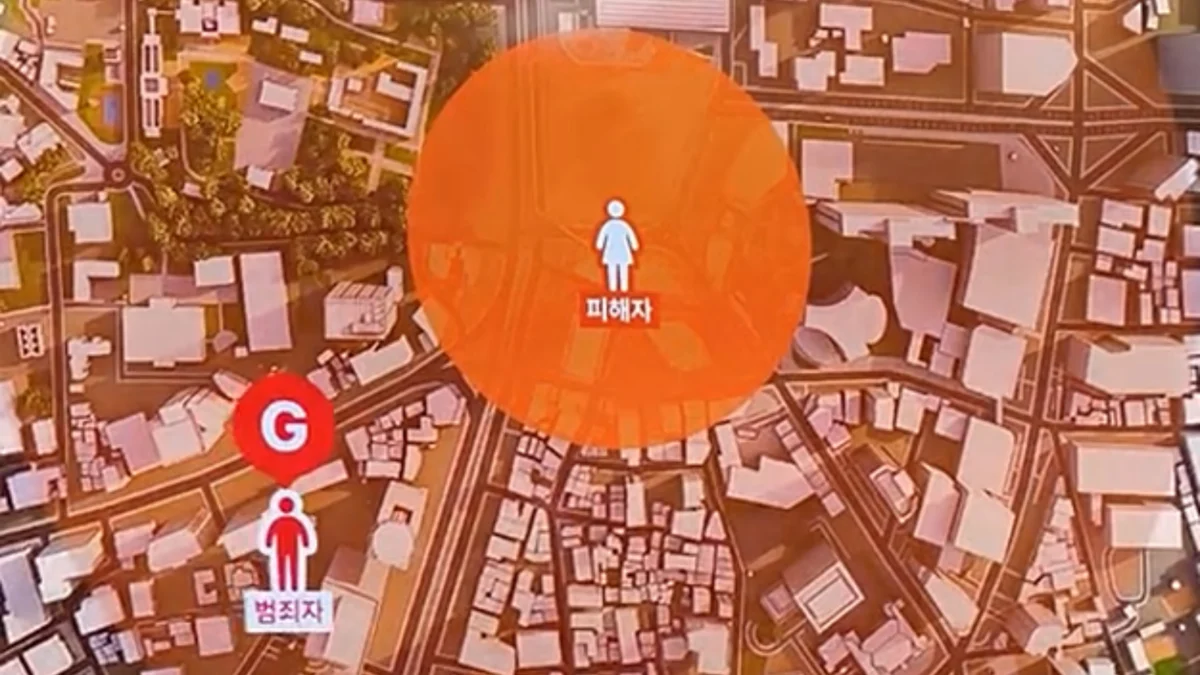
The South Korean government has officially inaugurated a pioneering mobile application designed to provide stalking victims with the real-time geographic location of their alleged harassers, marking a significant technological shift in the nation’s approach to gender-based violence and public safety. Launched in late June, the initiative integrates advanced GPS data from court-ordered electronic ankle monitors directly into a victim-facing interface, allowing those at risk to visualize potential threats before they escalate into physical confrontations.
Currently, approximately 400 individuals are enrolled in the program, which represents a specialized subset of the broader electronic monitoring infrastructure managed by the South Korean Ministry of Justice. The application operates on a tiered proximity system: when a tagged suspect enters a two-kilometer radius of the victim’s smartphone, the victim is granted access to a live map showing the suspect’s location and specific direction of travel. Should the distance between the two parties close to less than one kilometer, the system automatically triggers a high-priority alert to both the police and regional probation authorities, who then initiate immediate contact with the victim to ensure their safety and provide instructions for evasion or protection.
A Technological Evolution in Victim Protection
This digital intervention replaces an antiquated notification system that many victims and advocacy groups criticized as insufficient. Under the previous protocol, victims received automated text messages informing them that a suspect was within a certain distance. However, these alerts lacked spatial context, leaving victims unaware of whether the suspect was moving toward them, moving away, or stationary in a nearby building.
Yoon Hyun-bong, the director of the Seoul Electronic Monitoring Center, emphasized the psychological and practical necessity of the new visual interface during an interview with international media. "Waiting with no idea what’s happening is deeply distressing," Yoon stated. "A distance alone doesn’t tell you which direction he’s coming from, but seeing it on a map, you know where to hide."
The ability to see the "vector of approach" is considered a critical tactical advantage. In dense urban environments like Seoul or Busan, a 500-meter notification could mean a suspect is on the floor above or just around a street corner. By providing a live-updating map, the Ministry of Justice aims to reduce the "information asymmetry" that typically favors the stalker, empowering the victim to make informed decisions about their immediate movements.
The Legislative Catalyst: From the 2021 Act to Modern Enforcement
The implementation of the tracking app is the latest in a series of aggressive legal reforms following decades of criticism regarding South Korea’s leniency toward stalkers. For years, stalking was classified as a minor misdemeanor, often resulting in small fines equivalent to less than $100. This changed dramatically with the enactment of the Stalking Punishment Act in October 2021, which criminalized the behavior and introduced potential prison sentences of up to five years.
The impetus for the tracking app and the expanded use of electronic monitors was further accelerated by the high-profile "Sindang Station murder" in September 2022. In that case, a female subway employee was killed by a former colleague who had stalked her for years. The suspect committed the crime while awaiting sentencing for stalking and filming the victim. The tragedy sparked national outrage and led to a 2023 amendment to the law, which authorized courts to mandate electronic ankle monitors for suspects even before a final conviction is reached—a "pre-trial" preventative measure intended to close the gap between an initial police report and a court verdict.
Statistical Analysis: The Rising Tide of Reported Stalking
The demand for such technology is underscored by a staggering increase in reported stalking incidents across the peninsula. According to data provided by the National Police Agency, reported cases have nearly tripled since the 2021 law took effect. In 2025, reports reached an all-time high of 44,687 cases.
Analysis of law enforcement data from 2024 and 2025 reveals a complex picture of the judicial system’s response:
- Total Arrests: Police arrested 29,404 individuals on stalking charges during this two-year window.
- Monitoring Applications: Authorities submitted 1,187 requests for suspects to be fitted with electronic tracking devices.
- Judicial Approval Rate: Courts approved only 427 of those applications, a rate of approximately 36%.
- Victim Demographics: Roughly 80% of identified victims in these cases are women, highlighting the gendered nature of the crisis in South Korea.
The discrepancy between the number of arrests and the number of electronic tags issued suggests a cautious approach by the judiciary, which must balance the safety of the victim against the civil liberties and privacy rights of a suspect who has not yet been convicted. However, the 400 individuals currently using the app represent a growing trend toward prioritizing victim security in high-risk scenarios.
Operational Scale of the Monitoring Centers
South Korea operates two primary electronic monitoring centers—one in Seoul and one in Daejeon. These hubs are responsible for tracking more than 5,000 individuals nationwide who have been tagged for various crimes, including sexual violence, murder, and now, aggravated stalking.

The scale of this surveillance is immense. On average, these centers process approximately 19,000 alerts every 24 hours. Most of these are routine—triggered by low battery levels, temporary loss of GPS signal in tunnels, or minor deviations from permitted zones. However, roughly 300 alerts per day are classified as "serious," requiring immediate escalation to a probation officer who must investigate the suspect’s movements and potentially coordinate with local police for an intervention.
The introduction of the victim-facing app adds a new layer to this operations center. Officers must now not only monitor the suspect but also be prepared to guide a victim through the app’s interface during a live "proximity event."
Critical Perspectives: Empowerment vs. Emotional Burden
While the government touts the app as a breakthrough in safety, some women’s rights organizations and sociologists have expressed reservations about the long-term impact on victims’ mental health. The central concern is that the app may inadvertently shift the "burden of protection" onto the victim.
Sujeong Kim, the director of the Korea Women’s Hotline, raised questions about the ethics of self-monitoring. "If the authorities did their job properly, who would want to check it themselves?" Kim remarked. Advocates argue that forcing a victim to constantly check a map to see if their abuser is nearby traps them in a state of perpetual hyper-vigilance, effectively allowing the stalker to control the victim’s life even from a distance.
There is also the risk of "false security." Electronic monitors rely on cellular and GPS signals, which can be obstructed in South Korea’s many high-rise buildings, underground shopping malls, and subway systems. If a suspect’s tag loses signal, the app may show an outdated location, potentially leading a victim into a dangerous situation under the guise of safety.
Global Context: Stalking in the Era of Digital Personalities
The South Korean initiative arrives as the global community grapples with a rise in stalking cases linked to social media and live-streaming platforms. The borderless nature of digital interaction has made public figures, particularly female influencers and streamers, vulnerable to obsessive fans.
In June 2024, the international community was shocked by the arrest of a convicted stalker in connection with the death of Colombian influencer Natalia Villalba. Similarly, high-profile streamers have reported systemic failures in police responses to stalking. Jinnytty, a prominent South Korean Twitch star, famously broadcasted an "In Real Life" (IRL) stream where she was followed by a man she identified as a six-month stalker. In the United States, the streamer Amouranth has frequently criticized law enforcement for their inability to handle cyberstalking and physical harassment, noting that authorities often lack the technical tools or legal framework to intervene before a physical assault occurs.
South Korea’s app is being viewed by some international policy analysts as a potential blueprint for other nations. By integrating judicial orders with consumer-facing technology, the system attempts to solve the "proximity problem" that traditional restraining orders—which are essentially just pieces of paper—cannot address in real-time.
Future Implications and Policy Trajectories
The success of the South Korean tracking app will likely depend on whether the judiciary becomes more willing to grant electronic monitoring orders. As the 400 current users provide feedback, the Ministry of Justice is expected to refine the app’s UI/UX to minimize trauma while maximizing utility.
There are also discussions regarding the expansion of the technology to include "AI-driven predictive analysis." This would involve algorithms that analyze a stalker’s historical movement patterns to predict where they might go next, potentially alerting a victim even before the two-kilometer threshold is crossed.
However, as South Korea pushes the boundaries of surveillance technology to protect its citizens, the tension between safety and the "surveillance state" remains a point of contention. For the hundreds of victims currently checking their phones for a blue dot on a map, the app represents more than a technological feat—it is a vital, if stressful, lifeline in a country striving to turn the tide against a growing epidemic of stalking. The international community will undoubtedly be watching to see if this real-time transparency leads to a measurable decrease in stalking-related violence or if it simply changes the medium through which the trauma is experienced.




 Yuyun Lusiyani
 Joko Widodo
 Jia Lissa
 admin
admin
