
 Yuyun Lusiyani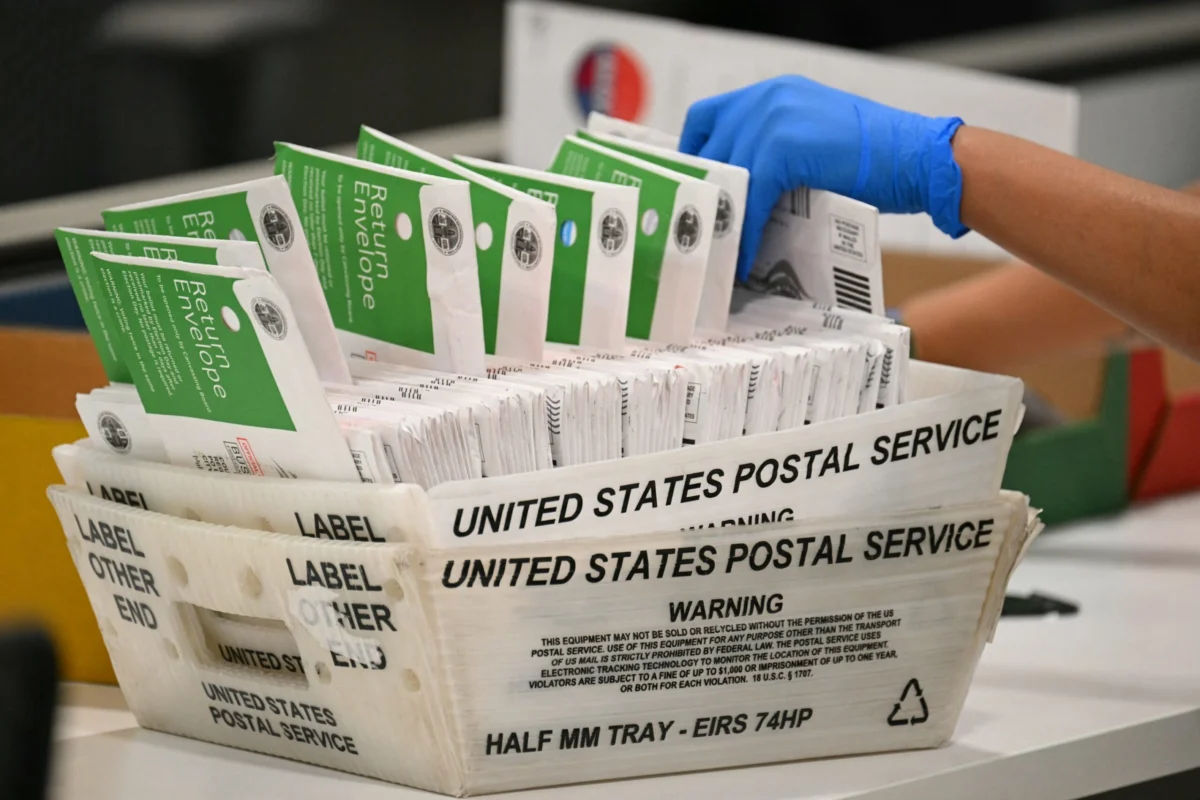
The Supreme Court this week delivered a significant blow to the Trump administration’s efforts to centralize control over federal elections, rejecting its plans to implement new, stricter rules for mail-in voting ahead of the crucial November midterm elections. In a brief, unsigned order issued on Monday, the nation’s highest court denied the administration’s request to overturn lower court injunctions, effectively ensuring that states will continue to manage mail-in ballot procedures under existing frameworks.
This ruling marks a pivotal moment in the ongoing national debate surrounding election administration, voter access, and the balance of power between federal and state authorities. The decision leaves in place the established methods that state and local election officials have traditionally employed, offering clarity and continuity as the midterm elections draw nearer.
Background: A Federal Push for New Election Controls
The genesis of this legal battle dates back to March, when then-President Donald Trump issued an executive order that sought to empower the U.S. Postal Service (USPS) to dictate new standards for states sending mail-in ballots to voters. This move was part of a broader, years-long campaign by Trump and his allies to cast doubt on the integrity of mail-in voting, which he frequently — and without substantiation — characterized as "corrupt" and prone to "cheating." His administration had been actively pursuing various avenues to exert greater federal influence over election processes, including efforts to gather state voter data and investigate voter eligibility, often fueled by unsubstantiated claims of widespread noncitizen voting.
Despite the president himself having voted by mail twice that year from the White House to participate in Florida elections, his administration maintained a strong public stance against "universal mail-in voting." White House spokesperson Olivia Wales previously stated that the president sought "commonsense exceptions" for voting by mail due to illness, disability, travel, or military service, but asserted that "universal mail-in voting should not be allowed because it’s highly susceptible to fraud." However, numerous comprehensive studies from organizations like the Brookings Institute, the Brennan Center for Justice, and the Election Innovation & Research Center have consistently found voter fraud, particularly in mail-in voting, to be exceedingly rare and statistically insignificant in altering election outcomes.
Mail-in voting has seen a steady increase in popularity over the decades, with roughly a third of Americans now casting their ballots by mail, according to data from the Brookings Institute. However, its prevalence varies dramatically across states. States like Oregon and Washington, which have adopted all-mail elections, see over 95% of their voters participate via mail, while others like West Virginia and Tennessee report less than 3%. This patchwork of state laws underscores the historically decentralized nature of election administration in the United States.
A Detailed Timeline of the Proposed Rules and Legal Challenges
The path to the Supreme Court’s decision was a rapid and contested one:
- March Executive Order: President Trump instructs the USPS to establish new rules for election officials regarding the mailing of ballots. The implicit threat was that the Postal Service would refuse to deliver ballots from states that did not comply.
- August Rule Finalization: The USPS formally finalized its new rule, detailing specific criteria for mail-in ballots. These included design standards requiring envelopes to feature the official election mail logo and a unique barcode. States would also be mandated to upload lists of eligible voters’ names and mailing addresses to a new, as-yet-unfinished federal portal. Critically, the barcodes on the ballot envelopes would need to match the voter information in these uploaded lists. Non-compliant ballots, according to the rule, would be rejected and returned to election officials.
- August Whistleblower Disclosure: An anonymous federal employee filed a whistleblower disclosure with U.S. Senator Richard Blumenthal (D-CT), describing the USPS’s new system as "secretive, rushed, chaotic, and fundamentally flawed." Concerns were raised about the system being untested and potentially error-prone.
- September Audit Findings: An audit by the USPS Office of Inspector General revealed that some Postal Service facilities had failed to properly handle ballots during that year’s primary elections. While the USPS acknowledged areas for improvement, it maintained that "overall ballot mail performance is strong."
- Concerns from USPS Officials: Reports emerged that top USPS officials themselves expressed concerns in internal meetings about the new rules’ potential to delay or prevent ballots from reaching a significant number of eligible voters, particularly those who rely most heavily on mail-in voting.
- State and Local Opposition: On September 3, a bipartisan coalition of 99 current and former state and local election officials filed a court brief arguing that it would be "impossible" for states to comply with the complex new rules in the limited timeframe before the midterms. Richard Hasen, a UCLA law professor and director of the school’s Safeguarding Democracy Project, highlighted that the rule changes would disproportionately affect older individuals, people with certain disabilities, and those residing in remote or rural areas—demographics that are often most reliant on mail-in voting.
- Federal Court Injunctions: Federal judges subsequently blocked the rule for the November elections, agreeing with state officials and voter advocacy groups that the implementation timeline was impractical and the potential for voter disenfranchisement too high.
- Administration’s Appeal to Supreme Court: Lawyers for the Trump administration then sought the Supreme Court’s intervention, arguing in their filing that the Postal Service rule "imposes only modest envelope-design and addressee-information requirements" on mail-in ballots.
- Supreme Court’s Decision: On Monday, the Supreme Court’s majority denied the administration’s request to lift the injunctions.
The Supreme Court’s Ruling and Dissents
The Supreme Court’s majority, in its brief, unsigned order, stated unequivocally that the "Government is unlikely to succeed on the merits of its challenge." This concise reasoning indicated that the Court saw fundamental flaws in the administration’s legal arguments for imposing the rules, particularly concerning the timing and potential impact on the upcoming elections. The lack of a signed opinion suggests a broad consensus among the majority justices that the lower courts’ rulings were sound, at least for the immediate context of the midterms.
Justice Samuel Alito, however, penned an eight-page dissent, joined by Justice Clarence Thomas, arguing that he would have allowed the rules to go into effect. While the specific reasoning of their dissent was not fully elaborated in the initial reports, it likely centered on the administration’s claims of authority to ensure election integrity and the perceived "modest" nature of the proposed changes.
Notably, Justice Brett Kavanaugh issued a concurring opinion with the decision to block the new mail-in ballot rules for the midterms. Kavanaugh acknowledged the critical point raised by states: that election officials simply did not have enough time to implement the Postal Service changes before the November elections. However, he added a crucial caveat, stating that the rules may fall within the Postal Service’s inherent authority, thereby not ruling out their potential implementation for future elections. This suggests a nuanced view, separating the question of the rule’s legality from the practical constraints of its immediate application.
Reactions and Implications
The immediate aftermath of the ruling saw swift reactions from various quarters. Former President Trump, in a post on Truth Social on Tuesday, criticized the Supreme Court’s order, labeling it "a big loss for Republicans, and America itself." This reaction underscores the highly politicized nature of election administration in contemporary American politics.
Conversely, election integrity and voter rights advocates lauded the decision. Barbara Smith Warner, a senior adviser for the Institute for Responsive Government, a think tank focused on election issues, stated, "State and local election administrators all across the country will continue to do what they always do, which is run safe, secure and transparent elections. Everyone can and should be sure that they can vote in this election." Her comments highlighted the relief among state officials who were facing an unfeasible mandate just weeks before a major election.
The spokesperson for the U.S. Postal Service did not respond to immediate requests for comment following the ruling. In previous statements, the agency had affirmed that it spent months developing its system consistent with federal court orders, with a goal to ensure "that Americans can have confidence that their election mail will be handled securely and delivered reliably." Postmaster General David Steiner, in response to the whistleblower concerns, had previously stated the agency "takes these concerns seriously" while asserting that "our standards for quality, security, and system integrity were not compromised."
The broader implications of this ruling are multifaceted. Primarily, it reaffirms the principle of federalism in election administration, where states retain primary authority over the "time, place, and manner" of elections. This decision effectively curtails a significant attempt by the executive branch to unilaterally impose federal standards on state-run election processes, particularly without congressional authorization or extensive consultation. It also provides stability for the upcoming midterms, preventing a chaotic scramble for states to comply with new, untested, and complex requirements. For voters, it means the procedures they are accustomed to for mail-in voting will remain in place, reducing potential confusion and disenfranchisement that could have arisen from abrupt changes.
Guidance for Voters on Mail-In Balloting
With the Supreme Court’s decision, the existing state-specific rules for mail-in voting remain unchanged for the upcoming November elections. This means that voter eligibility and procedures continue to depend entirely on the laws in their respective states.
- State-Specific Rules: Every state offers some form of mail-in voting. However, eligibility varies. Eight states and the District of Columbia proactively mail ballots to every registered voter. Twenty-nine states allow voters to request a mail-in ballot without needing to provide a specific reason. The remaining 13 states require voters to provide an "eligible excuse," such as illness, disability, or out-of-state travel, when requesting an absentee ballot.
- Checking Eligibility and Registration: Voters are strongly advised to check the rules for mail-in voting in their state. Before requesting a mail-in ballot, ensure you are registered to vote and that your local election office has your current address. Resources like Vote.org and the National Association of Secretaries of State (NASS) website can help voters confirm their registration status and state-specific mail-in voting requirements.
- Requesting Ballots and Deadlines: Take note of whether your state requires you to request a mail-in ballot ahead of the election and what the deadlines are for those requests. Similarly, be aware of when ballots must be returned to be counted. The U.S. Postal Service generally recommends mailing completed ballots at least a week before the state’s deadline to ensure timely arrival. Tammy Patrick, the chief programs officer at the Election Center, further advises voters to return their ballots "as early as possible," noting that Postal Service routes may have changed, potentially affecting delivery times.
- Accurate Completion: Experts emphasize the importance of carefully reading all directions on the ballot. Barbara Smith Warner advises voters to fill out the ballot completely and avoid leaving any stray marks that could invalidate it.
- Signature Matching: Sign the ballot with your typical signature, ideally one that matches other government documents like your driver’s license. Election officials use signature matching to verify voter identity, and consistency is key to ensuring your ballot is counted.
- Ballot Drop-Off and Tracking: To avoid potential postal delays, election experts recommend returning completed ballots to a secure ballot drop box or directly to your local election office. Drop boxes are often located at city halls, libraries, and schools; voters should check with their local election office for nearby locations. Many state and local election offices also provide online portals where voters can track the status of their ballot—whether it has been received, approved, or rejected.
- Changing Voting Method: For voters who request a mail-in ballot but later decide to vote in person, states have systems in place to prevent double voting. David Becker, executive director of the Center for Election Innovation & Research, notes that it is not uncommon for this to occur. If you decide to vote in person after receiving a mail-in ballot, experts recommend bringing the mail ballot and its envelope to the polling place so that poll workers can formally cancel or "spoil" it. If a mail-in ballot has already been sent but not yet accepted and cast by election officials, voters may still be able to change their mind and vote in person, potentially being issued another ballot, according to Tammy Patrick.
Future Outlook
While the Supreme Court’s decision brings immediate certainty for the November midterms, the broader debate over federal versus state control of elections and the security of mail-in voting is far from over. Justice Kavanaugh’s concurring opinion leaves the door open for the possibility that the USPS could legitimately implement similar rules in future election cycles, provided adequate time for state compliance. This suggests that future administrations, or even the current one, could revive these efforts, potentially leading to further legal challenges.
The political polarization surrounding election methods continues to intensify, making every aspect of election administration a potential battleground. The Supreme Court’s latest ruling serves as a reminder of the critical role the judiciary plays in arbitrating these disputes, often balancing competing interests of federal authority, state autonomy, and voter access. As the nation moves towards future elections, the dialogue around how Americans cast their ballots, and who sets the rules, will undoubtedly remain a central feature of the political landscape.




 Joko Widodo
 Jia Lissa
 Pevita Pearce
 admin
admin