
 Pevita Pearce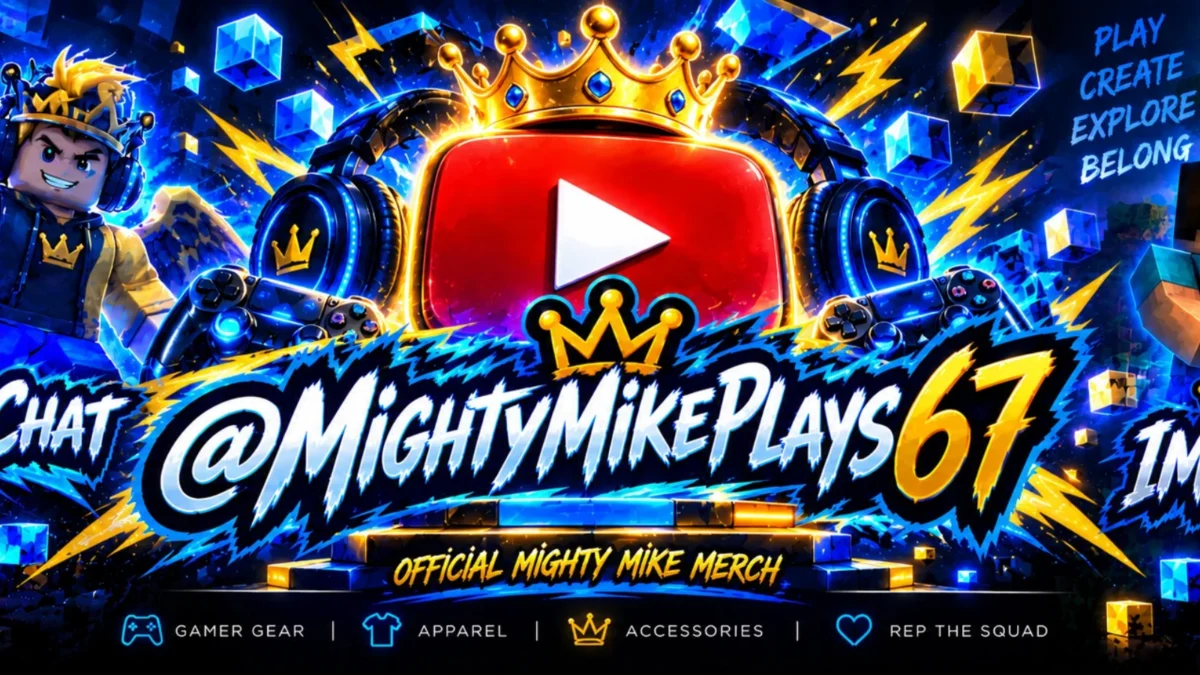
The digital content creation landscape has been gripped by a burgeoning controversy surrounding the YouTube channel "Mighty Mike Plays," which features nine-year-old Mike and is managed by his father, Dave. What began as a cautionary tale regarding a minor’s unsupervised access to a corporate credit card has evolved into a complex debate involving artificial intelligence (AI), high-stakes debt, and the ethics of digital monetization. The channel is currently navigating a significant wave of public criticism following the launch of an official merchandise store featuring t-shirts priced as high as $97, some of which utilize AI-generated graphics and reference the very financial crisis that brought the channel into the spotlight.
The Genesis of the 118,000 Dollar Debt Claim
The controversy originated several weeks ago when Dave, acting as the spokesperson for the Mighty Mike Plays channel, alleged that his son had accidentally incurred a staggering $118,000 in charges on a company credit card. According to Dave, the nine-year-old had been attempting to promote his Minecraft and Roblox videos through YouTube’s internal advertising platform. Without a comprehensive understanding of the bidding system or budget caps, the child reportedly set parameters that allowed the advertising spend to spiral out of control over a short period.
In subsequent updates that captivated social media audiences, Dave revealed the severe personal consequences of the incident. He claimed to have lost his employment as a direct result of the unauthorized spending on the company card. Furthermore, he stated that he was legally or contractually obligated to repay the full $118,479.83 within a 30-day window. The family’s narrative painted a picture of imminent financial ruin, with Dave mentioning the possibility of selling the family home to satisfy the debt. Notably, despite the dire circumstances described, the family explicitly stated they would not be launching a GoFundMe or seeking direct charitable donations, opting instead to find alternative ways to generate the necessary funds.
A Controversial Pivot to Merchandise
The situation took a contentious turn when the Mighty Mike Plays official store went live. Rather than traditional creator merchandise, which typically ranges from $25 to $45, the store listed products with significantly higher price points. The inventory currently includes 14 items, with "Standard" designs priced at $67 and "Premium" or "Legendary" drops retailing for $97.
The centerpiece of the collection is the "118K Black Tee," marketed as a "Legendary Drop" for $67. The product description explicitly leans into the controversy, characterizing the figure as a "viral moment" and "one of Mighty Mike’s most unforgettable numbers." This move to brand and sell the debt itself has been met with skepticism by the online community, with many questioning the sincerity of the original story and others criticizing the optics of profiting from a self-described family disaster.
Other designs include slogans such as "WASSUP CHAT" and "I’M DEFINITELY COOKED," the latter of which is a colloquialism for being in a hopeless or precarious situation. The $97 price tag for these shirts has become a focal point for critics, who argue that the pricing is predatory or, at the very least, inconsistent with the brand of a family-oriented gaming channel.

The Role of Artificial Intelligence and Public Reaction
The backlash intensified when viewers discovered that the graphics on the high-priced apparel appeared to be generated using artificial intelligence. In a video titled “I have some really bad news…,” the channel’s description addressed the mounting criticism, noting that comments had been disabled because viewers were becoming “way too aggressive over our use of AI tools for design creation.”
The channel’s stance on the technology was further clarified in a now-deleted Community post. The post took a defiant tone, stating, “AI is here to stay, adapt or get left behind.” The message confirmed that AI was indeed used to assist in the creation of the t-shirt graphics. This admission has sparked a broader debate within the creator economy regarding the value of AI-generated art versus traditional design, especially when sold at premium luxury prices.
Critics on platforms like Reddit and X (formerly Twitter) have pointed out a perceived irony: the family is asking for financial support through merchandise sales to pay off a massive debt, yet they are using a cost-cutting technology (AI) to produce that merchandise while charging prices that far exceed industry standards. The decision to disable comments has further fueled the narrative that the channel is avoiding accountability and transparency.
Verification and Technical Feasibility
To quell accusations that the $118,000 story was a fabrication designed to generate viral attention, Dave shared a screenshot of what appeared to be an American Express Business Gold Rewards card statement. The image displayed a "Remaining Statement Balance" of $118,479.83 and a "Total Balance" of $120,628.49. The billing cycle shown was from late July to late August.
Crucially, the statement noted that the card had "No preset spending limit." This detail provides a technical explanation for how a child could theoretically spend such a large sum without the card being declined. In the world of digital advertising, specifically Google Ads (which powers YouTube advertising), it is possible to set high daily budgets. If a campaign is set to "maximize clicks" or "maximize views" without strict cost-per-click (CPC) caps, the system will spend the allocated budget as quickly as possible.
However, the screenshot has not been independently verified. Financial experts and digital sleuths have noted that while the image looks authentic, it does not provide a line-item breakdown of the charges. Without seeing a ledger confirming that the $118,000 was paid specifically to Google/YouTube, the public remains divided on whether the debt was truly incurred via advertising or if it stems from other business expenses or is entirely manufactured.
Timeline of the Mighty Mike Plays Controversy
The progression of events has moved rapidly, reflecting the high-velocity nature of internet viral cycles:

- Late August 2024: Dave first goes public with the claim that Mike spent $118k on YouTube ads using a company card.
- Early September 2024: Dave announces his termination from his job and the 30-day repayment deadline. He mentions the potential sale of the family home.
- Mid-September 2024: The Mighty Mike Plays merch store launches with shirts priced between $67 and $97.
- September 18-19, 2024: Viewers identify AI-generated elements in the designs. The channel confirms the use of AI and disables comments due to "aggression."
- Present: The channel continues to promote the "118K" brand amid ongoing skepticism and a polarized audience.
Broader Implications for the Creator Economy
The Mighty Mike Plays situation highlights several critical issues currently facing the digital world. First is the matter of parental supervision and digital literacy. As more children enter the world of content creation, the risks associated with access to financial tools and complex advertising platforms become more pronounced. This case serves as a stark reminder of the potential for catastrophic financial errors in an era of "one-click" purchases and automated ad bidding.
Second, the controversy underscores the ethical tensions surrounding AI in commerce. As AI tools become more accessible, creators are increasingly using them to streamline production. However, as seen in this case, there is a significant segment of the public that views AI-generated content as "low effort," particularly when it is attached to a high price tag. The "adapt or get left behind" rhetoric used by the channel suggests a shift in mindset that may become more common among creators, even as it alienates portions of their audience.
Third is the nature of "Crisis Monetization." The internet has a long history of individuals turning personal scandals or tragedies into "brands." By creating a "118K" t-shirt, Mighty Mike Plays is attempting to transform a negative event into a marketable asset. While this is a common strategy in the attention economy, it carries the risk of trivializing the original issue and damaging long-term trust with the audience.
Conclusion and Future Outlook
As the 30-day repayment window reportedly nears its end, the focus on Mighty Mike Plays is unlikely to diminish. The success or failure of the merchandise store may determine the family’s financial future, but the reputational damage may be harder to repair. The combination of a high-stakes financial claim, the use of controversial AI technology, and a perceived lack of transparency regarding the "proof" of the debt has created a perfect storm of internet scrutiny.
Whether the "118K" story is a genuine tragedy of errors or a masterclass in viral marketing, it has already secured its place as a significant case study in the intersection of family life, digital advertising, and the modern creator economy. For now, the Mighty Mike Plays store remains active, and the "118K" legendary drop remains available for purchase, serving as a permanent, wearable reminder of a viral moment that has cost—or perhaps earned—the family a fortune.




 Yuyun Lusiyani
 Joko Widodo
 Jia Lissa
 admin
admin
