
 Pevita Pearce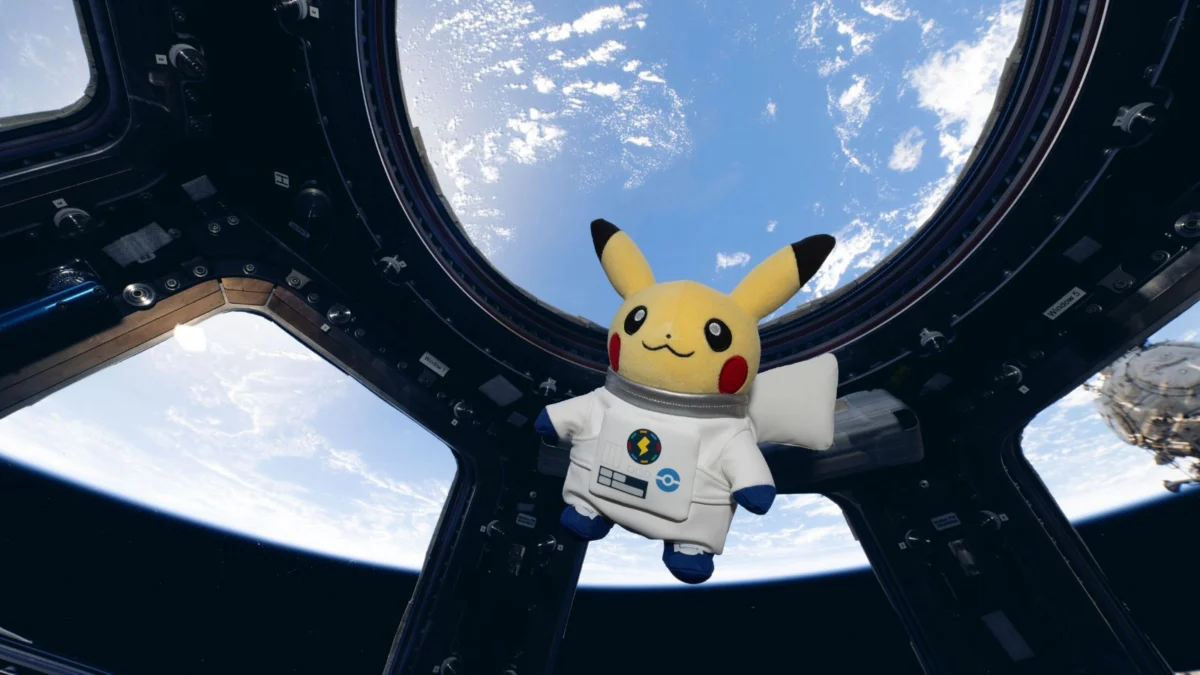
The European Space Agency (ESA) and The Pokemon Company International have officially unveiled a multi-year collaboration designed to bridge the gap between popular culture and space science, headlined by the recent return of a specialized Pikachu plush from the International Space Station (ISS). This announcement follows a secretive 67-day mission during which the iconic character orbited the Earth approximately 1,040 times, serving as a symbolic ambassador for European space exploration. The initiative, timed to coincide with the United Nations-declared World Space Week, represents one of the most significant intersections of the gaming industry and aerospace education to date, aiming to inspire a new generation of scientists, engineers, and explorers.
The Journey of Astronaut Pikachu: 67 Days in Microgravity
The centerpiece of this collaboration is a small Pikachu plush, outfitted in a custom-designed ESA flight suit, which embarked on a journey to the International Space Station earlier this year. The "Astronaut Pikachu" launched on April 11, 2026, and remained in the low-Earth orbit environment until June 17, 2026. During its tenure aboard the orbital laboratory, the plush was part of the mission activities of ESA astronaut Sophie Adenot, who has been a vocal advocate for creative science communication.
While aboard the ISS, the plush completed over 1,000 orbits, traveling at a velocity of approximately 28,000 kilometers per hour. The mission served not only as a promotional precursor for the current partnership but also as a logistical exercise in the stringent safety and mass protocols required for any item entering the space station environment. Objects sent to the ISS must undergo rigorous "off-gassing" tests and safety checks to ensure they do not introduce flammable materials or volatile organic compounds into the station’s recycled atmosphere. The successful deployment and return of the plush have now paved the way for an extensive educational campaign across the European continent.
A Pan-European Exhibition: Integrating Science and Fiction
Following its return to Earth, the space-flown Pikachu will serve as the focal point of a touring exhibition co-developed by ESA and The Pokemon Company. The exhibition is designed to blend high-level scientific data from European space missions with the accessible and beloved imagery of the Pokemon franchise. By integrating Pokemon characters into educational panels, the organizers hope to demystify complex concepts such as satellite Earth observation, deep-space telecommunications, and the mechanics of rocket propulsion.
The exhibition is scheduled to debut during the ESA Open Days, a series of public events held at various ESA establishments. These include the agency’s headquarters in Paris, the ESRIN facility in Rome, the ESTEC technical center in Noordwijk, the ESOC mission control center in Darmstadt, the ESAC space astronomy center in Villanueva de la Cañada, and the ECSAT facility in Harwell. These openings, occurring throughout late September and early October, offer the public a rare glimpse into the inner workings of Europe’s primary space gateway.
Following the initial launch at ESA sites, the exhibition will transition to some of Europe’s most prestigious cultural and scientific institutions. Confirmed venues include the Science Museum in London, the Deutsches Museum in Nuremberg, and the Cite de l’Espace in Toulouse. The tour is also slated to appear at Lucca Comics and Games in Italy, one of the world’s largest pop-culture festivals. The exhibition is expected to remain active and on tour until April 2027, ensuring a long-term impact on public engagement.

Digital Integration: Pokemon GO and the Gamification of STEM
A critical component of the partnership is the integration of the "Astronaut Pikachu" into the mobile phenomenon Pokemon GO, developed by Niantic in collaboration with The Pokemon Company. This digital tie-in is designed to drive physical foot traffic to science museums and ESA sites, rewarding players for engaging with educational venues.
From October 4, 2026, through April 30, 2027, players visiting six designated "anchor" museums—including the Science Museum in London and Space Expo in Noordwijk—will be able to participate in exclusive in-game events. Astronaut Pikachu will appear in one-star Raid Battles specifically at these locations. Trainers who successfully defeat and capture the Pokemon will receive a unique "Location Background" on the creature’s profile page, serving as a digital memento of their visit to the museum. For dedicated collectors, the game will also feature a rare "Shiny" variant of the Astronaut Pikachu.
The collaboration further intensifies during World Space Week, held from October 4 to October 10. During this window, several ESA sites will host localized gameplay features. Furthermore, a themed "Space Week" event will see an increased spawn rate for Pokemon with cosmic themes, including Clefairy, Magnemite, Starmie, Lunatone, Solrock, Elgyem, and Blipbug. This thematic alignment underscores the effort to use the internal logic of the Pokemon universe—where certain creatures are theorized to have extraterrestrial origins—to spark curiosity about actual celestial bodies and the search for life beyond Earth.
Official Statements and Strategic Objectives
The partnership is viewed by ESA leadership as a vital tool for modernizing the agency’s outreach strategy. Josef Aschbacher, the Director General of the ESA, emphasized the importance of reaching younger demographics through the platforms they already inhabit. "Inspiring future generations is a key part of ESA’s mission," Aschbacher stated during the reveal. "Through this collaboration with Pokemon, we are unlocking new ways for people across Europe to connect with space. By meeting the public in the museums they visit and the games they play, we can share the incredible achievements of European space exploration in a way that is both relatable and exciting."
Representatives from The Pokemon Company International echoed these sentiments, noting that the brand has a long history of celebrating exploration and discovery. The partnership allows the franchise to align itself with real-world scientific progress, reinforcing the "explorer" spirit that is central to the Pokemon gameplay experience.
From a strategic perspective, the ESA is utilizing this partnership to bolster interest in its "Agenda 2025" and subsequent 2030 goals, which include increasing European autonomy in space and enhancing the agency’s role in climate monitoring and lunar exploration. By fostering an early interest in STEM (Science, Technology, Engineering, and Mathematics) through the lens of a globally recognized brand, ESA aims to secure a future pipeline of talent for the European aerospace sector.
Historical Context: Pokemon’s Legacy in Space
This is not the first instance of the Pokemon franchise reaching beyond Earth’s atmosphere. In 2020, The Pokemon Company collaborated with the Japan Aerospace Exploration Agency (JAXA) to celebrate the "Kibo" module on the ISS. That event featured a live stream from the station and the distribution of a special "Kibo’s Pikachu" for the Pokemon Sword and Pokemon Shield video games.

However, the current collaboration with ESA is significantly broader in scope, involving physical touring exhibitions, long-term museum installations, and sophisticated mobile game integration across multiple nations. It marks a shift from one-off promotional stunts toward a sustained educational campaign.
The choice of Sophie Adenot as the participating astronaut is also significant. As a member of the 2022 ESA astronaut class and a former helicopter test pilot for the French Air and Space Force, Adenot represents the new era of European spaceflight. Her involvement lends a high degree of professional credibility to the project, signaling that the agency views these collaborations as serious educational endeavors rather than mere marketing exercises.
Broader Impact and Educational Implications
The use of "edutainment"—the blending of education and entertainment—is a growing trend among government agencies seeking to maintain public relevance in a fragmented media landscape. By leveraging the massive user base of Pokemon GO and the brand loyalty of the Pokemon franchise, ESA can achieve a level of reach that traditional press releases or documentaries rarely attain.
Sociological studies on gaming and education suggest that "situated learning"—where educational content is delivered in a context that is already meaningful to the learner—leads to higher retention rates and greater emotional investment. When a student sees a Pokemon like Magnemite used to explain the electromagnetic sensors on the Copernicus Sentinel satellites, the scientific concept becomes anchored to a familiar character, making the information more digestible.
As the exhibition begins its tour across Paris, Rome, London, and beyond, it will be monitored for its effectiveness in increasing museum attendance and engagement with ESA’s digital resources. If successful, this model of collaboration could serve as a blueprint for other scientific organizations, such as CERN or NASA, to partner with global entertainment brands to promote scientific literacy.
The Astronaut Pikachu mission and the subsequent European tour represent a sophisticated fusion of reality and imagination. For the next several months, the journey of a small yellow plush from the silence of the vacuum back to the crowded halls of Europe’s greatest museums will serve as a reminder of the power of curiosity—whether it is directed toward catching a rare digital creature or exploring the furthest reaches of our solar system. With the exhibition running through April 2027, the impact of this orbital journey is only just beginning to be felt on the ground.




 Yuyun Lusiyani
 Joko Widodo
 Eva Lovia
 admin
admin
 Lina Irawan