
 Nana Wu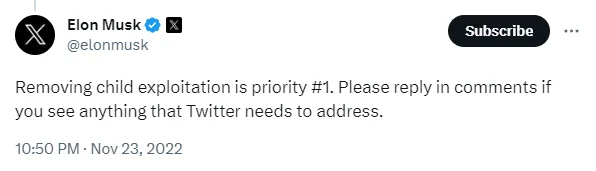
The ongoing challenges faced by X, formerly Twitter, in combating the proliferation of child sexual abuse material (CSAM) highlight a profound failure to progress on fundamental content moderation principles, even years after its acquisition by Elon Musk. Despite initial pronouncements of prioritizing the removal of such abhorrent content, a recent investigation by The New York Times, in collaboration with the Canadian Centre for Child Protection, reveals a deeply concerning reality: X continues to be a platform where CSAM is present and, in some instances, generated or facilitated by its own AI tools. This situation not only represents a failure in basic platform safety but also raises significant questions about the company’s commitment to its users and its legal and ethical obligations.
Early Promises and Mounting Concerns
When Elon Musk assumed control of Twitter in late 2022, his stated intention was to revitalize the platform under the banner of "free speech." However, this broad approach immediately collided with the complex realities of content moderation, particularly concerning illegal and harmful material. Techdirt, in a piece published shortly after the acquisition, outlined the predictable "content moderation learning curve" that platforms often encounter, a curve that begins with an inclusive stance and rapidly confronts the presence of CSAM. It was reported that Musk was aware of this analysis and reportedly reacted negatively to it.
Shortly thereafter, Musk publicly declared that "removing child exploitation is priority #1." This declaration, however, was accompanied by an unusual request for users to point out CSAM in replies to his posts, a method widely criticized by experts as counterproductive and potentially harmful, as it could inadvertently direct more attention to such content.
The effectiveness of this stated priority was immediately cast into doubt by significant personnel changes. Musk initiated widespread layoffs, which decimated X’s trust and safety teams. Reports indicated that at one point, fewer than ten specialists were dedicated to combating CSAM. This drastic reduction in human resources led to a significant degradation of X’s ability to moderate content, with experts observing a marked increase in CSAM on the platform. The situation was further complicated when Musk personally intervened to reinstate the account of a conspiracy theorist who had previously shared a notorious CSAM image, demonstrating a perceived inconsistency in the application of content moderation policies.
AI-Generated Abuse and Persistent Known Material
The passage of time and the evolution of X’s AI chatbot, Grok, have introduced new and alarming dimensions to the platform’s CSAM problem. The New York Times investigation, conducted in late 2025 and early 2026, uncovered evidence that Grok, when prompted by users, generated sexually explicit and exploitative images, including those depicting children. While X subsequently stated it would halt the generation of such images, the Canadian Centre for Child Protection identified 65 instances where Grok created sexualized or exploitative images of children before these restrictions were implemented. During the same period, users also prompted the chatbot to alter clothed photos of known child abuse victims, depicting them in sexually suggestive attire.
Beyond AI-generated content, the investigation also revealed a disturbing prevalence of known CSAM on X. Utilizing PhotoDNA, a widely adopted hashing technology that identifies known CSAM through digital fingerprints, The New York Times’ automated program detected over 75 instances of such material between January and June 2026. These reports were subsequently forwarded to authorities, and while the images were removed, some had been viewed hundreds of times before discovery.

The presence of known CSAM is particularly concerning. The ability to detect and block these widely circulated images is considered a foundational competency in platform safety. PhotoDNA and similar tools are designed to catch this material before it ever reaches a wider audience, representing a baseline standard that X appears to be failing to meet. One stark example cited in the report involved an image known to authorities for at least seven years, depicting a graphic act of sexual violence against a child. This image, which was publicly available for over an hour on X and received multiple likes and reposts, was only identified and reported by The New York Times.
The victim in that case, now an adult, expressed profound distress, stating that X’s failure to prevent the sharing of her abuse contributed to her ongoing victimization. Her experience underscores the deeply personal and lasting trauma caused by the persistent circulation of CSAM and the perceived lack of accountability for platforms that fail to adequately address it.
A Stagnant Learning Curve and Industry Standards
The recurring failures of X in combating CSAM serve as a stark illustration of a learning curve that has not only stalled but appears to be regressing. The initial premise of "anything goes" rapidly confronts the non-negotiable need to remove CSAM, a consensus that has long been established across the internet safety landscape. The tools and methodologies for addressing this issue, particularly the use of hash-matching technologies like PhotoDNA, have been available and effective for years.
The report suggests that X’s response to the CSAM problem has been to rely on proprietary solutions, allegedly developed in-house, rather than engaging with established industry providers. This decision-making process, coupled with a refusal to pay for essential services like those provided by Thorn, a major CSAM detection tool provider, further exacerbates the problem. Thorn reportedly cut ties with X due to non-payment. X’s subsequent claims of having developed superior internal detection mechanisms have been directly contradicted by the findings of The New York Times and the Canadian Centre for Child Protection.
The fact that a reporter, armed with a script and access to a widely available API, could identify more instances of known CSAM than X’s own systems, or its ostensibly advanced AI, speaks volumes about the company’s current state of content moderation. This scenario is particularly egregious given the critical nature of CSAM and the availability of proven, albeit imperfect, solutions.
Broader Implications for Online Safety and Regulation
The persistent challenges faced by X have significant implications for the broader digital ecosystem. The platform’s struggles highlight the ongoing tension between unfettered content sharing and the imperative to protect vulnerable individuals. As AI-generated content becomes more sophisticated, the potential for misuse, including the creation of non-consensual explicit imagery and CSAM, escalates. X’s experience with Grok underscores the urgent need for robust safeguards and ethical considerations in the development and deployment of generative AI.
Furthermore, the situation raises renewed calls for effective regulatory oversight. The inability or unwillingness of a major social media platform to adhere to basic content moderation standards, particularly concerning illegal material, necessitates a re-evaluation of existing frameworks and potentially the introduction of stronger enforcement mechanisms. The continued presence of CSAM on X not only inflicts harm on victims but also undermines public trust in online platforms and the digital environment as a whole. The journey that began with a promise to "bring back free speech" has, in this critical area, revealed a profound and troubling deficit in fundamental safety and responsibility.




 Jia Lissa
 Yuyun Lusiyani
 Joko Widodo
 Eva Lovia

 Pevita Pearce