
 Eva Lovia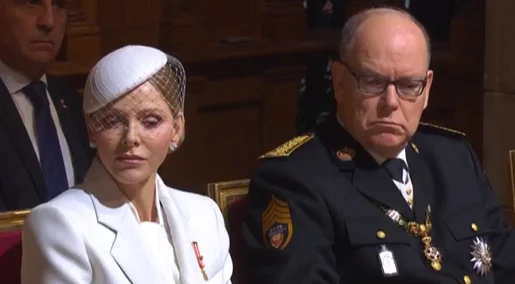
Princess Charlene of Monaco, a figure renowned for her elegance and grace, recently made a significant sartorial statement during an important international gathering in Metz, France. Exercising the centuries-old and exclusive privilège du blanc, or "privilege of white," Her Serene Highness met with Pope Leo XIV in a striking all-white ensemble. This rare honour, reserved for a select few Catholic female royals, underscored the significance of the occasion and Princess Charlene’s esteemed position within the global royal community. The meeting, which took place on Monday, was part of a four-day pastoral visit by Pope Leo XIV to France, culminating in the city of Metz.
The Monégasque royal couple, Prince Albert II and Princess Charlene, were in attendance at the conference titled “At the Roots of Europe: For Peace and Unity,” held at the Robert Schuman Conference Centre. This high-profile event brought together influential figures from across the continent, including French President Emmanuel Macron and his wife, Brigitte Macron, who formally welcomed the royal couple. Grand Duke Guillaume of Luxembourg was also among the distinguished attendees, highlighting the pan-European nature of the discussions.
The conference’s central theme revolved around critical contemporary issues, with Pope Leo XIV addressing topics such as migration, ongoing conflicts, and the imperative of European unity. In his address, the Pontiff articulated a profound observation on the continent’s evolving historical trajectory, stating that Europe was “entering a new stage in its long history” due to the increasing number of individuals seeking refuge from war and persecution. His words resonated deeply within the context of current geopolitical challenges and the ongoing humanitarian crises affecting various regions.
Princess Charlene’s choice to wear white was not merely a fashion statement but a deliberate adherence to a deeply rooted ecclesiastical tradition. Under standard papal protocol, women attending audiences with the Pope are traditionally expected to wear black. However, the privilège du blanc offers a distinguished exception to this rule. This privilege is a historical concession granted by the Holy See to a limited number of Catholic queens and princesses, allowing them to wear white during their encounters with the Pontiff. The tradition, known in Italian as the privilegio del bianco, originated as a symbolic acknowledgement of the sovereign status of these Catholic monarchs.
The Exclusive Circle of the Privilège du Blanc
The privilège du blanc is a testament to historical diplomatic and religious relationships, bestowing a unique distinction upon its recipients. Currently, fewer than ten royal women worldwide are recognized as holders of this honour. Among them are prominent figures such as Queen Letizia of Spain, Queen Sofia of Spain, Queen Mathilde of the Belgians, and the Grand Duchess of Luxembourg. Each of these women has, at various points, worn white during papal audiences, a visible representation of their inherited right and their status as prominent Catholic female heads of state or consorts.
Princess Charlene herself first invoked the privilège du blanc during a notable audience with Pope Benedict XVI in 2013. This earlier instance marked her formal entry into this exclusive group and showcased her adherence to both modern diplomatic engagements and historical traditions. Her continued exercise of this privilege during the Metz conference signals a consistent respect for these time-honoured customs, even when encountering the Pope outside the Vatican.
In stark contrast to Princess Charlene’s white attire, Brigitte Macron, who does not hold the privilège du blanc, observed the traditional protocol by wearing black. This juxtaposition served to visually emphasize the specific nature of the privilege and the protocol surrounding papal audiences. While the privilege formally applies to audiences held within the Vatican, its application has been extended to occasions when royal women entitled to it meet the Pontiff in other settings, as demonstrated in Metz.
Context of the Metz Conference and Pope Leo XIV’s Visit
The “At the Roots of Europe: For Peace and Unity” conference was a significant event within Pope Leo XIV’s broader pastoral visit to France. This four-day itinerary, which concluded in Metz, was designed to foster dialogue and address pressing social and political issues from a spiritual and ethical perspective. Pope Leo XIV’s engagement with European leaders and his emphasis on migration, conflict resolution, and unity reflect the Vatican’s ongoing commitment to playing a constructive role in addressing global challenges.
The choice of Metz, a city with a rich historical and cultural heritage situated near the borders of France, Germany, and Luxembourg, was strategically significant. It served as a symbolic location for discussions about European identity, unity, and shared challenges. The presence of leaders from Monaco, France, and Luxembourg underscored the interconnectedness of European nations and the importance of collaborative efforts in navigating complex contemporary issues.
The conference provided a platform for Pope Leo XIV to articulate his vision for Europe, emphasizing the continent’s historical foundations and its potential for a unified future. His remarks on the arrival of people fleeing conflict and persecution highlighted the humanitarian imperative that lies at the heart of many of Europe’s current debates. This focus aligns with the Catholic Church’s long-standing emphasis on compassion, solidarity, and the protection of the vulnerable.
Princess Charlene’s Attire: A Symbol of Elegance and Tradition
For the conference, Princess Charlene selected an elegant white Dior trousersuit, a modern yet sophisticated choice that adhered to the privilège du blanc. She accessorized her ensemble with a small Lady D-Joy handbag, further enhancing her refined appearance. The choice of Dior, a renowned French luxury fashion house, added a touch of haute couture to her diplomatic attire.
The privilège du blanc is not merely about wearing a specific colour; it is about the historical significance and the symbolic power it carries. It represents a continuity of tradition and a recognition of the historical roles played by Catholic monarchies in supporting and engaging with the Holy See. For Princess Charlene, wearing white in this context signifies her alignment with these historical ties and her recognition as a key figure within the European Catholic royal sphere.
Broader Implications and Analysis
The presence of Prince Albert II and Princess Charlene at this high-level conference, alongside other European royals and heads of state, underscores Monaco’s role as an active participant in continental affairs. While a principality, Monaco maintains significant diplomatic relations and engages in international dialogues on issues of mutual concern. Princess Charlene, in particular, has increasingly taken on a more prominent role in representing the Principality on the international stage, often focusing on humanitarian causes and cultural initiatives.
The Pope’s visit and the subsequent conference provided a valuable opportunity for leaders to engage in direct dialogue on critical issues. The shared platform facilitated discussions that could potentially influence policy decisions and foster greater cooperation among European nations. Pope Leo XIV’s emphasis on unity and peace at a time of significant geopolitical tension serves as a powerful reminder of the importance of diplomatic engagement and shared values.
The exercise of the privilège du blanc by Princess Charlene, while a personal choice, also serves as a subtle reinforcement of the enduring traditions that connect European monarchies and the Catholic Church. In an era where monarchies are constantly navigating the balance between tradition and modernity, such moments highlight the unique historical legacies that continue to shape their public roles. The Monégasque royal family, with its deep-rooted history, continues to embody this delicate equilibrium, participating in contemporary global discussions while honouring the customs of its past.
The discussions at the Robert Schuman Conference Centre, particularly concerning migration and European unity, are of paramount importance given the current geopolitical landscape. The ongoing challenges posed by refugee crises, regional conflicts, and the need for a cohesive European response require sustained dialogue and collaborative action. The insights shared by Pope Leo XIV and the engagement of leaders such as Presidents Macron and the Monégasque royals provide a crucial platform for addressing these complex issues.
In conclusion, Princess Charlene’s elegant adherence to the privilège du blanc during her meeting with Pope Leo XIV in Metz was more than a stylish sartorial choice. It was a deliberate and significant act that honoured a centuries-old tradition, underscored her esteemed position within the European royal community, and highlighted the enduring historical and diplomatic ties between the Principality of Monaco and the Holy See. The conference itself served as a vital forum for discussing critical issues facing Europe, with the presence of key figures like Princess Charlene reinforcing the importance of dialogue and shared values in navigating the continent’s future.



 Jia Lissa
 Yuyun Lusiyani
 Joko Widodo

 Pevita Pearce