
 Eva Lovia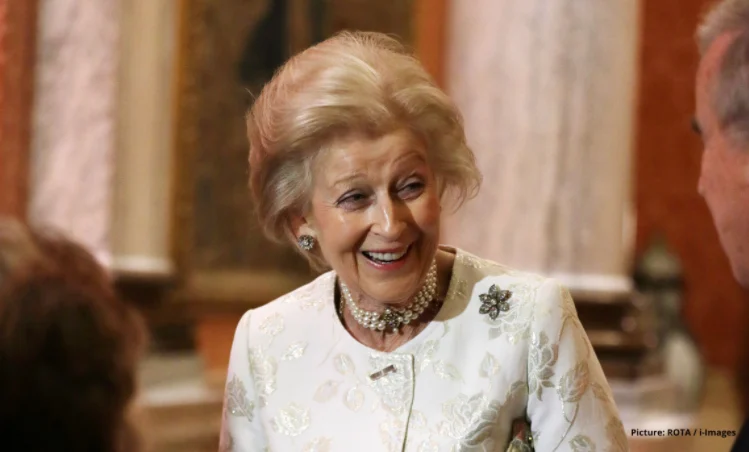
Princess Alexandra, a senior member of the British Royal Family and a dedicated public servant for over seven decades, has recently been at the centre of attention not for her customary engagements, but for her conspicuous absence from a significant family event. The 89-year-old royal was scheduled to attend a concert held over the weekend, a musical tribute honouring her late sister-in-law, Katharine, The Duchess of Kent. The event, organized by the charity Future Talent of which the Duchess was a patron, has inadvertently cast a spotlight on Princess Alexandra’s current health status, leading to widespread concern among royal observers and the public.
The Princess’s name had been officially listed in the Court Circular, the daily record of royal engagements, indicating her intended presence at the musical commemoration. This detail amplified the surprise and subsequent worry when it emerged that she had been unable to attend. Her last public appearance at a major royal event was in April of this year, when she participated in a family tribute to Her Majesty Queen Elizabeth II. This relative infrequency of public engagements, particularly her missed attendance at an event so close to her heart and family, has naturally fuelled speculation and concern regarding her well-being.
Princess Alexandra’s long and distinguished career as a working royal began in the 1950s. For decades, she was one of the most visible and active members of the Royal Family, undertaking hundreds of engagements annually. Her dedication to public service remains undiminished, as evidenced by her continued patronage or presidency of over 100 organisations, spanning a diverse range of interests from healthcare and welfare to the arts and education. Her commitment to these causes underscores her enduring sense of duty and her significant contributions to British society.
The memorial concert itself was a poignant gathering of close family members, paying homage to the life and legacy of Katharine, The Duchess of Kent. Among the attendees were the Duke of Kent, Prince Edward, aged 90, and his younger brother, Prince Michael of Kent, 84. The Duke and Princess Alexandra are siblings, both children of George and Marina, Duke and Duchess of Kent, making them grandchildren of King George V and first cousins to Queen Elizabeth II. The Duke of Kent continues to actively participate in public engagements and will celebrate his 91st birthday in October.
Katharine, The Duchess of Kent, passed away in September 2025 at the age of 92. Her life took a notable turn decades prior to her passing when she gradually withdrew from public duties to pursue her passion for music, becoming a dedicated music teacher. The tribute concert was a fitting celebration of her enduring love for music and her commitment to fostering young talent through the charity Future Talent. The presence of her children, Lady Helen Taylor and Lord Nicholas Windsor, along with several grandchildren, including Lady Amelia Windsor, underscored the intimate and personal nature of the occasion.
Princess Alexandra’s Enduring Royal Service
Princess Alexandra Helen Elizabeth Olga Christabel was born on December 25, 1936, making her the youngest grandchild of King George V and Queen Mary. Her royal lineage is deep and distinguished. Her father, Prince George, Duke of Kent, was the fourth son of King George V and Queen Mary. Her mother, Princess Marina of Greece and Denmark, was a cousin of Queen Elizabeth II’s father, King George VI. This close familial connection has always placed Princess Alexandra at the heart of the Royal Family.
Princess Alexandra officially began her public life shortly after the accession of her cousin, Queen Elizabeth II, in 1952. From the outset, she demonstrated a remarkable capacity for public service. Her early engagements often focused on charitable causes and the opening of new institutions, setting a precedent for the decades of service that followed. By the mid-20th century, she had become a familiar and respected face on the royal circuit, undertaking a demanding schedule of engagements that took her across the United Kingdom and around the Commonwealth.
Her extensive patronages reflect a genuine and long-standing interest in a wide array of fields. In healthcare, she has supported numerous hospitals, medical charities, and research foundations, often highlighting the importance of patient care and medical innovation. Her involvement in the arts has been equally significant, with her patronage extending to orchestras, galleries, and cultural institutions. Furthermore, she has consistently championed causes related to education, youth development, and social welfare, demonstrating a holistic approach to her public duties. This broad spectrum of support has allowed her to connect with diverse communities and contribute to the well-being of countless individuals.
The Significance of the Memorial Concert
The concert in memory of Katharine, The Duchess of Kent, held at a prominent London venue, was not merely a social gathering but a carefully curated event designed to celebrate a remarkable life dedicated to music and philanthropy. Future Talent, the beneficiary charity, was established by the Duchess herself with the aim of identifying and supporting talented young musicians from disadvantaged backgrounds. The organization provides financial assistance, mentorship, and performance opportunities, ensuring that promising talent is not stifled by economic circumstances.
The Duchess’s personal journey from a public royal figure to a respected music teacher exemplified her profound passion. After her marriage to the Duke of Kent in 1961, she maintained a public profile for many years, but gradually shifted her focus towards her musical interests. By the 1990s, she had largely withdrawn from the public eye, dedicating her time to teaching and her charitable endeavors. This memorial concert was therefore a poignant opportunity for those who knew her, admired her, and benefited from her work to come together and honour her enduring legacy.
The attendance of the Duke of Kent, Prince Michael, and other close family members underscored the deep affection and respect they held for Katharine. Their presence served as a testament to the strength of familial bonds within the Royal Family and their shared commitment to continuing her philanthropic vision. The musical performances themselves were likely chosen to reflect the Duchess’s personal tastes and her love for classical music, creating an atmosphere of both remembrance and celebration.
Broader Implications and Context
Princess Alexandra’s absence from this significant family event raises important questions about the realities of aging within the Royal Family and the evolving nature of royal duties. While the Princess has remained active for an exceptionally long period, it is natural that at 89, her capacity for public engagements would be subject to physical limitations. Her previous engagements, while fewer in number, have demonstrated her continued commitment. However, missing a family memorial concert, especially one dedicated to a close sister-in-law, suggests that her health may be a more significant concern than previously understood.
The British Royal Family, like any family, navigates the challenges of aging. The public expectation of constant visibility and activity can place considerable pressure on senior royals. Princess Alexandra’s situation highlights the delicate balance between maintaining public duty and ensuring personal well-being. The increasing age of several senior royals, including Queen Elizabeth II herself before her passing and other members of her generation, has prompted discussions about succession planning and the future role of younger royals in undertaking a greater proportion of public duties.
The Royal Family’s official communications are typically understated regarding the health of its members, prioritizing privacy. Therefore, any definitive statements about Princess Alexandra’s condition are unlikely. However, the public’s concern is understandable, given her long history of dedicated service and her position within the family. Her continued patronage of over 100 organizations, many of which are vital to their respective sectors, means that any prolonged absence or significant reduction in her capacity could have an impact on the visibility and support these charities receive.
In conclusion, Princess Alexandra’s recent absence from the memorial concert for Katharine, The Duchess of Kent, has understandably led to concerns about her health. Her illustrious career as a working royal, marked by unwavering dedication and a broad spectrum of charitable interests, has earned her widespread respect and admiration. While the specifics of her health remain private, her situation serves as a reminder of the personal toll that sustained public service can take and the ongoing evolution of the Royal Family’s role in contemporary society. The public will undoubtedly be wishing the Princess well and hoping for her swift return to public life, albeit at a pace that reflects her current needs.



 Jia Lissa
 Yuyun Lusiyani
 Joko Widodo

 Pevita Pearce