
 Yuyun Lusiyani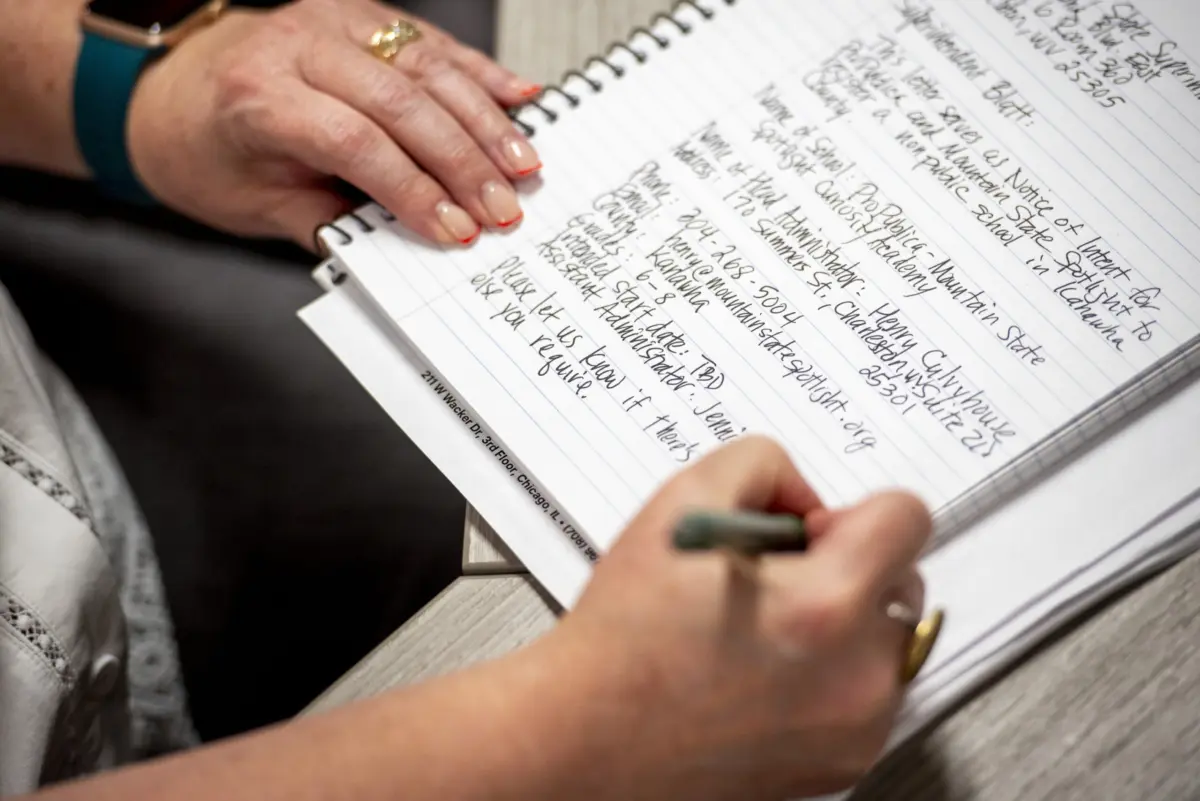
A groundbreaking investigation by ProPublica has revealed critical vulnerabilities in the regulatory framework governing private schools across several U.S. states, demonstrating how easily individuals with no educational background or pedagogical experience can establish and even qualify for public funding as private educational institutions. What began as a speculative inquiry during a routine editorial meeting — "What if ProPublica tried to establish a private school?" — rapidly evolved into a meticulous, multi-state undercover experiment designed to test the thesis that, in many jurisdictions, virtually anyone can open a private school with minimal oversight. This audacious journalistic endeavor, undertaken by a team of veteran education reporters, has starkly illuminated the gaping loopholes in a system increasingly reliant on taxpayer-funded vouchers and burgeoning "school choice" initiatives.
The Genesis of an Unconventional Investigation
The initial spark of curiosity ignited amidst discussions concerning the rapid expansion of the private school sector, fueled by significant public investment through voucher programs. Journalists observed that many states appeared to impose remarkably few barriers to entry for new private educational ventures, often requiring no prior experience, professional training, or even a detailed curriculum. This context of unchecked growth and minimal accountability prompted the audacious proposal: for ProPublica itself to attempt to register and operate private schools. The core question was not whether they could educate students, but whether the system allowed them to exist as schools, potentially accessing public funds, despite their lack of educational credentials.
The investigative team, composed of seasoned education reporters, acknowledged their lack of experience as educators but posited that this very fact would underscore the laxity of regulations. Their primary objective was to discern where, if at all, state authorities drew a definitive line regarding who was deemed fit to operate a school, particularly when such ventures sought to tap into public coffers. This investigation arrives at a crucial juncture, as private schools proliferate across diverse, often unconventional settings—ranging from barns and co-working spaces to private homes and public parks—all increasingly supported by taxpayer dollars through vouchers and similar programs. Previous ProPublica reporting had already highlighted states’ apparent disinterest in monitoring these rapidly expanding entities, setting the stage for this direct test of the system’s integrity.
Inspiration and Ethical Compass: Lessons from Investigative History
The ProPublica team drew inspiration from a lineage of audacious investigative journalism. A prominent precedent was comedian John Oliver’s 2015 stunt, where he successfully founded a tax-exempt church to satirically expose the ease with which televangelists could avoid taxes while soliciting millions. Closer to home, the lore of Chicago’s "Mirage Tavern" — a real bar operated by undercover reporters in the 1970s to expose systemic corruption — served as both a guide and a cautionary tale. While the Mirage investigation achieved substantial impact, leading to the creation of a new city oversight agency, it also faced criticism for its deceptive practices.
Learning from these historical examples, ProPublica established stringent ethical ground rules for its experiment. Crucially, the journalists harbored no intention of actually operating schools or enrolling students. Transparency was paramount; all applications were submitted using legitimate newsroom phone numbers and email addresses. In one instance, the application explicitly stated their identity as "journalists exploring opening a microschool." Furthermore, the team committed to halting the experiment immediately if it required engaging in illegal activities or leveraging public resources for personal gain. This ethical framework ensured the investigation remained focused on systemic vulnerabilities rather than individual deception, reinforcing its journalistic integrity.
The National Landscape of Private School Regulation and "School Choice"
The ProPublica investigation unfolds against a backdrop of intensifying debates over "school choice" and the role of private education in the public sphere. Over the past decade, numerous states have enacted or expanded voucher-style programs, often rebranded as Education Savings Accounts (ESAs) or scholarship programs, allowing public funds to be used for private school tuition, homeschooling, and other approved educational expenses. Proponents argue these programs empower parents, foster competition, and improve educational outcomes, particularly for students in struggling public schools. Critics, however, contend that such programs divert essential funding from public education, lack adequate accountability, and often benefit affluent families or institutions that do not meet rigorous educational standards.

The growth of "microschools" further complicates this landscape. These small, often parent-led or community-based learning environments are characterized by their intimate size, flexible curricula, and often lower operational costs compared to traditional private schools. While some microschools offer innovative pedagogical approaches, their emergence has also highlighted significant regulatory gaps. Many states, eager to promote educational alternatives, have streamlined the process for establishing these smaller entities, sometimes inadvertently creating avenues for operations with minimal oversight or quality assurance. For instance, data from organizations tracking school choice show that the number of states with universal or near-universal voucher programs has surged, and the amount of public money flowing to private entities has increased exponentially, often into the billions of dollars nationally. Yet, the regulatory apparatus has not kept pace with this rapid expansion, leaving a significant vacuum in terms of ensuring educational quality, financial transparency, and student safety.
The Experiment Unfolds: A State-by-State Chronology of Minimal Barriers
To conduct their investigation, ProPublica partnered with local newsrooms in three target states: the Arkansas Times, Mountain State Spotlight in West Virginia, and The Assembly in North Carolina. This collaborative approach leveraged local expertise and provided credible local addresses for the school applications, further enhancing transparency. The chosen names, "Curiosity Academy" (or variations thereof), subtly hinted at the journalistic intent.
Arkansas: A Business Transaction, Not an Educational Vetting
In Arkansas, the process of establishing a private school proved astonishingly simple. The state’s Education Department, notably, exerts no regulatory authority over private schools. The ProPublica-Arkansas Times Curiosity Academy LLC was established merely by filling out a form on the Arkansas Secretary of State website, paying a $45 fee, and affirming the presence of an American flag (a requirement for all schools, public and private, though only public schools also need the state flag). Within days, the Secretary of State’s office emailed a certificate of organization, formally recognizing the entity as a private school business. This initial step highlighted that in Arkansas, opening a private school was akin to registering any other small business, devoid of educational qualifications or oversight.
The journalists then explored applying for public funds. While traditional private schools participating in Arkansas’s voucher-like program require accreditation or a demonstrated path toward it—a process involving curriculum development and school handbooks—ProPublica deemed this beyond the scope of their experiment, as they had no intention of operating a functioning school. However, they discovered that Arkansas permitted a subset of schools, "microschools," to access public money with significantly fewer requirements. The application process for microschool funding took approximately 10 minutes. Crucially, it required no proof of credentials, no background checks, no demonstration of fiscal stability, and no assurance that the newsroom premises would be a safe environment for students. Although they did not proceed to register for and receive funds, the state employee who reviewed their application noted they had missed the deadline for the current school year but were eligible for the next, even suggesting alternative avenues to tap into public money. Kaelin Clay, spokesperson for the Arkansas Department of Education, defended the system, stating that the agency reviews applications to ensure state requirements are met and that microschool families have the "freedom to choose" their children’s learning environments. This response underscores the state’s emphasis on parental choice over rigorous institutional oversight.
West Virginia: A High School Diploma and a Local Notification
West Virginia presented a similarly low bar. The ProPublica-Mountain State Spotlight Curiosity Academy was established as a microschool after a state employee confirmed that, unlike traditional private schools, microschools did not require an inspection. The primary requirement was proof of at least a high school diploma. The journalists submitted a college transcript from the late 1990s to the local school district, which then notified the state of the new school’s existence. The search for a high school transcript, a document few adults retain, itself highlighted the minimal nature of the request.
An official statement from West Virginia’s Department of Education reiterated the lack of oversight: "The [Department] does not approve or deny the operation of microschools for any reason, including the qualifications of the owner/operator." The state’s legal framework, it was revealed, includes no mechanism for oversight of microschools whatsoever. This finding is particularly salient in a state that has aggressively expanded its "Hope Scholarship" program, offering public funds for private education, further amplifying concerns about the quality and accountability of the educational options available to families.
North Carolina: An Ethical Boundary and a Brewery Address

The North Carolina leg of the experiment introduced a unique challenge, ultimately halted not by state regulators, but by ProPublica’s own ethical guidelines. Initially, the team used the address of a local brewery that had a partnership with The Assembly newsroom (and even produced a beer called "Tell the Truth") for their school, the ProPublica-Assembly Academy. This was done because the brewery had necessary fire and sanitation inspection reports, whereas the co-working space housing The Assembly newsroom only had a fire inspection.
However, when a state official informed the journalists that they would need to obtain school-specific fire and sanitation inspections, the experiment was abandoned. This requirement crossed ProPublica’s self-imposed ethical line of not straining public resources. Diverting tax-payer-funded inspectors to evaluate a fictitious school was deemed an unacceptable use of public money and personnel, illustrating the journalists’ commitment to their principles even when state regulations might have allowed them to proceed. This incident underscores that even minimal requirements, when strictly applied, can prevent the establishment of non-serious ventures.
Findings and Broader Implications: A Call for Accountability
The ProPublica investigation offers compelling evidence of a systemic regulatory vacuum in the rapidly expanding private school sector, particularly concerning microschools. The ease with which "schools" can be established, often with minimal financial outlay and virtually no educational vetting of their operators, raises profound questions about accountability, educational quality, and student welfare.
- Lack of Educational Standards: The findings demonstrate that in some states, the primary hurdle to opening a private school is administrative, not educational. There is little to no requirement for operators to possess teaching credentials, develop robust curricula, or ensure a safe and conducive learning environment.
- Taxpayer Accountability: As billions of public dollars are increasingly channeled into private education through voucher programs, the absence of robust oversight means taxpayers have little assurance that their money is funding legitimate, high-quality educational services. The potential for fraud or misuse of funds in a loosely regulated environment is a significant concern.
- Student Safety and Welfare: Without inspections, background checks, or requirements for appropriate facilities, the safety and well-being of potential students are jeopardized. The thought of a "school" operating out of an uninspected location, run by individuals with no vetted credentials, presents a serious risk.
- Erosion of Public Trust: This investigation could erode public trust in both the private school sector and the state agencies tasked with overseeing education. If regulatory bodies are perceived as lax or indifferent, the integrity of the entire educational ecosystem comes into question.
- Policy Debate Fuel: The findings are poised to intensify the national debate over school choice. While advocates emphasize parental freedom, this investigation highlights the critical need for a commensurate focus on institutional accountability and student protection. Critics of deregulation will undoubtedly seize upon these findings as concrete evidence supporting their calls for stricter oversight of all publicly funded educational programs.
Reactions and Perspectives
The official responses from the Arkansas and West Virginia Departments of Education, emphasizing parental choice and the lack of oversight mechanisms, are telling. They highlight a philosophical stance that prioritizes flexibility and access over stringent regulatory control for certain types of private schools. This perspective, while championing parental autonomy, inadvertently creates the conditions for the vulnerabilities exposed by ProPublica.
Advocates for robust public education systems are likely to view these findings as a vindication of their warnings about the dangers of unchecked private school expansion and voucher programs. They will likely call for immediate legislative action to implement comprehensive oversight, including mandatory accreditation, educator qualifications, facility inspections, and financial audits for any private entity receiving public funds. Conversely, some school choice proponents might argue that the experiment, while demonstrating ease of entry, does not reflect the market forces that would naturally lead parents to choose higher-quality schools. However, this argument overlooks the critical role of upfront regulatory frameworks in preventing potentially harmful or exploitative ventures from ever gaining legitimacy.
Conclusion: A Call for Scrutiny and Reform
The ProPublica investigation has effectively pulled back the curtain on a critical regulatory blind spot within the U.S. education system. By successfully establishing private schools with minimal effort and demonstrating eligibility for public funds under lax oversight, the journalists have provided irrefutable evidence that the current frameworks in several states are insufficient to ensure educational quality, financial accountability, or student safety.
While the "ProPublica-Arkansas Times Curiosity Academy" and its sister schools will soon be formally closed, the impact of their brief, fictional existence is real and profound. These "schools" serve as stark mementos of a system in urgent need of reform. The investigation compels policymakers, educators, and the public to critically examine the balance between promoting school choice and safeguarding the fundamental right of every child to a safe, high-quality education. The era of casual private school establishment, the investigation suggests, must give way to an era of rigorous scrutiny and accountability. ProPublica encourages the public to engage with these findings, offering a quiz to test one’s own ability to open a private school, further underscoring the accessibility of what should be a highly regulated endeavor. The journey of these journalistic "school owners" underscores a vital message: transparency and accountability are not optional, but essential pillars of any educational system, public or private, that receives taxpayer support.

 Ana Megawati
 Joko Widodo
 Eva Lovia
 Jia Lissa
 Pevita Pearce