
 Yuyun Lusiyani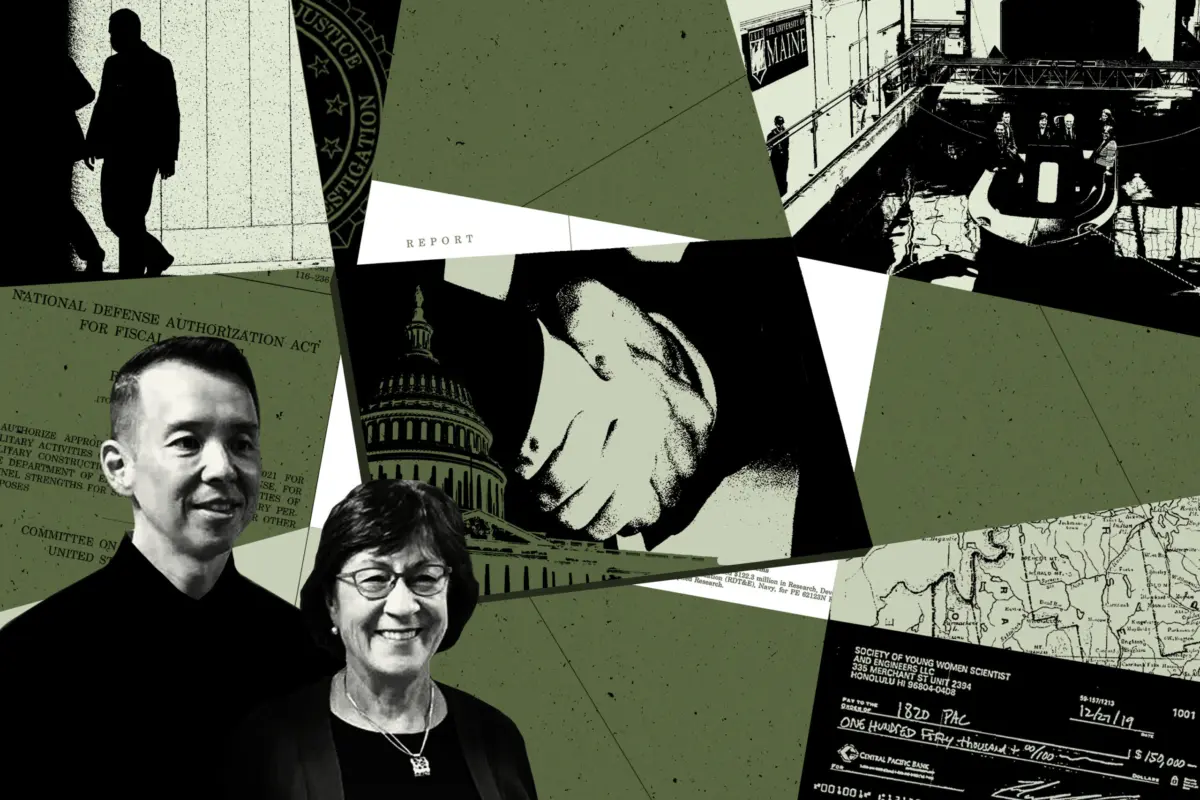
In late 2024, federal investigators from the FBI reportedly amassed sufficient evidence to initiate a comprehensive bribery probe with the potential to implicate prominent lawmakers, including Republican Senator Susan Collins of Maine. At the heart of this investigation are alleged illicit interactions between Senator Collins and a significant political donor, Martin Kao, the former CEO of Navatek, a defense contracting firm. The unfolding narrative, initially brought to light by ProPublica, details an elaborate scheme of illegal campaign contributions and alleged quid pro quo arrangements, casting a shadow over the integrity of political fundraising and government contracting.
The Genesis of the Allegations: A $500,000 Request and a Shell Company Ruse
The intricate web of alleged corruption began to form in 2019. According to Martin Kao’s detailed accounts provided to federal authorities, a representative from a pro-Collins Super PAC engaged with him and other Navatek executives. During this crucial meeting, a substantial request was made: a $500,000 donation to the Super PAC. This request immediately raised red flags within the confines of campaign finance regulations, as federal law explicitly prohibits government contractors from making political contributions to influence elections or official actions. Such a transaction, if exchanged for an official action by Senator Collins, or accepted by her, would constitute criminal bribery, a felony offense carrying severe penalties.
To circumvent these stringent campaign finance laws and deliberately obscure the true origin of the funds, Kao reportedly devised a clandestine strategy. He funneled an initial sum of $150,000 to the Super PAC through a shell company. This move, Kao claimed, had been cleared by his legal counsel. The head of the Super PAC was reportedly fully aware of Kao’s involvement behind the donation, signaling an apparent complicity in the scheme. An email, later reviewed by ProPublica, captured the Super PAC head’s succinct and telling response to Kao’s maneuver: "Very smart." This exchange underscored a calculated attempt to bypass legal safeguards designed to ensure transparency and prevent undue influence in political campaigns.
Weeks following this initial transaction, Kao allegedly informed his team that Senator Collins had committed to securing Navatek $32 million in naval contracts. This alleged commitment forms the core of the bribery accusation, suggesting a direct exchange of political contributions for official government action – a classic definition of quid pro quo corruption.
The FBI’s Unraveling of the Scheme and Kao’s Indictment
Despite Kao’s attempts to conceal the true source of the funds through the shell company, federal investigators eventually saw through the elaborate ruse. In 2022, a federal grand jury indicted Martin Kao for making illegal campaign contributions, a serious charge that could have resulted in a lengthy prison sentence. Facing the daunting prospect of years behind bars, Kao made the pivotal decision to cooperate fully with the FBI, revealing the entirety of the alleged scheme. His cooperation was driven by the hope of reducing his impending sentence. The detailed information he provided to the FBI, much of which had previously remained undisclosed to the public, became the critical roadmap for the expanded investigation.
Kao’s revelations painted a broader picture of Navatek’s systematic approach to political influence. He disclosed that he and his close associates had donated nearly $900,000 to dozens of politicians across the country. This extensive network of contributions allegedly facilitated Navatek’s expansion, allowing the company to establish operations in half a dozen states and secure more than $40 million annually in government funding. Among these political patrons, Kao explicitly identified Senator Collins as Navatek’s "most important." This designation highlighted her perceived centrality to the company’s strategy for securing lucrative government contracts and fostering its growth.
A Dormant Probe and the Reinvigoration of Justice
The progression of the FBI’s investigation, however, was not without significant interruption. According to reports, during the administration of then-President Donald Trump, the FBI and Department of Justice teams specializing in public corruption cases faced significant challenges, including what was described as an "evisceration" of resources and personnel. This period saw a discernible slowdown, and in many instances, a complete halt, in high-profile corruption investigations. The probe into Navatek and its alleged connections to lawmakers, including the potential implications for Senator Collins, reportedly became dormant during this time. Federal authorities ceased communication with the informant, Martin Kao, despite his having offered a detailed roadmap to potential corruption within Congress.
The revival of this critical investigation and its subsequent public revelation by ProPublica underscore the persistent efforts of investigative journalism to hold power accountable. ProPublica’s independent inquiry brought the existence of the dormant case to light for the first time, prompting renewed scrutiny and public interest in the allegations.
Senator Collins’s Vehement Denials and Official Responses
In the wake of ProPublica’s explosive reporting, Senator Susan Collins and her office swiftly and unequivocally denied the allegations. Her deputy chief of staff issued a statement asserting that Senator Collins’s office "vigorously" denies any claims of bribery or "pay-for-play" schemes made by Kao. Furthermore, the statement emphasized that her office had "fully cooperated" with the FBI throughout its initial inquiries.
Following the publication of the story, Senator Collins herself mounted a robust defense, which ProPublica subsequently characterized as containing "incorrect and misleading claims." In various public statements and interviews, she dismissed ProPublica’s reporting as a "disgraceful smear job." She criticized the journalistic outlet for relying on "the words of a twice-convicted felon over my office, campaign staff and me," implying a lack of credibility in Kao’s testimony. This strong pushback highlights the high stakes involved for a veteran senator with a long-standing reputation in Congress.
Official responses from other parties involved also emerged. The White House, when questioned about the matter, referred inquiries to the FBI. A spokesperson for the FBI stated that the bureau "ultimately found nothing implicating Senator Collins or her campaign" in their initial investigation. However, this statement notably did not address the new phase of the investigation, which was reportedly prompted by the more detailed and expansive account provided by Martin Kao as an informant. This distinction is crucial, suggesting that while initial probes might not have yielded sufficient evidence, Kao’s subsequent cooperation could have provided the missing pieces for a more comprehensive inquiry.
Steven Loui, the founder of Navatek, also weighed in on the controversy. He publicly distanced himself and the company from Kao’s alleged methods, describing them as "unethical and illegal." Loui affirmed that Navatek had fully complied with law enforcement investigations, attempting to separate the company’s official actions from the alleged illicit activities of its former CEO.
ProPublica’s Rigorous Investigation and Corroboration
The depth and credibility of ProPublica’s report stemmed from an extensive and rigorous investigative process. The journalistic team meticulously reviewed a trove of evidence gathered by the FBI, including thousands of pages of legal records. They also conducted interviews with dozens of individuals who possessed intimate knowledge of Navatek, its operational strategies in Washington D.C., and the intricacies of the FBI’s inquiry. This comprehensive approach allowed ProPublica to independently corroborate significant portions of Martin Kao’s account, lending substantial weight to the allegations despite Senator Collins’s vehement denials. The publication even released a video detailing their corroboration process, emphasizing their commitment to factual accuracy and transparency.
Broader Implications for Campaign Finance and Public Trust
The revelations surrounding the Navatek probe and the allegations against Senator Collins carry significant implications for the landscape of campaign finance, government ethics, and public trust in political institutions.
The Peril of Shell Companies: The use of shell companies, as allegedly employed by Kao, highlights a persistent vulnerability in campaign finance regulations. These opaque entities can effectively mask the true source of political contributions, making it exceedingly difficult for regulatory bodies like the Federal Election Commission (FEC) to track and enforce laws prohibiting donations from certain entities, such as government contractors. The ease with which such schemes can be implemented underscores the need for enhanced transparency measures and more robust enforcement mechanisms to prevent illicit money from flowing into political campaigns.
The Erosion of Public Trust: Allegations of "pay-for-play" schemes and bribery, particularly involving high-ranking elected officials, can severely erode public confidence in the integrity of the democratic process. When citizens perceive that political contributions directly translate into favorable government contracts or legislative actions, it fosters cynicism and undermines the belief that elected representatives act in the public’s best interest. This erosion of trust can have long-term consequences for civic engagement and the stability of democratic institutions.
Challenges in Prosecuting Public Corruption: The reported "evisceration" of public corruption teams within the FBI and DOJ during a previous administration points to a systemic challenge in holding powerful individuals accountable. Such actions can create an environment where complex, high-stakes investigations falter, allowing potential misconduct to go unpunished. It underscores the critical importance of independent and well-resourced law enforcement agencies to safeguard against political interference and ensure the impartial application of justice.
The Role of Investigative Journalism: This case powerfully demonstrates the indispensable role of independent investigative journalism in a functioning democracy. When official investigations stall or remain dormant, news organizations like ProPublica serve as a vital check on power, uncovering information that might otherwise remain hidden. By reviewing documents, interviewing sources, and independently corroborating facts, they bring critical issues to public attention, often spurring renewed official action and public demand for accountability.
The Fine Line Between Influence and Corruption: The case also brings into sharp focus the often-blurred line between legitimate political influence and outright corruption. While lobbying and campaign donations are legally permissible means for various groups to advocate their interests, the alleged quid pro quo in this instance crosses a clear ethical and legal boundary. It prompts a broader discussion about the ethical responsibilities of elected officials and the need for greater clarity and stricter enforcement around the mechanisms of political fundraising.
Conclusion: A Test of Accountability
The ongoing FBI probe into the allegations against Senator Susan Collins and Navatek CEO Martin Kao represents a significant test of accountability for both political figures and the justice system. The detailed testimony from a cooperating witness, coupled with ProPublica’s extensive independent corroboration, has brought serious accusations to the forefront. While Senator Collins vehemently denies the claims, the investigation raises profound questions about campaign finance integrity, the influence of money in politics, and the resilience of public corruption enforcement. As the investigation progresses, its outcome will undoubtedly have lasting implications for the political landscape and the public’s perception of justice and transparency in government.



 Ana Megawati
 Joko Widodo
 Eva Lovia
 Jia Lissa
 Pevita Pearce