
 Nana Wu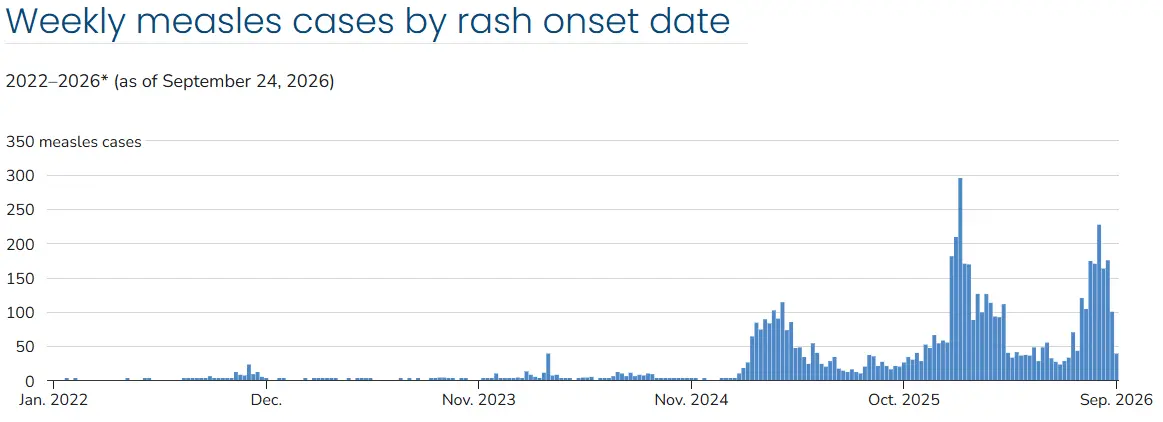
The United States is grappling with a deepening measles crisis, with Pennsylvania emerging as a significant hotspot experiencing a worsening situation. Data from the Centers for Disease Control and Prevention (CDC) indicates a disturbing trend of rising measles cases and hospitalizations nationwide, a stark departure from the disease’s eradication status at the turn of the century. This resurgence, particularly pronounced in Pennsylvania, raises urgent questions about public health preparedness, the impact of misinformation, and the effectiveness of federal leadership in combating preventable outbreaks.
Pennsylvania Grapples with Escalating Outbreak and Tragic Fatalities
Pennsylvania has become a focal point of the national measles resurgence, with alarming statistics highlighting the severity of the outbreak. As of a recent announcement, the state has confirmed a fifth death attributed to measles, underscoring the lethal potential of this highly contagious viral illness. The deceased individual was an unvaccinated resident of Lancaster County, an area identified as the epicenter of the outbreak that began in late April. This tragic development brings the total number of confirmed cases in Pennsylvania to 943, spanning 39 counties. The situation remains dynamic, with 119 new cases reported in the week preceding the latest fatality, and at least 176 individuals requiring hospitalization.
In response to the escalating crisis, Pennsylvania health officials have intensified vaccination efforts. State nurses have administered over 8,500 doses of the measles, mumps, and rubella (MMR) vaccine this year alone. A significant portion of these, exceeding 5,500 doses, were distributed through pop-up clinics strategically placed in outbreak-affected areas, demonstrating a concerted effort to reach vulnerable populations and curb further transmission.
National Trends Show Widespread Resurgence
The situation in Pennsylvania is not an isolated incident but reflects a broader national concern. The CDC has reported a significant increase in measles outbreaks across the country. In 2026, the nation has seen 40 new outbreaks, a figure that highlights the widespread nature of the current challenge. A staggering 95% of confirmed cases this year, totaling 3,478 out of 3,659, are directly linked to these outbreaks. Of these, 2,094 originated from outbreaks that began in 2026, while an additional 1,384 cases stem from outbreaks that commenced in 2025, indicating a persistent and evolving threat.
This surge in measles cases is particularly concerning given the disease’s previous eradication status in the United States. The last reported endemic transmission of measles in the U.S. was in 2000. The current data signifies a significant public health failure, with the re-emergence of a disease that was once considered a historical footnote in American public health. The increase in reported cases and hospitalizations, even with a lag in fatality reporting, points to a breakdown in established public health infrastructure and the effectiveness of disease prevention strategies.
Chronology of the Escalating Crisis
The current measles outbreak appears to have gained significant momentum in recent years, with a notable acceleration in 2025 and 2026. While specific nationwide data for earlier years of this resurgence is still being compiled, the reported figures for 2025 and 2026 suggest a rapid deterioration of the public health landscape concerning measles.
- Late April 2026: The measles outbreak in Lancaster County, Pennsylvania, begins, marking the start of a significant localized surge that would later be identified as the epicenter of the state’s crisis.
- Throughout 2026: The CDC reports a substantial increase in national measles cases and hospitalizations. Forty new outbreaks are identified across the country, with a vast majority of confirmed cases linked to these outbreaks.
- September 2026: Pennsylvania Department of Health confirms the fifth measles-associated death in the state, bringing the total state case count to 943 and highlighting the severity of the localized outbreak.
- Ongoing Efforts: Health officials in Pennsylvania implement widespread vaccination campaigns, including pop-up clinics, to combat the surge in cases.
The timeline indicates a persistent and growing problem, with outbreaks originating in one year spilling over into the next and new outbreaks continuously emerging. This suggests that the underlying factors contributing to the resurgence have not been adequately addressed.

Misinformation and Leadership: A Contentious Debate
The current measles outbreaks have become entangled in a contentious debate surrounding public health leadership and the proliferation of misinformation. While some public health officials and commentators have pointed to the role of vaccine hesitancy, fueled by decades of anti-vaccine rhetoric, others have been accused of actively contributing to the spread of doubt and conspiracy theories.
Robert F. Kennedy Jr., a prominent figure in vaccine skepticism, has been a central figure in this debate. Reports suggest that Kennedy has publicly questioned the accuracy of reported measles deaths in Pennsylvania and has allegedly intervened to influence the public reporting of these fatalities by the CDC. Critics argue that such actions, regardless of intent, undermine public trust in health institutions and exacerbate the spread of misinformation, thereby hindering effective public health responses.
Conversely, Kennedy and his supporters have often sought to attribute failures in managing outbreaks to state-level deficiencies or to frame public health measures as infringements on personal liberties. However, the consistent data from the CDC, which tracks cases and outbreaks nationwide, paints a picture of a systemic challenge that transcends individual state boundaries.
The Role of Misinformation and its Impact
The pervasive spread of vaccine misinformation is widely recognized as a primary driver of the resurgence in preventable diseases like measles. For decades, a complex ecosystem of online content, celebrity endorsements, and advocacy groups has propagated unfounded fears and discredited scientific consensus regarding vaccine safety and efficacy. This has led to a decline in vaccination rates in certain communities, creating pockets of vulnerability where the virus can spread rapidly.
It is crucial to address the assertion that opposition to vaccination is rooted in religious objections within specific communities, such as the Amish. Extensive research and statements from Amish community leaders have consistently debunked the notion that there is a religious prohibition against measles vaccination. In fact, vaccination is often viewed as a responsible practice within these communities. The headwinds against vaccination are more accurately attributed to the sustained campaigns of misinformation that have permeated various segments of society, transcending political and demographic lines. Historically, vocal opposition to vaccines has also been amplified by left-leaning, often Hollywood-based celebrities, demonstrating that the issue is not confined to a single ideological spectrum.
Broader Implications and the Path Forward
The escalating measles crisis carries significant implications for public health, national security, and societal well-being. The re-emergence of a once-controlled disease strains healthcare resources, poses a direct threat to vulnerable populations such as infants, immunocompromised individuals, and those who cannot be vaccinated, and erodes decades of progress in infectious disease control.
The current situation underscores the critical need for:
- Robust Public Health Infrastructure: Strengthening federal, state, and local public health agencies to effectively monitor, respond to, and prevent outbreaks.
- Combating Misinformation: Developing comprehensive strategies to counter the spread of vaccine misinformation through education, media literacy initiatives, and collaboration with social media platforms.
- Restoring Public Trust: Fostering transparency and open communication from public health officials to rebuild and maintain public confidence in scientific guidance and health recommendations.
- Data Integrity and Reporting: Ensuring accurate and timely reporting of disease data, free from political interference or attempts to obscure negative trends.
The resurgence of measles is a stark reminder of the fragility of public health gains and the enduring power of preventable diseases when vaccination rates decline and misinformation takes root. The responsibility for addressing this crisis lies not only with public health officials but also with individuals who have a role in disseminating information and fostering informed decision-making within their communities. The current trajectory suggests that without concerted and unified action, the measles crisis is likely to worsen, leading to further preventable suffering and loss of life.



 Yuyun Lusiyani
 Ana Megawati
 Joko Widodo
 Eva Lovia
 Jia Lissa
 Pevita Pearce