
 Yuyun Lusiyani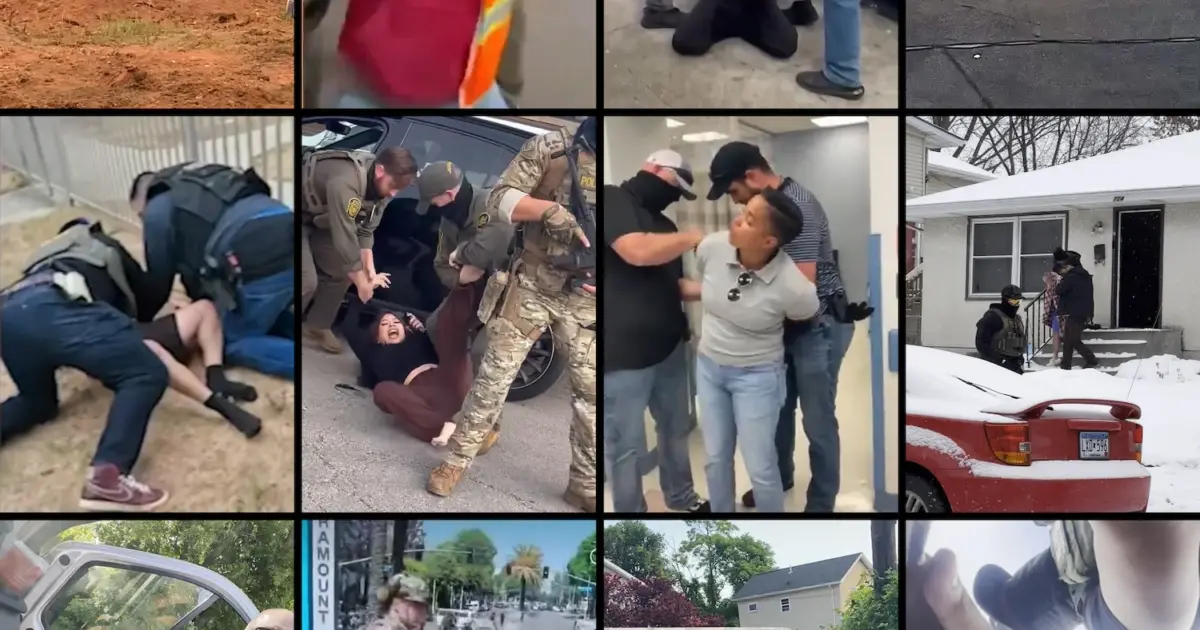
The United States is witnessing an unprecedented erosion of civil liberties, with federal immigration agents under the current administration detaining over 500 U.S. citizens, often without probable cause, using excessive force, and in direct contradiction to constitutional protections. A comprehensive investigation by ProPublica has meticulously cataloged these incidents, revealing a pattern of aggressive enforcement tactics that disregard established legal safeguards and disproportionately impact communities of color. Despite repeated denials from the Department of Homeland Security (DHS), the evidence paints a stark picture of citizens caught in the dragnet of an escalated immigration crackdown, their pleas of "I’m a U.S. citizen" frequently ignored or met with force.
The Escalation of Enforcement and its Unintended Consequences
For years, civil rights advocates and legal experts have issued dire warnings: an aggressive expansion of immigration enforcement, characterized by broad powers granted to agents and a diminishing of rights for non-citizens, would inevitably spill over to affect the rights of citizens. These warnings, once theoretical, have materialized into a disturbing reality since the start of the Trump administration. The administration’s policies, marked by a "zero tolerance" approach and intensified interior enforcement operations, have created an environment where federal agents frequently overstep their authority, leading to the wrongful detention, injury, and even deportation of American citizens.
This intensified focus on immigration enforcement has manifested in large-scale operations across the country. For example, "Operation Midway Blitz" in Illinois during September 2025 and "Operation Metro Surge" in Minnesota in December 2025, while ostensibly aimed at undocumented immigrants, have inadvertently swept up numerous citizens. While DHS maintains these operations are "highly targeted" and that "DHS is NOT arresting U.S. citizens by mistake," the collected evidence directly refutes these claims, demonstrating a systemic disregard for citizenship status and constitutional due process. The inherent risk in such broad-brush enforcement is that it blurs the lines of authority and places individuals, regardless of their legal standing, under suspicion based on appearance or association.
A Disturbing Pattern: Over 500 Cases Documented by ProPublica
ProPublica’s investigation stands as the most extensive public accounting of its kind, compiling over 500 individual cases where U.S. citizens were held against their will by immigration agents between January 2025 and September 2026. This extensive tally goes beyond mere questioning, encompassing individuals who were handcuffed, held at gunpoint, or otherwise physically prevented from leaving by federal agents—actions that courts define as detention. The scope of these incidents reveals several troubling trends that challenge the fundamental principles of American justice:
- Questioning Citizenship and Racial Profiling: More than a hundred Americans were detained after agents questioned their citizenship, with a stark majority identified as people of color. This strongly suggests racial profiling as a primary factor in initiating these stops, echoing long-standing concerns from civil rights organizations. Willy Wender Aceituno, a naturalized citizen and a two-time Trump voter, recounted Border Patrol agents breaking his truck window, yanking him out, and kneeling on his back in November 2025. Aceituno, a Latino, stated, "ICE isn’t looking for criminals, they’re looking for Latinos. Having papers in this country does not protect you." His experience underscores the vulnerability of individuals perceived as foreign, regardless of their legal status.
- Detention of Children and Teens: At least 70 American children and teenagers were detained, with approximately 20 of them handcuffed or zip-tied. This directly contradicts DHS’s assertion that "ICE does not zip tie or restrain children." Incidents include a 15-year-old with disabilities handcuffed outside a Los Angeles school in 2025, mistaken for a gang member, and more than a dozen American children detained during a raid on an Idaho horse track. The psychological trauma inflicted on these young citizens, as described by Anabel Romero whose 7-year-old son now warns his older sister to "watch out for ICE," is profound and lasting, fostering a generation that views law enforcement with fear and suspicion.
- Allegations of Assault and Obstruction: Over 300 Americans were detained for allegedly assaulting or obstructing agents. However, fewer than half of these individuals were actually charged in federal court, and a significant number of those cases were subsequently dropped or dismissed. This discrepancy raises serious questions about the validity of these initial allegations and whether they were used as pretexts for detention, potentially as a means to justify unlawful stops or excessive force.
- Suppression of Free Speech: Detaining Those Who Record: At least 63 Americans were detained while attempting to record immigration agents’ activities in public spaces. The First Amendment protects the right to record law enforcement, yet agents have repeatedly interfered with this right. In one instance, three siblings in Texas, including a young teen, were detained after stopping to film an arrest, with the teen reporting being tackled and experiencing sharp pain. This aggressive stance against documentation stifles transparency and accountability, crucial elements of a functioning democracy.
- Prolonged Detention Without Legal Access: A disturbing 36 Americans were held for at least a day without being able to contact a lawyer or their families. This constitutes a severe violation of due process, denying individuals their fundamental right to legal counsel and communication, which is especially critical when one’s citizenship is being questioned. The case of a dual citizen of Mexico and the U.S., held for four days in California without access to legal representation or family in June 2025, exemplifies this breach.
- Deportation of Citizens: Roughly a dozen citizens, predominantly children, were deported, often against their parents’ objections. In a particularly egregious case, Brian Morales Garcia, an American adult, was pulled over in central Texas in April 2026, disbelieved about his citizenship, denied access to his birth certificate, and deported to Mexico. He was only allowed back into the country after suing and presenting his birth certificate, highlighting a catastrophic failure in DHS’s verification processes and a profound injustice.
A Chronology of Violations: Case Studies in Overreach
The incidents documented by ProPublica reveal a consistent pattern across different regions and operations, illustrating how these violations manifest in real-world scenarios:
- January 2025 – Philadelphia: A 21-year-old citizen was held at gunpoint and handcuffed during a raid at a car wash where he worked, despite no apparent connection to the target of the raid.
- April 2025 – Florida: A 20-year-old was held in a Florida jail for over 24 hours, even though he possessed immediate proof of his U.S. citizenship.
- June 2025 – California: A dual citizen of Mexico and the U.S. was detained while working and held for four days without access to legal counsel or family, highlighting a disregard for established legal rights.
- September 2025 – Operation Midway Blitz (Illinois): During this enforcement surge, which DHS claimed involved "no administrative arrests of U.S. citizens," ProPublica found that federal agents detained over 120 citizens. In one incident, Darren Eichler, working at a Chicago suburb cemetery, was pepper-balled and tackled by agents who forcibly entered the property after he and coworkers refused them entry and began filming. Eichler, who was not charged, required hospitalization, still handcuffed, under agent supervision.
- November 2025 – Multiple Incidents: An 18-year-old citizen was taken off the street and later abandoned in the woods, a harrowing experience reflecting severe abuse of power. In a separate incident, Willy Wender Aceituno, the naturalized citizen mentioned earlier, was subjected to excessive force by Border Patrol agents, including having his truck window broken and being physically restrained on the pavement.
- December 2025 – Baltimore: An American woman was picked up and held for 25 days, preventing her from seeing her 5-year-old son over Christmas, a profound emotional and familial disruption caused by an erroneous detention.
- January 2026 – Minneapolis: A school staffer was tackled and handcuffed by agents hours after a local killing, later expressing profound fear: "I feel lucky to be alive." Also, Jeyli Salguero and her family experienced a violent home invasion by armed federal agents without a judicial warrant, resulting in her sister’s deportation and her father’s detention, leaving their home damaged and their sense of security shattered.
- April 2026 – Texas: Brian Morales Garcia, the Texas man, was deported to Mexico despite asserting his citizenship, a critical failure of due process that led to significant legal battles for his return.
- May 2026 – New York: A teen was violently thrown to the ground, bloodied, and then abandoned in an unfamiliar neighborhood, showcasing an alarming level of force and disregard for public safety.
- September 2026 – Illinois: An Illinois man was detained and injured by agents who mistook him for someone else, illustrating the dangers of identity errors in aggressive enforcement.
These individual accounts coalesce into a pattern of systemic overreach, where agents prioritize aggressive enforcement over adherence to constitutional rights and accurate identification.
Constitutional Protections Under Siege
The incidents cataloged by ProPublica represent direct challenges to several fundamental constitutional amendments, underscoring the legal precariousness created by current enforcement strategies:
- The Fourth Amendment: Probable Cause, Searches, and Seizures: This amendment protects individuals from "unreasonable searches and seizures" and generally requires probable cause for arrest. While agents have a lower bar of "reasonable suspicion" for stops, they often escalate to detention without meeting the higher probable cause standard. DHS frequently argues agents are merely questioning, even when individuals are handcuffed or held for hours. Justice Brett Kavanaugh’s concurring opinion, cited by DHS, suggesting "apparent ethnicity" can be a factor in stops, further legitimizes practices that critics argue amount to racial profiling, leading to citizens being detained based on their appearance, accent, or profession.
Furthermore, the Fourth Amendment prohibits officers from entering homes without a judge’s warrant. However, an ICE memo, exposed by a whistleblower, revealed agents were forcing entry into homes using administrative warrants, which do not involve a judge. Jeyli Salguero’s experience in Minneapolis, where armed agents broke into her family home without a judicial warrant, exemplifies this alarming practice.
The amendment also safeguards against "unreasonable" use of force. ProPublica has previously documented agents using banned chokeholds and breaking car windows. The case of Darren Eichler, pepper-balled and tackled, or Willy Wender Aceituno, knelt on by an agent, clearly demonstrate the use of excessive force against citizens who posed no threat. - The First Amendment: Freedom of Speech and Assembly: This amendment protects the right to protest peacefully and to record public officials, including law enforcement. Yet, the administration has aggressively pursued the arrest and prosecution of citizens protesting immigration policies, often alleging assault or obstruction. Over 300 individuals were accused of these crimes, with 130 at protests, yet many charges were dropped. The detention of citizens attempting to film agents, like the Texas siblings or the individuals at the cemetery, directly undermines these fundamental rights, chilling free expression and impeding accountability. The case of Oriana Korol, a clarinet player arrested at a peaceful protest, pepper-sprayed twice, and then charged with felony assault (later reduced to misdemeanor), underscores the aggressive response to dissent.
- Fifth Amendment: Due Process of Law: The deportation of U.S. citizens, particularly children, without proper due process is a profound violation. While DHS claims parents are given options regarding their children, the reality of cases like Brian Morales Garcia’s shows citizens being forcibly removed from the country, their claims of citizenship dismissed, and their access to legal recourse denied. Such actions represent a complete breakdown of the legal system’s protective mechanisms, where the burden of proving citizenship is unfairly placed on the individual rather than proper verification by authorities.
Official Denials Versus Eyewitness Accounts and Expert Condemnation
The Department of Homeland Security has consistently denied the systemic nature of these issues, issuing blanket statements such as "DHS is NOT arresting U.S. citizens by mistake," and calling allegations of "racial profiling… disgusting, reckless and categorically FALSE." They maintain that "DHS enforcement operations are highly targeted" and that anyone obstructing agents "will of course face consequences which include arrest."
However, these official statements are starkly contrasted by the firsthand accounts of citizens and the reactions of former immigration officials. Eric Balliet, who spent over two decades at Homeland Security Investigations and Border Patrol, including under the Trump administration, expressed "anger and disbelief," stating, "This is just terrible." Darius Reeves, former head of ICE’s Baltimore office, retired just last year, remarked, "I’ve never seen so many U.S. citizen encounters in all my years. It’s an embarrassment." Their candid assessments from within the system lend significant credence to the investigation’s findings, highlighting a clear divergence between official narratives and operational realities.
Several lawsuits have also been filed against the government, including one by Jeyli Salguero and other plaintiffs challenging DHS’s policy of entering homes without judicial warrants. While DHS claimed to have "paused" the policy, its existence and the resulting detentions of citizens highlight a disregard for constitutional limits. These legal challenges represent a crucial avenue for accountability and a means to reassert constitutional protections that have been eroded.
Broader Implications for American Society
The implications of these findings extend far beyond the individual cases. This pattern of aggressive, often unconstitutional, enforcement fundamentally undermines the rule of law and the trust between citizens and their government. When citizenship no longer guarantees protection from arbitrary detention and excessive force, particularly for communities of color, it creates a climate of fear and insecurity that erodes the very fabric of democratic society.
The "undercount" acknowledged by ProPublica, noting that their tally of 500+ cases is likely a conservative estimate (e.g., only 30 citizens identified in an Idaho raid where witnesses estimated over 200 were detained), suggests the true scale of the problem is even greater. This highlights a profound lack of transparency and accountability within federal immigration agencies, raising concerns about data collection and reporting integrity.
The experiences of individuals like Willy Wender Aceituno, who now ensures his U.S.-born daughter carries her passport because "She has a Latino face," illustrate the chilling effect these policies have on daily life and the psychological burden placed on entire communities. It signals that racial appearance, rather than legal status, has become a de facto basis for suspicion and potential detention, challenging the very ideal of equality under the law.
This investigation serves as a critical warning. The erosion of rights for immigrants, if left unchecked, will inevitably, and demonstrably, lead to the erosion of rights for all citizens. The administration’s relentless pursuit of its immigration agenda, coupled with its dismissal of constitutional concerns, has created a perilous landscape where fundamental liberties are increasingly vulnerable. The call for public information and footage related to the administration’s immigration crackdown remains open, underscoring the vital role of citizen vigilance and independent journalism in holding power accountable and safeguarding constitutional principles.

 Ana Megawati
 Joko Widodo
 Eva Lovia
 Jia Lissa
 Pevita Pearce