
 Yuyun Lusiyani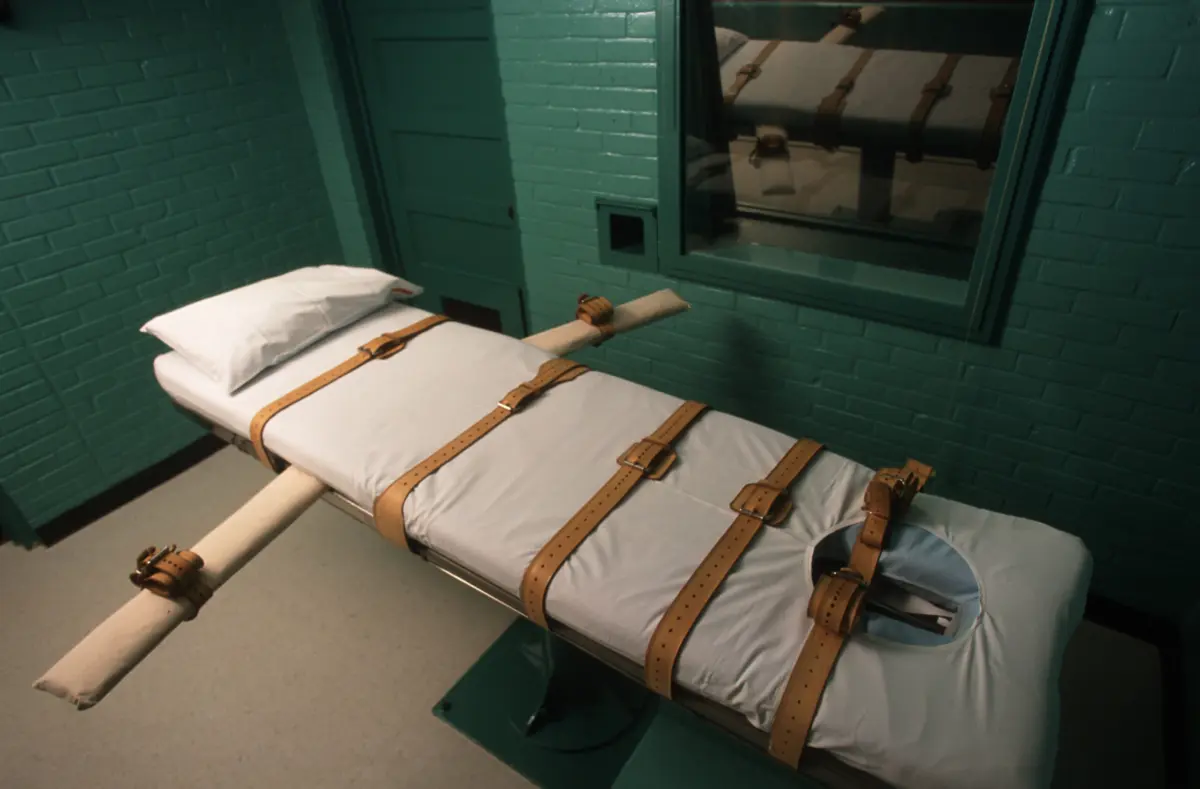
In a harrowing two-hour ordeal that gripped observers and sent shockwaves through the American justice system, Christa Pike, a death row inmate in Tennessee, endured a failed execution attempt described by legal experts as unprecedented. Witnesses reported that Pike cried, whimpered, and snored as the state administered two doses of its lethal injection drugs. By the conclusion of the procedure, her attorneys stated her arms were severely swollen, blistered, and one had turned purple, yet Pike remained alive. This marks the first documented instance in U.S. history where a prisoner has survived not just one, but two administrations of lethal injection drugs, bringing renewed scrutiny to the controversial method of capital punishment.
The botched execution, which unfolded with agonizing slowness, highlighted deeply entrenched issues within Tennessee’s capital punishment system and echoed concerns that have plagued lethal injection protocols across the nation. For a reporter who has covered death row for nearly a decade and witnessed multiple executions, the breakdown in Tennessee was not an isolated incident but a grim manifestation of systemic flaws that frequently surface. These issues, ranging from the health complications of aging inmates to the competence of execution teams and the pervasive secrecy surrounding lethal injection procedures, indicate a fragile system prone to failure. With executions scheduled in Texas and Florida, the implications of Pike’s case are immediate and far-reaching.
A Grueling Chronology of Failure
The attempt to execute Christa Pike commenced more than nine hours behind schedule, a delay precipitated by last-minute legal challenges. Once inside the execution chamber, the situation quickly deteriorated. According to her lawyers, one of whom watched in dismay, executioners struggled to locate a viable vein, repeatedly jabbing Pike with at least seven needles. As the caustic barbiturate, pentobarbital, finally began to flow through the IV lines, Pike did not achieve rapid sedation as intended. Instead, witnesses described her singing with her spiritual adviser before vocalizing her discomfort, stating her arm felt as though it was about to burst open. "Does this happen like that?" she reportedly asked, her words underscoring the profound distress and confusion of the moment.
The immediate aftermath of the botched execution saw swift reactions. The Tennessee Department of Correction (TDOC) initially declined extensive comment but later issued a statement asserting that it had "followed every step" of its established protocol, which it claimed had been "consistently effective." However, this assertion was quickly undermined. Just days later, on Saturday, the head of the TDOC, Frank Strada, resigned from his position. Governor Bill Lee announced he had ordered "a comprehensive, third-party review to determine exactly what occurred" and confirmed that the execution previously scheduled for December would not proceed this year. His office did not respond to requests for further comment, leaving many questions unanswered about the specifics of the review and its scope.
Pike’s legal team wasted no time, filing an emergency motion on Friday requesting a court order for the TDOC to preserve all evidence related to the failed execution. In their statement, they highlighted "the serious complications that occurred during the execution attempt, many of which Christa and her attorneys had warned the State and the courts about months earlier." Pike remains hospitalized, receiving critical medical care. After several days on a ventilator, intubated and unconscious, her attorneys reported on Tuesday afternoon that she was awake and speaking, though her prognosis remains unclear, with expectations of a "long recovery." They continue to urge Governor Lee to commute her sentence to life imprisonment without the possibility of parole, arguing that the state’s egregious failure necessitates a reevaluation of her sentence.
Unhealthy Prisoners: A Growing Challenge to Execution Protocols
Christa Pike’s case exemplifies a growing challenge in capital punishment: the execution of aging and medically compromised prisoners. By the time she was strapped to the gurney last week, Pike had spent 30 years on death row. Sentenced for the 1995 murder of 19-year-old Colleen Slemmer, a fellow Job Corps student in Knoxville, Pike was 18 at the time of the crime. Her legal history, like that of many on death row, includes a documented history of mental illness and childhood sexual abuse, factors often linked to violent offenses and long-term health issues.
Now 50 years old, Pike has accumulated a range of health problems that her legal team had repeatedly highlighted as potential complications for a lethal injection. During a three-day hearing in August, her attorneys presented arguments that her small veins and a pre-existing blood disorder would render the insertion of IV lines both difficult and exceptionally painful. They requested a stay of execution, but the Tennessee Supreme Court dismissed these concerns as "speculative," rejecting their petition. This decision, in hindsight, appears gravely misjudged. Joel Zivot, a professor of anesthesiology in Atlanta and one of Pike’s medical experts, later posited that the botched execution occurred because the IV lines were improperly placed or her veins were so badly damaged that the highly alkaline liquid leaked into the surrounding tissue of her arm. "It just got into her arms, and most of it stopped there," he explained, indicating that an insufficient amount of the drug reached her bloodstream to be lethal.
The drug at the center of this controversy, pentobarbital, is a caustic barbiturate used to slow breathing, treat seizures, sedate patients before surgery, and euthanize animals. Its application in human executions has been intensely scrutinized. The Justice Department under President Joe Biden had previously paused its use, citing uncertainty about whether it would cause "unnecessary pain and suffering." While the Trump administration later reversed this stance, the inherent risks remain. States like Georgia, Missouri, South Carolina, and Texas continue to use pentobarbital. A reporter for the Houston Chronicle, witnessing five executions in Texas in the late 2010s, noted that four condemned prisoners reported a burning sensation, and two tasted the drug. One even claimed to "hear it going through the vein." While these individuals ultimately died within minutes, Pike’s case highlights the catastrophic consequences when the drug fails to enter the bloodstream effectively.
The increasing age of death row inmates is a significant factor contributing to botched executions. Federal data indicates that in 1988, prisoners executed had spent an average of less than seven years on death row. By 2023, this figure had surged to over 23 years. This prolonged incarceration means that a growing number of individuals entering the execution chamber are elderly, often in poor health due and exacerbated by decades of inadequate prison medical care. These conditions—fragile veins, organ damage, chronic illnesses—can make lethal injection procedures exceptionally challenging. A 2024 analysis by the human rights group Reprieve found that the odds of a botched lethal injection increased by an average of 6% with each additional year of a prisoner’s age.
Several high-profile botched executions in the past decade underscore this grim reality. In 2017, Ohio halted the execution of Alva Campbell after the execution team failed to find a usable vein. His attorneys had warned of his severe medical problems, including lung cancer, COPD, prostate cancer, and pneumonia, which could lead to an agonizing execution. Campbell, 69, died in prison three months later from natural causes. The following year, Alabama failed to execute 61-year-old Doyle Hamm, a terminally ill cancer patient. Executioners spent more than two hours attempting to find a vein, potentially puncturing his bladder before abandoning the effort. Hamm died three years later from cancer complications. More recently, in 2024, Idaho called off the execution of 73-year-old Thomas Creech after nearly an hour of failed attempts to locate a vein. He remains on death row.
Tennessee itself has a recent history of problematic executions involving ailing inmates. Last year, the state executed Byron Black, a 69-year-old suffering from dementia and congestive heart failure, who relied on a wheelchair and had a defibrillator implanted in his chest. Despite defense warnings that the device could cause painful shocks and prolong the execution, Tennessee’s highest court refused to intervene, and prison officials left the device on. Witnesses reported Black lifting his head, groaning, and saying, "It’s hurting so bad," after the drugs began to flow.
Concerns about similar issues are now focused on Florida, where William Lee Thompson, 74, is scheduled for execution for a 1976 murder. Thompson suffers from dementia and frequently does not remember he is facing execution. Since August, he has battled sepsis, pneumonia, blood clots, a severe sacral wound, and other debilitating conditions. His lead attorney, Bri Lacy, told ProPublica that Thompson is malnourished and dehydrated, which could make it exceptionally difficult for executioners to access his "hard, fragile veins." Lacy noted that Thompson had been in an outside hospital until the night before Governor Ron DeSantis signed his execution warrant, after which he was transferred to death watch. In response to these concerns, Governor DeSantis issued an executive order temporarily staying the execution and mandating an evaluation by a panel of three psychiatrists to determine Thompson’s competency. The results of this evaluation are currently pending.
The Competence Crisis: "Unscrupulous Actors" and Ethical Breaches
Beyond the health of the condemned, the competence and ethical standards of execution teams pose another critical threat to the integrity of lethal injection procedures. The American Medical Association and the American Nurses Association have long and strongly opposed their members’ participation in capital punishment, viewing it as a profound violation of their professional ethics to do harm. This stance often leaves states relying on individuals willing to disregard these professional codes, leading to what critics describe as "unscrupulous actors."
Tennessee’s recent history provides a stark illustration. In May, the state attempted to execute Tony Carruthers, who has consistently maintained his innocence in a 1994 triple murder. According to Maria DeLiberato, senior counsel at the American Civil Liberties Union’s Capital Punishment Project and a witness to the execution, executioners jabbed Carruthers’ hands and feet more than a dozen times in a futile search for a working vein. Eventually, a physician, who identified himself as Dr. Mark Fowler, proposed placing a central line—an invasive procedure involving puncturing the neck, chest, or groin to insert a deep IV near the heart.
DeLiberato immediately objected, citing Fowler’s questionable qualifications. Less than a year prior, Fowler had admitted in a deposition that he lacked hospital privileges and had not performed a central line placement in approximately 12 years. "His hands were shaking, and it appeared to me he didn’t know what he was doing," DeLiberato recounted. By the time Fowler abandoned the attempt to insert the central line, Carruthers was moaning, and blood was oozing from his puncture wounds. After over an hour of this ordeal, the governor finally called off the execution, granting Carruthers a one-year reprieve. Fowler, in a text message to ProPublica, defended his actions, stating, "Placing a central line is like riding a bicycle. You don’t forget," and claimed his hands were not shaking. He dismissed his lack of hospital privileges as "irrelevant" and stated he stopped because it was "uncomfortable for Carruthers." It remains unconfirmed whether Fowler participated in Christa Pike’s attempted execution, as he declined to comment on the matter to ProPublica.
Following the Carruthers incident, dozens of Tennessee doctors and nurses wrote to the governor, urging a moratorium on the death penalty. They argued that medical providers who participate in executions "are those willing to set aside their professional ethics," and that bungled executions "are the predictable result of working with such unscrupulous actors."
Historical examples further illustrate this issue. For years, the physician overseeing executions in Missouri was a surgeon who had faced discipline from the state board and approximately 20 malpractice lawsuits. In court testimony from the mid-2000s, he admitted to confusing drug names and independently halving the anesthetic dose given to condemned prisoners. Although a court eventually banned him from participating in Missouri executions, federal officials later placed him on the execution team at the federal death chamber in Indiana.
The most infamous example of execution team incompetence perhaps remains the 2014 execution of Clayton Lockett in Oklahoma, which was a drawn-out and bloody procedure. A paramedic involved later testified, shockingly, that the delay was due to "Black people have smaller veins than white people," revealing a deeply troubling lack of medical understanding and potential racial bias within the execution team.
Experts have drawn parallels between Christa Pike’s case and the 2006 Florida execution of Ángel Díaz. Díaz, 55, struggled for approximately half an hour after the first dose of drugs failed to kill him, leading executioners to administer a second dose. An investigation revealed that the needles had passed through his veins, causing the drugs to seep into the surrounding tissue and leave foot-long burns on his arms. The investigation concluded that the state had not provided adequate training or followed its own protocols, and the lead executioner later admitted to having "no medical training and no qualifications." After a brief moratorium, Florida revised its procedures and resumed executions in 2008. The striking similarities between Díaz’s extravasation and the suspected cause of Pike’s survival highlight a recurring, unaddressed vulnerability in lethal injection.
Shrouded in Secrecy: The Systemic Flaw of Non-Transparency
A foundational problem exacerbating all other issues in lethal injection is the pervasive secrecy that cloaks execution procedures across many U.S. states. Secrecy laws generally protect the identities of execution team members, making it nearly impossible to vet their qualifications or uncover any troubled histories. This lack of transparency extends to the drugs themselves.
Maya Foa, who heads the human rights organization Reprieve, notes that states have "gotten more secretive over time," actively concealing aspects of executions that could reveal the true effects of lethal injection drugs. Some states, for instance, prohibit witnesses from observing the placement of IV lines, while in Florida, officials reportedly "tape prisoners’ fingers so you can’t see if they’re wiggling or still conscious."
States routinely withhold crucial information about the drugs, including supplier names, sterility testing results, and purchase dates. This opaqueness makes it exceedingly difficult, if not impossible, to determine if drugs have degraded, become tainted, or are otherwise compromised when executions go awry. Without this data, external analysis of botched executions is severely hampered, allowing states to maintain that their protocols are sound even in the face of glaring failures.
Tennessee’s own record illustrates this pattern. In 2022, citing a "technical oversight," Governor Lee called off the execution of Oscar Smith. A subsequent investigation revealed that the state had failed to test its death drugs for bacterial toxins, a clear violation of its own rules. After a three-year hiatus, the state resumed executions last year, ostensibly with corrected protocols, yet Christa Pike’s case casts doubt on the efficacy of these changes.
It remains unclear how old the specific drugs used in Pike’s execution were. While records obtained by ProPublica indicate that Tennessee spent $650,000 this year on execution-related expenses, the source, manufacturing date, and whether the drugs were produced by a pharmaceutical company or a compounding pharmacy remain undisclosed. This lack of detail makes independent verification of drug quality impossible.
Prisoners across the country have repeatedly sued to compel states to release more information about the drugs used to kill them. In Tennessee, six condemned men are currently suing for details regarding the age, origin, and expiration dates of the state’s pentobarbital supplies. Kit Thomas, a deputy chief in the Middle District of Tennessee’s federal public defender office and a lawyer involved in the lawsuit, states that officials have resisted providing even basic information, such as the manufacturer type. The case is ongoing, and the state attorney general has declined to comment on the lawsuit. "Without public accountability or transparency," Thomas warns, "we should expect to see more people strapped to gurneys and tortured for hours at a time."
Broader Implications and Future Concerns
The unprecedented botched execution of Christa Pike intensifies an already heated national debate surrounding the death penalty, particularly the reliability and constitutionality of lethal injection. The incident has immediate implications for other scheduled executions.
In Texas, Jamaal Howard, 46, is scheduled for execution for a May 2000 murder. On Saturday, his legal team asked Governor Greg Abbott for a 30-day reprieve, not to argue his innocence, but to demand more information about the drugs Texas plans to use. While Texas has historically provided testing results and other drug-related records, this practice has reportedly changed recently. Following the events in Tennessee, Howard’s attorneys emphasized their need for proof that the drugs are still viable. "We expect [the Texas Department of Criminal Justice] will assure you that its drugs are sound," Don Bailey and Jeff Newberry wrote, "Tennessee gave the same assurance." Amanda Hernandez, a Texas prison spokesperson, countered by stating the state has successfully executed over 600 people since 1976 and "stands ready to carry out the execution scheduled for Oct. 7." Governor Abbott’s office did not immediately respond to requests for comment.
The Christa Pike case underscores the fragility of lethal injection as a method of execution. The confluence of factors—aging inmates with complex medical needs, potentially unqualified or ethically compromised execution personnel, and an pervasive culture of secrecy—creates a volatile environment where "botched" executions become an increasingly predictable outcome. Robert Dunham, director of the Death Penalty Policy Project, succinctly captured the systemic nature of the problem: "The types of failures that went into this botch happen all the time. There is nothing in the execution process that states are incapable of getting wrong." The ordeal endured by Christa Pike serves as a stark warning that without fundamental reforms in transparency, training, and ethical oversight, the specter of cruel and unusual punishment will continue to haunt America’s death chambers.




 Ana Megawati
 Joko Widodo
 Eva Lovia
 Jia Lissa
 Pevita Pearce