
 Lina Irawan
The Fédération Internationale de l’Automobile (FIA) has officially codified the technical, sporting, and financial regulations for the 2026 Formula 1 season, signaling the most comprehensive transformation in the history of the world’s premier motorsport. Designed under the "Nimble Car" philosophy, these changes represent a strategic pivot away from the increasingly large and heavy vehicles of the current era toward a more compact, efficient, and technologically advanced platform. This regulatory overhaul is built upon three primary pillars: the introduction of a redesigned power unit with a near-equal split between internal combustion and electrical energy, the implementation of active aerodynamics, and a fundamental shift in how overtaking is facilitated on the circuit.
The 2026 regulations are the result of years of collaborative research between the FIA, Formula 1 management, and the sport’s ten existing teams, alongside incoming manufacturers such as Audi and Red Bull-Ford. The objective is to foster closer racing, enhance sustainability through 100% renewable fuels, and ensure the sport remains at the pinnacle of automotive engineering while addressing the "dirty air" issues that have historically hindered wheel-to-wheel combat.
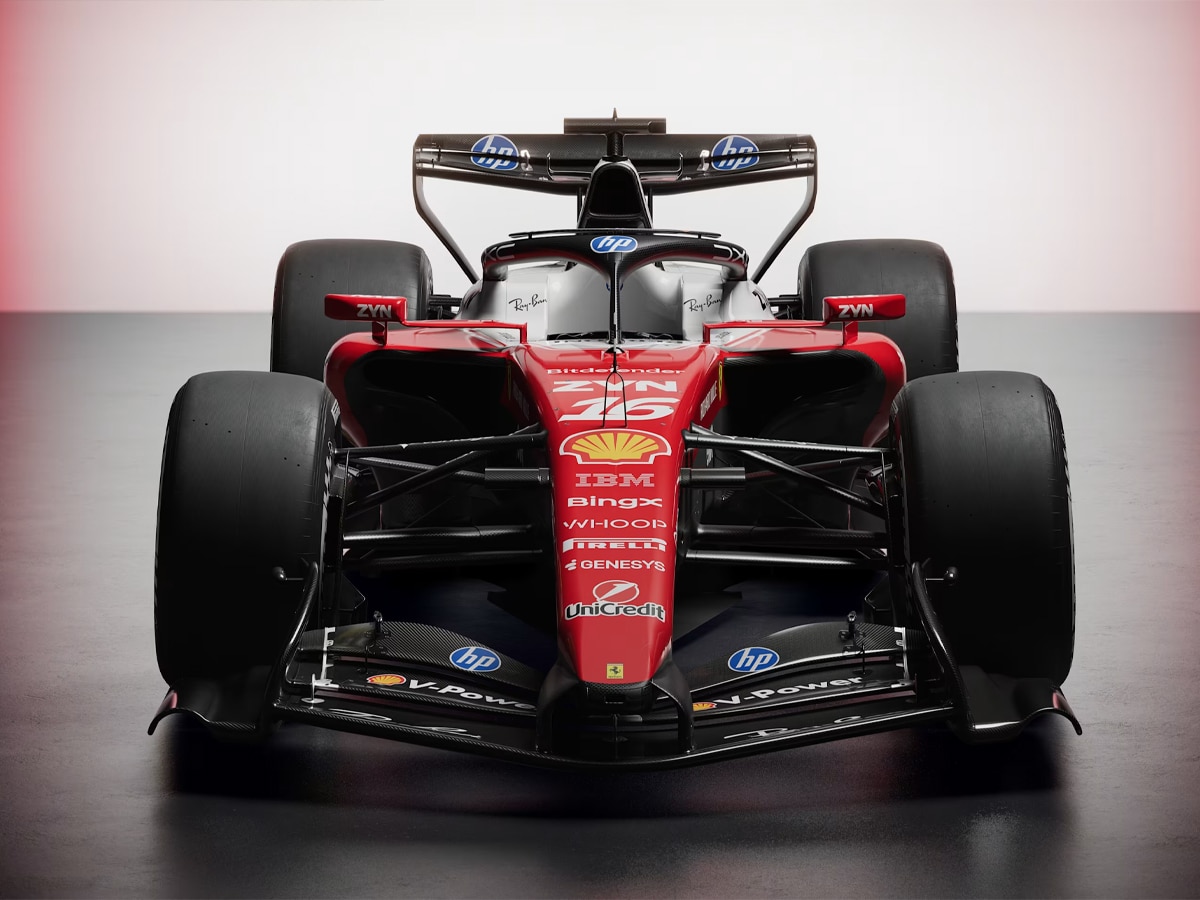
The "Nimble Car" Concept: Dimensions and Weight Reduction
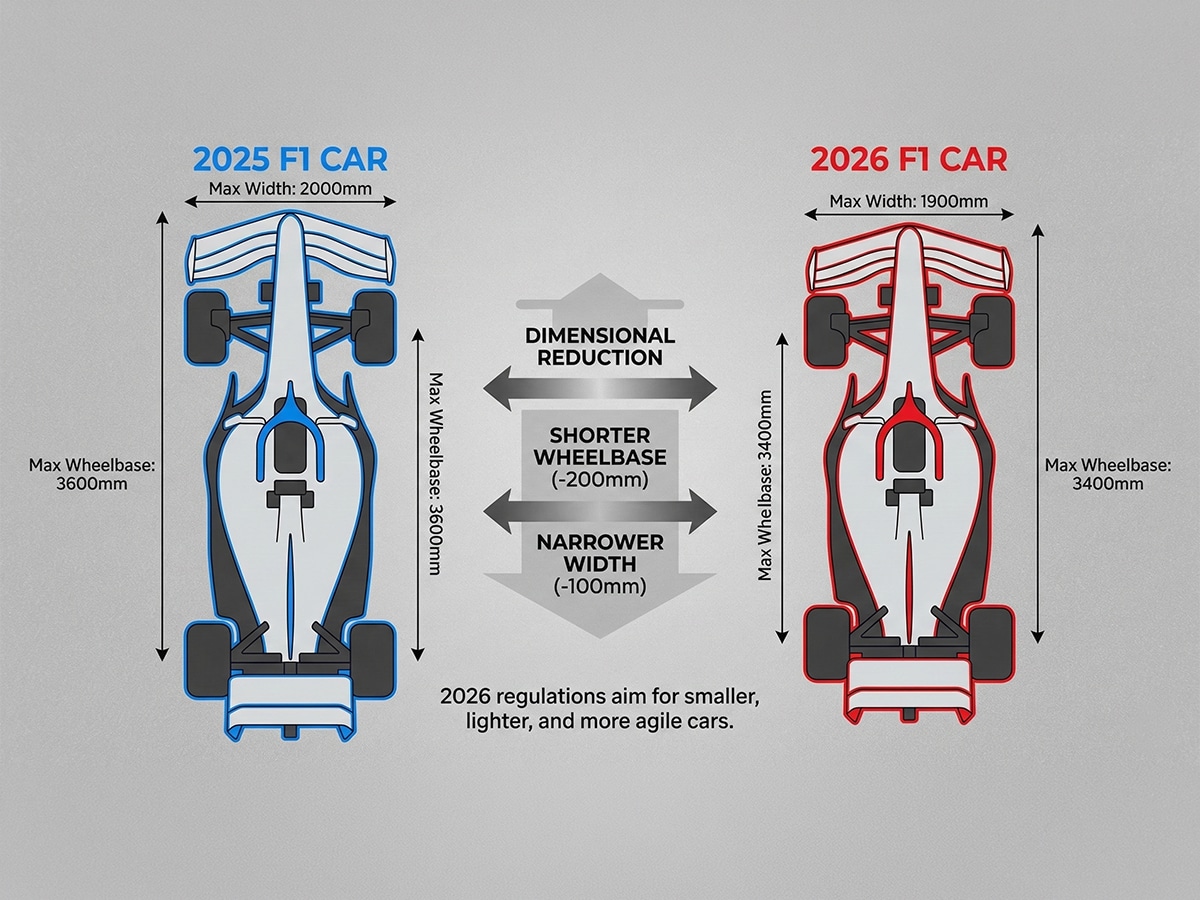
For the first time in several decades, Formula 1 is reversing the trend of vehicle growth. Since the move to the wide-track regulations in 2017 and the ground-effect transition in 2022, cars have reached record lengths and weights, leading to criticism that they have become too cumbersome for tight street circuits like Monaco or Singapore. The 2026 regulations mandate a significant reduction in the physical footprint of the cars.
The maximum wheelbase is being shortened by 200 mm, moving from 3,600 mm to 3,400 mm. Simultaneously, the overall width of the cars will be reduced by 100 mm, narrowing from 2,000 mm to 1,900 mm. These changes are intended to make the cars more agile and to provide drivers with more "usable" track space, theoretically opening up more lines through corners and increasing the viability of overtaking maneuvers in braking zones.
Complementing the smaller dimensions is a rigorous weight-reduction program. The FIA has set a minimum mass target of 724 kg for the 2026 cars—a 30 kg reduction compared to the 2025 minimum of 754 kg (excluding tires). This reduction is particularly impressive given the increased weight of the larger battery systems required for the new power units. To achieve this, engineers have removed the Motor Generator Unit–Heat (MGU-H), a complex and heavy component that recovered energy from exhaust gases. The 2026 mass limit is bifurcated: 726 kg for qualifying and sprint qualifying sessions, and 724 kg (plus nominal tire mass) for all other sessions, reflecting the FIA’s commitment to forcing teams to find efficiencies in chassis and component design.

The Power Unit Revolution: 50/50 Energy Split and Sustainable Fuels
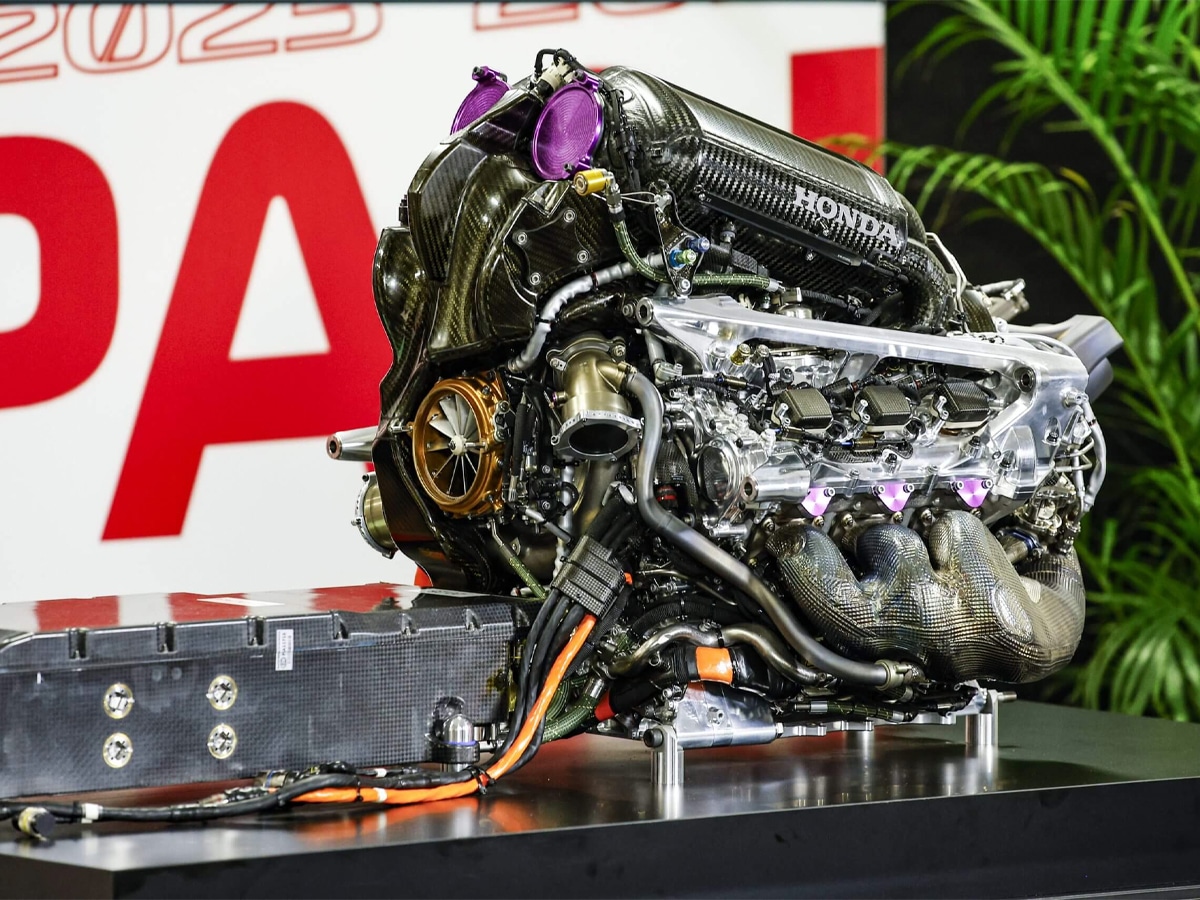
While the chassis changes are visually striking, the heart of the 2026 revolution lies beneath the engine cover. Formula 1 will retain the 1.6-liter V6 turbocharged internal combustion engine (ICE), but the way it generates and deploys power is being fundamentally altered. The removal of the MGU-H is a landmark decision aimed at simplifying the technology to attract new manufacturers—a strategy that has already proven successful with the entry of Audi and the return of Ford.
To compensate for the loss of the MGU-H, the power output from the Motor Generator Unit–Kinetic (MGU-K) will nearly triple. Currently, the MGU-K provides approximately 120 kW of power; in 2026, this will increase to 350 kW. This shift creates a roughly 50/50 power distribution between the ICE (producing approximately 400 kW) and the electrical system (350 kW).
This new ratio introduces a significant strategic element to racing. Drivers will no longer have a surplus of electrical energy at all times. Instead, energy management will become a critical differentiator in performance. Furthermore, the 2026 season will mark the debut of 100% advanced sustainable "drop-in" fuels. These fuels are carbon-neutral, derived from either non-food biological sources or carbon capture technology, ensuring that the internal combustion engine remains relevant in a net-zero future.
Active Aerodynamics: X-Mode and Z-Mode
To manage the unique power delivery of the 2026 engines and reduce drag on straights, the FIA is introducing a sophisticated active aerodynamics system. Unlike the current Drag Reduction System (DRS), which only affects the rear wing, the 2026 system will involve synchronized adjustments to both the front and rear wings.
The cars will operate in two primary aerodynamic configurations:
- Z-Mode (High Downforce): This is the default setting for cornering. The wing elements will be positioned to maximize downforce and grip, allowing for high mid-corner speeds.
- X-Mode (Low Drag): On straights, the driver (or the car’s ECU) will trigger a "straight-line mode." The front and rear wing flaps will flatten out, significantly reducing drag and allowing the car to reach higher top speeds while consuming less energy.
This dual-mode system is essential for the 2026 power units. Because the electrical energy recovery is so high, a car with traditional high-drag aerodynamics would "clip" (run out of electrical boost) mid-way down a long straight. The X-Mode ensures the car remains efficient enough to maintain competitive speeds throughout the entire lap.

The End of DRS and the Introduction of "Manual Override"
One of the most talked-about changes is the abolition of the traditional Drag Reduction System (DRS) as a passing tool. Since its introduction in 2011, DRS has been criticized for creating "highway passing" where the trailing car breezes past the leader with little effort. In 2026, passing will be governed by a new "Manual Override Mode."
Under the new system, all cars will have a standard energy deployment map. However, if a trailing car is within a certain time threshold (the "Detection Gap") of the car ahead, the driver will be granted access to a higher rate of electrical deployment. While the leading car’s energy deployment begins to taper off after reaching 280 km/h, the attacking car will be permitted to use full 350 kW boost up to 337 km/h. This creates a tactical "push-to-pass" window that relies on electrical energy rather than just a physical wing opening, requiring drivers to think more deeply about where and when to spend their battery reserves.
Chronology of the 2026 Regulations Development
The path to the 2026 regulations has been a multi-year journey involving rigorous simulation and political negotiation:
- August 2022: The FIA World Motor Sport Council approves the 2026 Power Unit regulations, focusing on increased electrical power and sustainable fuels. This triggers Audi’s announcement to join the grid.
- February 2023: Ford announces its return to Formula 1 in partnership with Red Bull Powertrains, citing the 2026 electrical focus as the primary motivator.
- June 2024: The FIA releases the first comprehensive look at the chassis and aerodynamic regulations, introducing the "Nimble Car" concept and active aero.
- December 2024 – Throughout 2025: Teams are prohibited from performing any wind tunnel or CFD (Computational Fluid Dynamics) work on 2026 cars until January 1, 2025, to prevent the wealthiest teams from gaining an insurmountable head start.
- March 2026: The regulations make their competitive debut at the season-opening Grand Prix.
Official Reactions and Industry Impact
The response from the paddock has been a mix of excitement and engineering caution. FIA President Mohammed Ben Sulayem described the regulations as a "forward-thinking" step that balances the needs of the environment with the DNA of racing. "Our goal was to create a car that is right for the future of the sport," Ben Sulayem stated. "Smaller, lighter, and more sustainable."
Stefano Domenicali, CEO of Formula 1, emphasized the importance of the new manufacturers. "The 2026 regulations have already delivered a massive win for F1 by bringing Audi and Ford to the table. These rules ensure that we remain the laboratory for future automotive technology."
However, some drivers have expressed concerns regarding the complexity of the new systems. World Champion Max Verstappen noted in early simulator sessions that the shift between Z-mode and X-mode would require a significant change in driving style, particularly in how drivers manage the "recharge" phase of the battery. Engineering directors from teams like Mercedes and McLaren have also pointed out the immense challenge of hitting the 724 kg weight limit, suggesting that many cars may start the 2026 season overweight.

Broader Implications for the Sport
The 2026 changes are designed to ensure the long-term viability of Formula 1 in a world increasingly focused on electrification and sustainability. By proving that high-performance racing can exist with 100% sustainable fuels and a heavy emphasis on energy recovery, F1 is positioning itself as a vital R&D hub for the global automotive industry.
From a competitive standpoint, these regulations represent a "reset button." Historically, major regulation changes have the potential to shake up the hierarchy, allowing midfield teams to find "loopholes" or innovations that can catapult them to the front. With the budget cap also in full effect, the 2026 season promises to be the most unpredictable and technically diverse era in the history of the sport. As the countdown to Melbourne 2026 begins, the focus shifts from the boardroom to the design offices, where the next generation of Formula 1 icons is currently being conceived.




 Jia Lissa
 Yuyun Lusiyani
 Joko Widodo
 Eva Lovia

 Pevita Pearce