
 Eva Lovia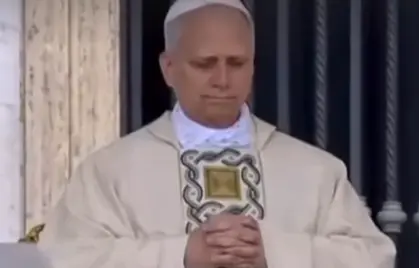
Vatican City – Pope Leo XIV, the first American Pontiff, has successfully undergone surgery to remove a cancerous nodule from his right lung. The procedure, which took place on Tuesday, involved the removal of the lower lobe of his right lung. Vatican officials confirmed that the diagnosis of lung adenocarcinoma, a common form of non-small cell lung cancer, was confirmed during the surgery. The Holy See has stated that the 71-year-old Pontiff is recovering well and shows no signs of infection.
The news of the Pope’s health concern first emerged during his weekly address to the faithful in St. Peter’s Square. Pope Leo XIV himself disclosed to the public that a routine health check had revealed a small, 3-millimeter nodule on his lung, necessitating surgical intervention for further investigation. This personal revelation underscored a growing trend of transparency regarding the health of global leaders and religious figures. The announcement was met with widespread concern and prayers from Catholics and well-wishers worldwide, culminating in a visible show of support as the Pope was admitted to the hospital.
The surgical intervention, described by the Vatican as "radical" to ensure complete removal of the affected tissue, utilized video-assisted thoracic surgery (VATS). This minimally invasive technique typically involves smaller incisions, leading to potentially faster recovery times and reduced post-operative pain compared to traditional open surgery. The operation lasted approximately 90 minutes, with the entire time in the operating room extending to around three hours, a standard duration for such procedures to allow for thoroughness and immediate post-operative assessments.
Following the surgery, a formal statement from the Vatican detailed the procedure: "As planned, the Holy Father underwent thoracic surgery. To ensure radical resection, the lower lobe of his right lung was removed using a video assisted technique. An intraoperative histological examination confirmed the diagnosis of lung adenocarcinoma, as suspected from the preoperative examinations. The Holy Father was in the operating room for approximately three hours; the operation itself lasted 90 minutes. The operation was successful, and there were no complications." This statement aimed to reassure the global Catholic community and the wider public about the Pope’s immediate well-being and the successful execution of the medical intervention.
The diagnosis of lung adenocarcinoma, while serious, is often treatable, particularly when detected at an early stage, as suggested by the small size of the nodule identified. Lung adenocarcinoma accounts for approximately 40% of all lung cancers and is the most common type found in non-smokers, though it can also affect smokers. The key factor in prognosis is the stage of the cancer at diagnosis, which determines the extent of spread. Doctors are currently conducting further examinations to ascertain if the cancer has metastasized beyond the removed lung lobe. This staging process is crucial in determining the long-term treatment plan and predicting the likelihood of a full recovery.
A Timeline of Events
The sequence of events leading to and following Pope Leo XIV’s surgery highlights a swift and decisive medical response.
- Early May 2025: Pope Leo XIV is elected as the 266th Pontiff of the Catholic Church, succeeding Pope Francis. His election marks a historic moment as he becomes the first American to hold the papacy.
- Date Undisclosed (Prior to Sunday Address): During a routine health check, a 3-millimeter nodule is discovered on the Pope’s right lung.
- Sunday Address (Date not specified in original article, but implied to be before Tuesday’s surgery): Pope Leo XIV personally informs the congregation in St. Peter’s Square about the discovered nodule and the need for surgery.
- Tuesday Morning: Pope Leo XIV is admitted to the hospital for his scheduled surgery. He receives a warm send-off from hospital staff.
- Tuesday (Time not specified): The Pope undergoes thoracic surgery to remove the lower lobe of his right lung. Intraoperative histological examination confirms lung adenocarcinoma.
- Post-Surgery: The Vatican issues a statement confirming the success of the operation and the diagnosis. The Pope returns to his hospital room to recuperate.
- Present: Pope Leo XIV is resting and recovering. His schedule is set to resume on October 20th.
Background and Context
Pope Leo XIV’s papacy began in May 2025, following the passing of Pope Francis. His election was a significant event, breaking centuries of tradition and marking a new chapter for the Catholic Church. As a former missionary in Peru for several years, his connection to Latin America is deep-seated, making his upcoming visit to the region particularly meaningful. His background as the first American Pope has brought a unique perspective to the papacy, and his health is a matter of considerable interest to the over 1.3 billion Catholics worldwide.
The decision by Pope Leo XIV to personally announce his medical condition reflects a modern approach to public communication. In an era where information is rapidly disseminated, transparency about the health of public figures can foster trust and understanding. While previous Popes have had their health issues reported, direct personal announcements from the papal podium are less common, emphasizing a potentially evolving communication strategy within the Vatican.
Supporting Data and Medical Insights
Lung adenocarcinoma is a subtype of non-small cell lung cancer (NSCLC), which accounts for about 80-85% of all lung cancer cases. The American Cancer Society estimates that in the United States, there will be approximately 238,340 new cases of lung cancer diagnosed in 2024. The 5-year survival rate for localized lung cancer (cancer that has not spread beyond the lung) is around 63%, according to the National Cancer Institute. However, this figure can vary significantly based on the specific stage and subtype of cancer, as well as the patient’s overall health and response to treatment.
The fact that the nodule was described as 3 millimeters suggests it was likely detected at a very early stage, possibly through advanced imaging techniques such as low-dose computed tomography (LDCT) screenings, which are increasingly recommended for individuals at high risk of lung cancer. Early detection is paramount in improving treatment outcomes and survival rates for lung cancer. The use of VATS for the surgery is also a positive indicator, as it aligns with modern surgical practices that prioritize patient recovery and minimize invasiveness.
The Vatican’s statement about checking to see if the cancer has spread is a standard procedure in cancer diagnosis. This process, known as staging, involves determining the size of the tumor, whether it has invaded nearby tissues, and if it has spread to lymph nodes or distant parts of the body. Staging is typically achieved through imaging tests (like CT scans, PET scans, and MRIs) and sometimes further biopsies. The results of this staging will be critical in guiding future treatment decisions, which could include further surgery, radiation therapy, chemotherapy, or targeted drug therapies, depending on the findings.
Official Responses and Broader Impact
The swift communication from the Vatican following the surgery has been met with a mix of concern and relief. Cardinals, bishops, and religious leaders from around the globe have issued statements of support and prayers for the Pope’s recovery. Messages have also poured in from secular leaders, acknowledging the significant global influence of the papacy and expressing well wishes for the Pontiff.
The Pope’s upcoming travel schedule, particularly his planned visit to Peru in November as part of a Latin American tour, will undoubtedly be subject to review based on his recovery progress. His past experience as a missionary in Peru could lend a deeply personal and significant dimension to this trip, making its potential continuation a focal point for the Catholic community in the region. The Vatican’s careful management of his schedule, allowing for rest until October 20th, indicates a measured approach to his return to public duties, prioritizing his health while acknowledging the demands of his office.
The health of any global leader is of interest, but the Pope’s position as the spiritual head of the Catholic Church elevates the concern to an international level. His recovery is not just a personal matter but also impacts the ongoing pastoral and diplomatic work of the Holy See. The successful surgery and initial positive prognosis are seen as a sign of divine providence by many of his followers.
Analysis of Implications
The diagnosis and subsequent surgery of Pope Leo XIV raise several points for consideration regarding leadership, transparency, and the future of the papacy.
Firstly, the event underscores the increasing importance of proactive health monitoring, even for high-profile individuals. The early detection of the nodule, due to routine checks, highlights the value of preventative healthcare.
Secondly, Pope Leo XIV’s personal announcement of his condition sets a precedent for openness. In a world often skeptical of official pronouncements, direct communication from the leader can foster a greater sense of connection and trust with the public. This approach may influence how future papal health matters are communicated.
Thirdly, the successful outcome of the surgery, while a relief, also brings into focus the demanding nature of the papal office. The Pontiff’s schedule is notoriously rigorous, involving extensive travel, diplomatic engagements, and spiritual leadership. His ability to resume these duties will be closely monitored. The Vatican’s careful planning for his return suggests a commitment to ensuring his full recovery before he undertakes his full responsibilities.
Finally, as the first American Pope, Pope Leo XIV continues to navigate his pontificate with a unique perspective. His current health challenge, and his response to it, will undoubtedly be a part of his historical legacy, adding another dimension to his already significant papacy. The global outpouring of support serves as a testament to his influence and the enduring faith of millions. The coming weeks and months will reveal the full impact of his recovery on his apostolic mission and the broader Catholic Church.


 Jia Lissa
 Pevita Pearce
 admin
admin
 Ana Megawati
 Joko Widodo