
 Eva Lovia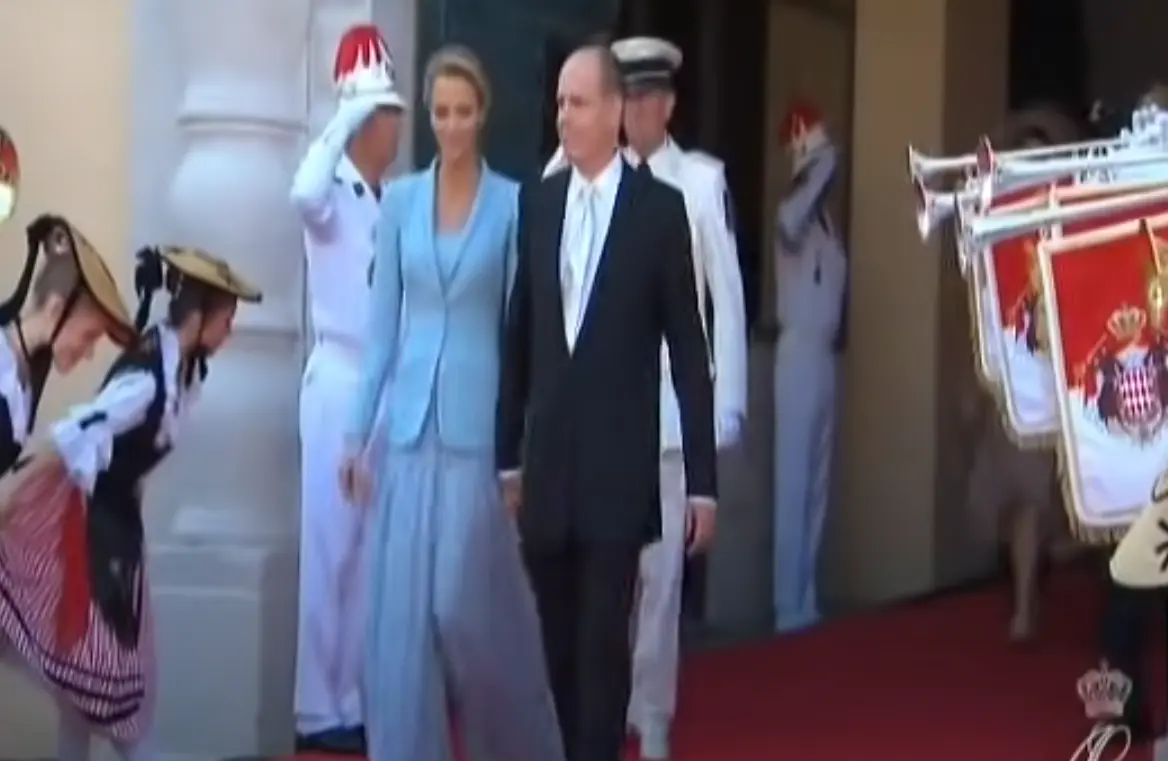
The union of Charlene Wittstock and Prince Albert II of Monaco in 2011 was a highly anticipated event, steeped in the rich history and glamour of the Grimaldi dynasty. As Wittstock prepared to step into the role of Princess Consort, the world watched with bated breath, eager to witness her bridal debut. The legacy of her predecessor, the iconic Princess Grace, cast a long shadow, and expectations for the sartorial choices of the new Princess were immense. In a move that defied conventional regal expectations and sparked widespread discussion, Charlene Wittstock opted for an ensemble that was both modern and deeply personal: a sophisticated trouser suit for her civil wedding ceremony. This choice not only signaled a departure from centuries of bridal tradition but also established a bold new style statement for royal brides.
The significance of this particular wedding was amplified by Monaco’s storied royal past. The last major royal wedding in the principality, that of Prince Rainier III and Grace Kelly in 1956, had produced one of the most celebrated and influential wedding gowns in fashion history, designed by Helen Rose. The subsequent union of Prince Albert II and Charlene Wittstock, therefore, carried a weight of historical comparison. The chosen designer, Karl Lagerfeld, a titan of the fashion industry and creative director of Chanel and Fendi at the time, was a fitting choice, given his long-standing relationship with the Monegasque royal family and his reputation for innovation. His involvement in designing Princess Charlene’s civil wedding attire underscored the event’s high profile and the careful consideration given to every detail of her public image.
The Civil Ceremony: A Bold Departure
The civil wedding of Prince Albert II and Charlene Wittstock took place on July 1, 2011, at the Prince’s Palace in Monaco. This marked the first official day of what was billed as the most significant celebration in Monaco since the wedding of Albert’s parents. The chosen attire for this pivotal moment was a striking pale blue trouser suit, a design conceived by Wittstock herself in collaboration with Karl Lagerfeld. This choice immediately set it apart from the voluminous gowns typically associated with royal brides. The ensemble consisted of wide-legged palazzo pants crafted from flowing chiffon and a tailored, single-breasted jacket. The shade of blue was reportedly chosen to perfectly complement Wittstock’s eyes, a detail that lent a personal touch to the sophisticated creation. This distinctive hue quickly became known as "Charlene blue," a testament to its memorable impact.
The decision to wear trousers for a royal wedding ceremony, even a civil one, was unprecedented and generated considerable commentary. While royal brides have historically adhered to deeply ingrained sartorial traditions, often featuring elaborate gowns and veils, Princess Charlene’s choice was a conscious embrace of modern aesthetics and personal expression. It demonstrated a willingness to challenge established norms within the royal sphere and signaled a new era for royal fashion. The ensemble was not merely a deviation from tradition but a carefully curated statement, reflecting a contemporary sensibility while maintaining an undeniable air of elegance and regality.
A Legacy of Style and Collaboration
Karl Lagerfeld’s involvement with the Monegasque royal family extended back many years. He shared a particularly close bond with Princess Caroline of Hanover, Prince Albert’s sister, for whom he designed numerous outfits for significant occasions, including the annual Bal de Rose. This established relationship facilitated his collaboration with Charlene Wittstock on her wedding attire. Lagerfeld’s expertise and vision were instrumental in translating Wittstock’s personal style into a design that was both personally resonant and publicly appropriate for a royal bride. The partnership between the soon-to-be Princess and the legendary designer resulted in an outfit that was not only a fashion statement but also a symbol of the evolving face of royalty.
The impact of this sartorial choice was immediate and far-reaching. It sparked discussions about the evolving role of royal women and the potential for them to express their individuality through their attire. While the traditional religious ceremony the following day saw Princess Charlene wearing a more conventional, albeit equally stunning, gown by Giorgio Armani, the memory of the trouser suit lingered as the defining image of her bridal debut. It was this particular outfit, born from a collaboration with one of fashion’s most influential figures, that cemented its place as one of Karl Lagerfeld’s most memorable royal style statements, a testament to its boldness and lasting influence.
Context of the Event: A Royal Wedding of Significance
The marriage of Prince Albert II and Charlene Wittstock was more than just a personal milestone for the couple; it was a significant event for the Principality of Monaco. Prince Albert II, the only son of Prince Rainier III and Princess Grace, had for years been considered one of Europe’s most eligible bachelors. His marriage to Charlene Wittstock, a former Olympic swimmer from South Africa, brought an end to years of speculation and ushered in a new chapter for the Monegasque monarchy. The celebrations surrounding the wedding were extensive, designed to showcase the glamour and prestige associated with Monaco.
The wedding festivities spanned several days, beginning with the civil ceremony on July 1st and culminating in a grand religious ceremony on July 2nd. The civil ceremony, held at the Prince’s Palace, was a more intimate affair, attended by close family and dignitaries. It served as the official legal union of the couple. The subsequent religious ceremony, held in the main courtyard of the Prince’s Palace, was a much larger and more public spectacle, drawing heads of state, celebrities, and members of royal families from around the globe. This dual ceremony structure allowed for both legal formality and grand public celebration, reflecting the dual nature of royal marriages as both personal unions and state occasions.
The choice of the Prince’s Palace as the venue for both ceremonies was highly symbolic. The palace has been the seat of the Grimaldi family for centuries and is a powerful emblem of Monegasque history and sovereignty. Holding the wedding in such a historic and significant location underscored the importance of the union for the principality’s future. The presence of thousands of spectators gathered in the palace square to witness the couple’s appearances further amplified the public’s engagement with the event and their support for the new royal couple.
The Impact of "Charlene Blue": A New Bridal Paradigm?
Princess Charlene’s decision to wear a trouser suit for her civil wedding was a deliberate and impactful choice that resonated far beyond the fashion world. It challenged the deeply ingrained notion that a bride, especially a royal bride, must wear a dress. This move was interpreted by many as a progressive step, reflecting a modern woman’s autonomy and her desire to express her personal style on her wedding day. The "Charlene blue" ensemble, with its clean lines and sophisticated silhouette, offered a powerful alternative to traditional bridal attire, suggesting that elegance and formality could be achieved through a non-traditional garment.
The implications of this choice were particularly noteworthy within the context of royal traditions. Royal weddings have historically been occasions where tradition and protocol are paramount, serving to reinforce the continuity and stability of the monarchy. Any deviation, therefore, is closely scrutinized and often carries significant meaning. Princess Charlene’s trouser suit, while not entirely negating the traditional aspects of her wedding, injected a contemporary element that acknowledged the evolving social landscape and the changing expectations placed upon royal women. It demonstrated that a royal bride could be both bound by tradition and express her individual identity.
Furthermore, the collaboration with Karl Lagerfeld added a layer of haute couture sophistication to the ensemble. Lagerfeld, known for his avant-garde designs and his ability to reinterpret classic styles, lent his considerable influence to this groundbreaking choice. His involvement ensured that the trouser suit was not perceived as a casual or informal alternative but as a high-fashion statement, designed with the same level of artistry and attention to detail as any haute couture gown. This lent the ensemble a gravitas and acceptance that might not have been afforded to a less designer-backed choice.
Reactions and Analysis: A Calculated Risk
While the original article focuses on the surprise element, a more nuanced journalistic approach involves examining the potential motivations and reception. The choice of a trouser suit for a civil ceremony, especially for a royal bride, was a calculated risk. It was designed to make a statement without undermining the solemnity of the religious ceremony. By opting for trousers for the civil union, which is a legal formality, and a gown for the religious ceremony, which is a more symbolic and public declaration of vows, Princess Charlene managed to balance tradition with personal expression.

It is plausible to infer that this decision was a collaborative one, with input from Prince Albert II and potentially other members of the royal family. The Monarchy, while steeped in tradition, also understands the need to adapt and present a relatable image to the public. A modern princess wearing a modern outfit for a civil ceremony could be seen as an effort to connect with a contemporary audience and demonstrate a forward-thinking approach.
The fashion industry, in particular, responded with widespread admiration for the bold yet elegant choice. Fashion critics lauded the clean lines, the sophisticated fabric, and the impeccable tailoring of the suit. The "Charlene blue" hue was also a talking point, seen as a departure from the typical bridal palette of white and ivory, and a more sophisticated and personal choice. The success of the ensemble lay in its ability to be both unconventional and undeniably chic, proving that a royal bride could indeed redefine expectations without compromising her status.
The Broader Implications for Royal Fashion
Princess Charlene’s wedding ensemble has had a lasting impact on the discourse surrounding royal fashion. It opened the door for a broader acceptance of diverse bridal attire within royal circles. While the traditional wedding gown remains a powerful symbol, the precedent set by Charlene Wittstock suggests that future royal brides may feel more empowered to incorporate elements that reflect their personal style and contemporary sensibilities. This shift acknowledges that royal women are individuals with unique tastes and that their wedding attire can be a reflection of this individuality, even within the confines of royal protocol.
The choice also highlights the growing influence of personal style in shaping public perception of royalty. In an era where social media and constant media attention put royal figures under a microscope, their sartorial choices are increasingly scrutinized and discussed. Princess Charlene’s bold move demonstrated that such choices can be a powerful tool for communication, conveying messages about modernity, independence, and personal agency.
In conclusion, Princess Charlene’s decision to wear a trouser suit for her civil wedding to Prince Albert II of Monaco was a pivotal moment in royal fashion history. It was a statement of intent, a fusion of personal style and high fashion, and a clear indication that tradition does not preclude innovation. Designed in collaboration with the legendary Karl Lagerfeld, the "Charlene blue" ensemble not only garnered immediate international attention but also paved the way for a more diverse and expressive approach to royal bridal attire, proving that even within the most established of institutions, individual style can make a profound and lasting impact. The legacy of that groundbreaking choice continues to influence perceptions of royal fashion, celebrating the blend of heritage and modernity that defines contemporary royalty.




 Yuyun Lusiyani
 Ana Megawati
 Joko Widodo
 Jia Lissa
 Pevita Pearce