
 Pevita Pearce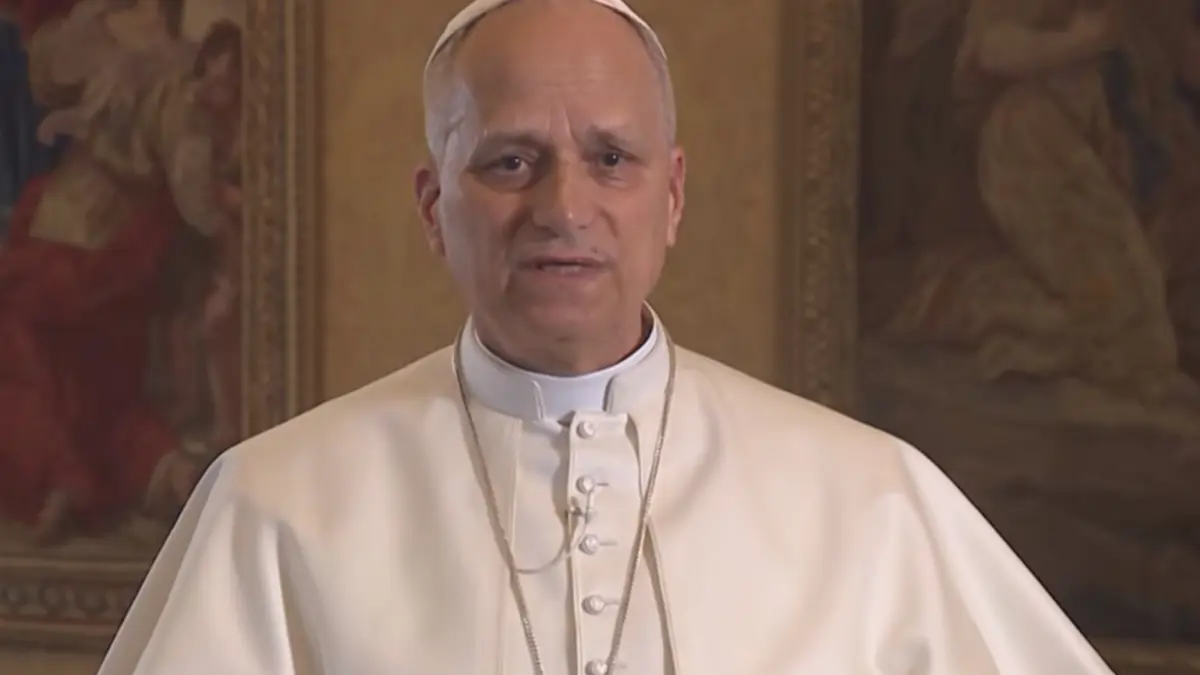
The Holy See confirmed on Tuesday that Pope Leo XIV has been diagnosed with lung adenocarcinoma following a scheduled surgical procedure to address a previously identified nodule on his right lung. The 71-year-old pontiff underwent a lobectomy—the surgical removal of the lower lobe of the lung—at Rome’s Agostino Gemelli University Hospital on October 13. While the presence of cancer was confirmed through histopathological analysis during the procedure, the Vatican’s medical team emphasized that the surgery was successful, and the prognosis remains optimistic due to early detection.
The announcement marks the most significant health challenge faced by Pope Leo XIV since his election to the papacy in May 2025. According to the official medical bulletin released by the Holy See Press Office, the surgery lasted approximately 90 minutes within a three-hour window in the operating theater. The procedure was led by Professor Stefano Margaritora, a renowned expert in thoracic surgery, alongside the hospital’s specialized surgical team. The Vatican has reported that the Pope is currently resting and that there were no immediate post-operative complications.
Chronology of the Diagnosis and Surgical Intervention
The timeline of the Pope’s medical journey began in late September 2024, during a series of routine geriatric examinations. It was during these checkups that medical staff identified a small, localized nodule in the lower region of the right lung. Although the pontiff remained asymptomatic, further diagnostic imaging suggested the need for surgical intervention to prevent potential complications and to obtain a definitive diagnosis.
On Sunday, October 11, during his weekly Angelus prayer, Pope Leo XIV took the unusual step of personally informing the faithful of his health status. Speaking from the window of the Apostolic Palace overlooking St. Peter’s Square, he revealed the discovery of the growth, describing it as "well-contained" and caught at an early stage. He requested the prayers of the global Catholic community, stating that he had accepted his doctors’ advice to undergo surgery to ensure he could continue his apostolic mission with full strength.
Following his final scheduled audiences on the morning of October 12, the Pope was admitted to Gemelli Hospital. Observers noted that the pontiff appeared in good spirits upon his arrival, taking a moment to greet hospital administrators and offer blessings to other patients in the lobby before being escorted to the private papal suite on the hospital’s tenth floor. This suite is the same facility that historically hosted Pope John Paul II and Pope Francis during their respective hospitalizations.
The surgery commenced on the morning of October 13. During the operation, a frozen section biopsy confirmed the presence of adenocarcinoma, a type of non-small cell lung cancer. Following the confirmation, the surgical team proceeded with the planned lobectomy. By early afternoon, the Vatican confirmed that the Pope had been transferred to a recovery room and was breathing independently.
Medical Context: Understanding Lung Adenocarcinoma
Lung adenocarcinoma is a form of non-small cell lung cancer (NSCLC) that typically originates in the mucus-secreting glands of the lungs. It is the most common form of lung cancer diagnosed in non-smokers and older adults. Medical experts not affiliated with the Vatican, but familiar with the procedure, suggest that the "well-contained" nature described by the Pope’s doctors indicates a Stage I or Stage II diagnosis.
For a 71-year-old patient, a lobectomy is a significant but standard procedure when the malignancy is localized. The removal of one lobe allows the remaining lung tissue to expand and compensate for the lost volume, usually resulting in a return to near-normal respiratory function after a period of rehabilitation. The early detection of the nodule is a critical factor; statistics for localized adenocarcinoma show a significantly higher five-year survival rate compared to cases where the cancer has metastasized to the lymph nodes or distant organs.
The Vatican’s medical bulletin indicated that the Pope would remain under observation for approximately seven to ten days. During this period, he will undergo respiratory physiotherapy to strengthen his remaining lung capacity. While the immediate focus is on surgical recovery, oncologists will likely review the pathology reports to determine if any follow-up treatments, such as targeted therapy or a brief course of chemotherapy, are necessary to minimize the risk of recurrence.
Global Reactions and Official Responses
The news of the Pope’s diagnosis has prompted a wave of support and well-wishes from international leaders and religious figures. The Italian Prime Minister was among the first to issue a statement, wishing the Holy Father a "speedy and full recovery" on behalf of the Italian people. Similarly, the Secretary-General of the United Nations expressed his hopes for the Pope’s health, highlighting Leo XIV’s role as a vital voice for global peace and environmental stewardship.
Within the Catholic Church, the College of Cardinals has called for a worldwide day of prayer. The Archbishop of Canterbury, representing the Anglican Communion, and the Ecumenical Patriarch of Constantinople also sent messages of fraternal solidarity, reflecting the strong ecumenical ties Leo XIV has fostered during his brief reign.
In St. Peter’s Square, pilgrims have gathered in small groups to hold vigils. The Vatican’s transparency regarding the diagnosis has been praised by many observers, as it contrasts with the more secretive approach taken during the health crises of some 20th-century pontiffs. This openness is seen as a hallmark of Leo XIV’s papacy, which has focused on institutional transparency and pastoral closeness.
Impact on the Papal Calendar and International Travel
The immediate consequence of the surgery is the suspension of all papal activities. The Vatican has officially canceled all public audiences and private meetings through at least October 20. The Sunday Angelus scheduled for October 18 is expected to be delivered via a recorded message or omitted entirely, depending on the Pope’s recovery progress.
The most significant question remains the Pope’s scheduled apostolic journey to South America. Pope Leo XIV was slated to visit Uruguay, Argentina, and Peru in November 2024. This trip is of immense symbolic importance, as it would be his first visit to his home continent since his election. Argentina, in particular, has been preparing for months to welcome the first South American pope of this era back to his native soil.
Vatican logistical teams and the Pope’s personal physicians are currently evaluating the feasibility of the trip. Traveling to South America involves long-haul flights and, in the case of Peru, visits to high-altitude regions like Cusco. Such environments can be taxing for a patient recovering from lung surgery. While the Vatican has not yet officially canceled the tour, sources suggest that the itinerary may be scaled back or postponed until early 2025 to allow the Pope sufficient time to regain his stamina.
Broader Implications for the Papacy
Elected in May 2025, Pope Leo XIV is still in the early stages of his pontificate. His election was seen as a mandate for continued reform within the Roman Curia and a renewed focus on the Global South. This health scare, while serious, comes at a time when the Pope is still actively shaping his legacy.
The diagnosis of cancer inevitably raises questions about the long-term governance of the Church. However, at 71, Leo XIV is relatively young for a modern pope; his predecessor, Pope Francis, reigned until his late 80s, and Pope Benedict XVI lived into his 90s. If the recovery from the lobectomy proceeds as expected, medical experts suggest that the Pope could return to a full workload within two to three months.
The situation also highlights the efficiency of the Vatican’s medical infrastructure. The Agostino Gemelli University Hospital has served as the "Third Vatican" for decades, providing the Church’s leadership with world-class medical care. The successful coordination between the Vatican’s own medical service and the hospital’s surgical team demonstrates a high level of preparedness for such contingencies.
As the Pope begins his recovery, the focus of the Holy See will remain on maintaining the continuity of the Church’s administration. The Cardinal Secretary of State will likely handle the day-to-day diplomatic and administrative functions of the Vatican, while the Pope focuses on his physical rehabilitation. For the 1.3 billion Catholics worldwide, the coming weeks will be a period of watchful waiting as they look for signs that their spiritual leader is ready to resume his duties on the global stage.



 Yuyun Lusiyani
 Ana Megawati
 Joko Widodo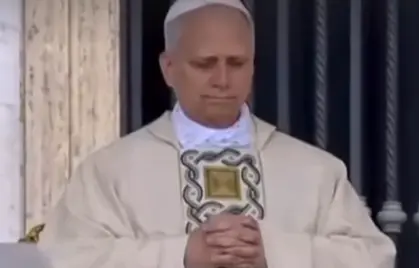
 Eva Lovia
 Jia Lissa