
 Ana Megawati
A chilling incident has gripped the community of Tamarac, Florida, where 28-year-old Manuel Farfan-Cabello stands accused of the first-degree murder of his 58-year-old mother, Ylda Cabello-Ynocente. The horrific act, which allegedly involved 30 stab wounds, was reportedly followed by Farfan-Cabello sending a photograph of his deceased mother to a family group chat, accompanied by messages declaring her death and claiming divine instruction. The case has cast a stark light on the complexities of mental health, family dynamics, and the devastating consequences of untreated severe psychiatric conditions.
A Detailed Account of the Tragic Events
The Broward County Sheriff’s Office (BSO) initiated an investigation around 7:45 p.m. on Friday following a report of a stabbing at a residence in the 5300 block of NW 28th Street in Tamarac. The initial call, placed by Farfan-Cabello himself, alerted authorities to the grim discovery that awaited them. According to a probable cause arrest affidavit, Farfan-Cabello confessed to 911 dispatchers that he had killed his mother approximately four hours earlier, subsequently disposing of the murder weapon, a knife, in a nearby pond.
Upon arrival, BSO deputies swiftly took Farfan-Cabello into custody without incident. Their subsequent entry into the family home revealed a scene of profound violence. Investigators described a substantial amount of blood spread throughout the living room and kitchen areas, painting a stark picture of the struggle that had transpired. Ylda Cabello-Ynocente’s body was found "stiff and cold to the touch," indicating that she had been deceased for some time before the arrival of law enforcement. She was pronounced dead at the scene by emergency medical personnel.
Further examination of the premises uncovered a blood trail leading from the home to a neighbor’s porch. Surveillance footage obtained from the neighbor’s property reportedly showed Farfan-Cabello ringing their doorbell earlier in the evening, a detail that adds another layer to the unfolding timeline of events, though the purpose of this action remains unclear.
The Disturbing Digital Confession and Family Intervention
The gravity of the situation was compounded by Farfan-Cabello’s alleged actions following the attack. Family members, some residing as far away as Peru, reportedly received distressing communications. An aunt of Farfan-Cabello informed investigators that her nephew utilized his mother’s phone to send messages to a family group chat. The initial message, written in Spanish, chillingly stated, "she is dead." This was allegedly followed by another message that read, "Please forgive me, but God told me to do it."
Skeptical and horrified, relatives reportedly requested photographic proof of the claim. Farfan-Cabello allegedly complied, sending an image that depicted the victim lying on the ground amidst a pool of blood, thus confirming their worst fears.
In the midst of this digital exchange, Farfan-Cabello reportedly engaged in a phone conversation with another family member. During this call, he allegedly reiterated his confession, stating, "I killed my mom. Yes. I was tired of her. She was bothering me too much, and I am here with God." The conversation took an even darker turn when the suspect allegedly expressed intentions to burn his mother’s body. It was through the persistent pleas and intervention of his family members that Farfan-Cabello was ultimately convinced to contact law enforcement himself, leading to his eventual arrest.
Background of Mental Health Struggles
The family’s accounts to investigators shed critical light on a long-standing struggle with mental illness. Relatives informed authorities that Farfan-Cabello had been diagnosed with schizophrenia and other significant mental health issues. Speaking to local NBC affiliate WTVJ, family members further elaborated on his condition, describing years of struggle and frequent hallucinations.
Schizophrenia is a chronic and severe mental disorder that affects how a person thinks, feels, and behaves. People with schizophrenia may seem to have lost touch with reality, which can be distressing for them and for their family and friends. Symptoms typically include hallucinations (seeing or hearing things that don’t exist), delusions (fixed false beliefs), disorganized thinking, and a lack of motivation. While the vast majority of individuals with mental illness are not violent, and the link between mental illness and violence is complex and multifaceted, severe untreated psychosis can, in rare instances, contribute to behaviors that are out of character for the individual and harmful to themselves or others. The family’s consistent reports of Farfan-Cabello’s hallucinations and his alleged statement, "God told me to do it," strongly suggest a potential connection between his mental state and the alleged crime.
Law Enforcement Response and Forensic Findings
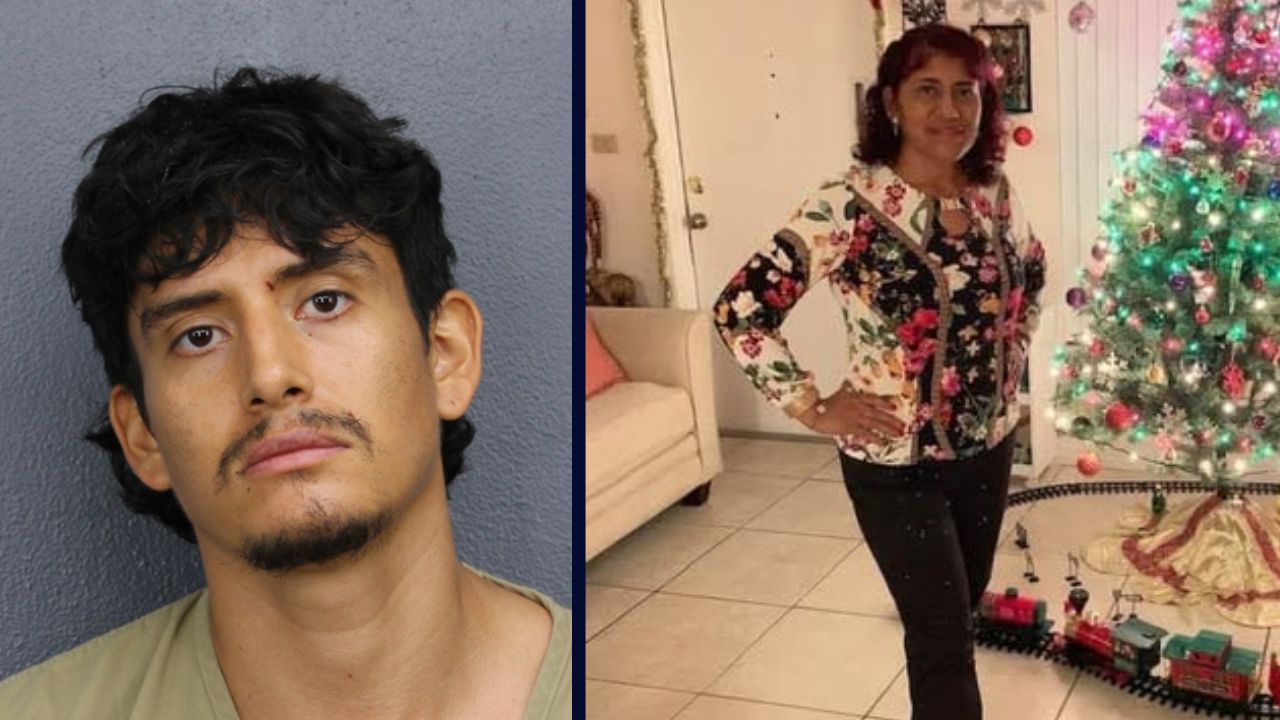
The Broward County Sheriff’s Office, a comprehensive law enforcement agency serving Broward County, including contract cities like Tamarac, immediately mobilized its homicide unit upon receiving the 911 call. Homicide detectives are specially trained to investigate deaths under suspicious circumstances, employing forensic techniques to gather evidence. The meticulous processing of the crime scene, which included documenting the blood distribution and the state of the victim’s body, is crucial for building a robust case.
An autopsy conducted by the Broward County Medical Examiner’s Office confirmed the brutal nature of the attack, determining that Ylda Cabello-Ynocente sustained 30 stab wounds. This level of violence often indicates an intense emotional component, though in cases involving severe mental illness, it can also be a manifestation of profound disorientation or delusional beliefs. The forensic findings will be critical evidence as the case proceeds through the legal system.
The Legal Process Ahead: First-Degree Murder and Mental Health Evaluation
Manuel Farfan-Cabello has been formally charged with first-degree murder, the most serious homicide charge in Florida. Under Florida Statute 782.04, first-degree murder is defined as a premeditated killing or a killing committed during the commission of certain felonies. Given the alleged confession of being "tired" of his mother and the time lapse between the alleged stabbing and the 911 call, prosecutors will likely argue that the act was premeditated. Conviction for first-degree murder in Florida can carry a sentence of life imprisonment without parole or, in capital cases, the death penalty, although the latter is typically reserved for the most egregious circumstances and subject to complex legal challenges.
Farfan-Cabello is currently being held without bond at the Broward County Jail. During his initial court appearance, a judge appointed him a public defender, ensuring his right to legal representation. Critically, the court also ordered that he receive a mental health evaluation. This evaluation is a standard procedure in cases where the defendant’s mental state is in question, especially when there’s a history of severe mental illness.
The mental health evaluation will assess Farfan-Cabello’s competency to stand trial (i.e., his ability to understand the charges against him and assist in his own defense) and his mental state at the time of the alleged offense. The latter could potentially lead to a defense based on insanity or diminished capacity, arguing that due to a severe mental disease or defect, he was unable to understand the nature and consequences of his actions or that they were morally or legally wrong. Such defenses are complex and require significant psychiatric evidence.
Broader Context: Filicide and Mental Illness
The term "filicide" refers to the killing of a child by a parent. While Ylda Cabello-Ynocente was an adult, the act is still a parent-child homicide, often rooted in deeply dysfunctional family dynamics or severe parental mental illness. Acts of violence by adult children against parents, while less frequently discussed under the strict definition of filicide, share similar tragic underpinnings. Such events are statistically rare but devastating.
Research into these types of crimes often points to a confluence of factors, including severe mental illness in the perpetrator, substance abuse, history of family violence, and significant stress within the household. When severe mental illnesses like schizophrenia are untreated or poorly managed, they can lead to an exacerbation of symptoms, including paranoia, delusions, and impaired judgment, which, in extremely rare cases, can contribute to violent outbursts, particularly against those perceived as a source of stress or threat, even within the family unit.
The case of Manuel Farfan-Cabello highlights the critical need for accessible and effective mental healthcare. Families often bear an immense burden when a loved one suffers from severe mental illness, navigating a complex system to secure appropriate treatment, often facing challenges with adherence to medication, social stigma, and the sheer emotional toll. The family’s reported efforts to manage Farfan-Cabello’s condition underscore the systemic gaps that can allow such tragic situations to escalate.
Community Impact and Support Systems
The incident has undoubtedly sent shockwaves through the quiet residential community of Tamarac. Such acts of domestic violence, particularly those involving family members, shatter the sense of safety and security within a neighborhood. For the family of Ylda Cabello-Ynocente, the tragedy is compounded by the loss of a loved one under horrific circumstances and the realization that the alleged perpetrator is their own son and nephew, struggling with profound mental illness. The emotional aftermath for them will be immense, requiring extensive grief counseling and support.
This case also serves as a stark reminder for the broader community about the importance of mental health awareness and the resources available. Organizations dedicated to mental health advocacy and support, such as the National Alliance on Mental Illness (NAMI), provide crucial information, support groups, and resources for individuals living with mental illness and their families. Early intervention, consistent treatment, and robust support systems are paramount in preventing crises and promoting stability for those affected by severe psychiatric conditions.
As the legal proceedings against Manuel Farfan-Cabello unfold, the court will weigh the evidence, including the alleged confessions, forensic findings, and the findings of the mental health evaluation. The outcome will not only determine Farfan-Cabello’s future but will also serve as a tragic testament to the devastating intersection of mental illness, family crisis, and violence, leaving an indelible mark on all involved and on the community of Tamarac. The case underscores the critical societal responsibility to address mental health challenges with compassion, resources, and effective intervention strategies.




 Yuyun Lusiyani
 Joko Widodo
 Eva Lovia
 Jia Lissa
 Pevita Pearce