Yuyun Lusiyani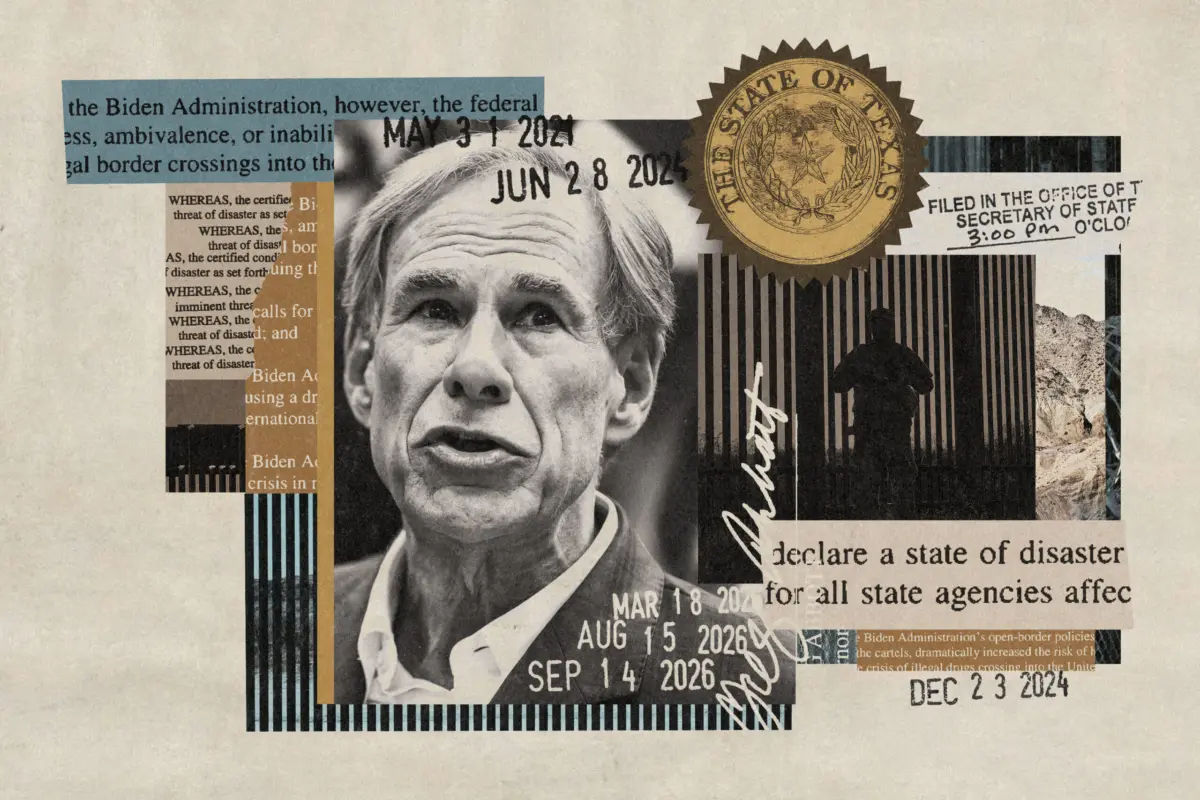
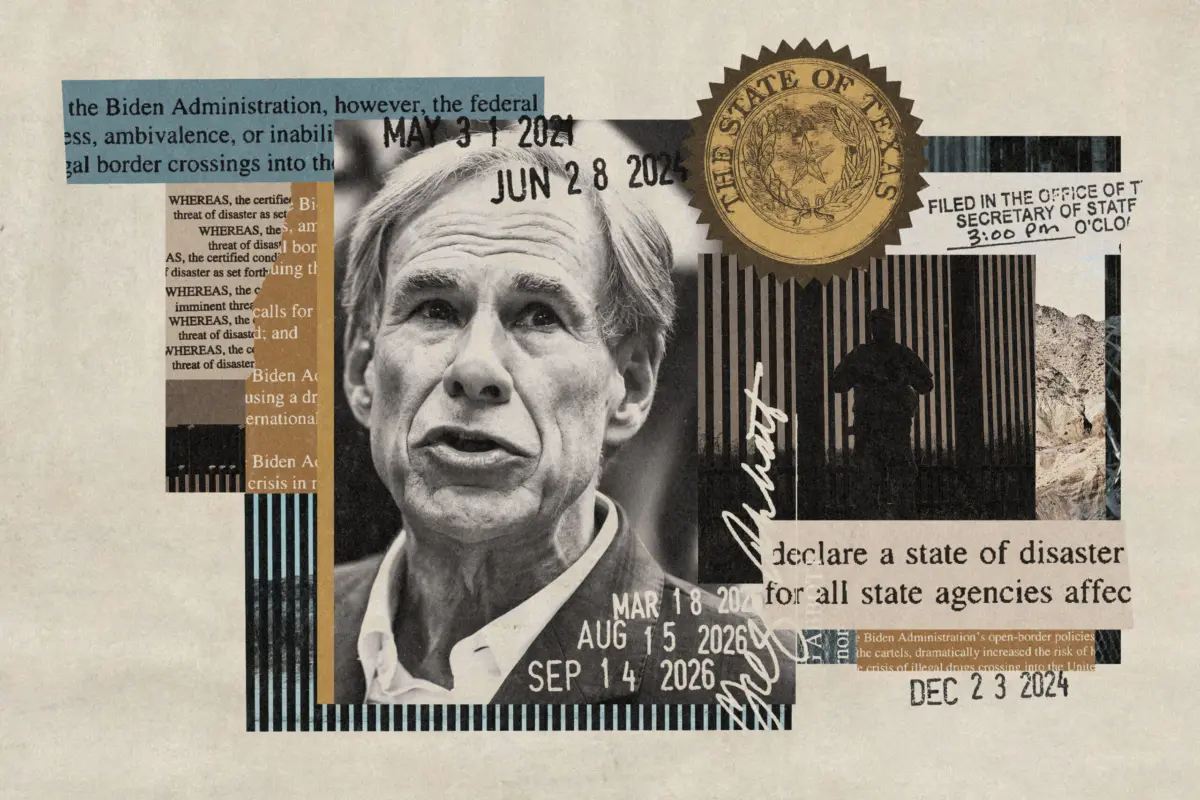
Last month, Texas Gov. Greg Abbott reiterated a long-standing claim, asserting that the volume of individuals unlawfully crossing the Texas-Mexico border "posed an ongoing and imminent threat" across the state. This declaration served to renew a border security disaster proclamation, an executive action that has significantly expanded his gubernatorial powers without requiring legislative approval. The continuation of this emergency, now in its fifth year, raises profound questions about executive authority, state spending accountability, and the actual conditions at the border.
A Protracted Emergency Declaration Amid Evolving Border Realities
Governor Abbott’s repeated proclamations of an emergency at the border began in May 2021, just four months into President Joe Biden’s term. At that time, U.S. Customs and Border Protection (CBP) was reporting substantial apprehension numbers, exceeding 180,000 along the southwest border in a single month. The governor argued that the federal government’s perceived inaction or inability to enforce immigration laws had precipitated a severe humanitarian crisis within numerous Texas communities. His initial order explicitly stated, "The Biden Administration’s open-border policies have enabled escalating violence from the cartels, dramatically increased the risk of human trafficking, and created a severe crisis of illegal drugs crossing into the United States." This framing provided the foundational justification for Operation Lone Star, a multi-agency state initiative launched in March 2021, aimed at deterring illegal crossings and combating drug and human smuggling.
However, the current rationale for the emergency stands in stark contrast to more recent official figures. The Trump administration, which took office in January 2025, has reported an unprecedented drop in migrant flows, claiming that border crossings have reached "historic lows" since its inauguration. Despite this significant reported decline, with average monthly apprehensions along the southwest border dropping to approximately 8,000 this year, Governor Abbott has maintained the emergency status. Since its inception, he has renewed or amended the proclamation an astonishing 69 times, with 21 of those renewals occurring during the current Trump administration, a period characterized by claims of dramatically reduced border activity. This enduring state of emergency, therefore, persists even as the publicly cited conditions that initially justified it have reportedly changed dramatically.
The "Weak Governor" Framework and the Consolidation of Power
Texas’s state constitution, a product of the post-Reconstruction era, was deliberately designed to establish a "weak governor" system. This framework limits executive authority, distributing power across various elected offices and requiring legislative approval for many significant actions. This design reflects a historical distrust of centralized power, stemming from the Reconstruction-era governorship of E.J. Davis, which was perceived as autocratic. Consequently, Texas governors traditionally operate with less inherent executive power compared to their counterparts in many other states.
Yet, Governor Abbott, a Republican who is seeking an unprecedented fourth term next month, has systematically consolidated power in a manner unseen in the state’s modern history. He has built upon efforts by his predecessors to incrementally strengthen the governorship, but his extensive reliance on executive orders and disaster declarations marks a significant acceleration of this trend. These emergency powers allow him to bypass the Legislature, shift state funds, suspend regulatory requirements, and award no-bid contracts—all mechanisms typically reserved for genuine, acute emergencies. This approach has drawn scrutiny from political scientists and constitutional scholars who question whether the intent of these emergency provisions is being stretched beyond their original scope.
Cal Jillson, a political science professor at Southern Methodist University in Dallas, described the situation as "unprecedented." He noted, "I don’t think that there is a similar example, certainly not as to the length of the emergency, and certainly not after the emergency has seemed to pass." This sentiment underscores a growing concern that what was intended as a temporary measure for immediate crises has become a default mode of governance, particularly regarding border security.
Operation Lone Star: Scope, Funding, and Accountability Concerns
The longevity of the border security disaster declaration is inextricably linked to Operation Lone Star, the state’s expansive and costly initiative. Launched in March 2021, Operation Lone Star aims to deploy state resources—including National Guard troops and Department of Public Safety (DPS) troopers—to border regions, build physical barriers, and prosecute migrants for state-level crimes like criminal trespassing. The emergency declaration has been crucial to funding and implementing this operation, enabling the governor to reallocate funds from other state agencies without legislative consent and expedite procurement processes.
The financial commitment to Operation Lone Star has been staggering. Texas initially budgeted over $11 billion for border security efforts during the Biden administration, and an additional $3 billion was allotted last year, after Trump assumed office. Much of this substantial funding is channeled through the Texas Military Department and DPS, the two primary agencies spearheading enforcement efforts. Beyond these departments, the governor’s office itself has seen a significant increase in its share of border spending, receiving nearly $230 million last year to distribute as grants, primarily to local prosecutors and government agencies supporting Operation Lone Star. This direct control over such a vast budget, facilitated by the emergency declaration, further concentrates power within the executive branch.
A critical area of concern highlighted by the sustained emergency is the proliferation of non-competitive contracts. Since January 2025, the DPS and the Texas Military Department have awarded more than $5 million in noncompetitive contracts, citing the ongoing emergency as justification. These contracts cover a wide array of items, from essential equipment like a Ford F-150 and various rifles and pistols for active-duty personnel (including a more than $2 million contract to Texas-based CTC Gunworks LLC for firearms) to less obvious expenditures like apartments.
While a DPS spokesperson stated that the department "aims to select vendors offering the best value, determined by cost, quality, and ability to meet the specific disaster response requirements" even with expedited purchases, the lack of competitive bidding inherent in emergency procurement raises questions about transparency, cost-effectiveness, and potential for waste. Officials with the Texas Military Department referred inquiries about their procurement processes back to the governor’s office, indicating a centralized control over information regarding these contracts.
Criticism, Legislative Resistance, and Broader Implications
Operation Lone Star has not been without its problems and critics. A 2022 investigation by ProPublica, The Texas Tribune, and The Marshall Project revealed significant issues, including the inclusion of arrests unrelated to border or immigration offenses in the state’s success metrics, and the counting of drug seizures by troopers not directly assigned to the operation. Furthermore, investigations by The Texas Tribune and Army Times exposed dire working conditions, chronic pay delays, and even suicides among National Guard members deployed as part of the mission, highlighting the human cost of the prolonged deployment.
State lawmakers, recognizing the unchecked expansion of executive power, have repeatedly attempted to curb the governor’s authority under the state’s disaster act. Last year, bipartisan legislative efforts sought to mandate gubernatorial approval from the Legislature for extending disaster declarations beyond a certain period. However, none of these measures successfully passed, illustrating the difficulty of reining in executive power once it has been established, especially in a politically charged environment.
Democratic State Rep. Mary González of El Paso, who serves as vice chair of the Appropriations Committee, voiced her concerns during a recent Tribune-hosted event. She noted that while legislators have begun to scale back border funding, a significant portion of the money remains in the governor’s office, operating "without checks and balances." González pointed out, "because we are still under an emergency — which is not an emergency anymore — an emergency border security statement which he can just use that money, you have seen some questionable appropriations under the veil of border security."
This situation creates a challenging dilemma for lawmakers: while many may agree on the general goal of border security, the method of achieving it through prolonged executive emergency powers bypasses legislative oversight and risks creating a precedent that could be exploited by future governors of any political stripe. Brandon Rottinghaus, a political science professor at the University of Houston, articulated this concern, stating, "Even someone who strongly supports the governor’s board of policies might ask whether they want a future governor of the opposite party using the same interpretation of emergency authority for years." He added that a key issue is that "governors, once they get a power, are hesitant to give it back."
The Political Imperative and the Future of Executive Authority
Governor Abbott’s consistent rhetoric emphasizes that Texas’s work in securing the border is far from complete, regardless of shifting federal administrations or reported apprehension numbers. At a press conference in early October, where he discussed a $7.5 billion federal reimbursement for state border security expenses, he asserted, "We must secure the border not just for the next two years of the Trump administration, but we gotta do it forever." This statement underscores a political commitment to maintaining a robust state-led border presence, possibly leveraging the emergency declaration indefinitely.
The border security declaration now stands as Abbott’s longest continuously running emergency proclamation, surpassing even his 2020 COVID-19 disaster declaration, which he renewed for three years despite often downplaying the pandemic’s severity. His second longest-running declaration relates to droughts, initiated in July 2022 and renewed several times, though its scope has since narrowed significantly. These examples demonstrate a pattern of sustained executive emergency actions, transforming temporary measures into long-term policy tools.
The ongoing debate about the border emergency transcends immediate policy concerns, delving into fundamental questions about the balance of power within Texas government. While border crossings and drug trafficking are persistent challenges for Texas, political scientists like Rottinghaus question whether these perennial problems inherently justify a continuous state of emergency. The constitutional implications of a governor operating for years outside the normal legislative process, coupled with the financial accountability concerns surrounding billions in state spending and no-bid contracts, suggest a significant shift in Texas governance. As Governor Abbott seeks re-election, his unprecedented use of executive power, particularly through the border emergency proclamation, remains a defining characteristic of his tenure and a critical point of contention for the state’s political future.


 Joko Widodo
 Eva Lovia
 admin
admin