
 Yuyun Lusiyani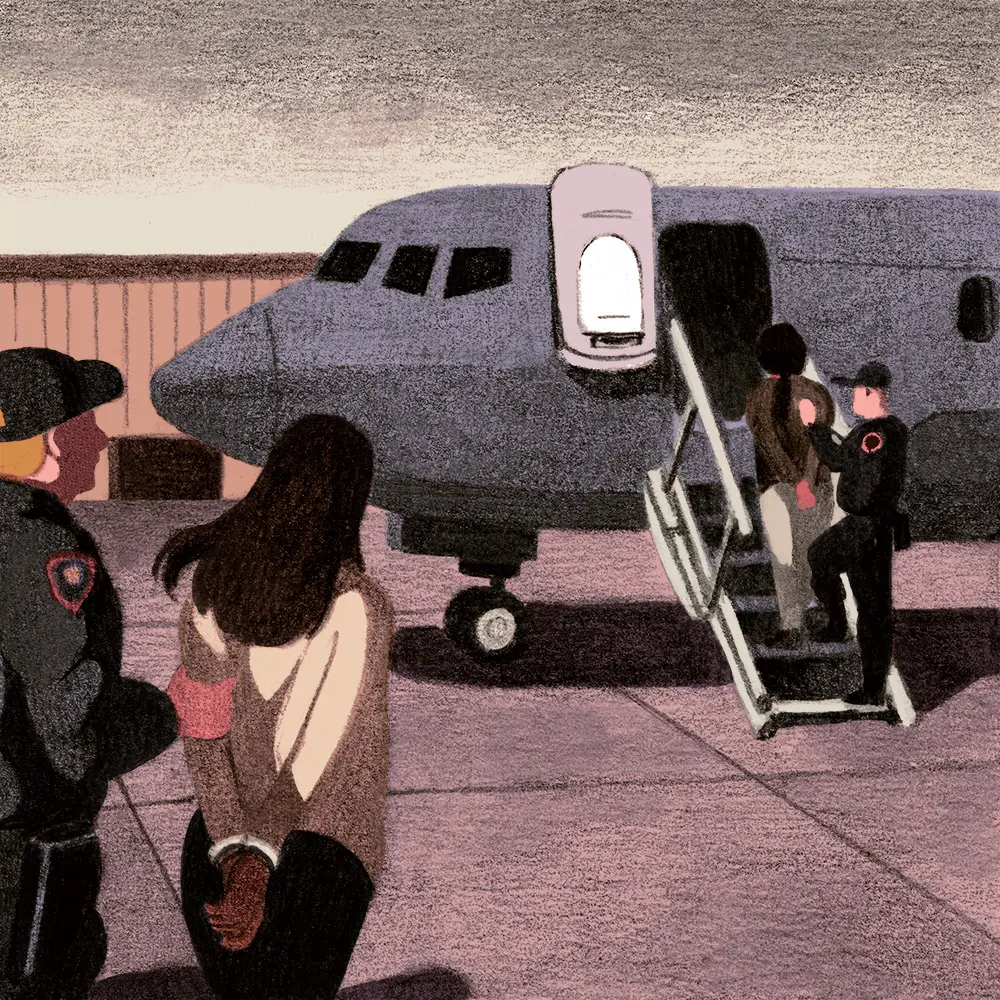
They were victims, not abusers. This was the unwavering assertion they made to police officers, attorneys, visitors, and anyone who would lend an ear. Yet, for many immigrant women caught in the brutal cycle of domestic violence, their pleas for justice often led them not to safety, but to a sprawling immigration detention center, marked as high-security risks. These women, clad in thin red jumpsuits within the confines of Michigan’s North Lake Processing Center, shared harrowing tales of partners who leveraged their immigration status as a weapon, threatening deportation and isolation from their children. These abusers, men or sometimes women, inflicted physical and emotional harm, leaving marks that often went unreported, until a fateful call to authorities turned their world upside down.
A Network of Support in Despair
Inside the cold cellblocks of the former prison, a grim solidarity emerged. Without external avenues for help, the women became each other’s lifeline. A tablet, typically used for calls, became a conduit for shared information and support. If one detainee connected with an outsider who could offer legal advice, aid, or even commissary funds, she would pass the tablet around, allowing others to voice their own narratives of abuse and injustice. This clandestine network brought them to Migladys Bermudez, an immigration attorney based in southeast Michigan. In May, Bermudez received a call from Pilar, a Peruvian woman detained at North Lake, referred by a former client. Pilar recounted her desperate attempt to escape an abusive boyfriend, whose marks she concealed with makeup. Ironically, he was the one who accused her of abuse, leading to her arrest.
Pilar then handed the tablet to Leya, a Cuban woman. Amidst the echoes of other detainees’ chatter, Leya described a life of insults, isolation, and physical violence, culminating in a black eye. Yet, it was her act of grabbing her boyfriend’s arm during an argument that landed her behind bars, separated from their nursing daughter. The heartbreaking consequence: video calls where her daughter no longer seemed to recognize her, ceasing to call her "Mamá." Bermudez was struck by the pattern. All three women in this chain – her former client, Pilar, and Leya – claimed they were trying to escape abusive relationships when arrested by local police on domestic violence allegations. In every instance, the criminal charges were either dropped or never filed. However, the U.S. Immigration and Customs Enforcement (ICE) intervened: the first woman was detained during a routine check-in after her charges were dropped, while Pilar and Leya were handed over to ICE directly by local officials. This was not an isolated incident but a troubling symptom of a systemic shift.
The Policy U-Turn: Eroding Protections for Immigrant Victims
For decades, immigrant victims of domestic violence faced unique vulnerabilities. The threat of deportation, often wielded by abusers, made calling 911 a daunting prospect. Yet, prior administrations, recognizing their plight, largely treated these individuals as victims deserving of help, not targets for deportation. The Violence Against Women Act (VAWA), a bipartisan legislative achievement, specifically created pathways to legal status for immigrants who were survivors of domestic violence or other serious crimes, acknowledging their precarious situation and offering a crucial lifeline.

However, the political landscape dramatically shifted with the inauguration of President Donald Trump. On his first day in office, the administration rescinded guidelines that had largely prevented immigration agents from making arrests at "sensitive locations," a category that included domestic violence shelters and hospitals. Just a week later, key protections granted to VAWA applicants and other crime victims were eliminated. This unprecedented move, the first in decades, empowered immigration authorities to disregard these protections, allowing them to more freely arrest, detain, and deport immigrant victims. The subtle but critical distinction between victims and criminals was blurred, if not erased entirely, under the new enforcement paradigm.
This policy shift had immediate and devastating consequences. Federal immigration agents began making arrests outside specialized domestic violence courts, further eroding trust and accessibility for vulnerable individuals. Simultaneously, the administration aggressively pursued agreements with more local police departments and jails, pushing them to participate in a broader "mass deportation campaign." These 287(g) agreements, which deputize local law enforcement to act as immigration agents, expanded significantly, sweeping an increasing number of immigrants into custody. Even in communities without formal 287(g) agreements, like Kent County in west Michigan where Pilar and Leya were arrested, local jails intensified their cooperation with ICE. Data for the first six months of 2026, for example, showed Kent County jail turning over more immigrants to ICE than it had during the entire previous administration, illustrating a profound shift in local enforcement practices.
Advocates across the country have reported an alarming surge in the detention and deportation of domestic violence victims. This climate of fear has forced many immigrants to remain in abusive relationships, too terrified to seek help or even venture outside their homes. "It’s just probably the most dangerous time for immigrant women right now who are victims of domestic violence," stated Migladys Bermudez, who took on Leya’s immigration case.
The "Dual Arrest" Dilemma: When Victims Become Suspects
A significant, albeit often unintended, consequence of efforts to protect domestic violence victims is the "dual arrest" phenomenon. Across much of the country, law enforcement officers are encouraged, and sometimes even mandated, to make an arrest when there is probable cause of a domestic violence assault. While intended to ensure accountability and immediate safety, this approach can backfire. Domestic violence incidents are often chaotic, emotionally charged, and complex. Officers arriving on the scene may find both parties accusing each other, making it difficult to discern the primary aggressor. In such fraught situations, victims can be mistakenly identified as abusers and taken into custody. If these individuals are immigrants, even if no criminal charges are ultimately filed, they can then be flagged and turned over to ICE.
There is no comprehensive national tracking system to quantify how frequently this occurs. However, ProPublica’s investigation, which included interviews with a half-dozen alleged victims detained at North Lake and reviews of police records from others there, paints a stark picture. Their stories underscore the original rationale behind programs like VAWA and highlight the profound risks when those protective guardrails are dismantled.
Legal Battles and Official Responses

In response to these sweeping changes, a coalition of immigrant survivors and advocates launched a lawsuit against the Trump administration. They argued that the new policies not only undermined public safety but also violated promises enshrined in federal law and policy regarding victim protection. "We were seeing our clients be more scared, be systematically targeted, be arrested, and deported very quickly," explained Kathleen Rivas, supervising attorney of the survivors team at Public Counsel, a law firm involved in the litigation. In May, a federal judge ordered the government to temporarily restore some of the protections while the case proceeded, though the Trump administration quickly appealed the order.
Official statements from the administration presented a different narrative. White House spokesperson Lauren Bis asserted that ICE was targeting the "worst of the worst," and claimed that the real concern was "American women whose lives have been taken by illegal alien criminals." A Department of Homeland Security (DHS) spokesperson echoed this sentiment, stating, "we will never apologize for deporting illegal aliens, because that’s how we save lives."
However, Leya, Pilar, and many other immigrants interviewed had no criminal records. Advocates countered that these policies actually make communities less safe, as immigrants become increasingly afraid to call the police when they are victims of violence. This fear, according to Casey Carter Swegman, director of public policy at the Tahirih Justice Center, a national nonprofit advocating for immigrant survivors, only emboldens abusers. "Certainly more immigrant survivors are feeling like the violence and abuse they experience behind the closed door is somehow more tolerable than the violence and abuse they could experience if they tried to leave," she observed.
Leya’s Ordeal: A Mother’s Desperate Plea
Leya’s own harrowing journey began in July 2025, in Florida. Just a month after giving birth to their daughter, her boyfriend’s jealousy erupted into violence, resulting in his fist slamming into her face, mere feet from their sleeping infant. Leya called 911 but hung up, paralyzed by fear. A recent immigrant from Cuba, she was in active immigration proceedings, while her boyfriend was a permanent resident with better English proficiency. She felt utterly trapped.
Sheriff’s deputies arrived, documenting her bruised face and bloodshot eye. Her boyfriend, while admitting to an "argument," offered no specifics on her injury and was arrested for domestic battery. Leya’s boyfriend’s mother, however, immediately threw Leya out. Unsure where to go, Leya and her daughter moved in with another of his relatives. Under pressure from his family, she eventually asked prosecutors to drop the charges, describing the battery as "a moment of impulse that he feels very sorry for." The case was dismissed.
Seeking a fresh start, Leya and her boyfriend moved to Wyoming, Michigan, a Grand Rapids suburb known for attracting immigrants seeking manufacturing and food processing jobs. But their relationship worsened. Leya recounted instances of him pushing her, pulling her hair, breaking her phone, forcing her to delete social media, and isolating her from friends and family. Their arguments escalated, often over money. In April, during one such altercation, her boyfriend called the police. "I’m having problems with my wife," he stated in Spanish, denying any violence, calling it "just a discussion."

When officers arrived, he claimed Leya got angry over his contact with an ex-girlfriend. He alleged she pushed him and grabbed his arm as he tried to leave, and attempted to hang up his 911 call. He admitted no injury but accused her of hitting him days prior. His brother corroborated, mentioning the Florida arrest and stating his brother was trying to avoid a repeat. The police report, notably, omitted any mention of the prior arrest.
Leya’s interview footage was redacted due to privacy laws. The police report stated she "minimized" the argument and denied physical contact, though she admitted trying to hang up the phone. In an interview, Leya clarified that the argument stemmed from his sending money to his ex-girlfriend while claiming he couldn’t afford diapers for their daughter. She insisted she had never hit him. Officers arrested Leya for domestic assault and interfering with a 911 call, but her boyfriend was not charged. Leya, believing she would explain her situation to a judge, did not tell officers she was a victim of abuse. She never got that chance.
Pilar’s Struggle: Caught in the Crossfire
The Wyoming Police Department’s written policy, like many nationwide, encourages or requires arrests in domestic violence cases based on probable cause. While this aims to treat domestic violence as a serious crime, the inherent complexity of these situations can lead to misidentification, with victims sometimes being criminalized. Erin Ross, a former domestic violence prosecutor now at the Vera Institute of Justice, highlighted this issue in a 2025 report, noting how survivors can be "criminalized by the very system meant to protect them." For immigrants, particularly those with language barriers or limited understanding of their rights, the Trump administration’s policies amplified this vulnerability.
A review of hundreds of habeas corpus petitions filed nationwide since January 2025 revealed dozens of immigrants arrested on domestic violence suspicions and turned over to ICE, despite dropped or never-filed charges. Underlying arrest records often showed officers making difficult judgments in chaotic scenes. A November 2025 incident in Florida, for instance, involved a Venezuelan woman charged with misdemeanor battery after an argument with her husband, despite her claims he took her keys and phone. She was turned over to ICE while charges were pending, which were later dropped. During her five months of incarceration, her husband took their daughters out of state, and she has not seen them since.
Leya’s arrest and the subsequent ride to Kent County jail were a profound shock. "I had suffered from domestic violence," she recounted, "But the one who ended up in trouble was me." The next day, prosecutors declined to file charges, citing insufficient evidence and no injuries, but Leya remained detained. Her fingerprints, run against state and federal databases, flagged her for ICE. A jail official also reportedly inquired about her immigration status. ICE issued a detainer, and Kent County officials honored it. A day later, Leya was at North Lake.
Pilar, Leya’s first cellmate, shared a similar fate. The 48-year-old asylum seeker from Peru had also been arrested in Wyoming for alleged domestic violence. Over 15 months, Pilar, her boyfriend, and her teenage daughter had called 911 five times. Calls ranged from Pilar’s daughter fearing for her mother’s safety to the boyfriend seeking shelter for mental abuse, to Pilar simply wanting him to leave. None resulted in arrests.

Pilar described her relationship as one of "physical, mental, psychological, economic abuse" in her habeas corpus petition, detailing how her boyfriend financially exploited and physically assaulted her. Her sister, witnessing bruises around Pilar’s neck, urged her to leave. Ashamed of the bruises, Pilar distanced herself from friends and family. She never disclosed the full extent of the abuse to police, fearing repercussions for her boyfriend, whom she still loved.
In October 2025, an argument in their apartment parking lot led both Pilar and her boyfriend to call 911. He claimed Pilar slapped his head, grabbed his shirt, and tried to pull him from the car. His T-shirt was torn. He asserted he never assaulted her, and any injuries were her own fault. He also told officers he had become a U.S. permanent resident two months prior and that Pilar was fabricating claims to "get papers." Pilar insisted she was the victim, showing scratch marks on her arm and begging officers to make him return her apartment keys. She also stated she had been trying to evict him for a while, and he wasn’t contributing to rent. When questioned about her boyfriend’s ripped shirt, Pilar said she grabbed him to avoid being dragged as he drove away. The officer, noting the boyfriend had called first, his torn shirt, and his larger stature, arrested Pilar. Her boyfriend was not charged.
Wyoming Public Safety Chief Kip Snyder declined to discuss the arrests, stating officers do not "participate in enforcing federal immigration laws. We encourage trust and cooperation with all residents and aim to ensure that everyone feels safe reporting crimes or seeking assistance." However, shortly after Pilar’s arrest, a police detective sought domestic violence charges against both her and her boyfriend. Prosecutors declined, citing insufficient evidence. Pilar, with no criminal history apart from this arrest and a pending asylum case, was not released. ICE issued a detainer, and jail officials turned her over.
Kent County’s Shifting Stance and Broader Implications
A few years prior, Kent County Sheriff Michelle Lajoye-Young had pledged that deputies would cease automatically honoring ICE detainers, requiring federal judicial warrants instead. This decision followed the erroneous transfer of a U.S. citizen, a Marine combat veteran, to ICE custody from her jail. Lajoye-Young had emphasized the need for "judicial oversight" to prevent erroneous detentions. Trump, in turn, labeled Kent County a "sanctuary jurisdiction," a designation that brought political pressure and scrutiny.
However, the implementation of this policy remains unclear. ProPublica’s requests for relevant policies found no documentation requiring judicial warrants, and no such warrants existed for Pilar and Leya. Lajoye-Young, who recently retired, declined interviews, and a spokesperson offered only a vague statement about adherence to "applicable law and established policy." Gema Lowe, an organizer with a local immigrant rights group, accused the sheriff of backtracking, lamenting the deepening mistrust among the county’s rapidly growing immigrant population. Lowe now advises immigrant victims to reconsider calling the police due to deportation risks, instead directing them to other local resources.
This caution reflects a national trend. Under the Trump administration, ICE arrests skyrocketed, with no immigrant deemed "off limits," including those with pending asylum claims and no criminal records. The number of state and local law enforcement agencies signing 287(g) agreements with DHS surged from fewer than 150 in January 2025 to over 2,600. A DHS spokesperson celebrated these "partnerships," claiming they are "critical to having the resources we need to arrest criminal illegal aliens across the country."

While Kent County lacks a 287(g) agreement, its jail consistently hands over the vast majority of individuals with ICE detainers. Dozens turned over this year had their criminal charges dropped or were never charged at all, like Pilar and Leya. A sheriff’s office spokesperson maintained that dismissal of charges "does not, by itself, mean the original arrest lacked probable cause." DHS, in a statement to ProPublica, asserted that both Leya and Pilar "illegally entered the country" in 2022 and would "receive due process" in their immigration proceedings.
Kent County Prosecutor Chris Becker, while unaware of victims being detained by ICE after police calls, acknowledged the "chilling impact" on immigrant women reporting domestic violence. His staff reported that victims are increasingly afraid to testify or file restraining orders, often out of fear that their partners, frequently breadwinners and fathers, would be deported. This complex web of fear and enforcement has created a pervasive atmosphere of insecurity for immigrant communities.
A Glimmer of Hope, A Lingering Shadow
As months passed at North Lake, Leya witnessed a constant flux of women. Some were deported, including Mexican women arrested in Kent County for alleged domestic violence. Others were released. New faces arrived, many sharing similar stories of arrest after domestic violence calls.
Leya fought relentlessly for her freedom. Volunteers from Kent County raised funds for her lawyers, physical exams, and fees. Even her ex-boyfriend, despite their past, wrote a letter on her behalf, describing her as "a calm person" and explaining their argument as a situation that "can happen in any relationship." He emphasized that Leya "deserves a second opportunity to remain in this country and be close to our daughter, as our baby truly needs her very much." While Leya was incarcerated, her daughter celebrated her first birthday, cut her first teeth, and took her first steps, milestones Leya missed.
In late August, a judge granted Leya bond, allowing her freedom while her immigration case proceeded. The relief was profound, yet bittersweet. Leaving her friends behind, particularly Pilar, who was nearing a year in detention, was agonizing. Four months after her arrest, Leya walked out of the old prison, facing the challenge of rebuilding her life and supporting her daughter independently. She made a solemn vow to herself: she would never return to the man who had caused her so much pain. Her story, and those of countless others, remains a stark reminder of the deep and often tragic implications of immigration policy shifts on the most vulnerable members of society.


 Ana Megawati
 Joko Widodo
 Eva Lovia
 Jia Lissa
 Pevita Pearce