
 Lina Irawan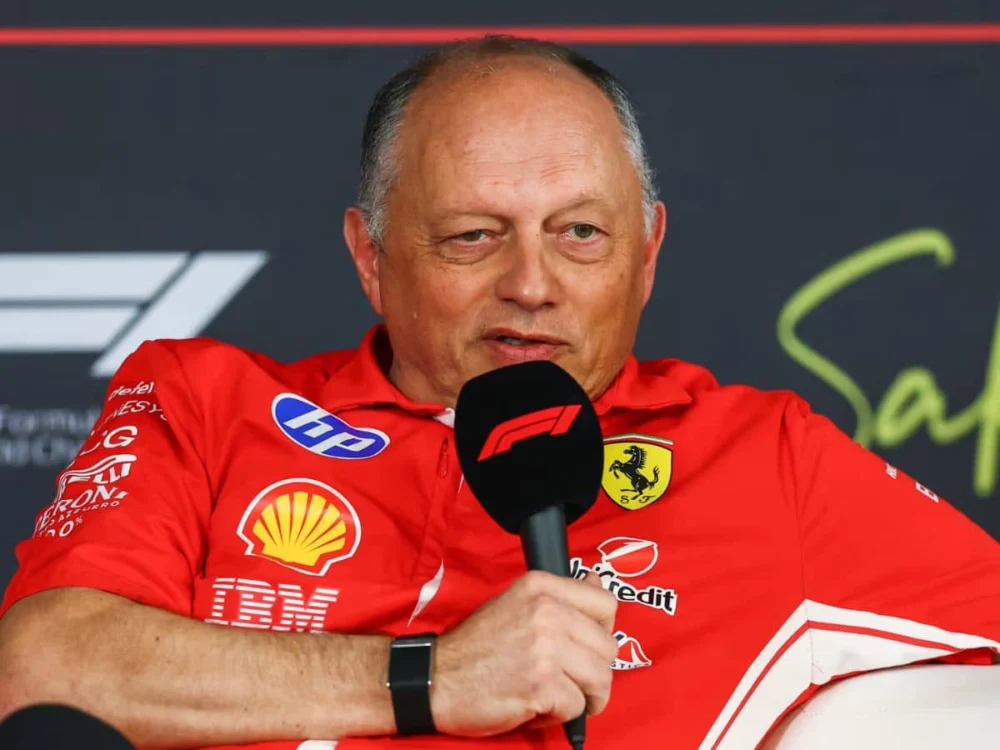
The 2026 Formula 1 season opener at the Albert Park Circuit in Melbourne has signaled a potential shift in the sport’s competitive hierarchy, as Scuderia Ferrari HP emerged from a challenging 2025 campaign with renewed technical vigor. Following a season that saw the Maranello-based squad fail to secure a single Grand Prix victory, finishing with Charles Leclerc and seven-time world champion Lewis Hamilton in fifth and sixth places respectively, the pressure on Team Principal Frédéric Vasseur has reached a critical juncture. However, as the sport enters a transformative era defined by radical new technical regulations, Vasseur remains steadfast in his leadership philosophy, emphasizing a delicate balance between sophisticated data analytics and the irreplaceable value of human intuition.
The atmosphere at the 2026 Australian Grand Prix was one of cautious optimism for the Tifosi. In the first practice session (FP1), Ferrari dominated the timing sheets with a commanding 1-2 finish, followed by a strong showing in the final practice where they secured the second and third fastest times, trailing only Mercedes’ George Russell. This early-season form suggests that the extensive development work undertaken at Maranello during the winter break has addressed the aerodynamic inconsistencies that plagued the SF-25. As the paddock prepares for the first qualifying session under the 2026 ruleset, Vasseur’s approach to management and organizational culture is being viewed as the primary catalyst for the team’s apparent resurgence.
The Technical Reset of 2026 and Ferrari’s Strategic Response
The 2026 season represents one of the most significant regulatory overhauls in the history of Formula 1. The introduction of power units with a 50/50 split between internal combustion and electric power, the removal of the MGU-H (Motor Generator Unit – Heat), and the implementation of active aerodynamics have forced teams to redesign their cars from a blank sheet of paper. For Ferrari, this "reset" provided a necessary opportunity to move past the frustrations of 2025.
Vasseur, speaking at an event hosted by Man of Many and Chivas Regal at Casa Ferrari, noted that the transition into this "new world" of regulations required more than just engineering prowess; it required a psychological realignment of the entire organization. The 2025 season was a sobering experience for the Scuderia, as they struggled to match the developmental pace of rivals like Red Bull Racing and McLaren. By finishing fifth and sixth in the drivers’ standings, Leclerc and Hamilton found themselves in a midfield battle that was uncharacteristic for a team of Ferrari’s stature.
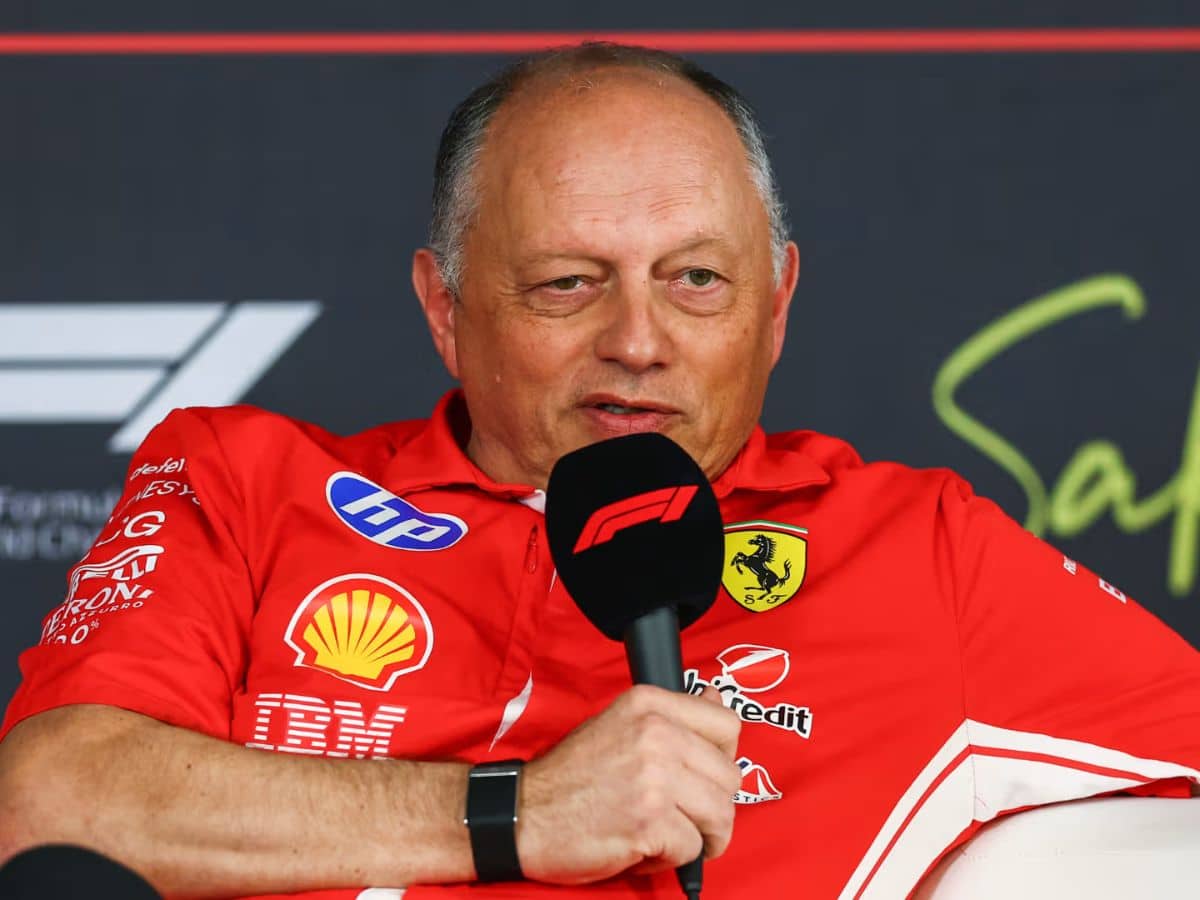
To combat this, Vasseur has focused on decentralizing the sense of responsibility within the team. He asserts that every individual, from the carbon fiber laminators to the trackside strategists, must view themselves as a "performance contributor." This cultural shift aims to eliminate the "blame culture" that has historically hindered Ferrari during periods of technical underperformance. By fostering an environment where every employee "owns" the result—whether it is a podium or a double retirement—Vasseur hopes to create a more resilient and agile organization.
The Invisible Workforce: Maranello’s Silent Engine
A recurring theme in Vasseur’s leadership is the recognition of the "invisible" part of the team. While the drivers and the pit crew are the public face of Scuderia Ferrari HP, they represent only a small fraction of the workforce. The vast majority of the team’s 1,000-plus employees remain at the factory in Maranello, working in the wind tunnel, the simulator, and the design office.
Vasseur highlights that 90% of the team members will never travel to a race track, yet their contributions are the primary drivers of lap time. "F1 is a strange animal," Vasseur remarked, noting the disconnect between those who experience the glamour of the paddock and those who perform the grueling work behind the scenes. His mission has been to reinforce the message that the "guys at home" are the true architects of the car’s performance. This inclusive approach is designed to maintain high morale throughout the 24-race calendar, ensuring that the factory staff feels a direct connection to the trophies brought back to Italy.
Data Sovereignty vs. Human Instinct
In the modern era of Formula 1, data is the currency of success. Teams run billions of simulations every weekend, using high-performance computing to predict tire degradation, fuel consumption, and optimal pit stop windows. However, Vasseur argues that an over-reliance on silicon-based decision-making can be a liability. He maintains that human intuition—or "experience"—is the final arbiter of success on the pit wall.
The 2026 regulations have introduced new variables, such as the "Manual Override" mode for power delivery, which requires drivers and engineers to make split-second tactical decisions that simulations may not fully account for. Vasseur believes that while data provides the foundation, the "human factor" is essential for adapting to the chaos of a live race. Whether it is a sudden change in weather or a safety car deployment, the ability to trust one’s gut remains a competitive advantage. Vasseur’s refusal to manage the team like a "robot" is a calculated move to preserve the creative and adaptive spirit of his engineers.
Leadership Under the Microscope: Managing the Tifosi
Leading Ferrari is widely considered the most high-pressure job in motorsport, comparable to managing a national football team in a country like Italy or Brazil. The Tifosi, Ferrari’s legion of global supporters, demand nothing less than excellence. The emotional volatility of the fan base can often translate into internal pressure, a phenomenon Vasseur has had to manage carefully since taking the helm.
Vasseur observed that the passion of the Ferrari fans is unparalleled, noting that he encounters more supporters at the factory gates in a single day than he did in a decade at other teams. While this passion is a source of strength, it also leads to what Vasseur describes as "over-motivation." In many instances, his role is not to push the team harder, but to "calm them down." He strives for a consistent approach, preventing the team from becoming overconfident after a successful practice session or falling into despair after a difficult race weekend.
The 2025 season tested this consistency. With Hamilton’s arrival, expectations were at an all-time high, making the winless campaign particularly painful for the fans. Vasseur’s task has been to shield his staff from this external noise, focusing instead on "continuous improvement" rather than the pursuit of an unattainable "perfection."
Chronology of the 2026 Resurgence
The path to Ferrari’s competitive showing in Melbourne began long before the cars hit the track. The following timeline outlines the key milestones in the team’s recent evolution:
- December 2024: Ferrari concludes a disappointing season, initiating a full internal audit of the aerodynamic department.
- February 2025: Lewis Hamilton officially joins the team, bringing a wealth of experience from Mercedes.
- August 2025: Vasseur announces a major recruitment drive, poaching key technical talent from rival teams to bolster the 2026 project.
- January 2026: The SF-26 (Project 678) undergoes its first fire-up in Maranello, showing promising figures on the dynamometer.
- February 2026: Pre-season testing in Bahrain reveals that Ferrari has made significant gains in high-speed stability and electrical energy recovery.
- March 2026: Ferrari tops the charts in FP1 at the Australian Grand Prix, signaling their return to the front of the grid.
Implications and Future Outlook
The early indicators from Melbourne suggest that Scuderia Ferrari HP has successfully navigated the transition into the 2026 era. By finishing second and third in the final practice, they have positioned themselves as the primary challengers to the dominant Mercedes and Red Bull outfits. The performance of the SF-26 appears to be a validation of Vasseur’s "performance contributor" philosophy, suggesting that the integration of the factory and trackside teams is yielding tangible results.

However, the long-term success of the team will depend on their ability to maintain this developmental trajectory. Formula 1 is a sport of rapid evolution, and the 2026 rules will see a steep learning curve for all participants. Vasseur’s emphasis on innovation and his rejection of complacency will be vital as the team enters the European leg of the season.
The partnership between Charles Leclerc and Lewis Hamilton also remains a focal point. After a 2025 season where both drivers were hampered by their machinery, the availability of a competitive car in 2026 could reignite the internal rivalry. Vasseur’s ability to manage two "alpha" drivers while keeping the team’s collective goals at the forefront will be the ultimate test of his leadership.
As the lights go out for the start of the 2026 season, Frédéric Vasseur has laid the groundwork for a new chapter in Ferrari’s storied history. By blending the cold precision of data with the warmth of human intuition and the fire of the Tifosi’s passion, he has positioned the Scuderia to once again fight for the world championship. Whether this early-season momentum can be sustained remains to be seen, but for the first time in several years, the "Prancing Horse" appears to be running with its head held high.



 Yuyun Lusiyani
 Joko Widodo
 Eva Lovia
 Pevita Pearce
 admin
admin