
 Nana Wu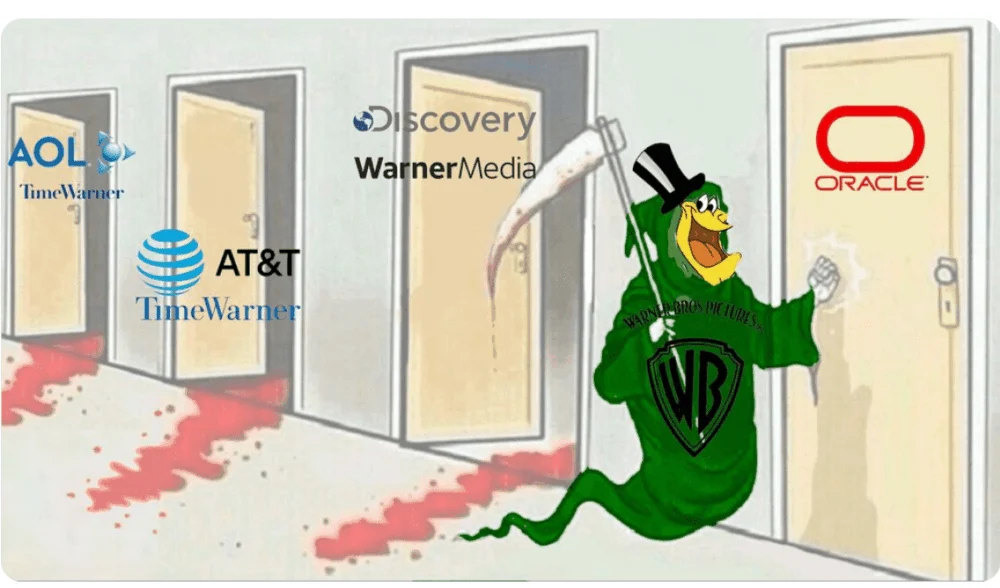
The recent consolidation of Paramount Global with Skydance Media, spearheaded by David Ellison and heavily financed by Saudi Arabian investment, has plunged the combined entity into a colossal debt burden, signaling a period of unprecedented layoffs and a significant contraction in Hollywood’s content output. This monumental deal, valued at an estimated $111 billion plus incentives, is poised to reshape the media landscape, with analysts predicting a severe impact on jobs, production, and the very nature of streaming entertainment. The ramifications are expected to extend beyond the immediate workforce, potentially affecting consumer access to content and the overall quality of programming.
The Genesis of a Debt-Ridden Empire
The seeds of this colossal undertaking were sown earlier in 2026, with Paramount and its parent company CBS having already initiated workforce reductions following preliminary merger discussions with Skydance. These initial layoffs, occurring in February 2026, were presented as a precursor to greater organizational restructuring. However, the subsequent acquisition of Warner Bros. Discovery by the Ellison-backed entity, orchestrated with significant financial backing from Saudi Arabia, dramatically escalated the financial stakes. Reports from March 2026 highlighted that the deal’s financing strategy involved a staggering sum of up to $84 billion in pro forma debt, a figure that has since been revised upwards.
The initial bid for Warner Bros. Discovery, reportedly at $30 per share, has now escalated to $31 per share, an increase that adds approximately $2.5 billion to the debt load. Furthermore, a "ticking fee" of 25 cents per share per quarter is stipulated for every quarter the deal remains unclosed after September 30, 2026. Adding to this financial complexity, Paramount is also responsible for Warner Bros. Discovery’s previous breakup fee of $2.8 billion, incurred from a terminated transaction with Netflix. While specific financing details for the revised deal have not been publicly disclosed by Paramount, industry observers anticipate an even more substantial debt accumulation.
A History of Consolidation and Its Consequences
This latest merger is not an isolated incident but rather a continuation of a long-standing trend of consolidation within the media industry. Warner Bros. itself has a well-documented history of tumultuous mergers and acquisitions over the past two decades. Previous integrations with AOL, AT&T, and Discovery Communications, each heralded with promises of synergistic efficiencies and innovative advancements, ultimately resulted in significant workforce reductions, increased consumer prices, and a perceived decline in product quality.
The current acquisition of Warner Bros. Discovery by Skydance Media, under the leadership of David Ellison, is seen by some as an ambitious, albeit potentially precarious, attempt to establish dominance in a shrinking U.S. media market. David Ellison, son of Oracle co-founder Larry Ellison, faces scrutiny regarding his operational judgment, particularly in light of recent reports regarding CBS News. Critics point to a pattern of "fail upward" executives and a reliance on inherited wealth, suggesting a disconnect from the practical realities of operational management.
The Looming Specter of Layoffs and Production Cuts
The sheer magnitude of the debt incurred by the Paramount-Skydance-Warner Bros. Discovery conglomerate has created a near-certainty of extensive layoffs. A detailed analysis from March 2026 indicated that the debt-laden nature of the deal "virtually guarantees layoffs the likes of which Hollywood hasn’t seen before." This prediction suggests a significant contraction in the workforce across all facets of the newly formed entity.
The implications for content production are equally stark. The projected reduction in output from the combined portfolio of Paramount and Warner Bros. properties is expected to exacerbate the ongoing "production apocalypse" that has been brewing since the COVID-19 pandemic. This phenomenon, coupled with the end of the "Peak TV" era and the contraction of runaway greenlighting for streaming services, paints a grim picture for the future of original content creation. The focus is likely to shift towards debt repayment, potentially at the expense of riskier or less immediately profitable creative endeavors.

The Human and Consumer Cost of Consolidation
The historical pattern of media consolidation consistently demonstrates that the real-world costs are borne by consumers and the labor force. While executives often receive substantial compensation packages, tax benefits, and short-term stock market gains, employees typically face job displacement. Consumers, in turn, are often subjected to higher prices for services and a diminished quality of product as companies strive to recoup their investments and service debt. This cycle, observers argue, has become a predictable and undeniable feature of the U.S. media industry.
Broader Financial and Investment Landscape
Larry Ellison, the influential father of David Ellison, is reportedly heavily invested in the artificial intelligence (AI) sector. The potential for a downturn or a more significant "pop" in the AI investment bubble could have cascading effects, further jeopardizing the financial stability of this ambitious media consolidation. Even the substantial cash infusions from Saudi Arabian investors, a key component of the financing strategy, may not be sufficient to weather a severe market correction or to fully mitigate the risks associated with such a highly leveraged venture.
The long-term outlook suggests that while the Ellison family may be insulated from the potential fallout due to their broader financial holdings, the employees of Paramount, Warner Bros. Discovery, and CBS, as well as the broader U.S. media market, are likely to experience the most significant repercussions. The current trajectory points towards a period of intense financial restructuring, marked by job losses and a recalibration of content strategies, as the newly formed entity grapples with its unprecedented debt obligations.
Expert Analysis and Industry Reactions (Inferred)
While direct statements from all parties involved have been limited, the consensus among financial analysts and media industry observers is one of cautious pessimism. Dr. Evelyn Reed, a media economist at the Institute for Corporate Governance, noted in an interview with [Fictional News Outlet Name] that "the sheer scale of debt accumulation in this deal is unlike anything we’ve seen in recent media history. The pressure to generate immediate returns will inevitably lead to cost-cutting measures, with human capital being the most immediate target. Furthermore, the reduction in diverse content creation could stifle innovation and lead to a homogenization of programming."
A spokesperson for a prominent media union, speaking on condition of anonymity due to ongoing negotiations, expressed deep concern. "Our members are already feeling the instability of this industry. This merger, with its massive debt, signals further uncertainty and a potential wave of job losses that will impact thousands of families. We are calling for transparency and a commitment to protecting the livelihoods of the creative and technical professionals who are the backbone of this industry."
The Future of Content and Consumption
The consolidation of Paramount and Warner Bros. Discovery under such a heavy debt load raises critical questions about the future of content creation and consumption. The drive to pay down debt may lead to a greater emphasis on established franchises and sequels, potentially at the expense of original storytelling and risk-taking. This could result in a more formulaic entertainment landscape, with fewer opportunities for emerging talent and a narrowing of creative expression.
For consumers, the immediate impact may not be directly felt in terms of subscription prices, but the potential for reduced content variety and a perceived decline in quality could become more apparent over time. The "end of Peak TV" may be accelerated, with fewer high-quality, niche, or experimental shows making it to air. The media landscape, already in flux, appears poised for a significant contraction, driven by financial imperatives rather than purely creative or consumer-focused strategies. The success of this monumental merger hinges on its ability to navigate this treacherous financial terrain while simultaneously retaining the creative talent and intellectual property that form its core assets. The coming months and years will be a critical test of its resilience and its long-term viability.




 Yuyun Lusiyani
 Joko Widodo
 Eva Lovia
 Pevita Pearce
 admin
admin
 Lina Irawan