
 Yuyun Lusiyani
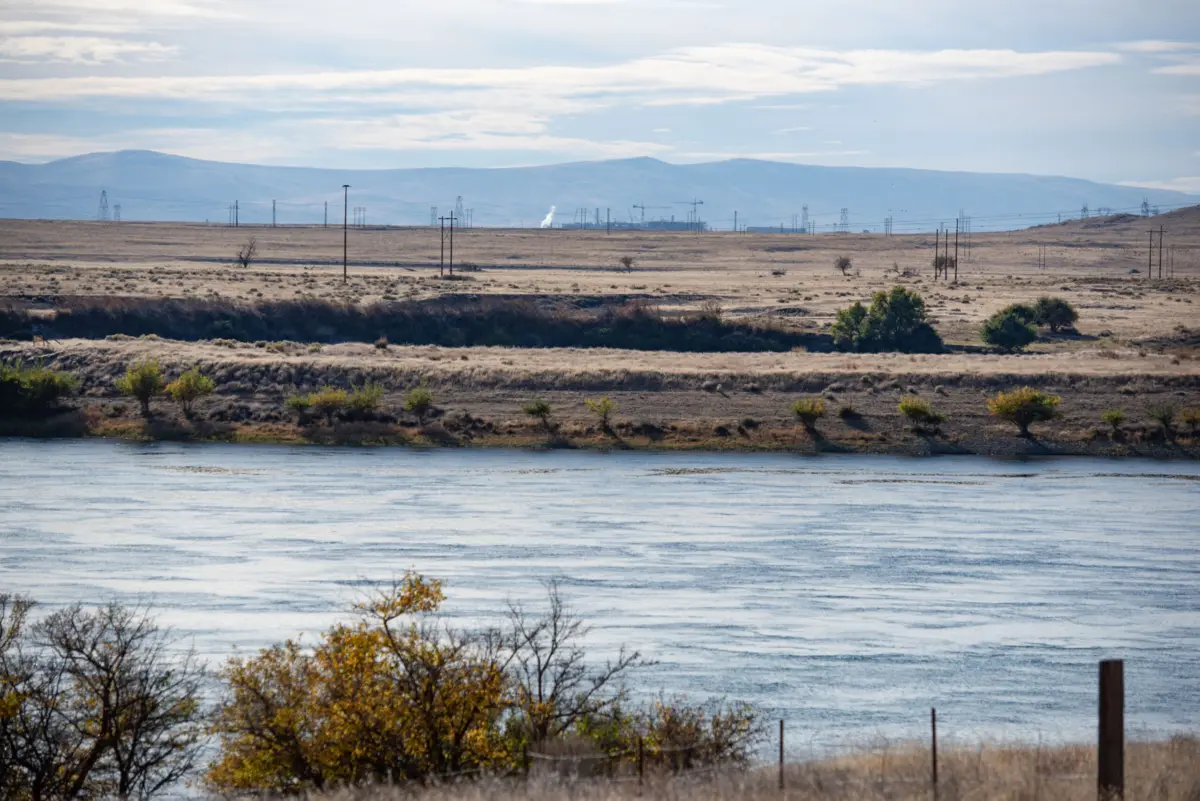
The U.S. Department of Energy (DOE) is systematically challenging workers’ compensation claims from former employees of the Hanford Site, one of the nation’s most contaminated nuclear facilities, despite a Washington state law designed to ease the burden of proof for those suffering from radiation and chemical exposure. An investigation by Cascade PBS and ProPublica reveals a pattern of persistent denials and lengthy legal appeals, which has left hundreds of ailing workers and the families of the deceased in financial and emotional limbo, while the DOE spends millions on external legal teams and expert witnesses.
Lonnie Rouse, a former Hanford worker, exemplifies the profound struggles faced by these employees. In March 2018, Rouse, already afflicted by a neurological disease attributed by medical experts to his workplace chemical exposure, stood before then-Gov. Jay Inslee at the Washington state Capitol. Nearly a decade had passed since his diagnosis, during which his health had severely deteriorated, manifesting as a stutter, a pronounced limp, and the loss of several teeth from inadvertently biting into a banana. His 2009 workers’ compensation claim had been denied, forcing him into bankruptcy and exhausting his retirement savings. He watched, desperate, as the governor signed a bill intended to transform his life.
For nearly two decades, Rouse had been on the front lines at the Hanford Site, a now-decommissioned nuclear weapons production plant in south-central Washington. His duties included packaging plutonium and monitoring radioactive waste. The site, a cornerstone of America’s Cold War arsenal and the source of plutonium for the atomic bomb dropped on Nagasaki in 1945, is now undergoing one of the largest and most expensive toxic waste remediation efforts in U.S. history, expected to continue until at least 2086. Rouse recounted working amidst tanks of radioactive sludge, exposed to at least 48 potentially hazardous chemicals, in conditions so toxic that the rubber once melted off his boots. He, like thousands of others, was integral to the ongoing cleanup that commenced after the last reactor shut down in the late 1980s.
A Legislative Attempt to Rectify Historical Injustice

Congress, recognizing the inherent dangers, acknowledged through voluminous studies that radiation exposure at DOE sites posed significant health risks to workers. This acknowledgment led to the 2000 passage of the Energy Employees Occupational Illness Compensation Program Act (EEOICPA), providing medical care and one-time payouts up to $400,000. Lawmakers noted the DOE’s historical policy "to litigate occupational illness claims, which has deterred workers from filing workers’ compensation claims and has imposed major financial burdens for such employees who have sought compensation."
However, the federal program’s benefits were often insufficient for long-term care. Washington state’s workers’ compensation system, by contrast, offered the potential for steady wage replacement or a lifetime pension, often surpassing federal caps. Recognizing this disparity and the ongoing challenges faced by Hanford workers, Washington state legislators enacted the 2018 presumption law (HB 1723). This groundbreaking legislation flipped the burden of proof, instructing state agencies to presume that certain cancers, neurological diseases, and respiratory illnesses suffered by Hanford workers were job-related. The DOE would now be required to prove that something other than workplace exposure caused the illness to deny a claim. This protective measure, typically reserved for high-risk professions like firefighting, was unprecedented for radiological workers in the U.S., according to the National Council on Compensation Insurance, the Washington state attorney general, and Gerry Pollet, a co-sponsor of the bill.
The DOE’s Unwavering Resistance
Despite the clear intent of the state law, the DOE’s approach to workers’ claims remains largely unchanged. Cascade PBS and ProPublica’s investigation, based on state claims records from 2023 onward, reveals a stark reality: out of 102 new claims filed by Hanford workers, the DOE recommended approving not a single one. While the state, which holds final authority, overruled the DOE and approved 75% of these claims, the DOE appealed all but seven of those approvals. This pattern extends beyond new claims; since the presumption law’s passage in 2018, the DOE has filed over 500 appeals.
"We have seen tremendous pushback from DOE on essentially almost every single case that’s been brought," stated Washington State Attorney General Nick Brown. The DOE’s strategy involves systematically challenging claims, dragging them out for years through recommended denials and subsequent legal appeals. Along the way, it has spent nearly $10 million between 2018 and 2025 on a single law firm, Wallace, Mann, Capener, Bishop & Debney, and over $1.7 million on external expert testimony. These experts, often medical toxicologists and industrial hygienists, frequently argue that factors like smoking, drinking, obesity, or genetics, rather than Hanford exposure, are responsible for workers’ illnesses.

Lonnie Rouse’s protracted battle illustrates this strategy. After his 2009 state claim denial, he was approved for federal benefits in 2010, with a federal medical consultant praising the thoroughness of his neuropsychologist’s causation analysis. When he refiled his state claim under the new presumption law in 2018, Washington state approved it later that year. The DOE immediately appealed, deploying experts who challenged his diagnosis and downplayed exposure risks, even blaming his alcoholism and family conflicts for his condition. Despite the state appeals agency finding these arguments unpersuasive and siding with workers nearly 9 out of 10 times in such cases, the DOE has filed more than 20 appeals contesting various aspects of Rouse’s claim over eight years. Though Rouse was awarded most of his back pay in 2024, the appeals continue, leaving him hesitant to touch the money.
"Depleted and Disgusted": The Human Toll of Litigation
The constant legal battle takes a heavy toll on workers and their families. Kathleen Kersey, who spent a decade at Hanford during both production and cleanup, experienced this firsthand. Her work involved monitoring radiation, but she states her safety training neglected chemical vapor hazards emanating from waste tanks. Diagnosed with multiple sclerosis, a neurological disorder covered by the presumption law, she filed a claim in 2019 that the state approved. The DOE appealed, asserting other causes for her illness. Kersey is among 152 workers whose claims remain in legal limbo, with the DOE having paid her no back wages. "I feel depleted and disgusted," Kersey shared, "It makes me feel like I’m worthless. I have no value."
The ammonia-like smell served as a constant warning sign for workers like Rouse in Hanford’s "tank farms," where over 50 million gallons of radioactive liquid waste are stored. From 1998 to 2008, Rouse’s job was to monitor these tanks. He recalled losing count of how many times toxic vapors were released, often knocking him to the ground, causing vomiting and nosebleeds. A 2014 federally funded report corroborated these experiences, noting common reports of nausea, headaches, and nosebleeds among tank farm workers exposed to chemical vapors.
A Battle Beyond the Grave

Perhaps the most distressing aspect of the DOE’s litigation strategy is its continuation even after workers have died. Half of the 152 claims currently in legal limbo belong to deceased workers. The DOE continues to fight to deny their families survivor benefits, prolonging their grief and financial hardship.
Isidoro Mata Jr., who demolished buildings at Hanford for nearly 30 years, faced this grim reality. Diagnosed with thyroid cancer in 2015, an illness linked to Hanford exposure by state law, his claim was approved by the state in 2019. The DOE appealed, vaguely citing "medical opinion supports denial of this claim as not related to the distinctive conditions of employment." While the state mandated payment of his wages and medication costs, the DOE filed a separate motion to halt these benefits during the appeal, arguing its likelihood of prevailing based on a doctor’s 2019 examination. The state, however, found the doctor’s examination "lacking in objective findings."
Mata’s daughter, Sara Chilcoat, recounted her father’s desperate fight for life while battling the DOE. "He was fighting for his life while they were trying to do that," she said, expressing her anger. Court records show Mata missed three meetings with DOE lawyers in 2020 due to chemotherapy. A letter from the state attorney general’s office confirmed his inability to participate. The DOE finally dropped its appeal in December 2020. Less than three months later, Mata died.
Regulatory Response and Future Outlook
State officials have voiced strong concerns. Gerry Pollet, the state representative, condemned the DOE’s actions. "This was supposed to have ended a decade ago," he said, lamenting that the situation is "even worse than it was 10 years ago." He added, "I think their actions are not only despicable, but they are criminal."

The Washington State Department of Labor and Industries (L&I), the state agency overseeing these claims, acknowledged the issue. L&I spokesperson Carrie McCausland confirmed that the agency had met twice with DOE staff after Cascade PBS and ProPublica raised questions, stating, "Agency staff are concerned and are right now assessing the severity of patterns we’ve seen." Potential actions include placing the DOE on an improvement plan or even revoking its ability to directly accept and pay out claims, which could limit its appeal power, although contractors would retain that right.
Attorney Charlynn Hull, whose firm Smart Law represents the majority of Hanford workers’ compensation claimants, including Rouse and Kersey, expressed frustration, noting no change in DOE behavior even under the Biden administration. She highlighted the emotional toll on families, particularly the children and spouses of deceased workers, who are forced to relive traumatic experiences during testimony. "When does this end?" she asked.
The DOE, in a statement, maintained it is "following all applicable local, state, and federal laws" and "has a long and successful record of accomplishment of protecting human health and the environment," declining to address detailed findings or questions.
Washington State Attorney General Nick Brown hopes that a consistent record of DOE losses in higher courts will eventually compel the department to reduce its volume of litigation. Until then, the approximately 13,000 people currently working at Hanford and the thousands more who served there continue to face the specter of illness and a bureaucratic battle for justice, a stark reminder of the enduring human cost of the nation’s nuclear legacy.




 Nila Kartika Wati

 Eva Lovia

 Lina Irawan

 Ana Megawati

 Joko Widodo
