
 Yuyun Lusiyani
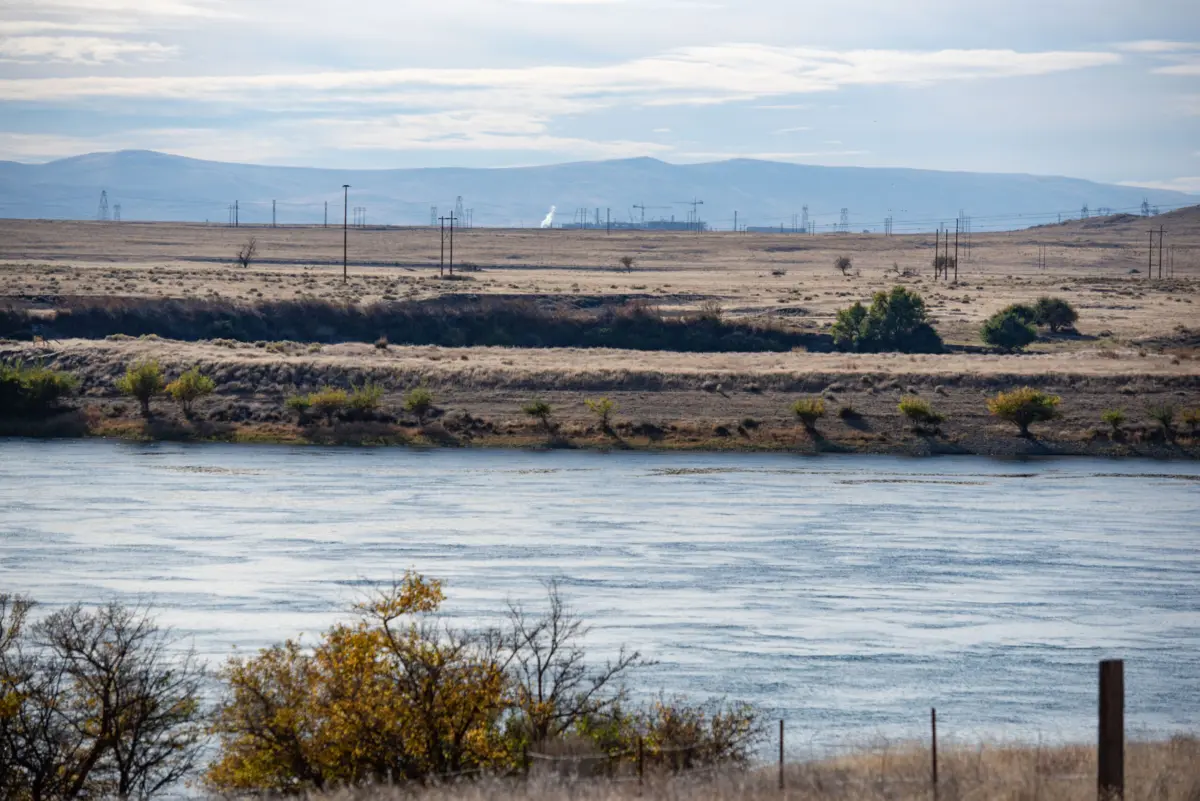
For over two decades, workers at the Hanford Site, a colossal and intensely contaminated former nuclear weapons production facility in south-central Washington state, have battled a silent, insidious enemy: the very federal agency responsible for their employment. Despite a landmark 2018 Washington state law designed to ease the burden on these employees, the U.S. Department of Energy (DOE) has persistently challenged workers’ compensation claims, investing millions in legal battles and expert testimony to deny benefits to those suffering from illnesses widely attributed to their hazardous work. An investigation by Cascade PBS and ProPublica reveals a systematic pattern of obstruction, leaving hundreds of workers and their families in prolonged legal limbo, often long after the claimants have died.
Lonnie Rouse’s Decade-Long Ordeal: A Microcosm of a Macroscosm
In March 2018, Lonnie Rouse, his body a testament to years of unseen battles, stood in a wood-paneled conference room at the Washington state Capitol. His gait was a limp, his speech marred by a stutter, and he had lost teeth to the unexpected softness of a banana – symptoms of a neurological disease diagnosed nearly a decade earlier by medical experts who linked it directly to his exposure to toxic chemicals at the Hanford Site. For almost 20 years, Rouse had packaged plutonium and meticulously monitored radioactive waste at the now-decommissioned Department of Energy plant, one of the nation’s most contaminated nuclear sites. He recounted how tanks brimming with radioactive sludge had exposed him to at least 48 potentially hazardous chemicals, and how the worksite was so perilous that the rubber on his boots once melted into the floor.
Rouse was one of thousands of dedicated individuals tasked with the gargantuan environmental cleanup at Hanford, an effort initiated after the last reactor ceased operations in the late 1980s. The risks were not theoretical; Congress itself, based on extensive studies, has formally acknowledged that radiation at DOE sites poses significant health risks to workers. Yet, when Rouse, like many others, fell gravely ill and sought workers’ compensation for his debilitating condition, his 2009 claim was denied. He had exhausted his retirement savings, declared bankruptcy, and watched his health deteriorate, all while the DOE consistently challenged his claims, often attempting to shift blame onto the workers themselves.
As then-Gov. Jay Inslee signed a bill that day in 2018, Rouse harbored a desperate hope. This new legislation was intended to be a lifeline, fundamentally altering the landscape for Hanford workers seeking justice.
A Legislative Attempt to Level the Playing Field
The 2018 Washington state law (House Bill 1723), a pioneering piece of legislation, flipped the burden of proof for workers’ compensation claims. Previously, Hanford employees were required to definitively prove that their illnesses stemmed from chemical exposure on the job. Under the new law, state agencies were instructed to presume that certain cancers, neurological diseases, and respiratory illnesses were caused by working at Hanford. The onus now fell on the Department of Energy to prove to the state that something other than their employment at the site had made the workers sick, should it wish to deny a claim. This presumption, typically reserved for high-risk professions like firefighting, was unprecedented for radiological workers, a fact noted by the National Council on Compensation Insurance, the Washington state attorney general, and state representative Gerry Pollet, one of the bill’s sponsors.

The intent was clear: expedite claims, reduce legal hurdles, and force the DOE to acknowledge its responsibility for the health crises afflicting its workforce. Lonnie Rouse believed it would swiftly resolve his long-pending claim. State lawmakers and the former governor shared this optimism, anticipating a shift towards accountability.
However, this legislative intent has been starkly undermined by the DOE’s unyielding litigation strategy. Cascade PBS and ProPublica’s investigation, based on state claims records, reveals a disturbing pattern. In the three and a half years leading up to 2023, workers filed 102 new claims for benefits under the presumption law. The Department of Energy did not recommend approving a single one. While the state, holding final authority, overruled the DOE and approved 75% of these claims, the DOE subsequently appealed all but seven of those approvals, initiating a protracted and emotionally draining legal process.
Hanford’s Legacy of Contamination and the Cold War’s Toll
To fully grasp the magnitude of this struggle, one must understand the context of the Hanford Site. Born from the urgency of the Manhattan Project during World War II, Hanford became the cornerstone of the nation’s nuclear arsenal, ultimately producing two-thirds of the plutonium for U.S. weapons, including the atomic bomb dropped on Nagasaki, Japan, in 1945. This intense, decades-long production left behind an environmental catastrophe of unparalleled scale.
Today, the site is home to 50 million gallons of highly radioactive liquid waste, stored in aging underground tanks, some of which are known to leak. The ongoing cleanup, expected to continue until at least 2086, is one of the largest and most expensive toxic waste remediation efforts in U.S. history. As of January 2025, over 13,000 people are still employed at Hanford, predominantly by private companies contracted by the DOE, continuing to grapple with its toxic legacy.
Workers like Rouse, who monitored these "tank farms" from 1998 to 2008, describe frequent chemical vapor releases, often accompanied by the acrid smell of ammonia, a warning sign of imminent danger. These exposures, according to a 2014 federally funded report, commonly led to nausea, headaches, and nosebleeds. Rouse himself recalls losing count of how many times toxic vapors knocked him to the ground, causing vomiting and nosebleeds. The hazards were multifaceted, extending beyond radiation to a complex cocktail of chemical exposures.
The Federal Program and Washington’s Bold Step
Recognizing the widespread harm, Congress passed the Energy Employees Occupational Illness Compensation Program Act (EEOICPA) in 2000. This federal program provided medical care and one-time payouts, capped at $400,000, to workers at DOE sites nationwide. Crucially, lawmakers explicitly noted the DOE’s historical policy "to litigate occupational illness claims, which has deterred workers from filing workers’ compensation claims and has imposed major financial burdens for such employees who have sought compensation."

While the EEOICPA offered some relief, Washington state’s workers’ compensation system promised more comprehensive benefits, including steady wage replacement or lifelong pensions, potentially far exceeding the federal cap. The 2018 state presumption law was an ambitious attempt to bridge this gap and provide more robust protection for its citizens.
The federal government immediately challenged Washington’s law, arguing it was discriminatory for singling out Hanford and the DOE. Anticipating an unfavorable Supreme Court ruling, state lawmakers swiftly enacted an expanded version in 2021, covering all workers at "radiological hazardous waste facilities" statewide, including a functioning nuclear power plant and a nuclear fuel rod manufacturing facility. Despite this expansion, Hanford workers continue to account for approximately 75% of the 428 claims filed since 2018, underscoring the site’s unique and pervasive health challenges.
A System of Obstruction: The DOE’s Persistent Appeals
The DOE’s response to the presumption law has been characterized by systematic and costly litigation. Interviews with workers, their surviving family members, legal counsel, and state officials paint a grim picture: a deliberate strategy to challenge and prolong workers’ compensation claims for years through recommended denials and subsequent legal appeals.
State records indicate that the DOE has filed over 500 appeals since the presumption law took effect in 2018. In at least 20 cases, individual workers’ claims have been appealed six or more times, mirroring the experience of Lonnie Rouse, whose claim has faced more than 20 appeals in nearly eight years.
"We have seen tremendous pushback from DOE on essentially almost every single case that’s been brought," stated Washington State Attorney General Nick Brown.
This legal offensive comes at a significant financial cost. The investigation uncovered that the DOE has paid nearly $10 million to a single law firm, Wallace, Mann, Capener, Bishop & Debney, between 2018 and 2025, to handle its appeals. Furthermore, a select group of three physicians and an industrial hygienist have collectively earned over $1.7 million since the law’s passage by testifying against Hanford workers. One particularly active expert witness doctor alone received over $200,000 from the DOE last year.
In its appeals filings, the DOE’s lawyers frequently argue that factors unrelated to work at Hanford, such as smoking, drinking, obesity, or genetics, are responsible for workers’ illnesses. In Lonnie Rouse’s case, the energy department attributed his neurological disease to alcoholism and family conflicts – arguments that the state agency handling appeals ultimately did not find persuasive. While Rouse was awarded most of his back pay in 2024, his lawyer advises him not to touch the funds, as the DOE’s appeals against his claim continue.

Despite the DOE’s aggressive stance, the agency that handles appeals has sided with workers in nearly 9 out of 10 cases where the state’s approval was challenged since 2018. This consistent failure to overturn state decisions highlights the perceived weakness of the DOE’s arguments in the face of compelling evidence and the presumption law.
Individual Battles, Collective Burden
The protracted appeals process exacts a heavy toll on workers and their families, both financially and emotionally. Kathleen Kersey, who dedicated a decade to Hanford during both its production and cleanup phases, experienced this firsthand. Her work involved measuring radiation and ensuring safety, though she notes that her training overlooked chemical vapor hazards from the waste tanks. Today, Kersey struggles with walking, short-term memory loss, and a period of temporary blindness in her right eye – symptoms consistent with a multiple sclerosis diagnosis, a neurological disorder covered by the state’s presumption law. The state approved her claim in 2019, but the DOE immediately appealed, contending that her MS was unrelated to her Hanford employment.
Kersey is one of 152 workers whose claims remain trapped in this legal limbo, approved by the state but continuously appealed by the DOE. She has received no back wages, leaving her feeling "depleted and disgusted." "It makes me feel like I’m worthless. I have no value," she shared, articulating the profound psychological impact of fighting for recognition and support for an illness contracted in service to the nation.
Appeals Beyond the Grave: Isidoro Mata Jr.’s Tragic Case
Perhaps the most egregious aspect of the DOE’s litigation strategy is its persistence in appealing claims even after workers have died. Of the 152 claims currently in legal limbo, half belong to deceased workers. The DOE continues to fight to deny their families survivors’ benefits, forcing grieving relatives to relive painful memories in court.
Isidoro Mata Jr.’s story epitomizes this heart-wrenching reality. For nearly 30 years, Mata worked demolishing buildings at Hanford. In 2015, he was diagnosed with thyroid cancer, an illness linked to Hanford by Washington’s law. His daughter, Sara Chilcoat, recounted his determination to work as long as he possibly could. The state approved Mata’s claim in 2019, but the DOE appealed, vaguely arguing that "medical opinion supports denial of this claim as not related to the distinctive conditions of employment."
Despite the ongoing appeal, the state compelled the DOE to pay Mata’s wages and medication costs. Yet, the DOE filed a separate motion to halt these benefits while the appeal was adjudicated. In its motion, the DOE argued that it was likely to prevail, citing a doctor who, after examining Mata in 2019, believed his cancer was unrelated to his work. The state, however, found this doctor’s examination "lacking in objective findings."

"He was fighting for his life while they were trying to do that," Chilcoat said, her anger palpable. "That makes me mad." Court records from 2020 show Mata missing meetings with DOE lawyers due to his chemotherapy treatments, a fact the state attorney general’s office conveyed to the appeals judge. In December of that year, the DOE finally dropped its appeal. Less than three months later, Isidoro Mata Jr. died, his battle for justice overshadowed by his final, painful decline.
State Regulators and the Path Forward
The persistent pattern of litigation has not gone unnoticed by Washington state regulators. Carrie McCausland, spokesperson for the Washington State Department of Labor and Industries, confirmed that agency staff are "concerned and are right now assessing the severity of patterns we’ve seen." Following questions raised by Cascade PBS and ProPublica, the department met twice with DOE staff, though no concrete actions beyond these meetings have yet been taken.
Future options for state regulators include placing the DOE on an "improvement plan" and monitoring its adherence, or even revoking the department’s ability to directly accept and pay out claims. If this were to occur, the private contractors employing Hanford workers would then decide whether to join the state-managed fund or seek state approval to manage claims themselves. While this could limit the DOE’s direct power to appeal, the contractors would still retain that right.
Washington State Attorney General Nick Brown expressed hope that a growing number of DOE losses in higher courts might eventually lead to a reduction in their litigation volume. However, Charlynn Hull, an attorney with Smart Law, representing the majority of Hanford workers’ compensation claimants, including Rouse and Kersey, observed no change in the DOE’s behavior even under the Biden administration.
For Hull, the most tormenting aspect of the DOE’s appeals is the necessity for children and spouses of deceased workers to testify, forcing them to relive the agonizing experience of their loved one’s illness and death. "I think that it’s just, it’s tormenting to them, in many ways, to relive how awful that experience was, especially with the cancer-related death," Hull stated. "When does this end?"
The question echoes across the vast, scarred landscape of the Hanford Site and into the homes of those who bore the hidden costs of national security. As the cleanup continues, so too does the fight for recognition and compensation, a testament to the enduring human impact of the Cold War’s atomic legacy.




 Nila Kartika Wati

 Eva Lovia

 Lina Irawan

 Ana Megawati

 Joko Widodo
