
 Yuyun Lusiyani
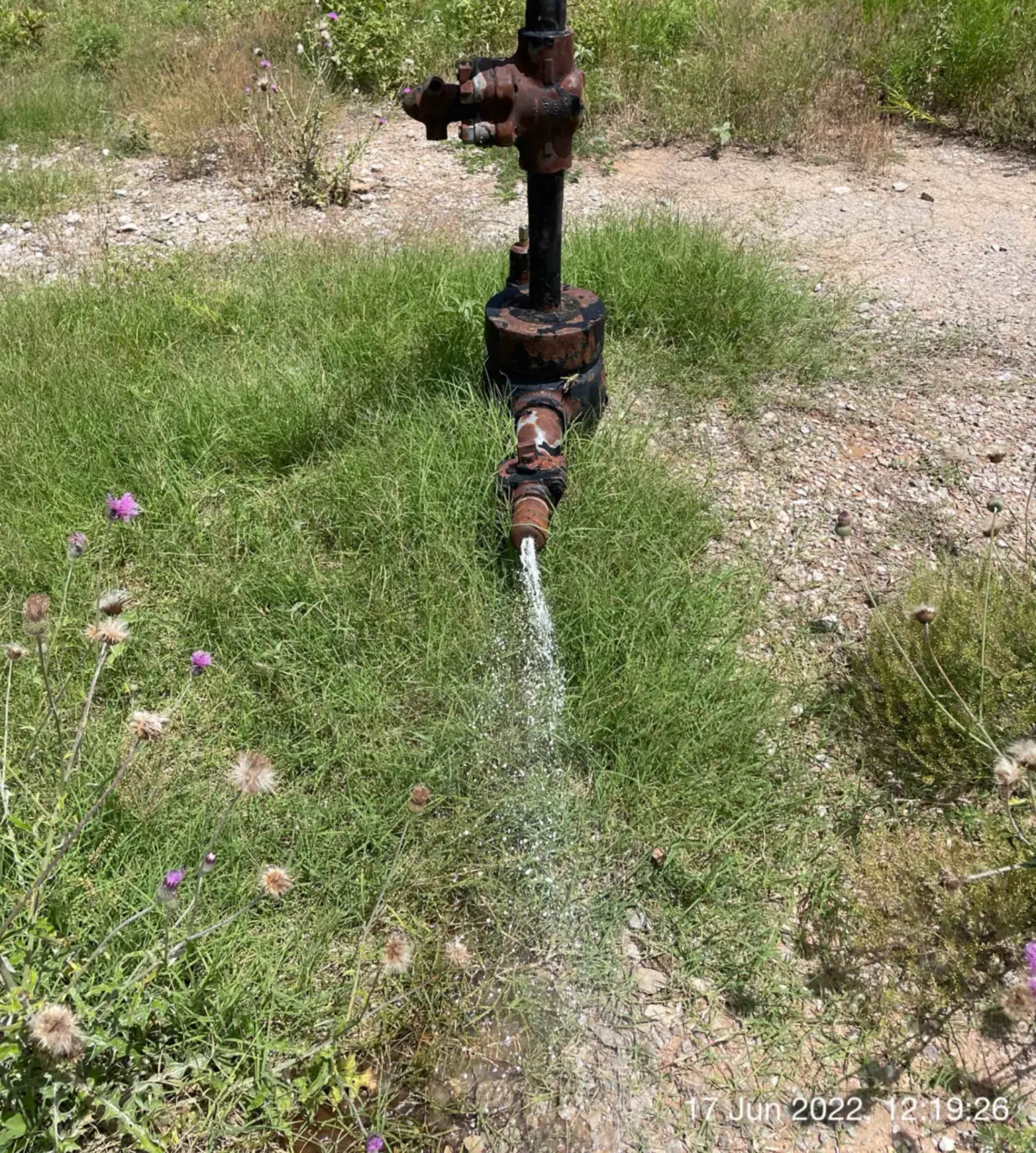
In June 2023, a palpable frustration simmered among staff at an Oklahoma regulatory agency. For over a year, these dedicated public servants had meticulously constructed a compelling case against Citation Oil & Gas, one of the nation’s largest privately owned oil companies, for egregious environmental pollution. This endeavor was particularly significant given Oklahoma’s established reputation for infrequent and lenient crackdowns on oil and gas operators for environmental infractions. The immediate catalyst for the agency’s escalating concern was a relentless discharge of toxic wastewater erupting from the ground near Ardmore, approximately 30 miles north of the Texas border.
This environmental catastrophe unfolded within the Bayou, a sprawling mile-wide oil field. Here, an iridescent oily sheen marred the surface of creeks, while stark, long streaks of snow-white salt aggressively scarred the once-fertile land. These insidious "purges," as they are known, bubbled insidiously amidst stands of majestic oak and walnut trees, posing a direct and imminent threat to vital drinking water sources. The severity of the situation had already attracted the attention of the Environmental Protection Agency (EPA), which, according to a federal report, had raised alarms about potential endangerment to underground sources of drinking water.
State investigators definitively attributed the escalating crisis to Citation’s injection wells. These wells are designed to pump massive volumes of wastewater, a byproduct of oil production, deep underground at high pressures to enhance oil recovery. However, this high-stakes process carries inherent risks. Days prior to the agency’s decision to act, Citation had been formally requested to halve its injection pressures. The company’s categorical refusal compelled staff within the oil division of the Oklahoma Corporation Commission (OCC), the state’s primary oil and gas regulator, to recommend official punitive action through the agency’s administrative court system. Danny Ray, an agency manager at the time, underscored the gravity of the situation in an email to colleagues: "This will be an important case to get some of these purges stopped and particularly concerning Citation’s operations." Three days later, he reiterated the urgency to oil division leaders and Citation officials, declaring, "We consider this an emergency situation that needs to be addressed promptly." To staunch the relentless flow of wastewater, the OCC took decisive action, temporarily shutting down all 22 injection wells in the Bayou, 19 of which were owned by Citation. This drastic measure ignited a protracted, year-long battle over the conditions under which injection operations might resume.
Oklahoma’s Pattern of Regulatory Leniency

Under Oklahoma state regulations, oil and gas companies are explicitly prohibited from polluting, and the Corporation Commission’s oil and gas regulators possess the authority to revoke injection permits and levy fines against violators. Yet, despite clear staff guidance to pursue administrative punishment against Citation, agency leadership ultimately chose a different path. In April 2024, state officials, notably including the then-Director of the oil division, Robyn Strickland, made the controversial decision to permit Citation to restart injection activities at pressures exceeding those recommended by technical staff and external experts.
This reluctance to penalize Citation is not an isolated incident but rather a deeply entrenched pattern within Oklahoma’s regulatory landscape. A yearlong investigation by The Frontier and ProPublica has meticulously documented how Oklahoma regulators have consistently allowed oil companies to contaminate drinking water, farmland, and even private residences with minimal, if any, repercussions. In a stark illustration of this leniency, the Corporation Commission’s own database of pollution reports and other rule violations lists Citation Oil & Gas more than any other company—over 1,000 times in the past decade. This figure represents hundreds more incidents than comparably sized operators, underscoring Citation’s unparalleled record of environmental infractions within the state. In recent years, purges linked to Citation have been identified as some of Oklahoma’s most protracted and environmentally destructive oil field pollution events. Despite this overwhelming evidence, the commission maintains no record of ever having fined or successfully completed an enforcement case against Citation.
Current and former employees of the Oklahoma Corporation Commission, speaking anonymously due to fear of professional reprisal, describe a prevailing sentiment among top agency officials: a marked wariness of aggressively pursuing habitual violators like Citation. Citation has ascended to become Oklahoma’s second-largest well owner, primarily through the acquisition of vast collections of aging, low-producing wells from larger oil giants that have largely divested from Oklahoma in favor of more lucrative fields in Texas and elsewhere. Citation acquired its Bayou wells in 2010 as part of this strategy. Regulators, according to these insiders, extend a degree of deference to Citation because the company maintains these older wells—assets that, if abandoned or sold, could easily transform into significant financial liabilities for the state, requiring costly plugging and environmental remediation.
A spokesperson for the Oklahoma Corporation Commission, Jack Damrill, declined to directly address questions regarding the agency’s handling of Citation’s extensive record, citing the possibility of future enforcement actions or litigation involving the company. "The OCC Oil and Gas Conservation Division must remain mindful of its regulatory and adjudicatory responsibilities and avoid making public statements that could potentially affect future proceedings or legal considerations," Damrill stated in an email. Robyn Strickland, who has since departed the agency to become chief projects officer for the Interstate Oil and Gas Compact Commission (a quasi-governmental organization known for advocating industry interests), did not respond to requests for comment. A Citation executive also declined to comment on the written questions presented.
Notably, Citation has faced more stringent regulatory actions in other jurisdictions. In 2017, the company reached a $2.25 million settlement with the U.S. Department of Justice concerning allegations of underpaid royalties from drilling on federal land in Wyoming, although the settlement did not constitute an admission of liability. In 2025, Utah secured a $700,000 settlement with Citation following a significant crude oil and wastewater spill. Texas and Colorado have also imposed fines on the company for various violations in recent years. "Citation has been the thorn in my side for a long time," confessed a current manager at the Oklahoma agency, requesting anonymity. "They just operate however they want. They’ve had major pollution issues, and you can’t really touch them."

Preparing a Case for Punishment and Industry Pushback
Five months into the Bayou wells’ shutdown, by November 2023, Citation’s impatience was evident. The company’s officials had repeatedly pressed for permission to resume operations and had even legally challenged the state through the commission’s court to definitively prove the connection between the Bayou purges and its injection activities. In a tense meeting held in a small conference room at the OCC’s Oklahoma City headquarters, with over a dozen others joining virtually, regulators and company officials convened to discuss the path forward.
Leading the state’s presentation was a team of consultants from Halff, an environmental engineering firm that the state had contracted earlier that year for $550,000 to investigate the burgeoning number of oil field wastewater eruptions across Oklahoma. The consultants and agency staff presented a united front, meticulously detailing the problem: Citation’s nearly two dozen Bayou injection wells had been operating at dangerously high pressures, according to a video recording of the meeting obtained by The Frontier and ProPublica. Over an extended period, the immense pressure from the injected wastewater had fractured underground rock layers, enabling the toxic fluid to migrate uncontrollably and erupt to the surface. "You definitely have overpressurization," Carolyn May, Halff’s director of environmental remediation, informed Citation officials, presenting calculations derived from well records, field data collected by agency staff, and federal standards. "It’s allowing that rock to fracture."
The consultants’ role was to provide independent expert analysis, mediating potential internal disagreements within the agency regarding how to address the wastewater eruptions. May and agency staffers enumerated a series of long-standing issues with Citation’s wells that had been overlooked for years. Beyond allowing excessive injection pressures, regulators had also granted more than a dozen exemptions to crucial testing and well-construction standards, directly endangering groundwater resources. Several wells exhibited troubling compliance records; agency documents noted one particular well had been in "perpetual violation" of its permit for "nine years running," injecting tens of millions of gallons of wastewater beyond its legal limits.
The problem extended beyond Citation’s active wells. Dozens of nearby abandoned, unplugged wells provided direct conduits for the pressurized wastewater to reach shallow freshwater aquifers and the surface. May specifically highlighted several of these abandoned wells as particularly concerning pathways, prompting oil division deputy director Mike McGinnis to suggest that Citation permanently plug them. Subsurface imaging conducted by agency staff revealed a distinct plume of highly polluted wastewater ascending from deep underground, directly from the injection zones. This, May emphasized, posed a grave threat to the freshwater sources beneath the Bayou—water that many local residents relied upon for drinking and cooking. "That’s our primary concern here," she stressed. This fear was not unique to the consultants; earlier in 2023, the EPA had issued a warning about "potential endangerment to underground sources of drinking water" in the Bayou due to oil field injection. Groundwater tests conducted near the purge sites confirmed the presence of oil field wastewater contaminants, including elevated levels of salt, bromide, and the potent carcinogen benzene, which exceeded EPA drinking water standards by a factor of five.

Citation, however, arrived at the meeting armed with a fundamentally different narrative. The company contended that the pollution was a cumulative result of historical oil drilling practices and recent rainfall, emphatically denying any link to its current operations. This claim had been a consistent refrain, particularly since the agency’s initial shutdown of its wells. To bolster its defense, Citation’s consultants produced detailed reports highlighting the area’s extensive history of oil production, dating back to the 1920s—a period characterized by unregulated extraction where companies routinely dumped wastewater into large, unlined pits, allowing it to seep directly into the ground. These reports argued that old pollution, deeply embedded in the land, was simply being flushed to the surface by rainfall. Each report invariably concluded that there was no demonstrable connection between Citation’s injection activities and the ongoing Bayou pollution.
During the meeting, Citation representatives, including engineering manager Jeff Lewis, reiterated these arguments. Lewis asserted that the company’s internal data indicated no culpability for the Bayou purges and that it could safely resume injection at pressures higher than Halff had recommended. He proposed restarting injection in the company’s deeper wells, arguing they were safely separated by rock layers from the abandoned wells identified by Halff as potential pathways. Agency staff, however, remained unconvinced. In prior internal discussions and emails, staff and consultants had criticized Citation’s water sampling methodologies as inherently biased towards supporting the company’s rainfall-induced pollution theory. While acknowledging the undeniable presence of historical pollution in the Bayou, internal documents penned by agency staff argued that recent purges involved significant volumes of wastewater forcefully pushing to the surface, blanketing creek beds in layers of snow-white salt—a scale and force incompatible with the passive resurfacing of old contamination. "A purge is created by pressure and is not due to old pits," Danny Ray had asserted in a memo distributed months earlier within the oil division, urging agency leaders not to allow Citation to restart injection. May echoed these rebuttals during the meeting, reiterating that the state’s evidence overwhelmingly pointed to an injection problem. She concluded her presentation with a clear warning: Citation’s injection practices in the Bayou required fundamental change. "If y’all want to start injecting again," she told company representatives, "I think we’re going to have to look at those pressures and the volumes very carefully." The meeting concluded without a resolution.
The Stalemate and the Controversial Compromise
The subsequent four months saw Citation and state regulators locked in a persistent debate over the terms for restarting Bayou operations, with neither side yielding ground. By the time they reconvened for another tense face-off in March 2024, a discernible weariness had settled over the oil division leaders. May and the Halff geologists once again insisted that Citation implement substantial pressure reductions to be permitted to restart even a limited number of wells. However, as they presented their case, Citation representatives, including Lewis and Vice President Bob Redweik, repeatedly interrupted them. After more than two hours of acrimonious disagreement, Redweik and Citation’s attorney abruptly terminated the meeting. "We’re not going anywhere," Redweik declared.
Several high-ranking oil division officials, including Strickland, McGinnis, and commission attorney Tyler Trout, were present but remained largely silent throughout the heated exchange. The following week, Trout attempted to break the impasse by forwarding a memo from Citation, inquiring: "In an effort to reach an agreement and move this situation forward, would we consider meeting Citation in the middle as far as recommended injection pressures are concerned?" May, however, held firm. "From Halff’s standpoint, our recommendations aren’t going to change," she responded, emphasizing that the final decision rested with agency leadership.

In early April, the agency ultimately opted for a compromise. It approved a plan allowing seven of Citation’s 19 Bayou injection wells to resume operations. Crucially, the company would be permitted to inject at pressures higher than Halff had recommended, though still less than Citation had initially demanded. Current and former employees reveal that this decision to restart injection originated from the top echelons of the oil division, including Strickland and McGinnis, effectively bypassing and overriding the objections of staff who opposed the plan. Like Strickland, McGinnis did not respond to requests for comment. "They wore us out," lamented an agency manager, also speaking anonymously.
Before injection recommenced, three oil division officials hand-picked by Strickland conducted a walkthrough of the Bayou with representatives from Halff and Citation, according to an email from Strickland. The rest of the division was deliberately kept uninformed. On the same day, a pollution abatement manager noted in an email to the commission’s general counsel that critics of the compromise plan within the agency had not been invited to this crucial inspection. Around the same time that agency leaders authorized Citation to restart injection in the Bayou, staff were actively preparing an extensive contempt case against the company for numerous rule violations in other parts of the state, as revealed by public records obtained by The Frontier and ProPublica. Field staff and consultants continued to uncover significant problems related to Citation’s injection practices, including excessive pressures at sites of destructive wastewater eruptions. The staff complaint advocated for the agency to impose substantial fines and revoke well permits. However, oil division leaders never formalized the paperwork for this comprehensive case.
Trouble also persisted in the Bayou itself. Just weeks after Citation restarted injection, field staff discovered a "severely contaminated" private water well nearby, directly polluted by oil field waste. Testing revealed alarmingly high levels of salt and, critically, "the highest levels of bromide that we have ever sampled," according to internal emails, referring to another chemical constituent of oil and gas waste that poses serious public health risks. (The landowners, involved in an ongoing lawsuit against Citation, declined comment but court records confirm they do not drink from the well. Citation, which disputes the family’s claims, states in court filings that it has spent hundreds of thousands of dollars addressing the pollution on their land as part of a commission-approved plan.) By the end of 2024, oil division leaders had allowed six more Citation wells to come back online, bringing the total to 13. The following spring, the agency controversially closed the Bayou investigation, along with several other inquiries related to Citation, without taking any further enforcement action.
Internal Frustration and Broader Implications
In the year and a half since the Bayou case was closed, a significant exodus has occurred within the oil division. Several key staff members who had passionately advocated for punishing Citation have departed the agency, alongside a handful of senior leaders. These former staffers informed The Frontier and ProPublica that their frustration stemmed from the agency’s persistent unwillingness to confront repeat corporate offenders, despite months—and in some cases, years—of painstaking investigative work by agency personnel.

Tracy Case, an attorney for the oil and gas division, candidly acknowledged this systemic issue at a national conference for oil regulators in Oklahoma City in May. "I’ve been there 11 years doing this and we’ve never pursued what we call our ‘bad actors,’" she admitted, according to a recording of the meeting obtained by the news outlets. She attributed this inaction to the oil division’s severe understaffing, which leaves it grappling with hundreds of potential enforcement cases simultaneously. An agency spokesperson declined to comment on Case’s behalf. A review by The Frontier and ProPublica reveals that less than a third of the approximately 750 enforcement cases filed by the oil division in the agency’s administrative law courts since 2023 have resulted in any form of punishment. The average fine imposed by the agency was a mere $1,700, with the most common penalty being a $500 fine coupled with the use of company insurance funds to plug unused wells. Neither the Oklahoma Corporation Commission nor Halff responded to inquiries about the consulting firm’s current role with the state agency.
At the Bayou, nearly all of Citation’s wastewater injection wells are now operational, many functioning at pressures exceeding Halff’s explicit recommendations. Industry data further indicates that Citation has successfully ramped up its oil production to pre-shutdown levels, even as new evidence of purges continues to surface. In September, fresh layers of salt—the telltale residue of wastewater—were observed covering the dirt near yellowish puddles of standing water. Nearby, streaks of oil glistened on the ground. Notably, the preceding weeks had been characterized by hot, dry weather with negligible rainfall, directly contradicting Citation’s long-standing claims that rainfall was the primary driver of resurfacing pollution. In early October, an agency field staffer formally requested that Citation install a specialized well in the Bayou to actively pump out polluted groundwater, according to a report in the agency’s incident database.
A relentless stream of new pollution complaints against Citation continues to appear in the state database, including over 60 spills and leaks at well sites within the past year alone. Among these complaints were three distinct purges that erupted in southern Oklahoma over the last three months. All these investigations remain active, according to state records. Another ongoing complaint against Citation originated approximately 10 miles east of the Bayou, on the ranch of Mike Faulkner. In April, Faulkner observed an unusual volume of saltwater gurgling to the surface and flowing down a creek on his property. Dozens of Citation wells, actively pumping wastewater underground, operate in close proximity. Citation, yet again, attributed the pollution to historic drilling practices, according to an email from one of the company’s engineers to the Oklahoma Corporation Commission. Nevertheless, the agency instructed the company to temporarily shut down some of its nearby injection wells, and, according to Faulkner, the purge on his land ceased for the first time in years. "That tells me that they know the why and the how of that saltwater purging," Faulkner stated in July, expressing his conviction. The agency also directed Citation to install monitoring wells to test for pollution and to construct a pit with a rock dam on Faulkner’s land to contain the polluted water, along with a fence to protect his cattle.
However, in the months that followed, the agency granted Citation multiple extensions on the deadline to construct the dam and fencing. In September, Faulkner learned that the agency had issued yet another extension—until December, seven months after his initial pollution report. As of October, the wells where the state had requested Citation to pause operations were once again injecting, albeit at reduced pressure. Faulkner expresses profound exasperation with Citation’s years-long pattern of degrading his pastures. Yet, his primary condemnation is directed at state officials for what he perceives as their fundamental unwillingness to effectively rein in the company. "They’re like a spoiled kid," he concluded, "They’ve just gotten away with it for a long time." The persistent pollution and the regulatory body’s perceived inaction highlight a systemic challenge in Oklahoma, raising serious questions about environmental protection, public health, and the accountability of powerful oil and gas operators.



 Nila Kartika Wati

 Eva Lovia

 Lina Irawan

 Ana Megawati

 Joko Widodo
