
 Yuyun Lusiyani
Less than two weeks after the Tennessee legislature controversially redrew Memphis’s congressional map, splitting the city into three distinct districts in a move widely interpreted as an attempt to dilute Democratic voting power, Republican state Senator Brent Taylor signaled his political intentions in a revealing social media post. The image, featuring Taylor alongside U.S. Rep. Tim Burchett on the steps of the U.S. Capitol, was captioned with Taylor’s remark about Burchett "showing me the dadgum ropes," foreshadowing his ambition for a federal seat. This snapshot encapsulated a broader, intensifying struggle between state-level Republican dominance and the aspirations of a predominantly Democratic, majority-Black urban center.
The Redrawing of Congressional District 9: A Shift in Power
The legislative maneuvering that carved Memphis into new districts culminated on May 7, the same day Taylor officially announced his candidacy for the redrawn Congressional District 9. For over four decades, District 9 had been Tennessee’s sole majority-Black congressional district, largely encompassing the city of Memphis and its immediate surroundings. The newly configured district, however, drastically alters this demographic reality, stretching across half the state and transforming into a majority-white constituency. This significant redrawing followed an April U.S. Supreme Court ruling that made it more challenging to contest gerrymandering practices designed to suppress minority votes, effectively paving the way for such bold electoral redesigns. Critics argue this redistricting is a textbook example of partisan gerrymandering, designed to consolidate Republican power and diminish the electoral influence of urban, Democratic strongholds. Historically, gerrymandering has been a potent tool in American politics, with various studies demonstrating its capacity to entrench incumbent parties and reduce voter engagement by creating uncompetitive districts.
Brent Taylor, 58, a white state senator from a heavily white community east of Memphis, enters this race with a considerable financial advantage, having loaned his congressional campaign $1.5 million. His wealth stems from the sale of his funeral home businesses to a private equity firm. His track record in the state Senate has been characterized by legislative actions that have consistently sought to curtail the authority of local officials in Memphis, many of whom were elected by the very voters he now aims to represent in Washington, D.C. Backed by a Republican supermajority in the state legislature, Taylor has championed numerous laws that effectively supersede the powers and priorities of local politicians, signaling a clear strategy of state-level intervention in municipal governance.
The National Trend of Preemption Laws and Its Local Manifestation
The legislative actions spearheaded by Taylor are not isolated incidents but rather reflect a growing national trend where state legislatures, particularly those dominated by one party, utilize "preemption laws" to assert control over local governments. This tactic has gained traction in recent years, especially among Republican-led statehouses, as a means to counter policies enacted by Democratic-leaning cities that diverge from state leaders’ ideological stances. These preemptive measures have touched upon diverse areas, including civil rights protections, public health mandates, environmental regulations, and workers’ rights. The National League of Cities has extensively documented this phenomenon, highlighting how it erodes local autonomy and stifles innovative local solutions to community-specific challenges.

In Memphis, a city that has grappled with persistently high rates of violent crime—though showing signs of decline in recent years—Taylor has strategically focused his legislative efforts on criminal justice. His approach emphasizes aggressive prosecution and incarceration, starkly contrasting with the reform-oriented strategies advocated by many local Memphis officials.
Eroding Local Control: Case Studies in Memphis
Taylor’s legislative portfolio reveals a concerted effort to reshape Memphis’s criminal justice landscape according to state priorities, often directly undermining local initiatives.
1. Prohibiting Limits on Police Traffic Stops: The Legacy of Tyre Nichols
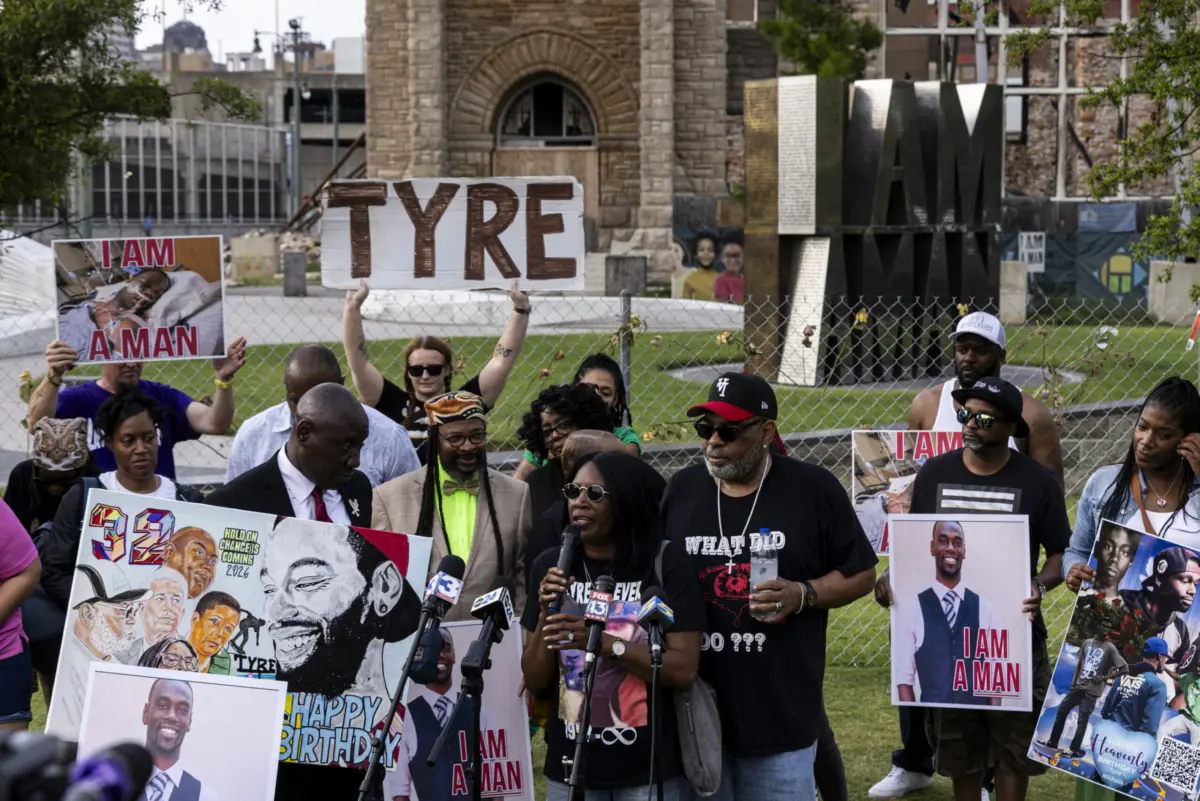
The tragic death of Tyre Nichols in January 2023, following a brutal encounter with Memphis police officers, sent shockwaves across the nation. Surveillance and body camera footage depicted officers repeatedly assaulting the unarmed 29-year-old, who died three days later from his injuries. In response to overwhelming community pressure and Nichols’ family’s advocacy, the Memphis City Council unanimously passed an ordinance in April 2023. This landmark "Driving Equality Ordinance" aimed to prohibit police from conducting pretextual stops for minor traffic infractions, such as a broken taillight, when the actual intent was to investigate unrelated, more serious crimes. Research consistently demonstrates that such pretextual stops disproportionately target Black drivers, erode public trust in law enforcement, and frequently escalate into unnecessary and dangerous encounters. For example, studies by the American Civil Liberties Union (ACLU) and academic institutions have shown Black drivers are significantly more likely to be stopped and searched than white drivers, even though contraband is found less often.
Taylor, just months into his state Senate term, vehemently opposed the ordinance, arguing it jeopardized public safety by limiting police’s ability to interdict crime. The following year, he co-sponsored legislation (SB2572) that explicitly prohibited local governments from restricting law enforcement’s authority to conduct traffic stops, thereby nullifying Memphis’s ordinance. During Senate floor debates, Taylor, a former funeral home director, acknowledged empathy for the Nichols family but asserted that such empathy "can’t cloud our judgment in protecting 7 million Tennesseans." Martavius Jones, then chair of the Memphis City Council, criticized Taylor’s intervention, stating it implied that "Memphis voters don’t know what their best interests are" and that the city’s ordinance would not have jeopardized public safety.
Tennessee Governor Bill Lee, a Republican, signed Taylor’s preemption bill into law, echoing the sentiment that police should not be limited in their enforcement methods, though he also stressed officer accountability. Eight months later, the U.S. Department of Justice (DOJ) released its own investigation into the Memphis Police Department, finding that its aggressive traffic enforcement had indeed harmed Memphians. The DOJ report recommended limiting pretextual stops, concluding that such practices enabled "the regular use of excessive force with impunity" and unlawfully discriminated against Black residents. However, this finding was controversially retracted by President Donald Trump’s Justice Department in 2025, signaling a shifting federal stance on police reform.

In the past year, police use of such stops has reportedly intensified, particularly in immigration enforcement, coinciding with the deployment of Trump’s "Memphis Safe Task Force." This multi-agency initiative, comprising state and federal law enforcement, including the National Guard, was actively supported by Taylor, who testified before the U.S. Senate that the task force would "succeed in doing the hard work to infiltrate gangs and arrest more routine criminals."
2. Unprecedented Scrutiny of a District Attorney: Targeting Steve Mulroy
Senator Taylor has also made it a priority to diminish the decision-making authority of locally elected district attorneys, specifically targeting Steve Mulroy, one of only two Democratic county prosecutors in Tennessee and the first Democrat elected as Shelby County District Attorney in 25 years. Taylor publicly labeled Mulroy a "far-left zealot" whose policies could exacerbate violent crime.
In 2023, Taylor sponsored a law that stripped elected county prosecutors of their power to review certain death penalty cases, transferring this authority to the state attorney general, an appointee of the state Supreme Court. While ostensibly a statewide measure, it disproportionately affected Shelby County, home to half of the state’s 40 death row prisoners. Mulroy decried the law as effectively "disenfranchising the voters" who elected their district attorney.
Taylor further intensified his efforts following the 2025 deployment of Trump’s crime task force to Memphis. As arrests surged, Taylor worked to subject Mulroy’s office to unprecedented scrutiny, arguing he wanted to ensure the prosecution of task force cases was as aggressive as the task force itself. One new law, co-sponsored by Taylor, authorized the state attorney general to review every case processed by Mulroy’s office, including those stemming from task force arrests, "to ensure the proper administration of justice necessary to protect the safety of the community." The dispositions of these cases, along with bail recommendations, would then be reported to legislative leaders. Republican state Representative Andrew Farmer, who introduced the bill in the House, explicitly stated its intent was to ensure "all crimes that deserve to be prosecuted are prosecuted."
The state’s District Attorneys General Conference, led by Republican former District Attorney Stephen Crump, initially opposed an earlier, broader version of the bill, fearing it would cause prosecutors to second-guess their decisions. However, objections were dropped once the bill was narrowed to apply solely to Mulroy. This law also includes a provision allowing the state attorney general to request state Supreme Court intervention and the installation of a temporary district attorney if Mulroy declines to prosecute specific categories of crime—a direct mechanism to bypass the elected DA’s authority. Mulroy condemned this, calling it "an unelected shadow DA operating in parallel to the duly elected DA" and a profound violation of prosecutorial discretion and independence, principles he argues are fundamental to the criminal justice system and enshrined in the Tennessee constitution.
In May, Taylor co-sponsored a second law specifically targeting Mulroy’s office. This law mandates that Mulroy’s office report to both the state and the U.S. Department of Justice within 10 business days every instance of a plea deal, dismissal, or reduction of charges for a felony offense resulting from a task force arrest. Representative John Gillespie, co-sponsoring the bill, stated it aimed to provide "Memphis residents deserve confidence that the significant investments being made to combat violent crime are matched with accountability at every level of the justice system."

Mulroy’s 2022 election as DA was a direct response to voter disillusionment with traditional "tough-on-crime" approaches, particularly after a year with a record number of homicides. He campaigned on a platform of reform, promising to deprioritize low-level offenses, emphasize rehabilitation, and establish a conviction review unit. William Arnold, a community organizer who spent nearly seven years wrongly incarcerated before his conviction was dismissed, actively campaigned for Mulroy, viewing his candidacy as a path to "help Memphians in a different way." Arnold expressed profound disappointment at the state legislature’s actions, noting it mirrors historical state interventions in Memphis, such as replacing the Memphis Shelby County Schools’ elected board with a state-appointed one.
3. Dismantling Bail Reform: The "Ability to Pay" Calculator
Among Taylor’s preemptive legislative initiatives, his 2023 effort to dismantle a bipartisan bail reform measure in Shelby County stands out. This reform aimed to prevent the discriminatory detention of low-income individuals, who are disproportionately Black, simply because they could not afford bail. State law dictates that magistrates should impose the "least onerous conditions" when setting bail, ensuring it is "as low as the court determines is necessary" to secure a defendant’s return to court.
However, in practice, hundreds of individuals were languishing in the Shelby County Jail awaiting trial solely due to an inability to pay bail. Organizations like Just City and the American Civil Liberties Union (ACLU) highlighted how pretrial detention can lead to job loss, loss of child custody, and other severe consequences. In 2021, these groups threatened to sue Shelby County for violating existing state law regarding bail practices.
In August 2022, a significant agreement was reached between these advocacy groups and county officials, including Mulroy’s Republican predecessor, District Attorney Amy Weirich. This new bail order incorporated an "ability to pay" calculator, designed to help judges factor a defendant’s financial condition into bail decisions, as required by state law.
This tool quickly became a target for Senator Taylor, who co-sponsored a bill (SB2565) in January 2023 to eliminate it. During a Senate Judiciary Committee meeting, Taylor characterized the calculator as "essentially asking defendants how much money they happen to have in their pocket so that they can make bail," arguing that public safety should be the paramount concern. Republican state Representative William Lamberth echoed this sentiment on the House floor, dramatically stating, "There is blood running in the streets of Memphis today because they’re letting people out." Taylor’s law explicitly mandated that "the defendant’s ability to pay shall not be considered" when setting bail, effectively tying the hands of judges.
Former Shelby County General Sessions Court Judge Bill Anderson, who publicly clashed with Taylor over bail reform and retired early in 2025, confirmed that the law severely restricted judicial discretion. A 2025 University of Memphis study subsequently found that the median bail amount increased after Taylor’s law took effect. The impact, Anderson noted, disproportionately affects Black residents, who are more likely to be low-income and constitute a significant portion of the Shelby County jail population. Data Collaborative for Justice reports consistently illustrate these racial disparities in pretrial detention outcomes. Anderson stated, "To those of us in the system, it’s obvious what he’s doing. He called them reform acts, but they’re not reform."

Broader Implications and the Congressional Race
The legislative actions championed by Senator Taylor highlight a profound philosophical and political divide within Tennessee. On one side stands a Republican-dominated state legislature asserting its authority over local governance, particularly in Democratic-led urban centers like Memphis, often under the guise of public safety and state-wide consistency. On the other side are local officials, civil rights advocates, and community members in Memphis who champion local autonomy, criminal justice reform, and policies tailored to their unique community needs.
John Pfaff, a Fordham School of Law professor who studies the impact of state preemption laws on prosecutors, offered a critical perspective. He posits that "tough-on-crime laws" like those Taylor has supported have historically functioned as "a form of social control against disliked minority groups" under the veneer of public safety. Pfaff explains that non-urban voters, who may feel "victimized by expanding civil rights" favored by urban populations, can leverage their control over state legislatures to impose their will on cities through preemption laws. This dynamic, he argues, allows rural and suburban areas to "finally tell Memphis what they want Memphis to do."
The upcoming congressional race for the redrawn District 9 encapsulates these tensions. Brent Taylor, despite his strong financial backing and the district’s new demographic tilt, faces a formidable opponent in state Representative Justin J. Pearson. Pearson, a 31-year-old Black Democrat with deep roots in southwest Memphis, offers a radically different vision for the district. He advocates addressing the root causes of crime through investments in education and economic opportunities, rather than a singular focus on incarceration. Pearson gained national prominence for his successful efforts to halt the construction of an oil pipeline in a Black Memphis neighborhood and for his expulsion and subsequent re-election by the Republican supermajority following a protest for gun control after a 2023 school shooting. He has positioned himself as the rightful voice for the historically Democratic Ninth Congressional District, garnering support from national Democrats and, notably, outraising Taylor in campaign donations.
While Taylor, who declined requests for an interview, maintains that his legislative efforts prioritize public safety, critics argue his policies are designed to suppress minority political power and undermine local self-determination. The contest between Taylor and Pearson is therefore more than just an election; it is a referendum on the future of local control, criminal justice reform, and democratic representation in a state increasingly defined by its political divides. The outcome will not only determine who represents Tennessee’s 9th Congressional District but also serve as a crucial indicator of the ongoing struggle for power between state and local governance, particularly concerning the rights and autonomy of minority communities.




 Nila Kartika Wati

 Eva Lovia

 Lina Irawan

 Ana Megawati

 Joko Widodo
