
 Yuyun Lusiyani
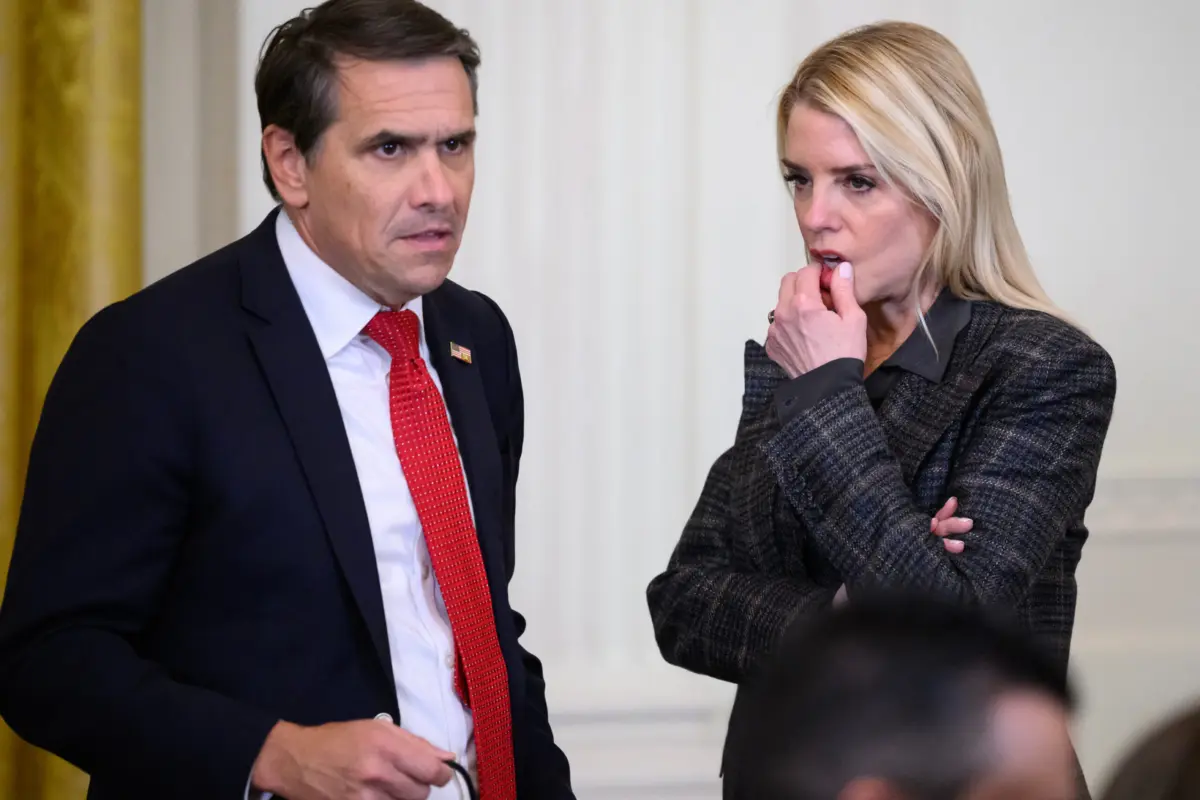
Alicia Jackson, the director of the Advanced Research Projects Agency for Health (ARPA-H), a federal agency tasked with funding high-risk, high-reward biomedical research, has been placed on administrative leave by the Department of Health and Human Services (HHS). This development follows an investigation by ProPublica revealing significant potential conflicts of interest stemming from Jackson’s substantial financial ties to the health technology sector, including a company directly benefiting from a recent HHS policy shift she publicly endorsed. The controversy centers on Jackson’s advocacy for the removal of "black box" warnings from hormone replacement therapies (HRT) while simultaneously holding considerable stock and options in Evernow, an online platform specializing in menopause care.
The administrative leave marks a critical juncture in an unfolding ethics inquiry that casts a shadow over a key federal health initiative and raises broader questions about financial transparency and accountability within the current administration. HHS confirmed Jackson’s leave in a statement to ProPublica, indicating an assessment of the facts before determining any change in her status, but declined to elaborate on the reasons or timing of the decision. This lack of transparency has further fueled concerns among ethics watchdogs regarding the integrity of federal policy-making and the management of public funds.
The Policy Shift and Jackson’s Public Endorsement
Last November, the Department of Health and Human Services announced a landmark decision to eliminate "black box" warnings on hormone replacement therapies. These warnings, the most stringent form of federal safety alert, had been in place for nearly two decades, largely stemming from the early 2000s Women’s Health Initiative (WHI) study. The WHI, a large-scale clinical trial, initially raised alarms about potential increased risks of breast cancer, heart disease, and stroke associated with HRT, leading to a significant decline in its prescription and fostering a widespread public stigma.
However, subsequent research and re-analysis of the WHI data, alongside new studies, have refined the understanding of HRT’s risks and benefits. Medical consensus has evolved to acknowledge HRT’s safety and efficacy for many women, particularly when initiated close to the onset of menopause for symptom relief and bone health, with risks varying based on individual factors, age, and duration of use. The FDA’s panel of experts had, in fact, recommended an end to the warning requirement months prior to Jackson’s arrival in government, signaling a scientific shift.
At a press conference commemorating the policy reversal, Alicia Jackson stood behind an HHS-emblazoned lectern, lauding the decision as a triumph for women and science. She emphatically stated, “Today we have the opportunity to add up to a decade of healthy years to the life of every woman that you love. The science is clear: Hormone therapy is safe and effective. And it is hugely beneficial to the vast majority of women.” Her powerful endorsement aimed to dismantle the long-standing stigma, opening the door for broader acceptance and utilization of HRT.
Financial Ties and Ethics Alarms
What remained less clear during her public remarks were the direct financial implications the policy change could have for Jackson. Disclosure records obtained by ProPublica reveal that Jackson is the founder and former chief executive of Evernow, an online telehealth platform dedicated to connecting women with medical experts for menopause symptom treatment. Despite her transition to federal service last year, Jackson retained at least $115,000 in Evernow stock and an undisclosed amount of stock options.
Ethics experts were quick to label Jackson’s official endorsement of the warning removal as "alarming" and an "obvious conflict of interest." Federal law, specifically 18 U.S.C. § 208, prohibits government employees from participating "personally and substantially" in matters that could influence their personal financial interests. This prohibition extends beyond direct decision-making to include public statements made in an official capacity, such as those delivered at a press conference or in a news release.
Virginia Canter, an ethics lawyer with extensive experience across multiple presidential administrations, articulated the core concern: “We should care because her company is apparently intending to profit off this change in policy that she endorsed as a government official while still retaining a financial interest in the company. I say it puts her within the zone of a potential violation.” The direct alignment between Jackson’s public advocacy and Evernow’s business model, particularly its focus on increasing access to menopause treatments, raises serious questions about whether personal gain influenced her official actions.
Months after the removal of the black box warnings, Evernow launched a significant nationwide expansion, further underscoring the potential for the policy shift to boost its market reach and profitability. The company’s business model, which offers both one-time treatments and membership-based care, is poised to benefit from reduced regulatory hurdles and increased patient confidence in HRT. Evernow’s website even lists celebrity angel investors like Gwyneth Paltrow, Cameron Diaz, Demi Moore, and Drew Barrymore, indicating its ambitious market strategy.

Uncertified Disclosures and Unanswered Questions
Federal law mandates that agency officials, including ARPA-H directors, submit financial disclosure forms for certification of compliance with ethics laws. However, Jackson’s two financial disclosures, filed in October of last year and two months ago, remain uncertified. This lack of certification is a red flag for ethics offices, often prompting requests for investigation by an inspector general if compliance cannot be confirmed.
ProPublica’s extensive attempts over two months to seek comment from Jackson and HHS on her investments and ethics records went unanswered. The generic statement from HHS confirming her administrative leave did not address specific questions about the reasons for the leave, its timing, or whether an inspector general investigation is underway. This silence compounds concerns about transparency and accountability.
Further complicating the situation, Bloomberg Law reported on a draft memo from one of ARPA-H’s senior officials that proposed granting Jackson a conflict waiver for many of her and her husband’s extensive investments. The memo acknowledged that since joining ARPA-H, Jackson’s financial ties necessitated her recusal from "a significant portion" of her duties, including discussions about agency funding. The draft waiver listed 30 investments that, if approved, would have allowed Jackson to participate in decisions affecting those interests. Notably, Evernow was not among the listed investments. Moreover, the Office of Government Ethics does not publicly list Jackson as having received any such waiver, leaving its status ambiguous.
Bloomberg also reported that two firms with ties to Jackson had sought ARPA-H funding. Whether these firms received funding or if the waiver was ultimately granted remains undisclosed by HHS, despite repeated inquiries.
A Multimillion-Dollar Portfolio and Broader Conflicts
Jackson’s financial interests extend beyond Evernow, forming part of a multimillion-dollar portfolio she holds with her husband, Alex Jacobson, a venture capitalist. This extensive portfolio poses numerous potential conflicts with her role overseeing ARPA-H’s substantial $1.5 billion budget and its mission to spur biomedical innovation.
Her government biography and LinkedIn profile detail a career spanning technological research, government service, and entrepreneurship. After earning a doctorate in materials science from MIT in 2007, she served as a U.S. Senate policy staffer before joining the Pentagon’s Defense Advanced Research Projects Agency (DARPA), eventually becoming deputy director of its first biotechnology office. She left the Defense Department in 2015 to lead several biotech businesses before founding Evernow in 2019.
In her financial disclosures, Jackson reported owning Evernow stock valued between $115,002 and $300,000, along with stock options whose value was deemed "not readily ascertainable." In a statement, Evernow claimed Jackson no longer holds a financial interest in the company, a assertion that contradicts her most recent federal financial reports and warrants further scrutiny.
Beyond Evernow, Jackson’s disclosures list investments in Gameto Inc., a Texas-based biotechnology company that received a two-year, $10 million award from ARPA-H to develop ovarian treatments aimed at preventing menopause-related diseases. While this award predated Jackson’s directorship, her office’s oversight of Gameto’s project coincided with an increase in the reported value of her Gameto stock, from $15,000-$50,000 in her October 2025 disclosure to $50,001-$100,000 in her August filing. The precise reasons for this value increase are unclear.
Furthermore, Jackson owns shares in over 60 venture capital and private equity funds, whose underlying holdings she claims are not disclosed to investors. These include at least 13 funds managed by 137 Ventures, a firm co-founded by her husband, Alex Jacobson. 137 Ventures invests across diverse sectors, including healthcare, digital health, and medical device companies, areas directly relevant to ARPA-H’s mandate. Federal appointees are required to list their spouses’ employment, yet Jackson’s public disclosures have omitted her husband’s role at 137 Ventures.
Ethics experts contend that such undisclosed fund holdings represent a serious conflict of interest, especially if any of the underlying businesses receive grants or contracts from her agency. To mitigate such risks, federal agencies typically require employees to either identify the contents of these funds or divest from them if anonymity is insisted upon. Ten months into her role at HHS, Jackson retained these funds with their underlying investments still undisclosed, according to her August financial statement. Kedric Payne, Vice President, General Counsel, and Senior Director for Ethics at the Campaign Legal Center, criticized this lack of disclosure, suggesting it "may be hiding their conflicts of interest from the public, and there is no ethics enforcement to stop it."

The disclosures also reveal that Jackson’s husband holds between $5 million and $25 million worth of stock in Palantir Technologies. Palantir had a $19 million contract with ARPA-H when Jackson became director, using its software and AI technology to build and improve the agency’s data infrastructure. In June, ARPA-H extended Palantir’s contract by a year, a renewal worth up to $13.7 million. The draft waiver obtained by Bloomberg would have allowed Jackson to participate in decisions affecting Palantir and Gameto, among others, but stipulated compliance with an ethics agreement whose discussions were reportedly ongoing six months into her tenure. HHS has not confirmed if Jackson recused herself from Palantir’s contract or if an ethics agreement has been finalized and produced in response to Freedom of Information Act requests.
A Pattern of Ethics Concerns Across the Trump Administration
Jackson’s situation is not an isolated incident but rather highlights broader systemic challenges within the Trump administration regarding financial ethics and government transparency. ProPublica’s "Trump Team Financials" database, a searchable tool launched in March, has continually exposed potential conflicts across various federal agencies.
Health Secretary Robert F. Kennedy Jr., Jackson’s ultimate superior, has also faced scrutiny. His latest financial disclosure shows his wife’s media company, Youngster Productions Inc., received $210,000 in consulting fees from MAHA Action, a nonprofit promoting Kennedy’s "Make America Healthy Again" agenda. Hines has actively advocated for MAHA Action, and the group has claimed credit for HHS policy actions. The Campaign Legal Center has called for an HHS inspector general investigation into whether Kennedy used his office to benefit his wife. Kennedy also received over $270,000 in gifts from allies bolstering MAHA. While HHS denies wrongdoing, Kennedy’s administration oversaw a nearly 30% reduction in HHS’s full-time ethics workers, according to the Campaign Legal Center.
Another HHS official, former top attorney Mike Stuart, was reassigned after a Washington Sun investigation revealed he invested in a company doing business with the department and repurchased stock in other businesses he was required to sell. The Office of Government Ethics refused to certify Stuart’s annual disclosure due to "continued non-compliance" with his ethics agreement.
Beyond HHS, similar concerns have emerged at other high levels. ProPublica reported in December that over 200 Trump appointees, including those overseeing or influencing crypto regulation, collectively owned between $175 million and $340 million in cryptocurrency investments. Todd Blanche, Trump’s former criminal defense attorney and now Attorney General, owned at least $159,000 in crypto-related assets last year. While serving as the Justice Department’s second-highest official, he shut down investigations into crypto companies and exchanges. Despite Democratic accusations of a "glaring conflict of interest," the Justice Department stated his action was "appropriately flagged, addressed and cleared in advance," and the Office of Government Ethics noted the inspector general "declined further action."
Other disclosures have shown senior executive branch officials, such as former Attorney General Pam Bondi, engaging in well-timed securities trades, selling stocks just before markets plunged due to new tariffs announced by Trump. Additionally, Federal Communications Commission officials accepted pricey gifts from Paramount, including tickets worth up to $125,000 each for the Kennedy Center honors gala, while the media giant sought FCC approval for significant mergers. The FCC stated that agency ethics officers approved attendance as consistent with ethics law.
The integrity of federal ethics oversight itself has come under pressure. The Campaign Legal Center’s analysis highlighted a significant decline in federal ethics staff, with 274 fewer full-time ethics officials by the end of 2025. This reduction reportedly hampered ethics officers’ ability to conduct training and monitor employee compliance. Moreover, Trump appointees failed to file nearly 420 legally mandated public financial disclosure reports last year, a nearly fourfold increase compared to the previous administration.
Implications for Public Trust and Accountability
The unfolding situation with Alicia Jackson and the broader pattern of ethics concerns across the Trump administration underscore fundamental questions about public trust, governmental transparency, and the integrity of policy-making. When officials are perceived to benefit financially from decisions made in their public capacity, it erodes confidence in the impartiality and objectivity of federal agencies.
ARPA-H, as a nascent agency with a crucial mission to accelerate biomedical innovation, relies heavily on public and scientific trust. Allegations of conflicts of interest involving its director could jeopardize its credibility and hinder its ability to attract top talent and secure continued funding for vital research.
The continued administrative leave for Jackson, the uncertified financial disclosures, and the lack of specific answers from HHS indicate an ongoing internal investigation. The outcomes of this probe, and whether it leads to further action by the inspector general, will be closely watched by ethics watchdogs and the public. As the ProPublica database continues to provide unprecedented insight into the financial dealings of federal appointees, the demand for robust ethics enforcement and unwavering transparency remains paramount to ensure that government decisions truly prioritize the public good over personal financial gain.




 Nila Kartika Wati

 Eva Lovia

 Lina Irawan

 Ana Megawati

 Joko Widodo
