
 Yuyun Lusiyani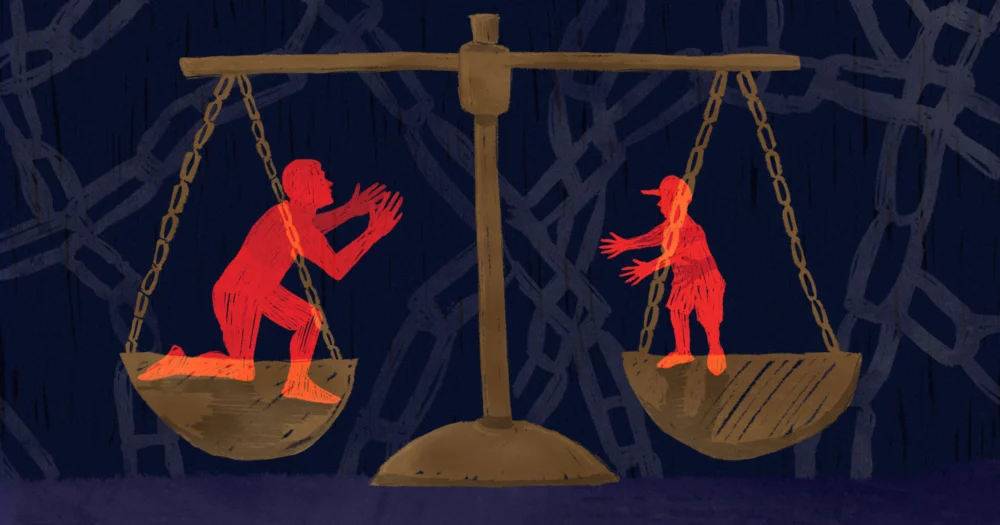
A landmark federal appeals court case in California is poised to redefine the landscape of immigration enforcement, potentially allowing for the deportation of non-citizen parents based on minor, non-harmful instances of child neglect. At the heart of this legal battle is Sotero Mendoza-Rivera, an undocumented farmworker, whose decade-and-a-half-old misdemeanor conviction for leaving his toddlers unattended for a mere half-hour to buy pajamas is now being wielded by the Trump administration as grounds for immediate removal from the United States. This case, currently before the 9th U.S. Circuit Court of Appeals, carries sweeping implications for both the nation’s immigration and child welfare systems, raising profound questions about proportionality, parental rights, and the interpretation of criminal intent in deportation proceedings. A ruling is anticipated in the coming months, which could set a powerful precedent for thousands of immigrant families across the country.
The Case in Focus: Sotero Mendoza-Rivera
A Fateful Decision in McMinnville
The incident that triggered this high-stakes legal drama occurred in 2010 in McMinnville, Oregon. Sotero Mendoza-Rivera, who had immigrated from Mexico ten years prior and established roots as a farmworker, made a decision with his girlfriend, Angelica Ortega-Vasquez, that would echo through their lives for years to come. According to a police report, the couple drove to a local Walmart, a seven-minute drive from their apartment, to purchase pajamas for their children, along with motor oil and brake fluid for their vehicle. They left their two young children, a 2-year-old son and a 3-year-old daughter, asleep in their beds at home. The duration of their absence was approximately thirty minutes.
Upon their return, a startling discovery awaited them. Their 2-year-old son had woken up, managed to get out of the apartment, and was found by a bystander by the street outside the complex, baby bottle in hand. The bystander promptly called the police. The responding officer, after assessing the situation, issued Mendoza-Rivera and Ortega-Vasquez a misdemeanor citation for child neglect. Crucially, the officer’s report noted that both children were healthy and clean, the apartment was well-kept and adequately stocked with food, and a neighbor attested that the mother was usually home with the children. The couple resolved the citation with a guilty plea, a fine, and a period of probation. There was no evidence of physical harm, abuse, or chronic neglect.
The Long Road Through the Courts
Despite the minor nature of the offense and the absence of actual harm, the Obama administration initiated deportation proceedings against Mendoza-Rivera shortly after the incident. However, unlike the current situation, he was not detained, allowing him to remain with his family and continue his work. Mendoza-Rivera appealed the deportation order, and his case began its slow, arduous journey through the complex legal system. It eventually encountered a significant backlog at the 9th U.S. Circuit Court of Appeals, a common occurrence for immigration matters, where some cases from nearly a decade ago are still awaiting resolution.
The relative dormancy of the case changed dramatically in August of the current year. Amidst the Trump administration’s renewed and intensified campaign of mass deportations, Immigration and Customs Enforcement (ICE) detained Mendoza-Rivera. He was subsequently locked up in a detention center in Tacoma, Washington, far from his family and the community he had called home for nearly a quarter-century. This detention marked a stark shift in approach, signaling the administration’s intent to aggressively pursue his removal.
The Trump Administration’s Stance and Legal Arguments
Redefining "Child Neglect" for Deportation
The Department of Justice (DOJ), under the Trump administration, is now arguing before a panel of the 9th Circuit in Pasadena, California, that Mendoza-Rivera’s 2010 misdemeanor conviction for child neglect is a "crime of child neglect" deserving of immediate removal from the country. The administration’s legal position is unequivocal: it asserts that even if no harm to the children occurred, an immigrant parent should still face deportation if their parenting decision involved a "substantial deviation" from a "normal" standard of care for children. This interpretation seeks to broaden the definition of deportable offenses, particularly those related to child welfare, beyond what many legal experts and advocates believe was the original intent of Congress.
A key aspect of the DOJ’s argument revolves around the concept of "negligence." During a 9th Circuit hearing in January, Justice Department lawyer Imran Zaidi acknowledged that the Oregon misdemeanor negligence statute under which Mendoza-Rivera was convicted does not require proving intent to harm a child, actual harm, or even exposure to harm. Nevertheless, Zaidi contended that negligence itself constitutes a "culpable mental state" meriting deportation, arguing it signifies a disregard for potential consequences "incompatible with a proper regard for consequences."
Judicial Scrutiny and Divergent Interpretations
The DOJ’s argument faced sharp questioning from Jed Rakoff, a New York federal district judge serving as a visiting member of the 9th Circuit panel. Judge Rakoff drew a distinction between negligence and recklessness, pointing out that negligence, by definition, is often unconscious, a mere lapse in judgment. Recklessness, on the other hand, involves consciously disregarding potential harm, a more serious act. He suggested that applying a strict interpretation of "child neglect" from a 1996 immigration law to minor, non-harmful acts of negligence would be a significant overreach. Rakoff questioned what Congress truly meant by "crime" in the context of the 1996 law’s provision for "a crime of child abuse, child neglect, or child abandonment," implying that lawmakers surely intended something more serious than briefly leaving children unattended, given the severe consequence of deportation.
Despite Rakoff’s skepticism, the other two judges on the panel appeared more receptive to the Justice Department’s interpretation. This split in judicial opinion underscores the complexity and the contentious nature of the legal question at hand: whether minor, often non-harmful parental "crimes" as defined by increasingly broad state child welfare statutes should be equated with the severe criminal acts Congress intended to target for deportation when it passed the Illegal Immigration Reform and Immigrant Responsibility Act (IIRIRA) in 1996.
Broader Implications for Immigrant Families and Child Welfare
A Looming Threat to Thousands of Parents
Child welfare officials and experts across the nation have expressed deep concern over the implications of this case. Richard Wexler, executive director of the National Coalition for Child Protection Reform, an advocacy group, articulated this apprehension, stating, "Imagine what a weapon it would be in ICE’s hands if child welfare is added to all the other areas where a conviction for the most minor offense means deportation." If the Trump administration’s legal team prevails, thousands of immigrant parents could become vulnerable to deportation for minor involvement in the juvenile court system – a new and potentially vast front in the administration’s deportation agenda.
While exact numbers are difficult to ascertain, ProPublica has previously reported that millions of parents are accused of child neglect annually in the U.S. Many of these accusations stem from factors related to poverty, such as a lack of affordable childcare or insufficient food, rather than physical or sexual abuse. Immigrant parents are statistically no more likely than U.S.-born parents to abuse children. However, undocumented parents may face a higher likelihood of being accused of certain low-level forms of neglect due to systemic factors. For instance, their fear of interacting with officials at schools or hospitals due to their legal status can lead to allegations of neglecting their children’s health or education. Moreover, many immigrant parents disproportionately work long and unpredictable hours, sometimes relying on older children to care for younger siblings, a practice that can be deemed inadequate supervision under U.S. child welfare standards. Differing cultural norms regarding parental supervision also play a significant role, often clashing with prevailing American middle-class standards.
Disparities in Child Welfare Allegations
The evolution of societal norms around what constitutes "bad" or even "criminal" parenting has significantly expanded over the past three decades. Many parenting practices considered normal for much of the 20th century are now investigated and prosecuted as child maltreatment in various states. Examples include allowing children to play at a park or walk home alone, which can be deemed "neglect," particularly if the family is poor or a person of color. Other instances include briefly leaving children in car seats with windows cracked and the car alarm on while running into a store for diapers, or failing to secure bedroom windows adequately at night. These actions, often born of momentary lapses in judgment or economic necessity, are increasingly scrutinized and penalized, creating a trap for vulnerable families. For Black families in Phoenix, for example, child welfare investigations can be a constant threat, illustrating the disproportionate impact of these policies on marginalized communities.
The Data Sharing Dilemma
The "Gold Mine" of Child Welfare Data
The potential for the Trump administration to leverage child welfare data for deportation purposes is another significant concern. While there is no current evidence that ICE has actively sought out these specific types of cases to identify parents for deportation, the infrastructure for such an effort exists. States annually report data on specific child welfare cases to the federal government through the National Child Abuse and Neglect Data System (NCANDS). Although this data contains identifiers for children, not their names, state agencies possess the full records. Andy Barclay, a seasoned child welfare statistician, warned that the "million or so reports in NCANDS would be a gold mine" for key Trump administration figures like Homeland Security Secretary Kristi Noem and top adviser Stephen Miller, should they choose to weaponize it.
Jerry Milner, who served as head of the federal Children’s Bureau and oversaw the U.S. child welfare system from 2017 to 2021 during the first Trump administration, stated that he "never had any of those discussions around the data" concerning its use for deportations. He added, "I can’t guarantee that others did not, but they never made it to me." However, Milner cautioned that "things are different now," expressing strong concerns if "any of the data are used for purposes other than what they were intended for."
Erosion of Data Privacy and Trust
Concerns about data privacy and inter-agency sharing are not new. Reports indicate that Medicaid data, which often contains more identifying information on families, is reportedly being shared with the Department of Homeland Security (DHS). Furthermore, DHS has previously accessed Office of Refugee Resettlement (ORR) data on migrant children, which can be used to pinpoint the locations of young people and the (sometimes undocumented) adults caring for them. Instances where DHS and FBI agents have visited migrant children at their caretakers’ homes, ostensibly for "welfare checks," further fuel fears that sensitive personal data is being repurposed for immigration enforcement, eroding trust between immigrant communities and public service agencies.
Legal Precedent and Historical Context
The 1996 Immigration Act: A Law Reinterpreted
A significant part of the Trump administration’s legal strategy hinges on the Illegal Immigration Reform and Immigrant Responsibility Act (IIRIRA) of 1996. This Bill Clinton-era legislation overhauled immigration enforcement, stipulating that noncitizens, including lawful permanent residents, must be expeditiously deported if convicted of certain offenses. These offenses include aggravated felonies, crimes of "moral turpitude," drug crimes, domestic violence, or a "crime of child abuse, child neglect, or child abandonment." The original motivation behind including such language was clear: amidst the violent crime wave of the 1990s, Senator Bob Dole, a co-author of the law, stated on the Senate floor that the deportable crimes he envisioned included "vicious acts of stalking, child abuse and sexual abuse." The legislative intent was to target serious, violent offenses that posed a clear threat to public safety.
However, the current administration’s interpretation seeks to stretch this definition to encompass minor acts of negligence, a significant departure from the original spirit of the law. While the Obama and Biden administrations generally adopted similar legal positions on this point, they exercised discretion, often choosing not to pursue deportation aggressively in cases involving minor offenses. David Zimmer, Mendoza-Rivera’s appellate attorney, noted, "There was some discretion being exercised. So it was at least possible, in a given case, that they might have decided not to pursue removal if the parent hadn’t done anything meaningfully wrong." Zimmer lamented that such discretion is "no longer the case in a regime that is seeking any reason to expel an immigrant."
Evolving Definitions of Parental Responsibility
The legal battle also highlights the vast divergence between the legislative intent of a 1990s crime bill and the modern, often expansive, definitions of child neglect in state juvenile courts. The fundamental question before the appeals court is whether these essentially harmless parental "crimes," as alleged by increasingly hands-on local child welfare authorities, fall into the same category of serious offenses that the U.S. Congress had in mind when crafting a law to address violent crime, domestic violence, and terrorism.
Some prior court rulings have blocked deportations for individuals with similar alleged parenting lapses, while the federal Board of Immigration Appeals has provided inconsistent guidance on the issue. Immigration advocates fear that the current appeals court proceeding, which consolidates several similar cases including Mendoza-Rivera’s, could establish a highly influential precedent across the legal system, with significantly higher stakes given the current administration’s aggressive enforcement focus.
Official Responses and Legal Defense
The White House declined to answer questions for this article, and the Department of Homeland Security did not respond to requests for comment. A Justice Department spokesperson, in an email, accused the Biden administration of allowing Mendoza-Rivera’s case to languish. The spokesperson affirmed the Trump administration’s commitment to "making America safe again," stating that the Attorney General "will continue to defend efforts to remove criminal illegal aliens, especially those convicted of offenses which place children in situations likely to endanger their health or welfare." This statement reinforces the administration’s hardline stance, even for minor offenses.
Mendoza-Rivera’s legal team, and advocates for immigrant families, argue that the core issue lies in the question of intent. If a parent neither intended to harm their child nor was consciously aware they might cause harm, they contend it should not qualify as a "crime" worthy of deportation. This perspective aligns with Judge Rakoff’s earlier distinction between negligence and recklessness, emphasizing that negligence often represents a small deviation from a subjective "reasonable person’s" standard of parenting, rather than a deliberate act of endangerment.
Josh Gupta-Kagan, founder and director of the Columbia Law School Family Defense Clinic, observed that Mendoza-Rivera and Ortega-Vasquez "were not a safety threat to their children, let alone to anyone else," even if they showed poor judgment. He questioned how pursuing their deportation serves the Trump administration’s "stated interest in public safety."
The Personal Toll and Uncertain Future
For Sotero Mendoza-Rivera and his family, the legal proceedings represent a profound personal crisis. McMinnville, Oregon, is where he has lived for nearly a quarter-century, where he worked tirelessly picking and packaging produce, and where he and Ortega-Vasquez raised their two children, who are now teenagers and American citizens. These children are eligible for "cancellation of removal," a form of legal relief that has historically been available to undocumented parents who have been in the U.S. for ten or more years, possess "good moral character," and whose deportation would cause extreme hardship to their U.S. citizen children. The Trump administration’s view, however, seeks to make even minor parental negligence convictions a barrier to this relief.
Mendoza-Rivera has been detained for months in Tacoma, Washington, far from his family, who have consequently lost a significant portion of their income. His U.S. citizen children are now without their father, facing an uncertain future. If the Trump administration successfully reinterprets a law originally intended to protect children to instead punish minor parental missteps, these children stand to lose their dad to a foreign country for good, disrupting their lives and potentially causing irreversible hardship. The outcome of this case will not only determine the fate of Sotero Mendoza-Rivera but will also cast a long shadow over immigrant families nationwide, fundamentally altering the calculus of child welfare and immigration enforcement for years to come.



 Joko Widodo
 Eva Lovia
 Pevita Pearce
 admin
admin
 Lina Irawan