
 Yuyun Lusiyani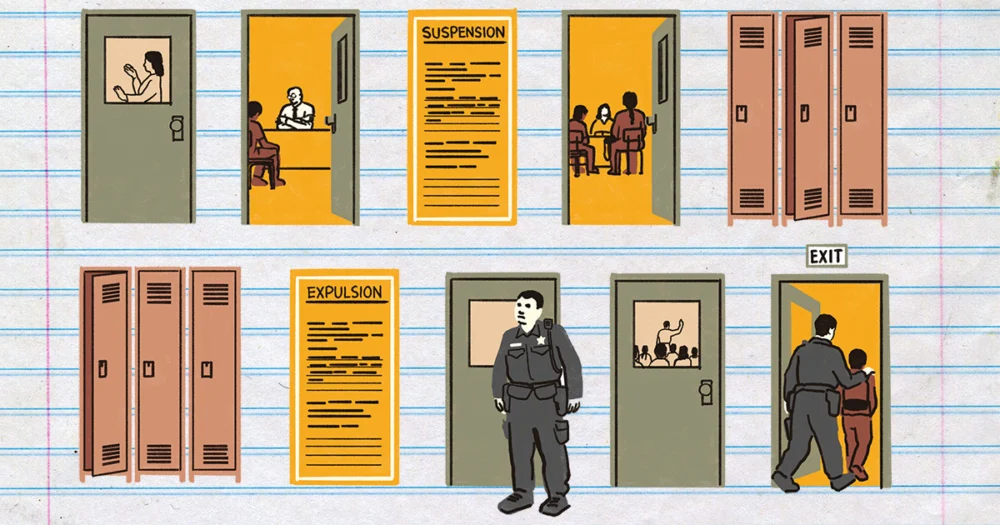
A comprehensive 25-page report released last week by the Navajo Nation Human Rights Commission (NNHRC) has brought to light allegations of pervasive discrimination and a deeply entrenched climate of fear experienced by Navajo students within one of New Mexico’s largest school districts, Gallup-McKinley County School District (GMCSD). The findings, which draw heavily on emotional testimony from parents and community members, assert that the district’s practices are detrimental to its significant Indigenous student population and are rooted in institutional racism and the lingering effects of colonization.
The NNHRC’s report serves as a stark call to action, urging the New Mexico Attorney General’s office to publicly release the full findings of its own two-and-a-half-year investigation into the district’s disciplinary policies, which disproportionately affect Indigenous students. This urgent request comes amidst revelations that the Attorney General’s office has concluded its investigation, identifying "troubling disciplinary practices" within GMCSD.
The Commission’s Urgent Findings and Recommendations
The Navajo Nation Human Rights Commission, an independent agency tasked with protecting and promoting human rights within the Navajo Nation, conducted four public hearings in September and October of the previous year. These hearings were held in various Navajo Nation communities situated within the vast geographical expanse of the Gallup-McKinley County School District, providing a direct platform for affected individuals to share their experiences.
Parents, students, and community members bravely stepped forward to offer harrowing testimonies, painting a picture of systemic neglect and prejudice. Accounts included instances of overly harsh discipline, significant language barriers that impede effective communication and learning, discriminatory hiring practices that fail to adequately represent the Indigenous community, inadequacies in special education plans, and even basic issues such as insufficient heating systems in classrooms. A particularly concerning aspect highlighted by Wendy Greyeyes, chair of the commission and an associate professor of Native American studies at the University of New Mexico, was the "pervasive fear of retaliation." She recounted witnessing witnesses cry during hearings, afraid their words would reach district officials, and noted that many parents testified on behalf of children too intimidated to speak for themselves. The transcripts of these powerful testimonies have not been publicly released, underscoring the sensitivity and fear surrounding the issue.
Among its key recommendations, the NNHRC report advocates for a formal agreement between the Navajo Nation and GMCSD. This agreement would mandate the district’s adoption of a discipline policy grounded in restorative justice principles. Restorative justice is an approach that prioritizes repairing harm and rebuilding relationships within the school community, rather than solely focusing on punitive measures. Greyeyes suggested that such a policy could draw inspiration from successful existing models, such as talking-circles programs implemented in New Mexico’s Cuba Independent School District and the STAR School located east of Flagstaff, Arizona, on the Navajo Nation.
Furthermore, the commission recommends a comprehensive state financial audit of the district’s spending, specifically scrutinizing expenditures allocated for Native education in comparison to those for other student populations. This audit aims to ensure equitable resource distribution. The report also calls for the New Mexico Public Education Department (PED) to significantly improve its management and tracking of student discipline data across all districts, thereby enhancing oversight and accountability.
A History of Disparity: The Attorney General’s Investigation and Prior Reporting
The NNHRC’s report is not an isolated indictment but builds upon a growing body of evidence and concerns regarding GMCSD’s treatment of its Indigenous students. It explicitly cites a December 2022 investigation published by New Mexico In Depth and ProPublica. That groundbreaking investigative series revealed that Indigenous students across New Mexico faced harsher disciplinary actions than their non-Indigenous peers during the four-year period ending in 2020. Crucially, an in-depth analysis of statewide student discipline records concluded that the Gallup-McKinley district was overwhelmingly responsible for this stark disparity. GMCSD holds the unique distinction of having the largest Indigenous student body of any local school district in the United States, making its practices particularly impactful on the Native American educational landscape.
Following these alarming revelations, New Mexico Attorney General Raúl Torrez initiated an official investigation into the district’s disciplinary practices in 2023. This past Wednesday, Lauren Rodriguez, chief of staff for Attorney General Torrez, confirmed that the office’s extensive investigation had concluded. While specific findings were not immediately released, Rodriguez stated that the probe uncovered "troubling disciplinary practices." She emphasized that the "exhaustive" investigation highlights the critical need for the state Public Education Department to enforce student discipline data reporting requirements more rigorously and to enhance the tracking of this vital information. This echoes previous statements by former longtime GMCSD Superintendent Mike Hyatt, who, while downplaying the extent of discipline received by Native students, had previously pointed to poor data collection as an issue. The NNHRC’s report, and the AG’s implicit findings, suggest that the issue goes far beyond mere data collection deficiencies.
Systemic Issues and a Climate of Fear
The testimonies gathered by the NNHRC underscore a deeply rooted systemic problem that extends beyond mere disciplinary statistics. The "pervasive fear of retaliation" described by Greyeyes is indicative of a breakdown in trust between the school district and the Navajo communities it serves. When parents and students are afraid to voice concerns, it creates an environment where grievances fester, and systemic issues remain unaddressed. This fear can significantly impact a student’s educational experience, their mental well-being, and their willingness to engage with school authorities.
The specific issues raised at the hearings – language barriers, discriminatory hiring, special education failures, and inadequate facilities – all point to a district that, despite its significant Indigenous student population, may not be adequately serving their unique cultural and educational needs. Language barriers, for instance, can isolate students and parents who primarily speak Navajo, hindering their ability to understand school policies, participate in parent-teacher conferences, or access necessary support services. Discriminatory hiring practices can lead to a lack of Indigenous teachers and administrators who could serve as vital role models and cultural liaisons, further alienating students. Inadequate special education plans can deny vulnerable students the tailored support they require, exacerbating existing learning challenges. Even basic facility issues, such as lack of heating, create an uncomfortable and potentially unhealthy learning environment, disproportionately affecting communities that often have fewer resources.
Legal Labyrinth: The Quest for Civil Rights Authority
Despite the "troubling disciplinary practices" identified, the New Mexico Attorney General’s office has indicated a significant hurdle: it is "not clear under state law that the office can pursue formal legal action against the district for this particular conduct." This lack of explicit legal clarity underpins Attorney General Torrez’s persistent advocacy for comprehensive state civil rights legislation since 2023.
Under the existing New Mexico Civil Rights Act, private individuals are empowered to sue public bodies for violations of the state constitution. However, the law does not explicitly grant the Attorney General the authority to investigate and prosecute public bodies for systemic inequities, a power that is routinely exercised by the federal Department of Justice. In 2023, New Mexico lawmakers attempted to bridge this gap by passing a bill that would have provided the Attorney General with broad authority to investigate state or local agencies for civil rights violations. The bipartisan support for this legislation highlighted a widespread recognition of the need for stronger state-level enforcement.
However, Governor Michelle Lujan Grisham ultimately killed the bill with a pocket veto. While she did not issue a formal statement, her office indicated at the time that the bill, though "well-intentioned," would "create confusion" and that "much of the work outlined in the legislation can be undertaken by the AG regardless of whether or not the bill is signed." Attorney General Torrez, while acknowledging his office’s implied authority to pursue such cases, had previously told New Mexico In Depth that enshrining this power in law would have made it "crystal clear," providing a more robust and unambiguous mandate. Torrez’s spokesperson has confirmed that the Attorney General remains committed to seeing such crucial legislation pass, underscoring the ongoing legal challenge in addressing systemic civil rights violations at the state level. This legislative stalemate directly impacts the ability of the state’s highest legal office to intervene decisively in cases like that of GMCSD.
Paths to Reform: Recommendations and Restorative Justice
The NNHRC’s recommendations offer concrete pathways towards reform, moving beyond mere identification of problems to proposing actionable solutions. The emphasis on restorative justice is particularly significant. Unlike traditional punitive models that often lead to suspensions and expulsions, thereby disconnecting students from their education, restorative justice aims to keep students in school by addressing the root causes of misbehavior, facilitating dialogue between affected parties, and fostering a sense of community responsibility. This approach could be transformative for GMCSD, helping to mend the fractured trust and create a more inclusive and supportive learning environment.
The call for a comprehensive financial audit of the district’s spending on Native education is also critical. Transparency in financial allocations is essential to ensure that resources intended for Indigenous students are indeed reaching them and are being utilized effectively to address their specific needs. Such an audit could uncover discrepancies in funding that contribute to the disparities in educational outcomes and highlight areas where investment is urgently required. Coupled with improved data tracking by the Public Education Department, these measures would create a more accountable system, capable of identifying and rectifying inequities before they become deeply entrenched.
District’s Silence and Broader Context
The Gallup-McKinley County School District’s lack of response to requests for comment regarding the Navajo Nation Human Rights Commission report is noteworthy. This silence, as reported, could be interpreted in various ways, but it certainly does not alleviate the concerns raised by the NNHRC or the Attorney General’s office. Open communication and a willingness to engage with allegations are typically crucial steps in addressing such serious charges.
As Greyeyes aptly stated, the problems identified in the commission’s report are "rooted in colonization" and "institutional racism." This broader context is vital for understanding the depth and persistence of the issues. The history of education for Native American children in the United States is fraught with policies of forced assimilation, cultural suppression, and systemic neglect, from boarding schools designed to "kill the Indian, save the man" to underfunded public schools that continue to struggle with culturally relevant pedagogy and equitable resource distribution. The challenges faced by Navajo students in GMCSD are not isolated incidents but rather manifestations of this enduring legacy. The fact that some of these issues are "accepted sometimes even by our own Navajo people" speaks to the insidious nature of systemic racism, where inequalities can become normalized over generations.
Looking Forward
The reports from both the Navajo Nation Human Rights Commission and the New Mexico Attorney General’s office represent a critical juncture for the Gallup-McKinley County School District and for educational equity in New Mexico. The confluence of tribal advocacy, investigative journalism, and state legal scrutiny creates significant pressure for reform. The recommendations from the NNHRC, particularly the adoption of restorative justice and enhanced accountability mechanisms, offer a clear path forward.
However, the effectiveness of these recommendations hinges on the political will of state leadership and the proactive engagement of the school district itself. The legislative impasse regarding the Attorney General’s civil rights authority underscores a systemic challenge that extends beyond GMCSD, affecting the state’s capacity to address similar issues elsewhere. The ongoing conversation sparked by these reports must translate into tangible changes that dismantle discriminatory practices, foster a supportive and culturally responsive educational environment, and ultimately ensure that all Navajo students in New Mexico receive the equitable and high-quality education they deserve. The future of thousands of students depends on decisive action and a commitment to justice.


 Joko Widodo
 Eva Lovia
 Jia Lissa
 Pevita Pearce
 admin
admin