
 Ana Megawati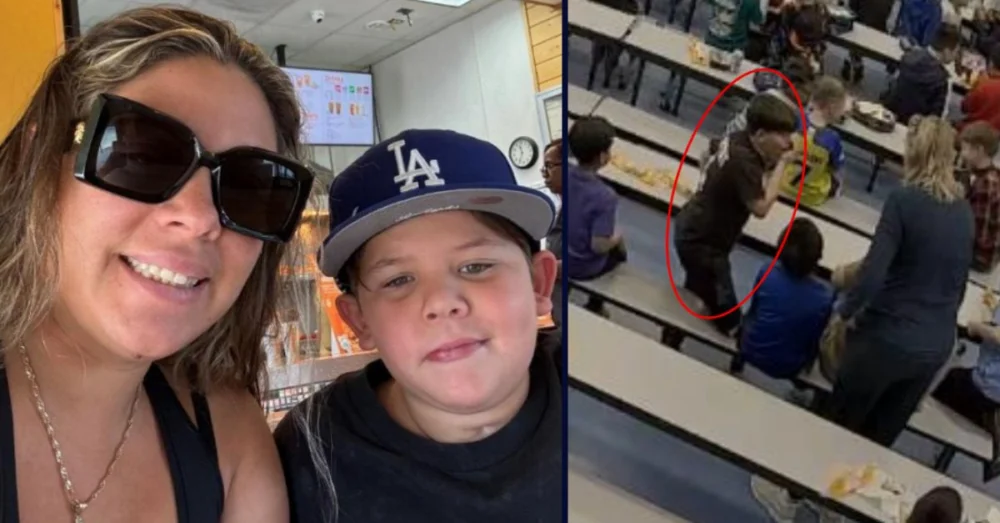
A devastating lawsuit has been filed against a Nevada school district by the mother of an 8-year-old boy who died after allegedly choking on a piece of pineapple during lunch, with the complaint asserting that school staff failed to provide timely intervention and instead directed the distressed child to an isolated bathroom. The incident, which occurred on February 25, 2025, at an elementary school within the Clark County School District (CCSD), has brought into sharp focus the critical importance of immediate emergency response protocols and the duty of care owed by educational institutions to their students.
A Tragic Lunchtime Event and Allegations of Negligence
The 26-page complaint, filed by Amanda Corbala, mother of Cruzito Tank Ruiz, and representatives for his estate, details a harrowing sequence of events that led to the young boy’s death on March 2, 2025. According to the lawsuit, Cruzito was eating lunch when a piece of pineapple became lodged in his airway. Surveillance footage, which is repeatedly referenced in the legal filing, purportedly shows Cruzito exhibiting clear signs of distress, including "signaling for help with his hands to his mouth and displaying obvious signs of physical distress."
The lawsuit alleges that despite Cruzito’s visible struggle, and another student informing an employee that Cruzito "was sick," the staff member failed to initiate life-saving measures or summon immediate assistance. Instead of performing CPR, contacting the school nurse, alerting other adult staff, or calling emergency services, the employee allegedly "directed and instructed the choking child to leave the populated cafeteria and proceed to an isolated area in the boys’ restroom." The filing further claims that the employee then "sent Cruzito to the bathroom [and] she ignored him," effectively removing him from a supervised area where help was readily available.
This alleged directive to isolate a choking child is a central pillar of the lawsuit, which contends that these choices "created and increased a mortal danger" to Cruzito and were inconsistent with "mandatory CPR" training that school employees are typically required to undergo. The plaintiffs argue that the employee’s decisions "stripped Cruzito of access to the adults and medical resources present in the lunchroom," highlighting that elementary school bathrooms are designed for children, not as isolated spaces for adult supervision or emergency care.
The Critical Window for Intervention: A Lost Opportunity
The lawsuit paints a grim picture of Cruzito’s final conscious moments. Following the employee’s directive, Cruzito reportedly walked into the boys’ restroom alone, continuing to choke. Approximately five minutes later, the school employee allegedly directed other staff members to the boy’s bathroom. By this time, however, the situation had escalated catastrophically. The complaint states that Cruzito had already "collapsed and turned blue" as he "suffered extreme conscious pain, terror, and air hunger while isolated in the restroom."
Other students ultimately notified staff of Cruzito’s condition, prompting other staff members to call 911. Emergency responders arrived, but the lawsuit asserts that by then, it was too late. While first responders attempted to use a defibrillator, Cruzito had flatlined and was in a "non-shockable rhythm." His mother, Amanda Corbala, reportedly witnessed medics performing CPR on her son as he was wheeled out on a stretcher, a moment described in the lawsuit as causing her to "shriek in terror." Cruzito was transferred to the hospital, where he tragically succumbed to his injuries on March 2, 2025, with the cause of death identified as "an anoxic brain injury secondary to cardiac arrest." Anoxic brain injury occurs when the brain is completely deprived of oxygen, leading to irreversible damage, often within minutes. Medical experts generally agree that brain damage can begin within four to six minutes of oxygen deprivation, underscoring the critical importance of immediate intervention in choking incidents.
Conflicting Accounts and Evidentiary Discrepancies
A key element of the lawsuit involves the conflicting statements allegedly provided by the school employee regarding the incident. The complaint states that the employee offered two separate written accounts. In the first statement, she claimed no recollection of releasing either boy for the bathroom and stated she "didn’t notice either in distress and neither mentioned any distress to me."
However, in a second written statement, the employee reportedly acknowledged that Cruzito was "not feeling well" and "had his cheeks puffed out a bit." This observation, she wrote, prompted her to begin to tell him to go to the bathroom, but she claims she cut that directive short, instead telling him to "go to the trash can not the bathroom and if needed someone will take you to Ms. Laura (Nurse’s office)." She then claimed she "went back to my class just 3-4 feet away."
The plaintiffs strongly dispute this second narrative, asserting it does not align with other evidence, including student reports and the surveillance footage. The lawsuit highlights that "students reported that Cruzito was choking at the table," and "students reported that Cruzito vomited at the table." Furthermore, the complaint notes that the employee "can be seen wiping up liquid and/or food from the area where Cruzito was sitting after she sent him to the bathroom," and crucially, "The direction [the employee] directed Cruzito was toward the bathroom." The lawsuit concludes that the employee’s actions constituted an "affirmative order ‘to leave the cafeteria and go to the bathroom,’ which ‘affirmatively separated him from adult supervision, [defibrillator] access, CPR, and trained staff during the critical window for intervention.’"

The Foreseeability of Harm and Legal Arguments
The lawsuit is premised on multiple theories of liability, including constitutional, statutory, and common law claims. The plaintiffs allege that the Clark County School District committed "an affirmative act" placing Cruzito in danger where injury was foreseeable, and then "acted with deliberate indifference" to that danger.
The legal filing explicitly states: "CRUZITO’s injury, asphyxiating to death because of airway obstruction, was foreseeable. It is a known and obvious consequence that isolating a child exhibiting signs of choking will prevent rescue and lead to hypoxia, cardiac arrest, and death." It further argues that "A reasonable school employee with [the employee’s] required training would have known that directing a choking child out of sight hampers access to emergency treatment. Alternatively, it is common knowledge that a choking person needs help, not to be isolated. Even [the employee] thought CRUZITO might need medical attention from the nurse."
The attorneys representing Amanda Corbala, Farhan R. Naqvi and Andre M. Lagomarsino, emphasized the profound grief of the family and their motivation for pursuing legal action. In a statement provided to Law&Crime, they stated, "Cruzito died at just 8 years old because a Clark County School District employee ordered him to go to the bathroom alone while he was choking at school. The family is heartbroken by the loss of their beloved Cruzito. His mother and family want to make sure it never happens again." The plaintiffs are seeking extensive damages.
Broader Context: Choking Incidents and School Safety Protocols
Choking is a significant public health concern, particularly among young children. According to data from the Centers for Disease Control and Prevention (CDC) and the National Safety Council, choking is a leading cause of unintentional injury death for children under the age of four, though it remains a risk throughout childhood. Food items, like the pineapple in Cruzito’s case, are common culprits, alongside small toys and other objects. The critical factor in survival and minimizing long-term damage from choking is swift and effective intervention.
Schools are entrusted with the care and safety of children during school hours, a responsibility that includes having robust emergency response plans for medical crises such as choking. These plans typically involve mandatory CPR and first-aid training for staff, clear communication protocols to summon immediate help (e.g., calling the school nurse, alerting administrators, or dialing 911), and ensuring that students are never left unsupervised or isolated when exhibiting signs of a medical emergency. The standard protocol for a choking child involves performing the Heimlich maneuver and, if the child becomes unresponsive, initiating CPR and calling emergency services. Any deviation from these established protocols can have severe, often fatal, consequences.
While the Clark County School District has not yet issued a public statement directly addressing the ongoing litigation, school districts typically maintain that student safety is their utmost priority and that staff receive training for emergency situations. In cases of active lawsuits, it is common practice for school districts to refrain from commenting on specific allegations to avoid prejudicing legal proceedings. However, the severity of the allegations in Cruzito’s case, particularly concerning the alleged directive to isolate a choking child, will likely prompt internal reviews and potentially lead to re-evaluation of emergency response training and supervision policies within the district and potentially beyond.
Implications for School Accountability and Future Policy
This tragic incident and subsequent lawsuit carry significant implications for school districts nationwide. It underscores the profound responsibility placed upon school staff to recognize and respond appropriately to medical emergencies. The alleged failure to act and the decision to isolate Cruzito, if proven, highlight potential gaps in training, oversight, or adherence to established safety protocols.
Beyond the immediate legal ramifications and potential financial damages, the case could serve as a powerful catalyst for re-examining and strengthening emergency response policies in schools. It prompts questions about the frequency and quality of CPR and first-aid training for all school personnel, the clarity of communication channels during emergencies, and the accountability mechanisms in place to ensure that these protocols are not only understood but strictly followed. The use of surveillance footage as a central piece of evidence also emphasizes the increasing role technology plays in accountability, providing an objective record of events that can corroborate or contradict witness statements.
For Amanda Corbala and Cruzito’s family, the lawsuit represents not only a quest for justice and accountability for the loss of their beloved son but also a fervent hope that such a preventable tragedy will never befall another child within the school system. The outcome of this case will undoubtedly be closely watched by parents, educators, and legal professionals, potentially influencing school safety standards and legal precedents regarding the duty of care in educational environments for years to come.

 Yuyun Lusiyani
 Joko Widodo
 Jia Lissa
 Pevita Pearce
 admin
admin
