
 Yuyun Lusiyani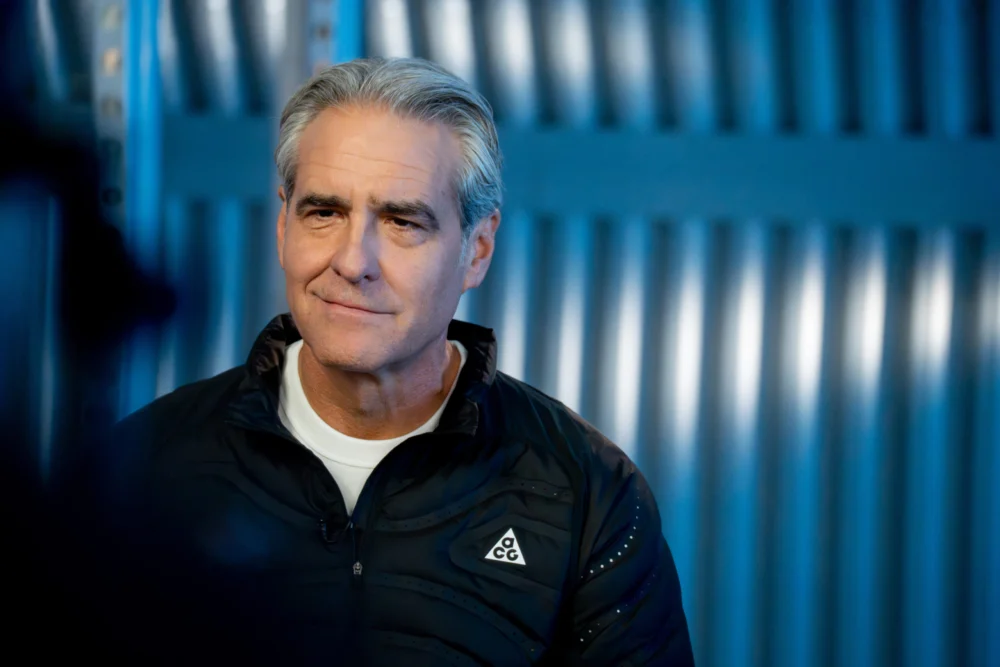
A recent investigation by ProPublica and The Oregonian/OregonLive has uncovered a significant divergence between Nike’s stated commitment to ensuring its global workforce earns a living wage and its operational strategies in Indonesia, one of its largest manufacturing hubs. The analysis reveals that over the past decade, the athletic apparel giant has dramatically expanded its manufacturing footprint in regions of Indonesia where minimum wages fall considerably short of estimated living expenses, while simultaneously reducing its presence in higher-wage areas. This strategic relocation, driven by a relentless pursuit of "operational efficiencies" and margin expansion, appears to contradict the company’s public pledges regarding worker welfare and has ignited concerns among labor advocates about a potential "race to the bottom" within the country’s labor market.
Nike, a global titan in athletic footwear and apparel, publicly asserts that the more than one million individuals worldwide who produce its products should be able to support their families, cover living expenses, and enjoy some discretionary income. The company maintains that if factory wages are insufficient, employers should implement plans to bridge the gap. However, the comprehensive investigation into Nike’s operations in Indonesia, a country where its suppliers employ 280,000 people and serve as the company’s second-largest production center, paints a different picture.
A Strategic Shift Towards Lower Wages
The core finding of the ProPublica and The Oregonian/OregonLive analysis centers on a pronounced geographic realignment of Nike’s Indonesian supply chain. Between 2015 and 2023, factories supplying Nike shed approximately 36,000 jobs in areas where the monthly minimum wage either met or closely approached an estimated living wage. These higher-wage regions, notably including the bustling capital of Jakarta, typically offer a minimum wage around $300 per month.
In stark contrast, over the same period, Nike’s supplier workforce surged by nearly 112,000 individuals in parts of Central and West Java. In these provinces, local minimum wages hover around $165 per month, a figure widely regarded as insufficient to meet basic living needs. Dozens of workers interviewed by the news organizations confirmed that their earnings rarely exceeded this minimum threshold, highlighting the tangible impact of this wage disparity on their daily lives.
This trend signifies a notable evolution in corporate strategies for labor cost reduction. While multinational corporations have historically sought out entirely new countries with lower labor costs, the current pattern observed with Nike in Indonesia demonstrates a shift within a country. Companies are now leveraging regional wage disparities to achieve substantial savings and bolster their profit margins, often at the expense of workers in more established industrial centers. Nurina Merdikawati, a lecturer in the Indonesia Project at Australian National University, succinctly articulated this phenomenon, stating, "If it’s very labor intensive, then you go where labor is cheapest. In Indonesia, that’s going to be Central Java." This internal migration of manufacturing has not been exclusive to Nike; local news reports indicate that other major brands have also increasingly relocated to Central Java and other low-wage regions of Indonesia in recent years.
The Human Cost: Layoffs and Insecurity
The ramifications of Nike’s strategic shift extend beyond wage stagnation, manifesting in significant job losses and heightened insecurity for workers in Indonesia’s higher-wage regions. In October 2023, Victory Chingluh, a long-standing Nike supplier situated near Jakarta, laid off more than 2,000 workers. This was followed by another round of job cuts in 2024, when Adis Dimension, another Nike shoe supplier in the vicinity, let go of approximately 1,500 employees, according to local media reports.
For the remaining workforce in these areas, a palpable fear of further job cuts looms large. Employees at Victory Chingluh shared with reporters their anxieties, revealing that the company is constructing a new factory in Cirebon, a city in West Java, where the minimum wage is a staggering 45% lower than in their current location. This development fuels suspicions that the layoffs are a prelude to a broader relocation. During previous layoff rounds, workers were often presented with a difficult choice: accept a severance package or risk losing everything if the factory eventually closed entirely. This fear is not unfounded. In 2018, Kahoindah Citragarment, another Nike supplier near Jakarta, abruptly shut down without paying its workers their full severance after Nike reportedly pulled its orders. An investigation by the Worker Rights Consortium (WRC) confirmed the lack of proper compensation, prompting labor advocates to argue for legally owed separation pay. Eventually, Hojeon, the factory’s South Korean parent company, agreed to pay workers $4.5 million, underscoring the precariousness of employment in a volatile supply chain.
Union leaders at Victory Chingluh, speaking anonymously due to fears of reprisal, disclosed in December that they anticipated an additional 5,000 layoffs at a facility that once employed around 15,000 people. Despite the ongoing job cuts, they have been informed that the new Cirebon factory, expected to be ready by 2027, is intended for "expansion." This contradictory messaging further exacerbates worker anxiety. Nike, in response to queries about the layoffs, stated that it works closely with suppliers to minimize disruptions and mandates that all statutory severance, social security, and other separation benefits are paid. The company also mentioned assembling working groups, including civil society, unions, and local governments, to ensure proper execution. However, Victory Chingluh declined to comment on the specific allegations.

The ‘Living Wage’ Promise Under Scrutiny
Nike’s public relations often suggest that workers in its foreign supply chain are well-compensated. The company specifically claims that employees at its strategic suppliers earn, on average, nearly double the local minimum wage. However, the ProPublica and The Oregonian/OregonLive investigation directly challenged this assertion in Indonesia. Across three regions, roughly 100 workers interviewed stated they earned either the minimum wage or only slightly more, nowhere near the "double minimum wage" figure touted by Nike.
Nike defended its global average figure, acknowledging natural variations. The company also shifted its emphasis, stating that the crucial metric isn’t merely how much suppliers pay relative to the minimum wage, but rather whether workers earn a living wage and if their employers are actively striving to reach that benchmark. While Nike doesn’t explicitly mandate a living wage, its code of conduct asserts that every worker "has a right to compensation for a regular work week that is sufficient to meet workers’ basic needs and provide some discretionary income." The company reported that two-thirds of its "key suppliers" (without specifying which ones) paid above living wage benchmarks in 2022.
However, critics like Jason Judd, executive director of the Global Labor Institute at Cornell University, view such pledges as inherently flexible and "almost meaningless." Judd argues that merely asking factories to "work toward" living wages, as Nike does, "could go on for 20 years, until you’ve found yet another lower-wage province." This observation resonates strongly with the documented geographic shift within Indonesia.
The WageIndicator Foundation, an independent Dutch nonprofit that calculates living wage estimates, supports this skepticism. Their estimates suggest a living wage in Central Java starts around $245 per month. Yet, in the very parts of the province where Nike suppliers are concentrated, the local minimum wage ranges only from $136 to $215. This significant gap forces many workers to take on additional jobs, such as selling fish or gasoline, or even covertly selling snacks inside factories, risking dismissal if caught, just to make ends meet. Wiranta Ginting, deputy international coordinator for the Asia Floor Wage Alliance, a prominent labor group, bluntly characterized the situation as fundamentally "about cost reduction and power."
Financial Pressures and Potential Savings
The strategic relocation to lower-wage regions is deeply intertwined with Nike’s broader financial landscape. The company, which reported $46.3 billion in revenue in the past year, has faced challenges including declining annual sales and profits. These issues were compounded by uncertainty surrounding former President Donald Trump’s tariffs, which Nike had estimated could cost $1.5 billion annually before a recent Supreme Court decision struck them down. The company’s stock has also seen a significant downturn, dropping more than 60% from its 2021 peak. In a December earnings call, CEO Elliott Hill explicitly stated, "Margin expansion is a top priority for me and my leadership team."
While Nike disputes the precision of any calculations regarding labor cost savings, the investigation made some rough estimations. If every factory worker earned precisely the minimum wage and exclusively produced Nike products, the company’s shift into lower-cost areas could have resulted in approximate labor savings of $200 million in 2025 alone. This figure is based on a comparison between what Nike’s suppliers actually paid last year and what they would have paid had the company expanded uniformly across the municipalities where it had factories in 2015. Nike countered that this analysis "rests on a series of oversimplified assumptions that limit the reliability of its conclusions," arguing that it fails to account for manufacturing realities such as facility capacity, workforce availability, skills, technology, and changes in product mix. However, even as a broad indicator, the potential savings highlight a clear economic incentive behind the geographic shift.
Broader Implications: Labor Rights and Community Development
The expansion into Central Java has been met with enthusiasm by local officials, who view it as a catalyst for economic growth. The province’s then-governor announced in 2022 that 97 factories had opened there. Last year, another 10 garment and footwear factories were under construction, with 17 more projected for this year. Nike echoed this sentiment, stating that "increased manufacturing in Central Java is not an accident and, in many ways, is something to be celebrated." The company attributed this growth to the Indonesian government’s intentional steps to transform Central Java into an industrial hub, aiming to extend economic growth seen in other regions. Nike also asserted that "manufacturing growth in regions with lower prevailing wages can lead to raised standards, increased worker skills, and positive contributions to local communities."
However, labor advocates contend that this narrative overlooks critical issues. The differences between Indonesia’s established urban production centers, like Greater Jakarta, and the less-developed areas of Central Java extend far beyond wages. Greater Jakarta boasts a long history of robust unionization and collective bargaining, which has historically secured higher minimum wages and better working conditions. In contrast, factories in Central Java’s newer industrial zones often recruit younger workers, exhibit weaker union representation, and face less stringent scrutiny from labor inspectors.

Scott Nova, executive director of the Worker Rights Consortium, an international watchdog group, highlighted a disturbing trend: problems on the factory floor are more prevalent in Central Java. His group’s investigations over the past five years have revealed that, despite some recent progress, workers at many factories "suffer gender-based violence and other abuses at higher rates than in the country’s older production centers." Nova added that because "unions have a tenuous foothold in the region and face harsh employer resistance, workers often cannot fight back."
A specific WRC investigation brought to light years of sexual harassment endured by women at a Central Javanese factory producing Nike-licensed goods for Fanatics, a privately owned brand. In 2022, the labor rights group informed Fanatics about allegations of unwanted touching and verbal harassment by supervisors. Further investigation in 2023 uncovered even more egregious abuse at another Central Java factory owned by the same company, South Korea-based Ontide. This led to a landmark agreement in 2024, the Central Java Agreement for Gender Justice, a binding deal with labor unions mandating harassment training and monitoring. Fanatics reported "excellent progress" in its implementation, and Nova lauded it as "a ray of hope."
Despite this positive development, workers across other Central Java factories reported ongoing issues. Ten workers at one supplier noted that numerous women’s toilets had been non-functional for months. Two employees at other factories recounted receiving written reprimands after reporting job-related injuries. Nike, responding to these accounts, reiterated its commitment to a "safe and healthy work environment" as a "fundamental human right," stating it conducts annual compliance audits and has not found more problems in Central Java than elsewhere in Indonesia. The company affirmed its swift action with suppliers to implement improvement plans when needed.
At Selalu Cinta, a Central Java factory employing 18,000 people and producing various Nike footwear, hundreds of workers signed petitions demanding the removal of a manager accused of repeatedly screaming at and intimidating employees. Ten workers confirmed that factory leaders had failed to address the issue. Nike stated it mandated an independent third-party investigation at Selalu Cinta and is overseeing corrective actions in consultation with unions, with follow-up verification planned. Selalu Cinta officials did not respond to requests for comment. One woman, whose parents relied on her wages, described working under the manager’s frequent tantrums as "feeling like you’re in hell."
The implications for workers in Jakarta are equally concerning. Factory workers and union officials there expressed reluctance to demand wage increases, fearing that better pay would only accelerate the exodus of jobs to cheaper regions. "It’s clear that every company will expand where it’s cheaper," a union official at a Nike supplier near Jakarta remarked, encapsulating the pervasive anxiety.
Methodology Behind the Investigation
To track Nike’s factory shifts, ProPublica and The Oregonian/OregonLive analyzed factory-level data self-reported by Nike in November 2015 and November 2025. Overall employment at Nike suppliers in Indonesia grew by 39% during this decade. To accurately measure growth without misinterpreting Nike’s expanded disclosure efforts, factories related to materials and components that appeared only in the 2025 list (after Nike began increasing such disclosures in 2021) were excluded. This accounted for 12 materials factories and approximately 3,500 workers.
Minimum and living wages were assigned to each factory based on their precise municipal locations, verified using factory addresses, Google Maps, websites, and shipping records. Minimum wages were derived from 2025 government decrees, with sectoral wages applied where specified for labor-intensive multinational companies. Living wage estimates were sourced from the WageIndicator Foundation, using their lowest 2025 estimate for a decent standard of living for a typical family. Factories were deemed "at or above living wage" if their applicable minimum wage was at least 95% of this estimate. All wages were converted from Indonesian rupiah to U.S. dollars using the mean monthly average daily exchange rates for 2025 from the Federal Reserve.
For geographical representation, factory coordinates were clustered when located within 15 kilometers of one another, forming density-based groups on a map. Care was taken to ensure factories in different wage classifications were not lumped together. The estimation of potential savings compared actual 2025 supplier payroll (based on reported worker numbers and municipal minimum wages) to a counterfactual scenario where employment grew proportionally across municipalities with Nike factories in 2015. This calculation, while a broad indicator and not a precise measure of actual savings, aimed to illustrate the scale of potential cost reductions if all workers earned the minimum wage and were dedicated solely to Nike production.
An Ongoing Challenge
The investigation into Nike’s labor practices in Indonesia underscores the complex challenges inherent in global supply chains. While corporations like Nike articulate commitments to fair labor standards and living wages, the economic realities of a competitive global market often incentivize strategies that prioritize cost reduction. The shift within Indonesia from established, higher-wage industrial centers to emerging, lower-wage regions highlights a concerning trend that could undermine worker protections and exacerbate inequalities. As Nike navigates its financial pressures and pursues "margin expansion," the scrutiny on how these objectives align with its stated ethical responsibilities towards the hundreds of thousands of workers who produce its iconic products will undoubtedly intensify. The ongoing struggle for fair wages and decent working conditions in places like Central Java serves as a stark reminder of the human element often obscured by global commerce.



 Joko Widodo
 Eva Lovia
 Pevita Pearce
 admin
admin
 Lina Irawan